Orange Daylily
Hemerocallis fulva
Family · Asphodelaceae
A single Hemerocallis fulva flower lasts one day; the sterile roadside clone spreads by root instead of seed and looks nothing like a named daylily hybrid.
Hemerocallis fulva
Plant profile
- WateringModerateWater every 7 days
- Light exposurePartial sun
- Hardiness zoneUSDA 3–8
Growth
- Family
- Asphodelaceae
- Life cycle
- Perennial
- Growth speed
- 8/10
- Mature size
- 90–185 cm
- Spread
- 60–75 cm
- Flowering
- Tawny orange, one-day trumpet flowers through summer
- Propagation
- Division
Dormancydies back to the ground after frost in cold-winter climates, resprouting from the rhizome crown in spring
Time to maturitya replanted division typically flowers within a year or two
Soil & climate
- Soil types
- loamy
- Drought tolerance
- Yes
Light & Placement
- Where to place it
- sunny border
- roadside or ditch bank
- slope or bank for erosion control
- naturalized meadow edge
- large container with no drainage into open soil, to prevent spread
OriginCentral and eastern China to Korea; long cultivated and naturalized across Europe, North America and beyond
Safety
- Toxicity
- CatsToxic
- DogsSafe
- HorsesSafe
Invasive speciesnaturalized and classed as weedy across much of North America and Europe; spreads by rhizome rather than seed, so digging out root fragments matters more than deadheading spent flowers
Data fromGBIF: Hemerocallis fulva (L.) L.Plants of the World Online (Kew): HemeroASPCA: Orange Day Lily toxicityMissouri Botanical Garden Plant Finder: NC State Extension Gardener Plant Toolbo
Where it grows
World distribution
Orange Daylily is native to 4 countries: China, Japan, South Korea, and Taiwan.GBIF records 37,280 documented identifications across 95 countries, with the largest concentrations in United States, France, and United Kingdom.
- China
- Japan
- South Korea
- Taiwan
Yellow to orange dots: concentration of documented identifications per country. Green countries: sourced native range. Source: GBIFNative range from POWO (Kew).
A Flower That Opens for Just One Day
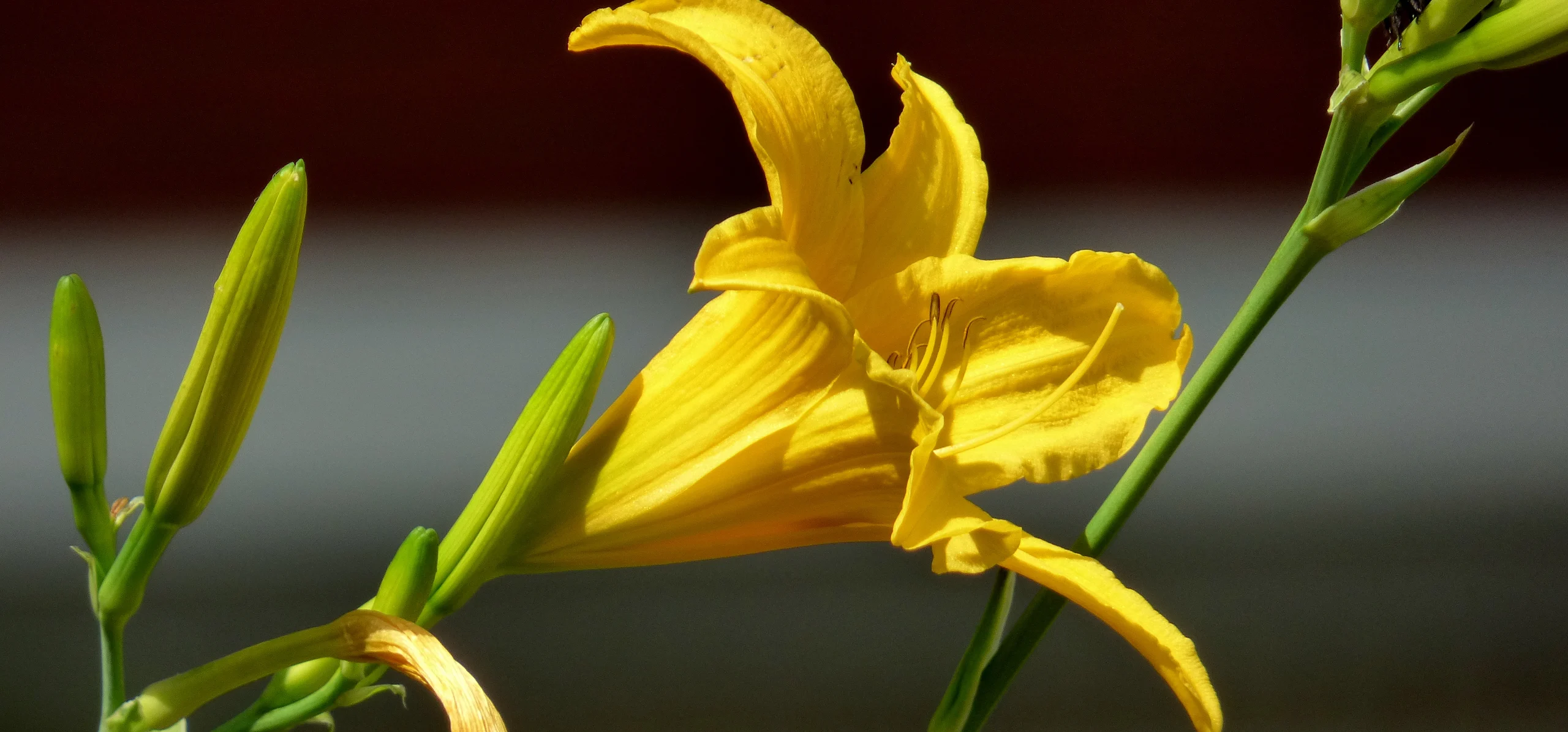
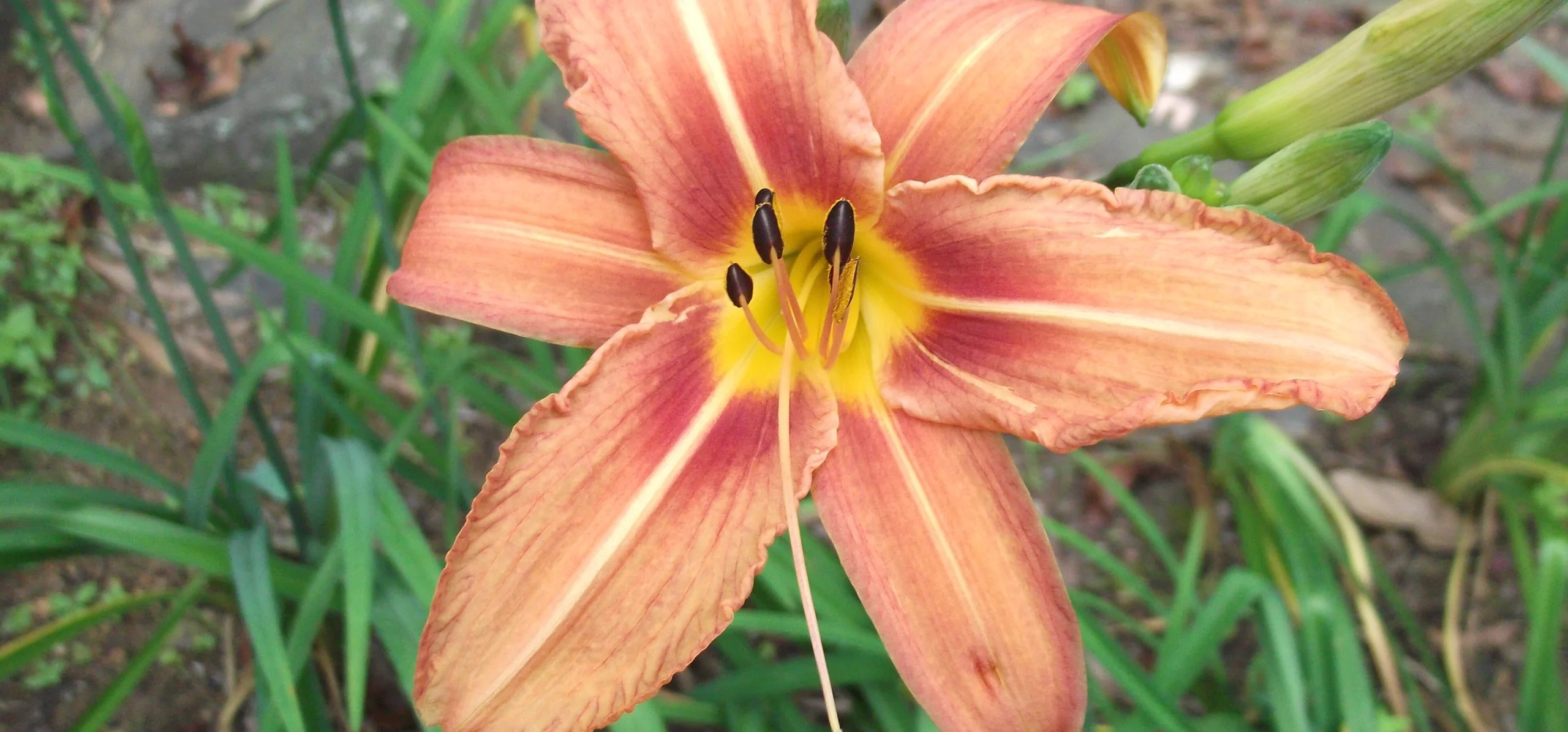
The flower that gives this plant its name lasts exactly one day: it opens in the morning, fades by evening, and is replaced the next day by another bud further along the same flowering stem. Hemerocallis fulva is the tawny orange, trumpet-shaped daylily that lines highway ditches, old farmhouse driveways and abandoned lots across much of North America, usually in a spot nobody planted or waters. Each flower runs roughly 5 to 12 cm across, orange to orange-red with a paler midrib down each tepal and a darker, reddish throat fading into yellow at the center. If what you are looking at flowers from a rhizome-thick clump, never sets a seed pod, and looks like every other roadside daylily in the county, this is almost certainly the species rather than a named cultivar.
Not the Daylily From the Garden Center
Garden centers sell thousands of Hemerocallis hybrids, bred for ruffled edges, contrasting eyes, rebloom and colors from near-white to near-black; NC State Extension's plant database lists these separately as Hemerocallis hybrida to distinguish them from the wild species. Hemerocallis fulva is the plainer parent behind a lot of that breeding, a single, unspotted orange flower with none of the ruffling or color range of a modern hybrid, sold or found under names like tawny daylily, orange daylily or ditch lily. The double-flowered form sold as 'Kwanso', with extra tepals packed into the center, is a variety of the same species and spreads exactly the same way. A hybrid daylily planted in a border stays where it is put; this species does not, which matters more than flower color when deciding whether to plant it on purpose.
A Root System Built to Spread Without Seed
The orange clone found across most of North America is a triploid, carrying three sets of chromosomes instead of two, which leaves it functionally sterile, it rarely if ever sets viable seed no matter how many flowers open each summer. All of its spread instead comes from underground, through a network of thick rhizomes that push out new fans of leaves and swell here and there into tuberous storage roots. A clump left undisturbed for a few seasons widens steadily as these rhizomes extend outward, and any piece of root or rhizome left in the soil after digging can regrow into a new plant on its own. That combination, no seed but an aggressive, hard-to-remove root system, is what has let it colonize roadsides, ditches and neglected gardens since it was first carried out of Asia.


Light, Soil and Placement
Give it full sun, six hours or more of direct light a day, for the heaviest bloom, though it flowers acceptably in partial shade with as little as two to six hours of direct sun. Soil is almost a non-issue: NC State Extension notes it prefers a well-drained loam with some organic matter but tolerates poor, compacted ground without complaint, which is exactly why it thrives in gravel road shoulders and clay fill dirt where little else survives. Good drainage matters more than fertility. Where the goal is to keep it contained rather than let it run, plant it in a large container with no drainage into open soil, the same trick used for aggressive mints, since a pot with drainage holes sitting on open ground still lets rhizomes escape into the surrounding bed.
Planting, Dividing and Basic Care
Set new rhizome divisions with the crown at or just below soil level and water them in well; established clumps then need little beyond an average garden watering routine and shrug off short dry spells once rooted in. The Missouri Botanical Garden Plant Finder recommends dividing clumps once they become overcrowded to keep bloom vigorous, which for a plant this size also doubles as spread control if the extra divisions are potted up or discarded rather than replanted nearby. Deadheading spent flowers daily keeps a planted clump looking tidy, and cutting the flowering scape down once bloom finishes tidies it further without affecting next year's flowering, since next season's growth comes from the crown and roots rather than the old stem.
Containing or Removing an Established Patch
A patch established for years is rarely a one-season project, for the same reason it is hard to garden around in the first place: any rhizome fragment left behind after digging can resprout. Dig as much of the root mass as practical, working outward from the visible fans of leaves rather than assuming the roots stop where the foliage does, and expect a few fans to pop up again the following spring from missed fragments. Where digging out a large roadside or hillside patch is not realistic, repeated mowing before flowering will not eliminate it but does slow how fast it claims new ground through expanding rhizomes, and it keeps the clump from looking overgrown. Because it does not spread by seed, a patch fully dug out and not replanted from elsewhere will not return from windblown seed the way a true weed might, only from root left behind in the soil.
Edible Buds and a Warning for Cats
The unopened flower buds are a well-known edible in Chinese cooking, stir-fried fresh or dried as "golden needles," though that is a note for the kitchen rather than a reason to plant it where it is unwanted. The bigger practical warning is for cat owners: the ASPCA lists orange daylily as toxic to cats, with vomiting, lethargy and possible kidney failure from any part of the plant, while classing it as non-toxic to dogs and horses. Cats are unusually sensitive to Hemerocallis, and even a small amount of pollen or a few bites of petal or leaf can trigger acute kidney injury, so a household with a cat that chews houseplants or garden foliage is reason enough to keep this daylily, or any cut flowers of it, well out of reach.
Test your plant knowledge
Tap a card to flip it and reveal the answer.
Each individual flower of Hemerocallis fulva opens for only one day before wilting. Tap to reveal ✓ True
The common orange roadside daylily spreads mainly by producing viable seed that blows into new areas. Tap to reveal ✕ False
The ASPCA lists this daylily as equally toxic to cats and dogs. Tap to reveal ✕ False
Because the plant is sterile, dividing its rhizomes is the standard way to propagate it. Tap to reveal ✓ True
This species tolerates poor, compacted soil and still flowers reliably. Tap to reveal ✓ True
Sources
References consulted for this guide
- GBIF: Hemerocallis fulva (L.) L.gbif.org
- Plants of the World Online (Kew): Hemerocallis fulvapowo.science.kew.org
- ASPCA: Orange Day Lily toxicityaspca.org
- Missouri Botanical Garden Plant Finder: Hemerocallis fulvamissouribotanicalgarden.org
- NC State Extension Gardener Plant Toolbox: Hemerocallis fulvaplants.ces.ncsu.edu
- Reference entity : Wikipédiaen.wikipedia.org