Common Sunflower
Helianthus annuus
Family · Asteraceae
Sunflowers build a taproot that hates transplanting: direct-sow after frost, give full sun and drainage, then stake giants and harvest once bracts turn brown.
Helianthus annuus
Plant profile
- WateringModerateWater every 4 days
- Light exposureFull sun
Growth
- Family
- Asteraceae
- Life cycle
- Annual
- Growth speed
- 8/10
- Mature size
- 30–427 cm
- Spread
- 46–91 cm
- Propagation
- Seed
FloweringJuly to October; golden-yellow to bronze or bicolor heads 3 to 6 in wide (NC State Extension)
DormancyNone, dies after seed set
Time to maturityVaries widely by cultivar
Soil & climate
- Soil pH
- pH 6–8
- Soil types
- clay, loam, sand
- Drought tolerance
- Yes
Light & Placement
- Origin
- Native to the southwestern United States and Mexico (POWO; NC State Extension)
- Where to place it
- Open, south-facing bed away from taller plants' shade
- Along a fence or trellis line for support in windy sites
- Vegetable garden edge or dedicated cutting-flower row
- Large container for dwarf, single-stem cultivars
Safety
- Pet safe
- No
ToxicityNot specifically listed by the ASPCA under Helianthus annuus; their "Sunflower" page describes a different species, Helianthus angustifolius
Invasive speciesNC State Extension notes it self-seeds readily and may become weedy if seed heads are left to shed
Data fromHelianthus annuus L., GBIF Backbone TaxoHelianthus annuus L., Plants of the WorlASPCA Toxic and Non-toxic Plants: SunfloNorth Carolina Extension Gardener Plant NDSU Agriculture: Sunflower Production G
Where it grows
World distribution
Common Sunflower is native to 2 countries: Mexico and United States.GBIF records 105,340 documented identifications across 157 countries, with the largest concentrations in United States, United Kingdom, and Sweden.
- Mexico
- United States
Yellow to orange dots: concentration of documented identifications per country. Green countries: sourced native range. Source: GBIFNative range from POWO (Kew).
A Fast-Growing Daisy-Family Annual From the American Southwest
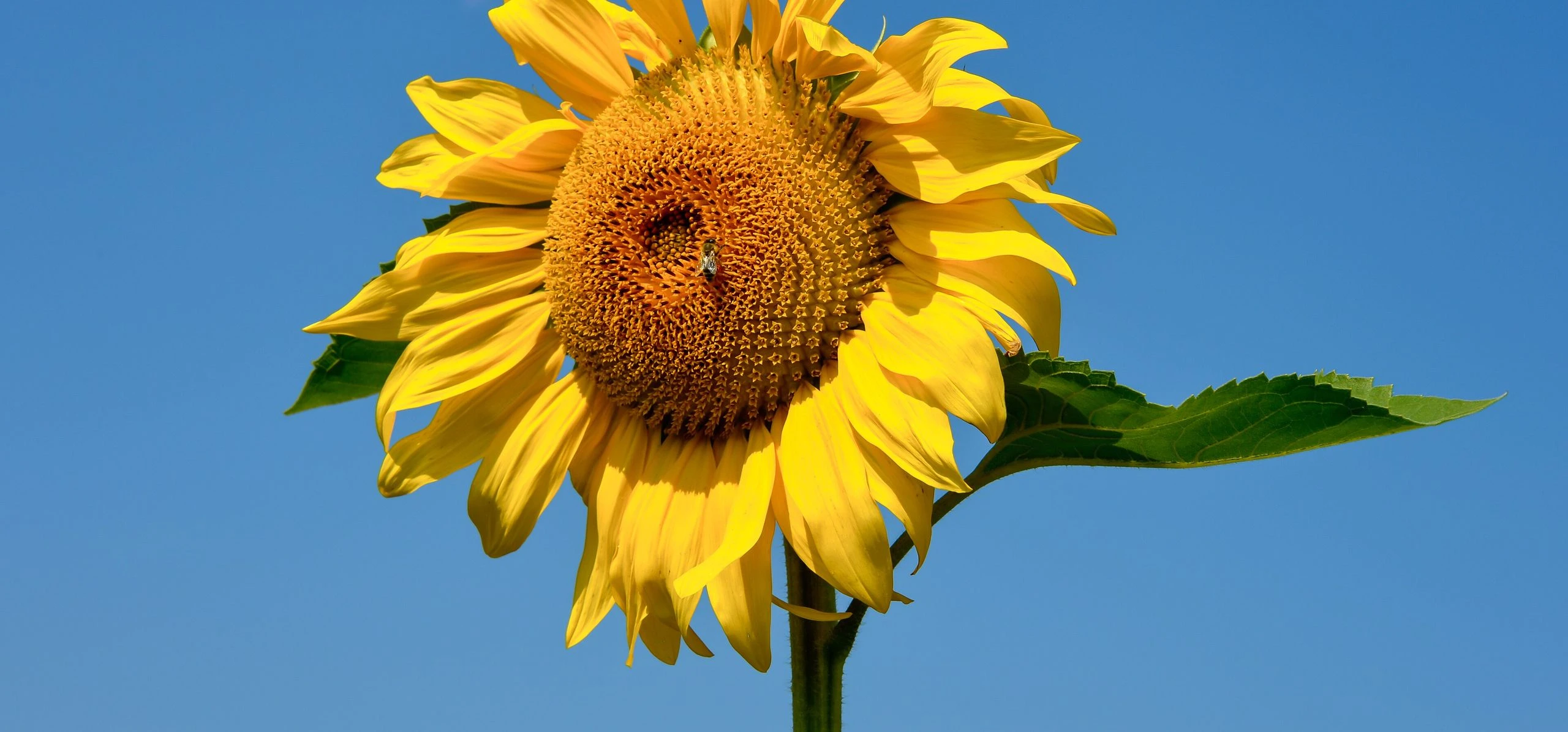
A single thick, bristly stem topped by one large flower head, or several smaller heads on a branching plant, with coarse triangular leaves: that is Helianthus annuus, the common sunflower. GBIF records its accepted name as Helianthus annuus L. in the daisy family Asteraceae, and POWO lists its native range as southwestern U.S.A. to Mexico, which NC State Extension narrows further to Arizona, California and Nevada before the species was carried into cultivation and naturalized across most of North America and beyond. What looks like a single flower is really a composite head: a ring of yellow ray florets surrounds a dense disc of hundreds of tiny florets, each one maturing into a single seed. It is a true annual, completing its life cycle from seed to seed in one frost-free season.
Sow It Directly Where It Will Grow
Sunflowers build a thick taproot early on, and that root resents disturbance, which is why NC State Extension's own guidance favors sowing seed directly outdoors rather than starting it indoors for transplant. Seed goes 1.5 to 2 inches deep once the danger of frost has passed, since the plant is not frost-tolerant and stalls in cold soil. Spacing depends on habit: NC State Extension lists branching cultivars at 18 to 24 inches apart, while single-stem giant types are usually set closer since each plant produces only one head. Germination is quick once soil has warmed in spring, but noticeably slower in cool, wet ground.
Full Sun, Soil and Watering Through the Season
NC State Extension calls for full sun, six or more hours of direct light a day, and lists a wide soil tolerance: clay, loam or sand, with a pH running from neutral (6.0 to 8.0) into alkaline territory above that. Once established, the plant is drought-tolerant, but the NDSU Sunflower Production Guide notes that moisture stress during the flowering stage can cut yield sharply, so a deep, infrequent soak through bud formation and bloom does more good than light daily sprinkling. Good drainage matters more than rich fertility: NC State Extension notes the species tolerates poor soils outright, and heavy feeding tends to push leafy growth rather than bigger blooms.


Height, Staking and Feeding Tall Varieties
Height varies enormously by cultivar. NC State Extension puts the species range at 1.5 to 10 feet, with dwarf types staying at 1 to 2 feet and giant cultivars reaching 12 to 14 feet, spreading 1.5 to 3 feet at the base. A single-stem giant carries a lot of weight up top on a comparatively narrow stalk, and in an open, windy garden that combination benefits from a stake or a length of trellis netting run horizontally so the stem grows up through it instead of leaning on it alone. Nitrogen needs are modest: the NDSU guide notes that yield in field-grown sunflower is largely independent of nitrogen rate once basic fertility is met, and excess nitrogen mainly raises the risk of the stem lodging, or falling over, in wind.
Pollinators, Pests and Disease
NC State Extension calls Helianthus annuus a great late-season nectar source for butterflies, including monarchs, and notes it also hosts the Silvery Checkerspot caterpillar, supports bee species that specialize on Asteraceae pollen, and draws seed-eating birds once the heads ripen. That popularity with wildlife comes with pest exposure: NC State Extension lists caterpillars, slugs, snails and beetles as the common home-garden problems, with powdery mildew, leaf spot and rust as the recurring diseases. At field scale, the NDSU guide adds white mold, downy mildew and Verticillium wilt to the disease list and recommends rotating sunflower out of the same ground for three to four years to break the cycle, a rule worth following in a home bed too if disease shows up two years running.
Harvesting Seed or Growing for Cut Flowers
Plants grown for seed reach what the NDSU guide calls physiological maturity, growth stage R9, when the bracts on the back of the head turn from green to yellow and brown; that is the point to cut the head and finish drying it somewhere sheltered from birds rather than leaving it exposed on the stalk. Cut-flower growers instead harvest earlier, as the outer ray petals start to unfurl but before the disc florets open fully, since the head keeps developing after cutting. Branching, multi-head cultivars stretch that harvest across weeks rather than delivering one single-stem crop all at once.
Common Mistakes and the Pet-Safety Question
The most common mistake is treating sunflowers like other bedding annuals and starting them indoors for transplant: the taproot noted above makes transplanted seedlings routinely lag behind or stall compared with direct-sown ones. The second is overfeeding: nitrogen-rich soil or heavy fertilizing produces oversized leaves and weaker flowering rather than better blooms, in line with the NDSU field data above. On pet safety, the picture needs care rather than assumption: the ASPCA's own "Sunflower" page lists Helianthus angustifolius, the swamp sunflower, as its scientific name rather than Helianthus annuus, so the common sunflower covered here has no dedicated ASPCA entry of its own to point to. Treat that as unconfirmed instead of assuming it is automatically safe for cats, dogs or horses.
Test your plant knowledge
Tap a card to flip it and reveal the answer.
Common sunflowers develop a taproot that resents disturbance, so direct sowing works better than transplanting. Tap to reveal ✓ True
The ASPCA has a dedicated entry confirming Helianthus annuus is non-toxic to cats and dogs. Tap to reveal ✕ False
Giant, single-stem sunflower cultivars can reach 12 to 14 feet tall. Tap to reveal ✓ True
Heavy nitrogen fertilizing produces bigger, more abundant flowers. Tap to reveal ✕ False
Sunflowers are drought-tolerant once established, but most sensitive to water stress while flowering. Tap to reveal ✓ True
Sources
References consulted for this guide
- Helianthus annuus L., GBIF Backbone Taxonomygbif.org
- Helianthus annuus L., Plants of the World Online, Kew Sciencepowo.science.kew.org
- ASPCA Toxic and Non-toxic Plants: Sunfloweraspca.org
- North Carolina Extension Gardener Plant Toolbox: Helianthus annuusplants.ces.ncsu.edu
- NDSU Agriculture: Sunflower Production Guidendsu.edu
- Reference entity : Wikipédiaen.wikipedia.org