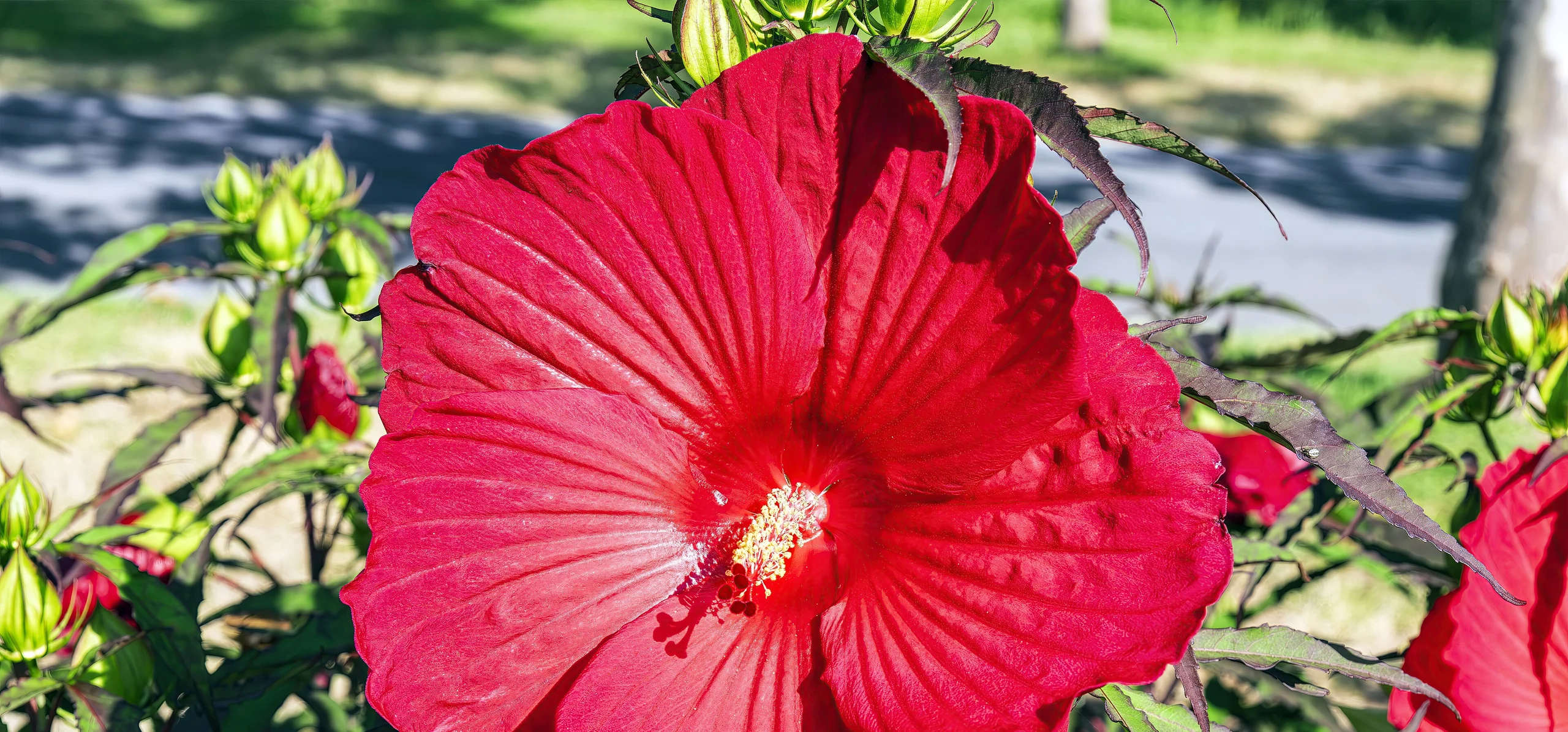
Swamp Rose Mallow
Hibiscus moscheutos
Family · Malvaceae
Swamp rose mallow dies to bare ground each winter and returns very late from a marsh-native rootstock. Watering, cultivars, pruning and pest notes.
Hibiscus moscheutos
Plant profile
- WateringVery highWater every 3 days
- Light exposureFull sun
- Hardiness zoneUSDA 4–9
Growth
- Family
- Malvaceae
- Life cycle
- Perennial
- Growth speed
- 8/10
- Mature size
- 60–240 cm
- Spread
- 60–180 cm
- Propagation
- Seed
- Division
- Cutting
FloweringFlowers 15-20 cm or more across from midsummer to early autumn, on the current season's growth
Dormancyherbaceous; dies back completely to the ground each winter and re-emerges very late in spring, sometimes not until June
Time to maturitycan flower in its first year from seed or an established crown; reaches full size within the same growing season each year
Soil & climate
- Soil pH
- pH 5–6.5
- Soil types
- loam, silt, sand with organic matter, wet or boggy soil
- Drought tolerance
- No
Light & Placement
- Where to place it
- rain garden or pond margin
- wet meadow border
- sunny perennial border kept consistently moist
- large container with a saucer kept full of water
OriginMarshes and wet meadows of eastern North America, from southeastern Canada to the central and eastern U.S. and northeastern Mexico
Safety
ToxicityNot individually listed by the ASPCA; its hibiscus entry covers Hibiscus syriacus specifically
Invasive speciesA North American wetland native within its own range; garden cultivars such as the Luna and Summerific series are grown as ornamentals without reported invasive spread.
Data fromGBIF Backbone Taxonomy: Hibiscus moscheuPlants of the World Online (Kew): HibiscClemson HGIC: Hardy Hibiscus (Hibiscus mNC State Extension Gardener Plant ToolboMissouri Botanical Garden Plant Finder:
Where it grows
World distribution
Swamp Rose Mallow is native to 3 countries: Canada, Mexico, and United States.GBIF records 26,495 documented identifications across 32 countries, with the largest concentrations in United States, France, and Canada.
- Canada
- Mexico
- United States
Yellow to orange dots: concentration of documented identifications per country. Green countries: sourced native range. Source: GBIFNative range from POWO (Kew).
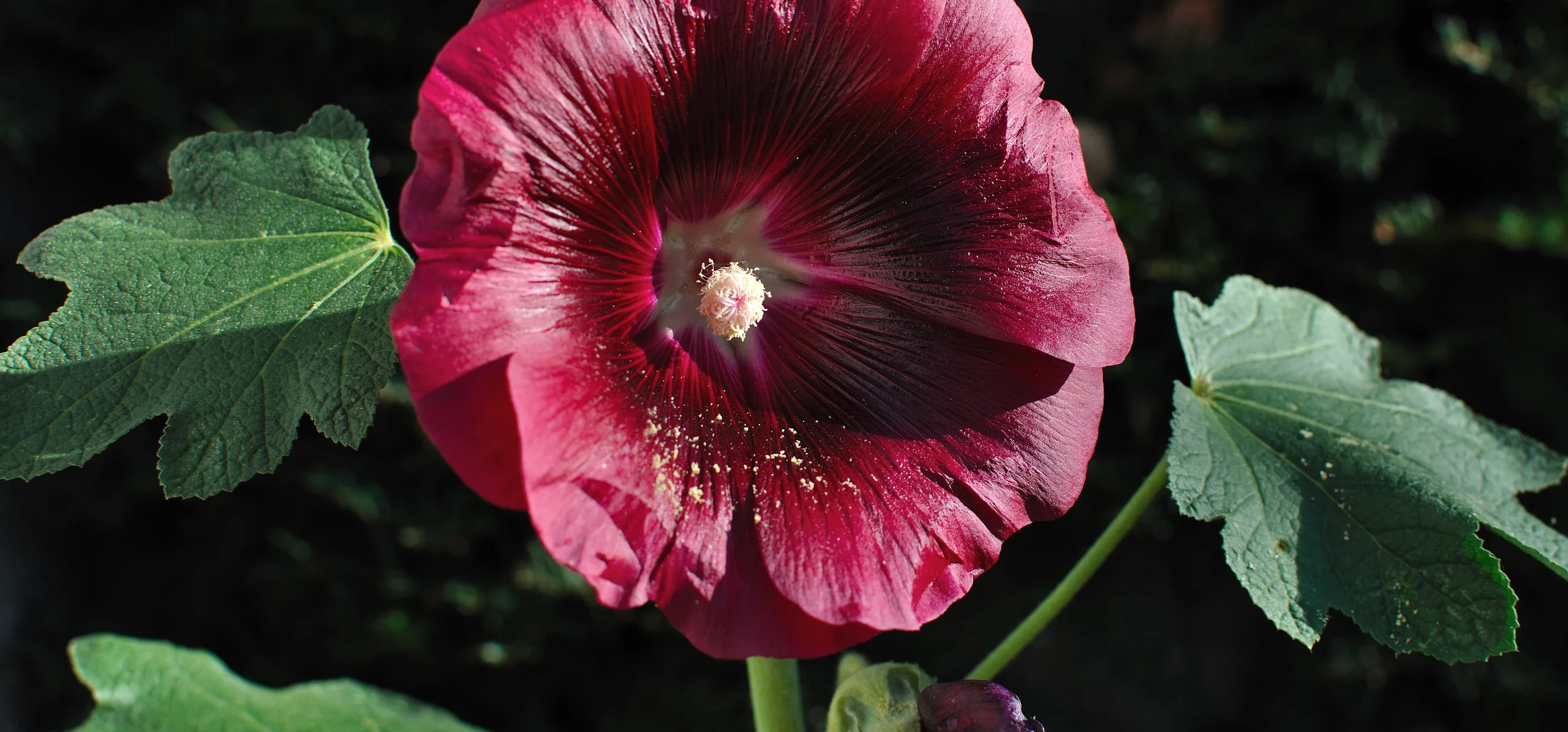
Hibiscus moscheutos is the herbaceous, cold-hardy hibiscus: a marsh native that throws up dinner-plate flowers, often 15 to 20 cm across, on stems that die completely to the ground every autumn and vanish from the garden until late spring. It is hardy to roughly -30°C in USDA zone 4, which sets it apart from the woody, shrubby Hibiscus syriacus (Rose of Sharon) it is frequently confused with. What it needs above everything else is full sun and soil that never dries out, since it comes from wet meadows and marsh edges rather than a typical garden bed. If the ground where you planted it looks empty in April, resist the urge to dig there: the crown is alive underground and simply has not started growing yet.
A Marsh Native, Not a Woody Shrub
Plants of the World Online lists the native range of Hibiscus moscheutos as southeastern Canada through the central and eastern United States and into northeastern Mexico, where it grows in freshwater and brackish marshes, wet meadows and creek edges. That habitat explains almost everything about how the plant behaves in a garden. Unlike Hibiscus syriacus, which keeps a permanent framework of woody branches through the winter, this species is herbaceous above ground: every stem it produces in a season dies at the first hard frost, and the plant survives as a woody rootstock at soil level. Each spring it rebuilds its entire top growth from scratch, which is why a mature plant can look like nothing more than a bare patch of soil for months at a time.
Why the Ground Looks Bare Until Early Summer
Swamp rose mallow is one of the last perennials in the border to show any growth, often staying invisible well into late May or even June depending on climate, considerably later than the already-slow Hibiscus syriacus. New owners who plant one in autumn and see nothing the following spring frequently assume it died and dig up the spot to replant, which kills the dormant crown. Mark the planting location clearly in autumn, before the stems die back, and simply wait; once growth starts it is fast, with stems capable of reaching full height and flowering within the same season.
Full Sun and a Thirsty Root Zone
Give it full sun, six hours or more, for the strongest stems, the most disease resistance and the heaviest bloom; it tolerates a few hours of afternoon shade but flowers less. The bigger difference from most garden shrubs is water: this is a wetland plant, so the soil should stay consistently moist to wet through the growing season, and it tolerates soggy ground and even brief standing water that would rot the roots of almost anything else. Extension guidance points to a slightly acidic pH, generally below 6.8, in rich soil with plenty of organic matter. Letting the root zone dry out in a hot spell shows up quickly as scorched leaf edges and dropped buds, which is the single biggest difference in care compared with the far more drought-tolerant Hibiscus syriacus.


Choosing a Variety: Compact Luna Series and Dark-Leaved Summerific Hybrids
The straight species can reach 2 to 2.4 m in good conditions, which is too large for many borders, so most gardens grow a bred cultivar instead. The Luna series was developed as a compact plant, roughly 60 to 90 cm tall, that still carries the same oversized 15 to 20 cm flowers on a much smaller frame, making it usable in a large container or a small border where the species itself would overwhelm the space. The Summerific hybrids take the opposite approach to standing out: several selections pair the huge flowers with near-black or deep burgundy foliage that holds its color through the season, giving the plant visual interest even between flushes of bloom. Neither group changes the underlying care: full sun, constant moisture and the same disappearing act every winter.
The Late-Winter Cutback
Leave the dead stems standing through autumn and winter rather than cutting them back right after the flowers fade; they mark where the dormant crown is and offer some winter structure. In late winter, before new growth starts, cut the previous year's stems down to about 15 cm from the ground. Because every flower forms on wood grown that same season, this hard cut costs nothing in bloom and simply clears the way for the new stems to come up cleanly. Cutting too early, in autumn, removes the visual marker that stops you from disturbing the crown by accident over winter.
Japanese Beetles and Hibiscus Sawfly
Two pests do most of the visible damage on this species. Japanese beetles feed in midsummer and skeletonize leaves down to the veins within days if left unchecked; hand-picking them into soapy water in the cool of early morning, when they are sluggish, is the least disruptive control on a plant that pollinators also visit heavily. Hibiscus sawfly larvae are smaller and easy to miss: pale green, caterpillar-like, and feeding from the underside of the leaf, so a plant can go from healthy to lace-like in a few days before the damage is noticed. Checking leaf undersides regularly through summer catches an infestation before it strips the plant, and insecticidal soap controls both pests without harming the pollinators the huge flowers attract.
Propagation by Seed and Division
Seed is the easiest route: hardy hibiscus seed germinates readily without special treatment and can flower in its first season if started early enough indoors. An established clump can also be divided in spring, just as new growth begins, by lifting the crown and cutting it into sections that each carry roots and at least one growing point; this is the only way to propagate a named cultivar true to type, since seedlings from hybrids like the Summerific series will not come true. Softwood stem cuttings taken in late spring root as well, though division is generally more reliable for a plant whose crown regrows so vigorously each year.
Common Mistakes and Pets
The recurring error is treating the late, total disappearance each winter as plant death: digging up a dormant crown before it has had a chance to sprout, sometimes as late as June, is the single most common way to lose this species. The second is underwatering; a wetland native left to dry out through a summer heatwave scorches and drops buds even though the same conditions would barely bother a typical border perennial. The ASPCA's poison-control entry for hibiscus names Hibiscus syriacus specifically and does not carry a separate listing for swamp rose mallow, so its toxicity to cats, dogs or horses is not something the ASPCA has confirmed either way for this exact species; treat it with the same ordinary caution you would apply to any unlisted garden plant around pets that like to chew foliage.
Test your plant knowledge
Tap a card to flip it and reveal the answer.
Hibiscus moscheutos dies back to bare ground every winter and can stay invisible in the border until late spring or early summer. Tap to reveal ✓ True
The best time to cut the dead stems back to the ground is right after the flowers fade in autumn. Tap to reveal ✕ False
This species tolerates constantly wet or boggy soil, unlike most garden shrubs, because it is native to marshes and wet meadows. Tap to reveal ✓ True
The Luna series was bred to be more compact than the wild species, making it easier to fit into a small border or large container. Tap to reveal ✓ True
The ASPCA specifically lists Hibiscus moscheutos as confirmed non-toxic to cats and dogs. Tap to reveal ✕ False
Sources
References consulted for this guide
- GBIF Backbone Taxonomy: Hibiscus moscheutos L.gbif.org
- Plants of the World Online (Kew): Hibiscus moscheutos L.powo.science.kew.org
- Clemson HGIC: Hardy Hibiscus (Hibiscus moscheutos)hgic.clemson.edu
- NC State Extension Gardener Plant Toolbox: Hibiscus moscheutosplants.ces.ncsu.edu
- Missouri Botanical Garden Plant Finder: Hibiscus moscheutosmissouribotanicalgarden.org
- Reference entity : Wikipédiaen.wikipedia.org