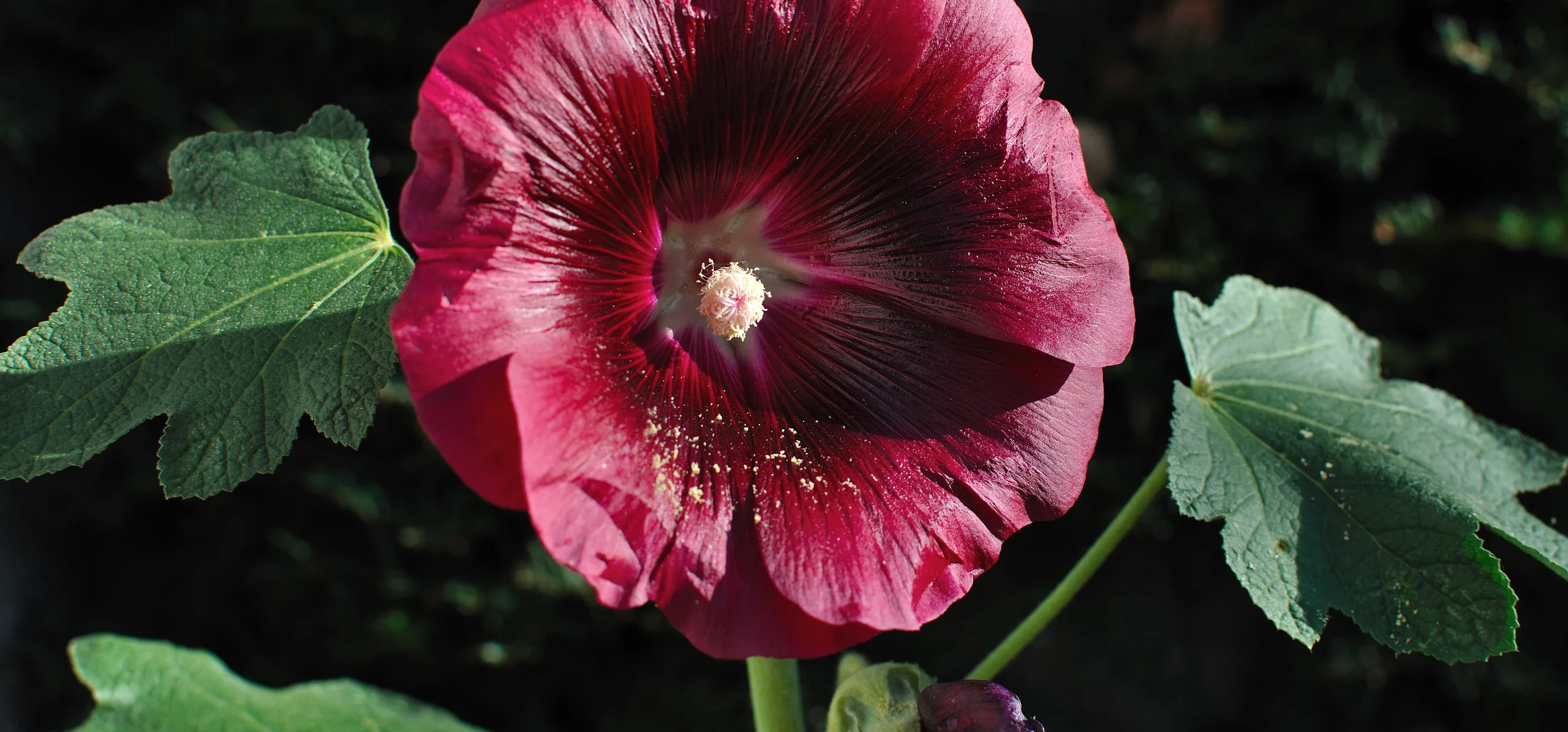
Hollyhock
Alcea rosea
Family · Malvaceae
Alcea rosea grows 1.5 to 2.5 m tall in full sun. Covers biennial sowing, soil, staking, hollyhock rust control, and ASPCA-confirmed pet safety.
Alcea rosea
Plant profile
- WateringModerateWater every 7 days
- Light exposureFull sun
- Hardiness zoneUSDA 2–10
Growth
- Family
- Malvaceae
- Life cycle
- Biennial
- Growth speed
- 7/10
- Mature size
- 150–250 cm
- Spread
- 50–100 cm
- Flowering
- Summer, June to August
- Propagation
- Seed
Dormancyrosette overwinters, flowering spike dies back after bloom
Time to maturityflowers in its second year from seed
Soil & climate
- Soil types
- chalk, loam, sand
- Drought tolerance
- No
Light & Placement
- Origin
- Garden origin; POWO records the native range as a cultigen from Türkiye
- Where to place it
- sunny cottage garden border
- south or west-facing wall or fence backdrop
Safety
- Toxicity
- CatsSafe
- DogsSafe
- HorsesSafe
Invasive speciesself-seeds freely and can naturalize into a persistent colony over several seasons
Data fromAlcea rosea L., GBIF Backbone TaxonomyRHS: Alcea rosea (hollyhock)Missouri Botanical Garden: Alcea rosea PASPCA: Toxic and Non-Toxic Plants, HollyUniversity of Wisconsin-Madison Extensio
Where it grows
World distribution
Hollyhock is native to a single country: Türkiye.GBIF records 54,242 documented identifications across 113 countries, with the largest concentrations in United Kingdom, France, and Netherlands.
- Türkiye
Yellow to orange dots: concentration of documented identifications per country. Green countries: sourced native range. Source: GBIFNative range from POWO (Kew).
What You're Growing: The Cottage-Garden Hollyhock
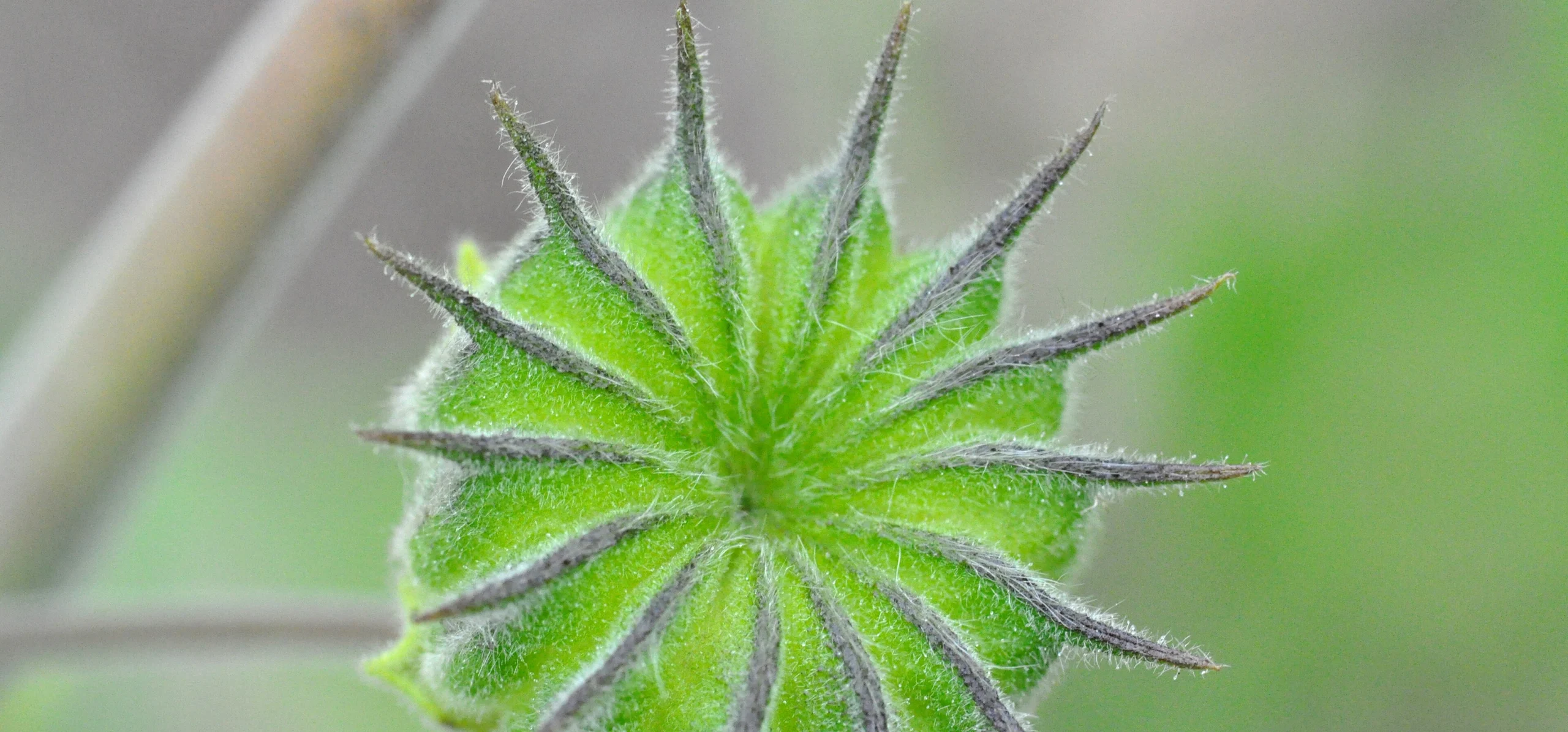
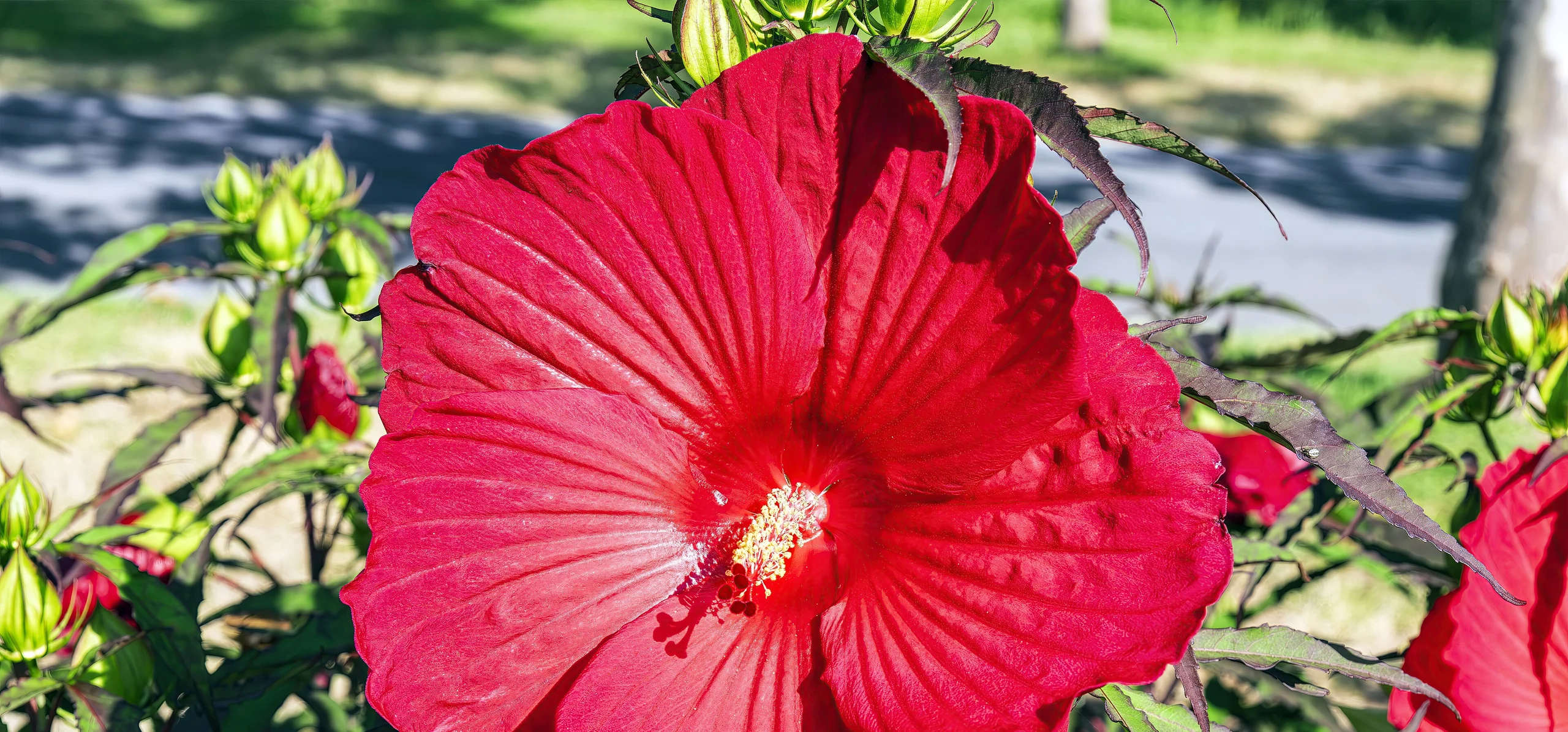
Alcea rosea, the common hollyhock, is a tall member of the mallow family, Malvaceae, grown for the rigid flowering spike that reaches 1.5 to 2.5 m according to the RHS, with Missouri Botanical Garden recording specimens of 5 to 8 ft (roughly 1.5 to 2.4 m) in rich, well-drained soil. Funnel-shaped flowers up to 10 cm across open in succession up the stem from June to August, in white, pink, red, purple or yellow, above large, heart-shaped leaves with three, five or seven lobes that shrink toward the top of the spike. Plants of the World Online records Alcea rosea's native range as a cultigen from Türkiye, meaning centuries of cultivation have obscured its original wild form; Missouri Botanical Garden simply lists its native range as garden origin. If a hollyhock has appeared unannounced against a fence or wall, it is almost certainly self-sown from a plant grown nearby in a previous year.
Sowing Seed and the Biennial Cycle
Hollyhock behaves as a biennial: seed sown in August or September germinates into a low rosette of leaves that overwinters, then sends up its flowering spike and blooms the following summer, June to August (Missouri Botanical Garden). Clemson Cooperative Extension recommends sowing collected seed as soon as it is ripe, or setting out young plants after the last frost for bloom the year after. Individual plants are short-lived and typically flower only once before dying back, but because hollyhock self-seeds so readily, an established planting behaves like a perennial colony that persists for years even as the plants beneath it are constantly replaced. RHS lists two to five years for the species to reach full maturity, a range wide enough to cover both a quick-blooming garden strain and a slower stand building up from scattered self-sown seedlings.
Site, Sun and Soil
Hollyhock needs full sun; the RHS recommends a south or west-facing position, exposed or sheltered. It tolerates chalk, loam and sandy soils across acid, neutral and alkaline pH, provided drainage is good, a point on which the RHS and Missouri Botanical Garden agree, with MBG adding that the species will not tolerate wet winter soils. A heavy clay bed that stays waterlogged through winter is the fastest way to lose the rosette before it ever flowers; where drainage is poor, raise the bed or work in grit before planting. Missouri Botanical Garden also notes the plant tolerates some light shade, though flowering is heaviest in full sun.


Watering and Feeding
Missouri Botanical Garden rates hollyhock's water need as medium: keep the soil evenly moist through the growing season without letting it turn soggy, particularly over winter while the rosette sits dormant. The RHS describes the ideal soil as moderately fertile, which for most garden beds simply means digging in compost at planting time rather than following a regular feeding programme; neither source used here documents hollyhock as a heavy feeder.
Staking Tall Spikes in Exposed Sites
Missouri Botanical Garden describes the flowering spikes as rigid and usually self-supporting, but both MBG and the RHS note that staking becomes necessary on exposed, windy sites. Driving a bamboo cane in behind the spike and tying the stem loosely at two or three points as it grows keeps a top-heavy flower spike from snapping in a summer storm. Growing hollyhock against a wall or fence, one of the uses Missouri Botanical Garden highlights, also gives the spike wind shelter along with a backdrop for its height.
Hollyhock Rust: Identification and Control
Hollyhock's defining problem is hollyhock rust, recorded by Missouri Botanical Garden under the fungus Puccinia malvacearum and by University of Wisconsin-Madison Extension under its current name, Leptopuccinia malvacearum. Early symptoms are orange to yellow spots roughly 1/8 to 1/4 inch across on the upper leaf surface, with brown pustules developing underneath; badly affected leaves develop holes and shrivel, though the flowers themselves are generally unaffected (Missouri Botanical Garden). The fungus spreads on windborne spores, contaminated transplants, rain splash and irrigation water, and it overwinters in old plant debris, ready to reinfect the same plant the following year without needing a second host (University of Wisconsin-Madison Extension).
Prevention does more than any spray: water at the base with drip irrigation rather than overhead sprinklers, space plants for airflow, strip off infected leaves as soon as they appear, and cut spent stems to the soil line and clear away all debris once flowering finishes, rather than leaving old growth standing over winter. Do not save seed from an infected plant. Where chemical control is needed, University of Wisconsin-Madison Extension lists chlorothalonil, mancozeb, myclobutanil, tebuconazole and triticonazole as effective active ingredients, alternating between at least two of them with different modes of action to avoid resistance. The RHS adds that growing hollyhock as an annual or biennial, rather than letting the same plant stand for years, further limits how much rust can build up on site.
Other Pests, End-of-Season Care and Pet Safety
Beyond rust, Missouri Botanical Garden lists spider mites and Japanese beetle as occasional problems, while the RHS also flags cutworms, slugs, aphids, capsid bugs and flea beetles on younger growth. Once a spike finishes flowering, the RHS advises cutting back the dead foliage, or pulling the whole spent plant out and discarding it where rust has been present, to reduce the debris the fungus needs to overwinter. For households with pets, the ASPCA lists hollyhock as non-toxic to dogs, cats and horses, one of the few tall cottage-garden plants that needs no special handling around curious animals.
Test your plant knowledge
Tap a card to flip it and reveal the answer.
Hollyhock is typically grown as a biennial, flowering in its second year from seed. Tap to reveal ✓ True
Watering hollyhock foliage overhead in the evening is the best way to prevent hollyhock rust. Tap to reveal ✕ False
The ASPCA lists hollyhock as toxic to cats, dogs and horses. Tap to reveal ✕ False
A hollyhock flower spike can grow taller than 2 metres in a single flowering season. Tap to reveal ✓ True
Cutting hollyhock stems to the ground and clearing debris after flowering helps limit rust the following year. Tap to reveal ✓ True
Sources
References consulted for this guide
- Alcea rosea L., GBIF Backbone Taxonomygbif.org
- RHS: Alcea rosea (hollyhock)rhs.org.uk
- Missouri Botanical Garden: Alcea rosea Plant Findermissouribotanicalgarden.org
- ASPCA: Toxic and Non-Toxic Plants, Hollyhockaspca.org
- University of Wisconsin-Madison Extension: Hollyhock Rusthort.extension.wisc.edu
- Reference entity : Wikipédiaen.wikipedia.org