Busy Lizzie
Impatiens walleriana
Family · Balsaminaceae
Grow Busy Lizzie (Impatiens walleriana) in shade with moist soil, feeding and pinching, plus the downy mildew-resistant Beacon and Imara series.
Impatiens walleriana
Plant profile
- WateringHighWater every 3 days
- Light exposurePartial shade
- Hardiness zoneUSDA 10–11
Growth
- Family
- Balsaminaceae
- Life cycle
- Perennial
- Growth speed
- 7/10
- Mature size
- 15–60 cm
- Spread
- 15–60 cm
- Flowering
- Spring until the first frost, continuous with no deadheading
- Propagation
- Seed
- Cutting
Dormancynone in frost-free zones 10-11; killed outright by the first frost and grown as a bedding annual everywhere colder
Time to maturityflowers within 6-8 weeks from seed and continuously from then until frost
Soil & climate
- Soil pH
- pH 6–6.5
- Soil types
- well-drained, humus-rich, moisture-retentive, slightly acidic
- Saline soil
- Not tolerated
- Drought tolerance
- No
Light & Placement
- Origin
- East Africa: Kenya, Mozambique, Tanzania, and Zimbabwe
- Where to place it
- bright, indirect light near an east or north window for overwintered cuttings
- shaded borders and beds
- north- or east-facing walls
- under trees or large shrubs with dappled light
- hanging baskets and window boxes with drainage holes
Safety
- Toxicity
- CatsSafe
- DogsSafe
- HorsesSafe
Invasive speciesNaturalized and locally invasive in frost-free tropical and subtropical regions outside its native range, including Brazil's Atlantic Forest, Pacific islands, and Hawaii, where it can dominate the understory of disturbed forest; do not dump garden waste into wild areas in these climates.
Data fromGBIF: Impatiens walleriana Hook.fil.POWO (Kew): Impatiens walleriana Hook.f.ASPCA: Buzzy Lizzie toxicity to cats, doNC State Extension: Impatiens wallerianaUniversity of Maryland Extension: Downy
Where it grows
World distribution
Busy Lizzie is native to 5 countries: Kenya, Malawi, Mozambique, Tanzania, and Zimbabwe.GBIF records 8,315 documented identifications across 112 countries, with the largest concentrations in Brazil, Taiwan, and Mexico.
- Kenya
- Malawi
- Mozambique
- Tanzania
- Zimbabwe
Yellow to orange dots: concentration of documented identifications per country. Green countries: sourced native range. Source: GBIFNative range from POWO (Kew).
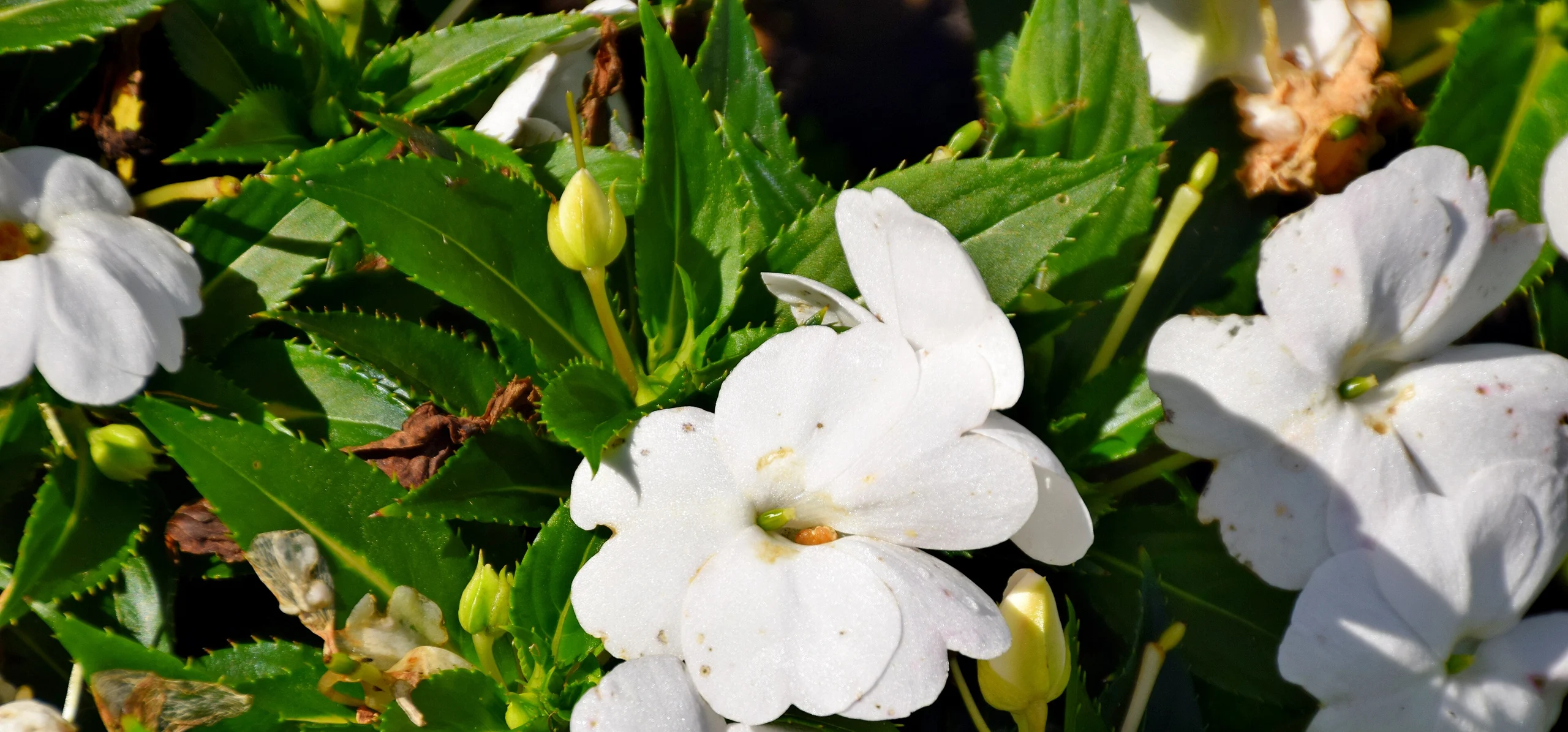
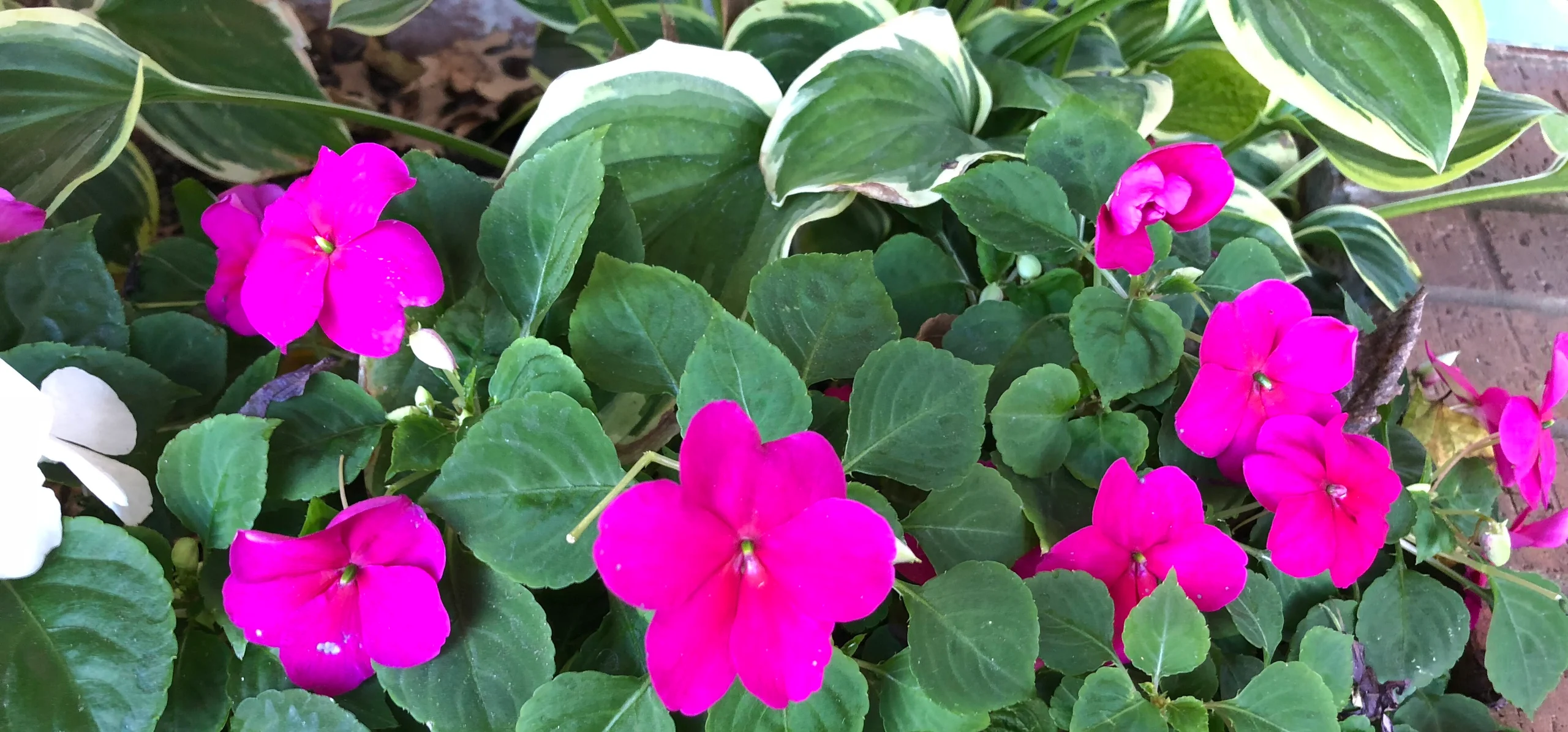
That mounding, ever-blooming annual filling a shaded corner with flat, five-petaled flowers in pink, red, orange, purple, or white is almost certainly Impatiens walleriana, sold everywhere as Busy Lizzie or, in North America, simply impatiens. It thrives in shade where few other bedding plants flower this heavily, needs soil that never fully dries out, and wilts within hours of a hot, dry afternoon. It was the best-selling bedding annual in the United States until a host-specific downy mildew swept through gardens starting in 2011 and made it disappear from many beds for the better part of a decade. Seed and plug lines bred for resistance, sold as the Beacon and Imara series, are what bring it back into rotation today.
Starting From Seed or Buying Plugs
Impatiens seed is tiny and needs light to germinate, so press it onto the surface of a moist seed-starting mix rather than covering it, then hold humidity with a clear plastic dome or wrap until the first true leaves appear, roughly two to three weeks at a steady 21 to 25 degrees Celsius. Sow indoors about eight to ten weeks before the last frost date, since seedlings are slow to size up and resent an early move outdoors into cold soil. Most home gardeners skip this altogether and buy plugs or six-packs already in bud, which is also the easiest way to get a named, downy-mildew-resistant cultivar like Beacon or Imara rather than an unlabelled flat of unknown parentage.
Light: Built for Shade
Busy Lizzie is a genuine shade specialist, one of the few bedding annuals that flowers as heavily in full shade as most others do in full sun. Part shade to full shade is ideal; a spot under trees, on the north or east side of a wall, or with only filtered midday light keeps the foliage dark green and unmarked. Push it into a border that gets several hours of hot afternoon sun and the leaves bleach and scorch at the edges within days, even though the plant is otherwise healthy, which is the single most common placement mistake with this species.
Watering and Soil: Why It Wilts by Afternoon
The stems are soft and succulent and hold almost no water reserve, so the plant droops visibly the moment the surrounding soil dries out in a heat wave, then perks back up within an hour or two of a thorough watering. Give it a humus-rich, well-drained, moisture-retentive soil, slightly acidic at around pH 6.0 to 6.5, and water often enough that it never gets the chance to wilt in the first place. Repeated wilt-and-recover cycles do not kill the plant outright, but they check its growth and open the door to the stress-related diseases covered below, so consistency matters more than volume.


Feeding and Pinching for Bushier Growth
A balanced, water-soluble fertilizer every two to four weeks through the growing season keeps a plant that blooms nonstop from running out of nutrients, and container plants need it more often than those in open beds since watering washes nutrients out of a small volume of potting mix faster. By midsummer, plants that started the season compact can turn leggy and sparse at the base; trimming off the top third of each stem forces new branching from lower nodes and brings back a tighter, fuller mound within a couple of weeks, along with a fresh flush of flowers.
Downy Mildew: The Epidemic and the Resistant Series
Plasmopara obducens, the pathogen behind impatiens downy mildew, infects no other plant, and it found garden Impatiens walleriana almost universally susceptible when it broke out across Europe and the US Northeast and Midwest in the fall of 2011, reaching Florida by February 2012. Infected plants show yellowing and downward-curling leaves with a white to grayish, fuzzy growth on the undersides, then drop their leaves and flowers within days, leaving bare stems. New Guinea impatiens proved largely tolerant and became the default shade annual for years while breeders worked on garden impatiens itself. The Beacon series from PanAmerican Seed and the Imara series, both released to growers around 2019 to 2020 after years of trials, carry strong resistance and are what let this species return to nurseries, though neither is fully immune and a preventive fungicide program is still worthwhile in warm, humid seasons.
Pots, Hanging Baskets, and the End of Season at Frost
Its compact, mounding habit and constant bloom make it one of the best container plants for shade, whether in a hanging basket, a window box, or a mixed pot with drainage holes, though container plants dry out faster than bedded ones and need checking daily in hot weather. As a tender perennial it has no frost tolerance at all: the first light frost blackens the foliage overnight and ends the season outdoors everywhere colder than USDA zone 10. Gardeners outside that range either treat it as a disposable annual and pull the spent plants, or lift a favorite pot indoors before the first cold night.
Propagation From Cuttings and the Popping Seed Pods
A stem cutting a few centimeters long, with the lower leaves stripped, roots readily in a glass of plain water, often showing visible white roots within one to two weeks, which makes it easy to carry a particular color through winter as a houseplant on a bright windowsill without dealing with seed at all. The genus name comes from the seed capsules: once pollinated flowers set slender, swollen pods that, when ripe, explode at the lightest touch, coiling back instantly and flinging seeds well clear of the parent plant, the same trait that gives touch-me-nots their common name.
Invasive in the Tropics, Safe Around Pets
Outside its native East African range, in frost-free tropical and subtropical climates, Busy Lizzie escapes cultivation readily and naturalizes in damp, shaded understory, forming dense stands that crowd out native plants in places such as Brazil's Atlantic Forest, several Pacific islands, and Hawaii; gardeners in those climates should never toss trimmings or spent plants into wild or wooded areas. Closer to home, the ASPCA lists it as non-toxic to cats, dogs, and horses, which makes it a reasonably safe choice for a border or basket that pets can reach, even though letting any animal graze steadily on ornamental foliage is worth discouraging regardless of the toxicity rating.
Test your plant knowledge
Tap a card to flip it and reveal the answer.
Busy Lizzie flowers best in full, all-day sun. Tap to reveal ✕ False
Its seeds need light to germinate and should be pressed into the mix rather than covered. Tap to reveal ✓ True
The downy mildew that devastated garden impatiens after 2011 is caused by a pathogen that infects only impatiens species. Tap to reveal ✓ True
The Beacon and Imara series are completely immune to downy mildew. Tap to reveal ✕ False
The ASPCA lists Busy Lizzie as non-toxic to cats, dogs, and horses. Tap to reveal ✓ True
Sources
References consulted for this guide
- GBIF: Impatiens walleriana Hook.fil.gbif.org
- POWO (Kew): Impatiens walleriana Hook.f.powo.science.kew.org
- ASPCA: Buzzy Lizzie toxicity to cats, dogs and horsesaspca.org
- NC State Extension: Impatiens walleriana Plant Toolboxplants.ces.ncsu.edu
- University of Maryland Extension: Downy Mildew in Impatiensextension.umd.edu
- Reference entity : Wikipédiaen.wikipedia.org