New Guinea Impatiens
Impatiens hawkeri
Family · Balsaminaceae
New Guinea impatiens (Impatiens hawkeri) takes more sun than busy Lizzie if watered often: light, feeding, cutting propagation, and mildew resistance.
Impatiens hawkeri
Plant profile
- WateringHighWater every 4 days
- Light exposurePartial sun
- Hardiness zoneUSDA 10–12
Growth
- Family
- Balsaminaceae
- Life cycle
- Perennial
- Growth speed
- 6/10
- Mature size
- 15–50 cm
- Spread
- 45–90 cm
- Flowering
- Continuous from spring through fall
- Propagation
- Cutting
- Seed
Dormancynone in frost-free climates; killed by frost and grown as a bedding annual elsewhere
Time to maturityflowers within weeks of planting out, continuously from spring through fall
Soil & climate
- Soil types
- loam, well-drained, rich in organic matter
- Drought tolerance
- No
Light & Placement
- Origin
- New Guinea and the Solomon Islands (Papuasia)
- Where to place it
- bright window with several hours of direct or strong filtered light
- full sun for sun-bred hybrids like SunPatiens
- partial shade for standard New Guinea hybrids
- hanging baskets and patio containers with drainage holes
Safety
- Toxicity
- CatsSafe
- DogsSafe
- HorsesSafe
Data fromGBIF: Impatiens hawkeri W.BullPOWO (Kew): Impatiens hawkeri W.BullASPCA: Impatiens (Buzzy Lizzie) toxicityNC State Extension: Impatiens hawkeri, NUniversity of Maryland Extension: Downy
Where it grows
World distribution
New Guinea Impatiens is native to 2 countries: Papua New Guinea and Solomon Islands.GBIF records 1,786 documented identifications across 47 countries, with the largest concentrations in Papua New Guinea, Ecuador, and Costa Rica.
- Papua New Guinea
- Solomon Islands
Yellow to orange dots: concentration of documented identifications per country. Green countries: sourced native range. Source: GBIFNative range from POWO (Kew).
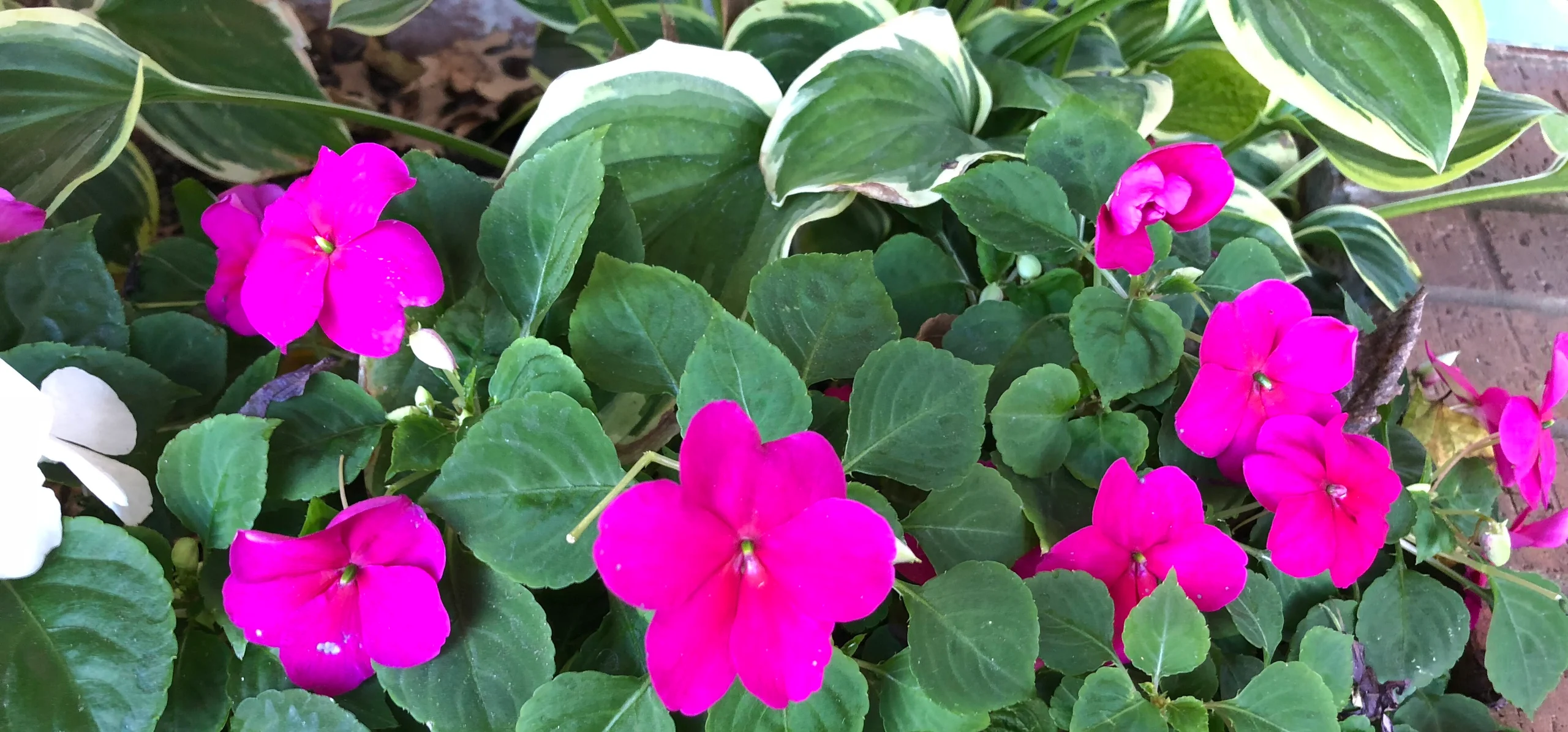
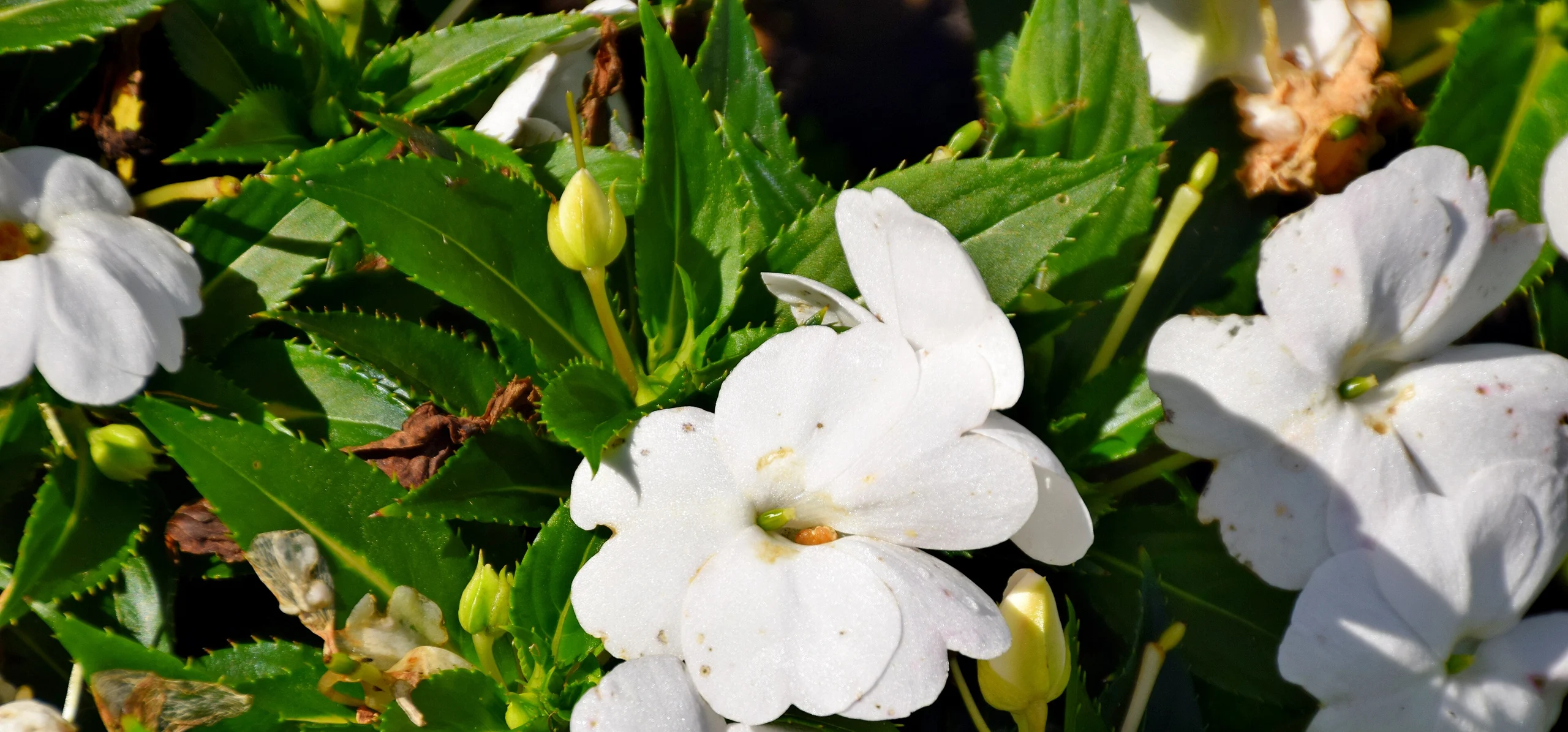
New Guinea impatiens, Impatiens hawkeri, is the impatiens with flowers the size of a silver dollar and leaves that come bronze, deep green, or streaked with cream, which is what sets it apart at a glance from the smaller-flowered busy Lizzie (Impatiens walleriana). Decades of breeding, including the SunPatiens hybrid line, gave it the ability to take several hours of direct sun that would scorch its shade-loving cousin, as long as the soil never dries out. Almost every plant sold today is grown from a cutting rather than a seed packet, because hybrid seed is unreliable or sterile. It is also the impatiens to reach for if downy mildew wiped out beds of walleriana in past summers, since New Guinea types are reported tolerant of the disease that ended garden-variety impatiens plantings in many regions.
Choosing a New Guinea Impatiens: SunPatiens and Other Hybrids
What is sold as "New Guinea impatiens" on a garden center bench is almost always a complex hybrid bred from Impatiens hawkeri and related species, not the wild species itself, and the series name on the tag tells you what to expect. SunPatiens, developed by Sakata, was bred specifically for full-sun beds and holds up in a spot that would wilt an ordinary New Guinea hybrid by mid-afternoon. Other series lean into variegated or near-black bronze foliage as the main selling point, with flower color almost secondary. Because these plants are clones, a cutting taken from a named cultivar reproduces its exact leaf color and flower size, which is why cuttings dominate commercial production over seed.
Light and Sun Tolerance
New Guinea impatiens spans a wider light range than most bedding plants, from full sun to fairly deep shade, though it generally performs best with some midday shade unless it is a sun-bred series like SunPatiens. The trade-off is water: every extra hour of direct sun increases how fast the pot dries out, so a full-sun planting needs a watering routine a shadier one does not. Indoors, a bright window with several hours of direct or strong filtered light keeps a potted plant blooming; deep shade slows flowering to almost nothing even though the plant survives.
Watering: Reading the Wilt
This is the one signal New Guinea impatiens gives you before real damage: the leaves and stems go soft and droop noticeably within a day or two of the soil drying out. Water thoroughly as soon as you see it and the plant is usually upright again within an hour, with no lasting harm from an occasional missed day. Repeated wilting cycles do take a toll over a season, thinning the plant and cutting flower count, so treat wilt as a warning to adjust the schedule rather than a routine you can rely on. Keep the soil evenly moist rather than alternating between soggy and bone-dry, and increase frequency as temperatures and sun exposure rise through summer.


Soil, Potting, and Feeding
Plant it in a loamy, well-drained soil enriched with organic matter that still holds moisture between waterings; a straight sandy mix dries too fast for a plant that wilts this readily. Because it flowers continuously from spring through fall and gets watered often, nutrients wash out of the root zone faster than in a plant watered less frequently. Mix a slow-release granular fertilizer into the soil at planting, then follow with a diluted balanced liquid feed every two to three weeks through the growing season, more often for hanging baskets and small containers than for garden beds. Skip feeding once growth slows in autumn or on plants being prepared to move indoors.
Downy Mildew Resistance and Other Problems
The disease that matters most for this genus is impatiens downy mildew, and it is the main reason New Guinea impatiens largely replaced busy Lizzie in many gardens: university extension pathologists report New Guinea impatiens tolerant of the pathogen that devastated Impatiens walleriana plantings. That tolerance is not absolute immunity, so avoid overhead watering late in the day and give plants room for air to move between them regardless. Outdoors it otherwise has few serious problems beyond occasional southern bacterial wilt or southern blight in hot, humid climates. The pest to watch for is spider mites, especially on plants brought indoors for winter where heated, dry air favors them; check the undersides of leaves for fine stippling or webbing and raise humidity around the plant if you spot them.
Propagation from Cuttings and Overwintering
Take a two- to three-inch tip cutting with at least two leaf nodes, strip the lower leaves, and set it in water or a light, moist potting mix; rooting hormone speeds things along but is not essential. Roots typically form within two to three weeks, faster with bottom heat. Because New Guinea impatiens is tender and damaged by any frost, it survives outdoors as a perennial only in the warmest, frost-free climates; everywhere else it is grown as a summer bedding plant. Before the first frost, take cuttings from your favorite plants and root them on a bright windowsill indoors rather than trying to keep an entire mature plant alive through winter, then move rooted cuttings back outside once nights stay reliably above freezing in spring.
Toxicity to Cats, Dogs, and Horses
The ASPCA lists Impatiens as non-toxic to cats, dogs, and horses, which makes New Guinea impatiens one of the safer flowering bedding plants for a garden or patio shared with pets. A curious dog or cat that nibbles a leaf or flower is not at risk of the poisoning seen with genuinely toxic ornamentals, though eating a large quantity of any plant material can still upset a pet's stomach. That makes it a reasonable choice for hanging baskets at nose height or containers within reach on a shared patio, without the fencing off some other flowering annuals require.
Test your plant knowledge
Tap a card to flip it and reveal the answer.
New Guinea impatiens can tolerate more direct sun than Impatiens walleriana, as long as it gets enough water. Tap to reveal ✓ True
Most New Guinea impatiens sold in garden centers are grown from seed rather than from cuttings. Tap to reveal ✕ False
New Guinea impatiens is reported tolerant of the impatiens downy mildew that devastated Impatiens walleriana plantings. Tap to reveal ✓ True
Wilting leaves on a New Guinea impatiens mean it is overwatered and needs less water. Tap to reveal ✕ False
The ASPCA lists Impatiens as non-toxic to cats, dogs, and horses. Tap to reveal ✓ True
Sources
References consulted for this guide
- GBIF: Impatiens hawkeri W.Bullgbif.org
- POWO (Kew): Impatiens hawkeri W.Bullpowo.science.kew.org
- ASPCA: Impatiens (Buzzy Lizzie) toxicity to cats, dogs and horsesaspca.org
- NC State Extension: Impatiens hawkeri, New Guinea Impatiensplants.ces.ncsu.edu
- University of Maryland Extension: Downy Mildew of Impatiensextension.umd.edu
- Reference entity : Wikipédiaen.wikipedia.org