Bearded Iris
Iris germanica
Family · Iridaceae
Iris germanica rhizomes need their top surface exposed to full sun, not buried, and clumps need dividing every three to four years to keep flowering well.
Iris germanica
Plant profile
- WateringLittleWater every 10 days
- Light exposureFull sun
- Hardiness zoneUSDA 3–9
Growth
- Family
- Iridaceae
- Life cycle
- Perennial
- Growth speed
- 6/10
- Mature size
- 61–91 cm
- Propagation
- Division
FloweringUp to 6 fragrant blooms per branched stalk in spring; many modern cultivars rebloom later in the season
Soil & climate
- Soil types
- loam
- Drought tolerance
- Yes
Light & Placement
- Origin
- Garden hybrid of Balkan parentage (POWO: native to the NW Balkan Peninsula)
- Where to place it
- Sunny bed with sharp drainage, rhizome top exposed to the sun
- Border spaced well away from shrubs or trees that could shade it as they grow
- Wide, shallow container with fast-draining mix, rhizome top left exposed above the soil line
Safety
- Toxicity
- CatsToxic
- DogsToxic
- HorsesToxic
Data fromIris x germanica L., GBIF Backbone TaxonIris germanica, Missouri Botanical GardeGerman Bearded Iris, Penn State ExtensioIris Borer (Macronoctua onusta), UniversToxic and Non-toxic Plants: Iris, ASPCA
Where it grows
World distribution
Bearded Iris is native to a single country: Croatia.GBIF records 21,399 documented identifications across 85 countries, with the largest concentrations in France, Spain, and United Kingdom.
- Croatia
Yellow to orange dots: concentration of documented identifications per country. Green countries: sourced native range. Source: GBIFNative range from POWO (Kew).
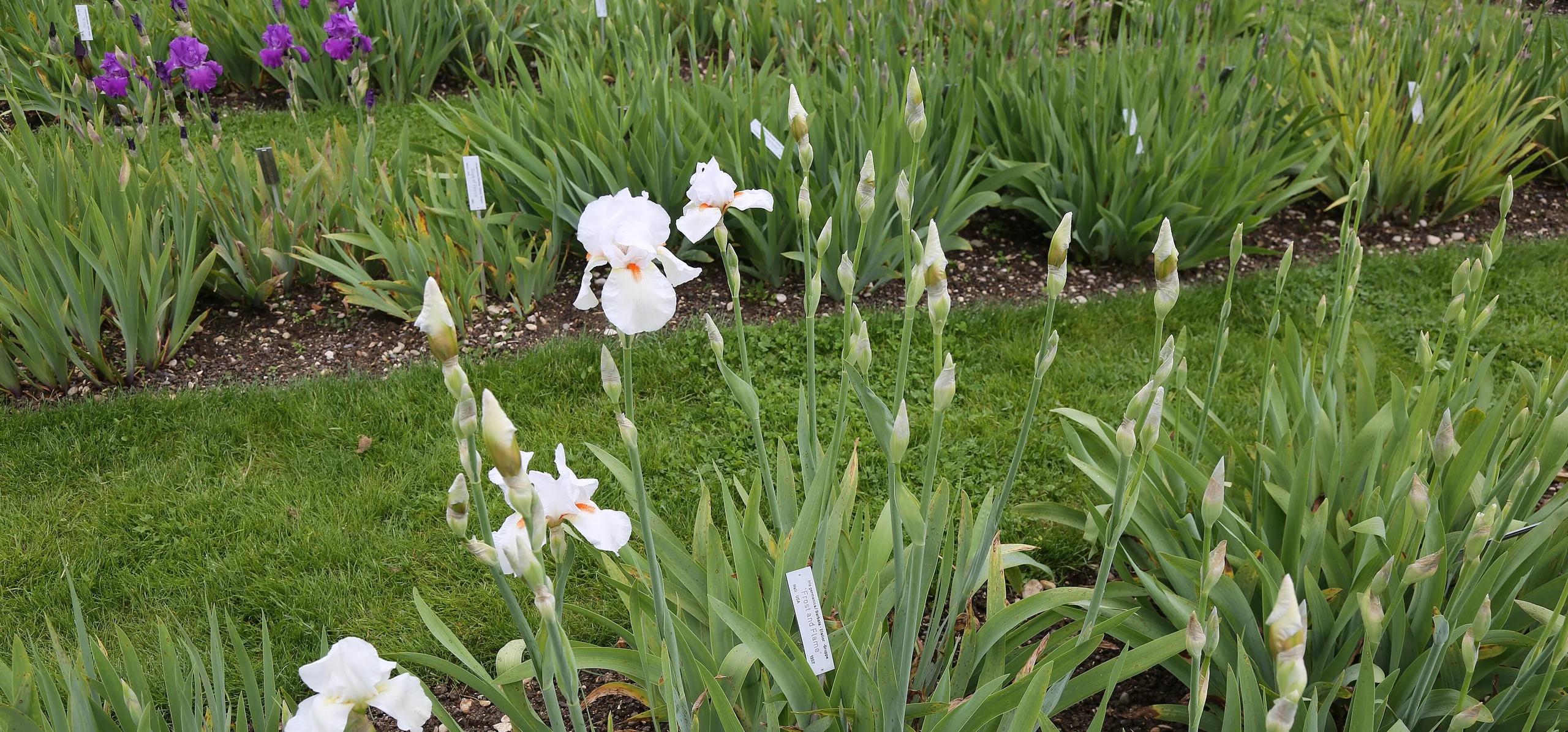
Iris germanica, the bearded iris sold as a fan of sword-shaped leaves attached to a fat, knobby rhizome, blooms for two to three weeks in late spring on branched stalks that can carry up to six flowers each, opening a few at a time. The detail that trips up most new growers is depth: this rhizome wants to sit on top of the soil, not under it, with only the fine roots buried and the top surface left to bake in full sun. Get that wrong, along with overcrowding the clump and skipping division, and a planting that flowered well in its first year can stop blooming almost entirely within three or four seasons. This guide covers correct planting depth, why flowering fails, the division routine bearded iris need every few years, and the borer, rot and leaf spot problems that come with growing it in North America.
Plant the Rhizome on Top of the Soil, Not Under It
Set the rhizome horizontally in a shallow trench or saucer-shaped hole so its top surface sits at or just above ground level, with only the fibrous roots pressed into the soil below. Missouri Botanical Garden's planting instructions call for covering the rhizome with no more than about half an inch of soil, spacing plants 12 to 24 inches apart, and doing the planting in mid to late summer, from July into early September. When several rhizomes go in together, point the leaf fans outward, away from the center of the group, so each division has room to grow into open ground rather than into its neighbors. Exposure to summer sun and air on that top surface keeps the rhizome relatively dry and firm; a rhizome buried a few inches down stays cool and damp instead, which is the condition that invites the rot covered further down.
Full Sun and Soil That Drains Fast
Bearded iris flower and resist disease best in a full-sun position, and Missouri Botanical Garden notes that plants will tolerate light shade but at the cost of fewer, weaker blooms. Soil needs to be humusy and only lightly moist, not wet: on heavy clay, the standard fix is to raise the bed or work in coarse grit and organic matter until water moves through it quickly instead of pooling around the rhizome. Newly planted rhizomes need regular watering to establish roots, but established clumps do better on the dry side between waterings than kept consistently damp, since standing moisture around an exposed rhizome is what starts bacterial rot, not the sun exposure itself.


Why a Once-Reliable Clump Stops Flowering
A clump that bloomed well for its first two or three years and then produces mostly leaves is almost always suffering from one of three things: overcrowding, shade, or rhizomes that have ended up buried. As a clump multiplies, the newer rhizomes push outward and pile on top of each other at the center, competing for the same patch of soil and sunlight until the whole clump runs out of room to form new flower buds. A nearby shrub or tree that has grown taller since planting can quietly shade a bed that was full sun a few years earlier, cutting bloom for the same reason light shade does anywhere else. And rhizomes that get buried, whether from mulch piling up, soil washing over them, or simply being planted too deep in the first place, spend their energy pushing new growth toward the light instead of forming flower buds, and are also more likely to rot before they get the chance.
Dividing Every Three to Four Years
Missouri Botanical Garden recommends dividing bearded iris immediately after flowering once a clump becomes overcrowded, typically every three to four years; for most gardens that means digging up the clump in July or August, once the last flower stalks have finished. Lift the whole clump, break or cut it into individual sections at the natural joints, and keep only the younger, firm rhizomes from the outer edge, since the old, woody center rarely reflowers well. Trim the leaf fan back to about 4 to 6 inches before replanting, which reduces water loss through the cut leaves while new roots are re-establishing and makes a wind-rocked fan less likely to loosen the rhizome before it anchors.
Iris Borer and Bacterial Soft Rot
Iris borer, Macronoctua onusta, is the bearded iris pest that causes the most damage across the northern and eastern United States. The moth lays eggs on old iris leaves in fall, and University of Illinois Extension notes the eggs hatch the following spring once new leaves reach about 4 to 6 inches tall; the young caterpillar tunnels down inside a leaf and works its way into the rhizome, where it feeds and grows through summer before pupating in the soil and emerging as a moth again in fall. The larval tunnel through the rhizome is rarely fatal on its own, but it opens a wound that lets in soft rot bacteria, and Illinois Extension describes the telltale sign as a yellow, water-soaked streak running down the leaf where bacterial rot follows the borer's tunnel into the rhizome. Cleaning up and destroying old iris foliage every fall, before eggs are laid on it, is the single most effective control; a rhizome that is already soft, mushy and foul-smelling from rot should be dug up, the rotten tissue cut away back to firm tissue, and the wound left to dry in the sun before replanting.
Leaf Spot on the Foliage
Small yellow-brown spots ringed with a water-soaked border, appearing first on older leaves in cool, wet spring weather, are the sign of iris leaf spot, a fungal disease that overwinters on old leaf debris left in the bed. Left alone, the spots enlarge, turn grayish brown with a darker reddish-brown edge, and can merge until they kill the leaf outright, though the disease is more disfiguring than dangerous to an otherwise healthy, well-spaced clump. The same fall cleanup that helps against iris borer works here too: removing and disposing of dead and spotted foliage rather than composting it, since the fungus survives on that debris and reinfects new growth via wind and rain the following spring. Good airflow between clumps, achieved simply by not letting the planting get overcrowded, does more to prevent both problems than any spray.
Toxic to Cats, Dogs and Horses
The ASPCA lists iris as toxic to cats, dogs and horses, with pentacyclic terpenoids, including compounds called zeorin, missourin and missouriensin, as the toxic principle. The rhizome carries the highest concentration by far, which makes it the riskiest part for a dog inclined to dig, and chewing or ingesting any part of the plant can bring on salivation, drooling, vomiting, lethargy and diarrhea. This is one more reason to keep the exposed rhizome shallow rather than deep and unnoticed: a dug-up rhizome sitting on the surface after a pet has been digging is at least easy to spot and remove.
Thousands of Cultivars, Including Modern Rebloomers
Iris germanica is the presumed parent behind the great majority of modern bearded iris cultivars, and Penn State Extension puts the number of named cultivars in the thousands, spanning nearly the full color spectrum from white and pink through blue, purple and near-black, in self colors, bitones and the streaked or stippled patterns called plicatas. Most of that range flowers once, in mid to late spring, but Penn State Extension notes that more recent breeding has produced a growing number of reblooming, or remontant, cultivars that put up a second flush of flower stalks later in the season, typically in late summer or fall, provided the plant is otherwise healthy, well fed and not competing with an overcrowded clump for water and nutrients.
Test your plant knowledge
Tap a card to flip it and reveal the answer.
Bearded iris rhizomes should be planted with the top surface exposed to the sun rather than buried under soil. Tap to reveal ✓ True
Bearded iris flower best when grown in full shade. Tap to reveal ✕ False
Bearded iris clumps are usually divided every three to four years, right after flowering finishes in July or August. Tap to reveal ✓ True
Piling mulch over the rhizome each year helps protect bearded iris from rot and the iris borer. Tap to reveal ✕ False
Iris borer tunnels through the rhizome can let bacterial soft rot into the plant. Tap to reveal ✓ True
Sources
References consulted for this guide
- Iris x germanica L., GBIF Backbone Taxonomygbif.org
- Iris germanica, Missouri Botanical Garden Plant Findermissouribotanicalgarden.org
- German Bearded Iris, Penn State Extensionextension.psu.edu
- Iris Borer (Macronoctua onusta), University of Illinois Extension Hort Answersweb.extension.illinois.edu
- Toxic and Non-toxic Plants: Iris, ASPCAaspca.org
- Reference entity : Wikipédiaen.wikipedia.org