Flaming Katy
Kalanchoe blossfeldiana
Family · Crassulaceae
Kalanchoe blossfeldiana is a Madagascar succulent forced into bloom for sale. How to water it without rot and trigger a second flush of flowers at home.
Kalanchoe blossfeldiana
Plant profile
- WateringLittleWater every 12 days
- Light exposurePartial sun
- Ideal temperature10–27 °C
- Hardiness zoneUSDA 10–12
Growth
- Family
- Crassulaceae
- Life cycle
- Perennial
- Growth speed
- 4/10
- Mature size
- 15–46 cm
- Spread
- 15–30 cm
- Propagation
- Cutting
FloweringClusters of small red, pink, orange, yellow or white flowers; reblooms after about six weeks of uninterrupted 14-hour nights (Clemson HGIC)
DormancyNo true winter dormancy; instead sets flower buds during the naturally short, dark days of autumn and winter
Time to maturitySold already in flower; a rooted cutting typically reaches flowering size within about a year
Soil & climate
- Soil pH
- pH 5.5–7.5
- Drought tolerance
- Yes
Soil typesWell-draining succulent or cactus mix, Standard potting soil cut with extra perlite for drainage
Light & Placement
- Where to place it
- East- or south-facing windowsill with a few hours of direct morning sun
- Bright room spot set back from an unshaded south or west window in summer
- Partial shade with 2 to 6 hours of direct sun and afternoon shade in hot climates (USDA zones 10a to 12b)
- Small 4 to 6 inch pot with a well-draining succulent mix
OriginNative to NE Madagascar, growing wild as a succulent subshrub in seasonally dry tropical habitat (POWO)
Safety
- Toxicity
- CatsToxic
- DogsToxic
- HumansToxic
Data fromKalanchoe blossfeldiana Poelln., GBIF BaKalanchoe blossfeldiana Poelln., Plants Kalanchoe, Toxic and Non-Toxic Plants, AKalanchoe, Home & Garden Information CenKalanchoe blossfeldiana, NC State Extens
Where it grows
World distribution
Flaming Katy is native to a single country: Madagascar.GBIF records 534 documented identifications across 58 countries, with the largest concentrations in Colombia, United States, and Brazil.
- Madagascar
Yellow to orange dots: concentration of documented identifications per country. Green countries: sourced native range. Source: GBIFNative range from POWO (Kew).
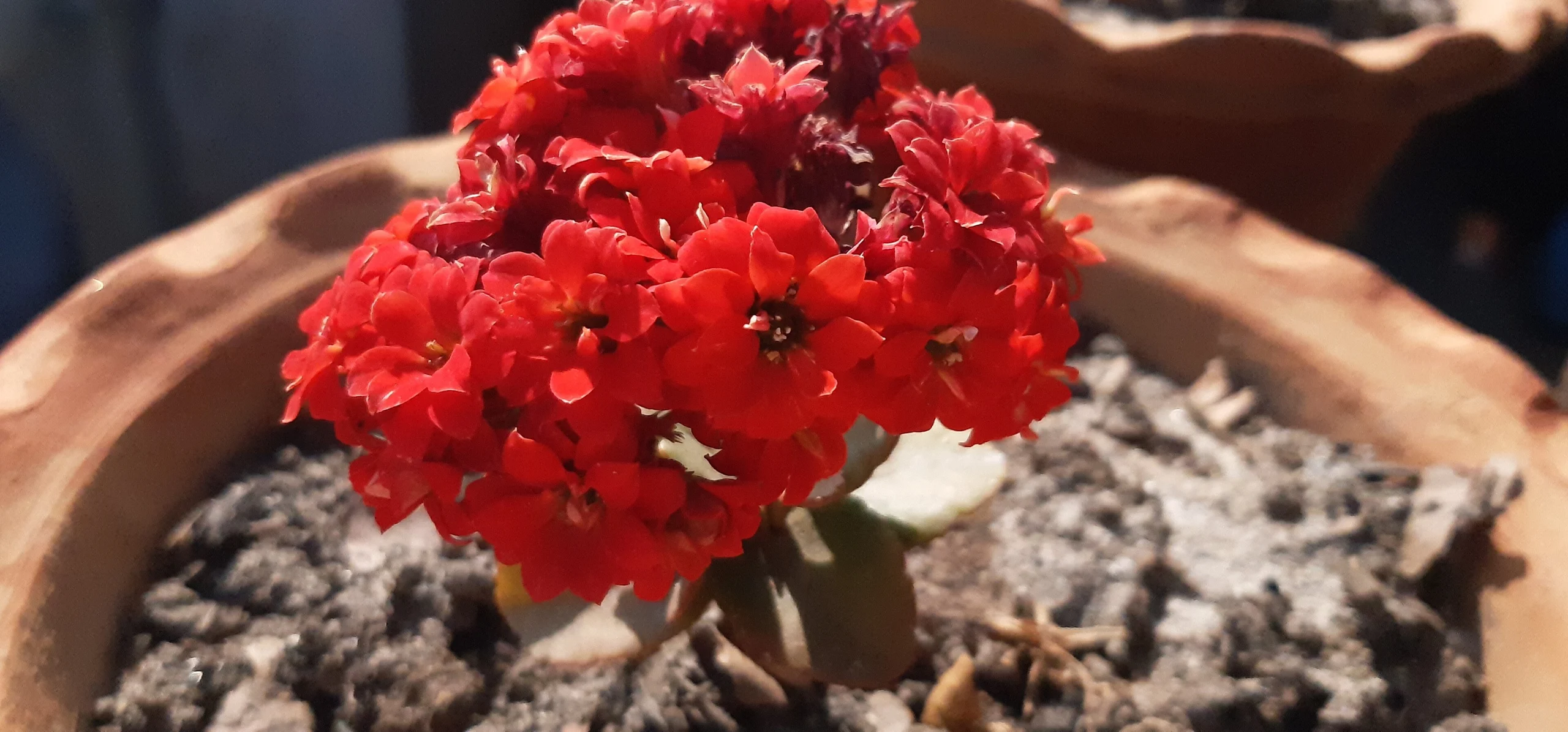
The tight dome of small, saturated flowers on a Kalanchoe blossfeldiana at the supermarket checkout is not its natural, year-round state: a grower restricted its daylight for about six weeks before shipping it, and once those flowers fade most owners assume the plant is finished and bin it. It is not. Underneath the flowers is a succulent subshrub with thick, glossy, scalloped leaves built to store water, and it will flower again on the same short-day trigger the grower used, given bright light, restrained watering and a deliberate stretch of darkness the following autumn. The plant most people throw away after three weeks can, with almost no extra effort, keep flowering for years.
A Madagascar succulent, not a disposable gift plant
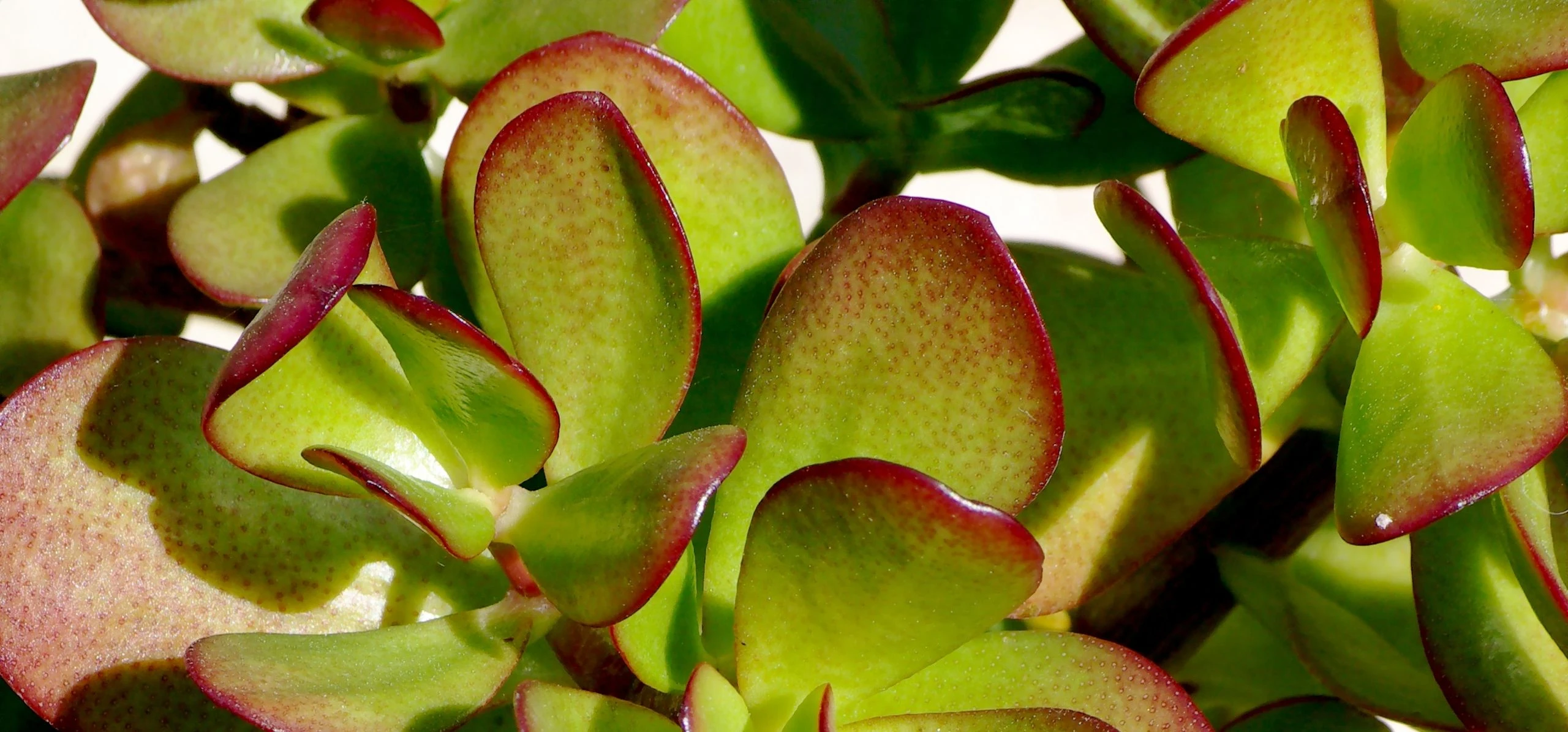
GBIF's accepted classification places Kalanchoe blossfeldiana in the family Crassulaceae, order Saxifragales, alongside jade plants, sedums and echeverias, and its thick water-storing leaves follow the same logic as those relatives. Plants of the World Online (Kew) records its native range as NE Madagascar, where it grows wild as a succulent subshrub in a seasonally dry tropical habitat, going months without rain between wet seasons. That background explains almost everything about how it fails indoors: it is built to survive drought, not to sit in damp soil, and its flowering is timed to a seasonal light cue rather than a fixed calendar date. The species has also been sold under older names such as Kalanchoe coccinea, a reflection of how closely it was once confused with a related red-flowered Madagascan species before the taxonomy settled.
Light and placement
Give it the brightest spot available: a windowsill facing east or south, with a few hours of direct morning sun, suits it well. In peak summer, unshaded afternoon sun through glass can scorch the leaf edges and bleach the flower color, so a spot a little further back from a west-facing window is safer once the sun is at its strongest. Too little light has the opposite problem: stems stretch thin and pale reaching for a window, and a plant grown that way rarely rebuilds the compact shape it had when purchased. Rotate the pot every week or two so growth stays even rather than leaning toward the glass.
Watering without rotting the roots
This is a drought-tolerant succulent, and the single most common way to kill it is to keep the soil constantly damp. Water deeply until it runs from the drainage holes, then let the top of the mix dry out before watering again, and never let the pot sit in a saucer of standing water. A soft, discolored base or a stem that goes mushy and dark is root or stem rot setting in, usually from a pot without drainage or a saucer that never empties, and by the time it is visible the damage is often already done. A gritty, fast-draining succulent or cactus mix, rather than a moisture-retentive standard potting soil, makes the watering mistake much harder to make in the first place.


Getting it to flower again: the short-day trick
Kalanchoe blossfeldiana is a short-day plant: it only forms flower buds after a run of long, completely uninterrupted nights, which is exactly what commercial growers manipulate to have it blooming on a shelf year-round. To repeat that at home, give the plant roughly fourteen hours of unbroken darkness a night for about six weeks, typically starting in early autumn, by moving it into an unlit closet or covering it with an opaque box each evening and returning it to its bright spot each morning. Even a brief flash of light, a hallway lamp or a streetlight through a gap, during that dark stretch can reset the cycle and delay budding, so the darkness has to be genuinely complete. Cool conditions during this period, roughly 60°F (15°C) at night and 70°F (21°C) by day, help; sustained heat above about 80°F (27°C) through the long nights can suppress flowering even when the darkness is right. Grown outdoors in a mild climate, the plant often reblooms on its own through the naturally short days of late autumn and winter without any covering routine at all.
Deadheading and cutting back after the bloom
Once a flush of flowers fades, snip off the spent clusters at the stem; this stops the plant from putting energy into seed production and keeps new buds coming for longer while a flush is still active. When the whole display is finally over, cut back the tallest, leggiest stems and any bare old flower stalks, and repot into fresh, well-draining mix. Commercial growers keep shop plants compact with growth regulators that a home gardener does not have access to, so a Flaming Katy left to its own devices for a year or two will naturally get taller and floppier than the tight dome it arrived in; cutting it back hard after flowering is what keeps it bushy rather than leggy.
Warmth and winter care
This is a frost-tender plant, hardy outdoors only in USDA zones 10a to 12b, so anywhere colder it needs to live as a houseplant or be brought inside well before the first cold snap. Keep it above roughly 50°F (10°C) through winter, away from a cold windowsill at night and away from drafts from doors or heating vents, both of which stress it at the same time it may be trying to set buds. Within that safety margin, the cooler nights of autumn described above are a feature that helps trigger flowering, not a risk, as long as the temperature never drops close to freezing.
Propagation from leaf and stem cuttings
New plants come easily from stem cuttings taken in spring or early summer: cut a two- to three-inch tip with two pairs of leaves, strip the lowest leaves, let the cut end callus over in open air for a couple of days, then insert it into a moist, gritty rooting mix. Roots are usually established enough to pot on within two to three weeks. Like many of its Crassulaceae relatives, a whole healthy leaf pressed cut-side down into the same kind of mix will often root and eventually produce a small plantlet too, though it takes longer and is less reliable than a stem cutting with an active growing tip, which is why growers favor stem cuttings for anything beyond casual propagation.
Powdery mildew, pests and pet safety
The most common disease problem is powdery mildew, a fungal coating that leaves a white, web-like film over leaves and stunts new growth; better air circulation around the plant and, if needed, a potassium bicarbonate fungicide keep it in check. Mealybugs, aphids and spider mites show up occasionally and can usually be removed by hand or with an alcohol-dipped swab before they spread. Every part of the plant contains bufadienolides, cardiac-affecting compounds, and the ASPCA lists Kalanchoe as toxic to both cats and dogs, with vomiting, diarrhea and, rarely, an abnormal heart rhythm as the signs of ingestion; the same compounds make it a medium-severity risk to people who eat it, so it is worth keeping it on a shelf out of reach of pets and small children rather than at nose height on a low table.
Test your plant knowledge
Tap a card to flip it and reveal the answer.
Kalanchoe blossfeldiana sets new flower buds on a fixed calendar date rather than in response to day length. Tap to reveal ✕ False
Reblooming requires about six weeks of roughly fourteen hours of completely uninterrupted darkness each night. Tap to reveal ✓ True
Letting the soil dry out between waterings helps prevent the root and stem rot this succulent is prone to. Tap to reveal ✓ True
New plants are most reliably started from a stem cutting with an active growing tip rather than a single leaf. Tap to reveal ✓ True
The ASPCA lists Kalanchoe as non-toxic to cats and dogs. Tap to reveal ✕ False
Sources
References consulted for this guide
- Kalanchoe blossfeldiana Poelln., GBIF Backbone Taxonomygbif.org
- Kalanchoe blossfeldiana Poelln., Plants of the World Online, Kew Sciencepowo.science.kew.org
- Kalanchoe, Toxic and Non-Toxic Plants, ASPCA Animal Poison Controlaspca.org
- Kalanchoe, Home & Garden Information Center, Clemson Cooperative Extensionhgic.clemson.edu
- Kalanchoe blossfeldiana, NC State Extension Gardener Plant Toolboxplants.ces.ncsu.edu
- Reference entity : Wikipédiaen.wikipedia.org