Liriope
Liriope muscari
Family · Asparagaceae
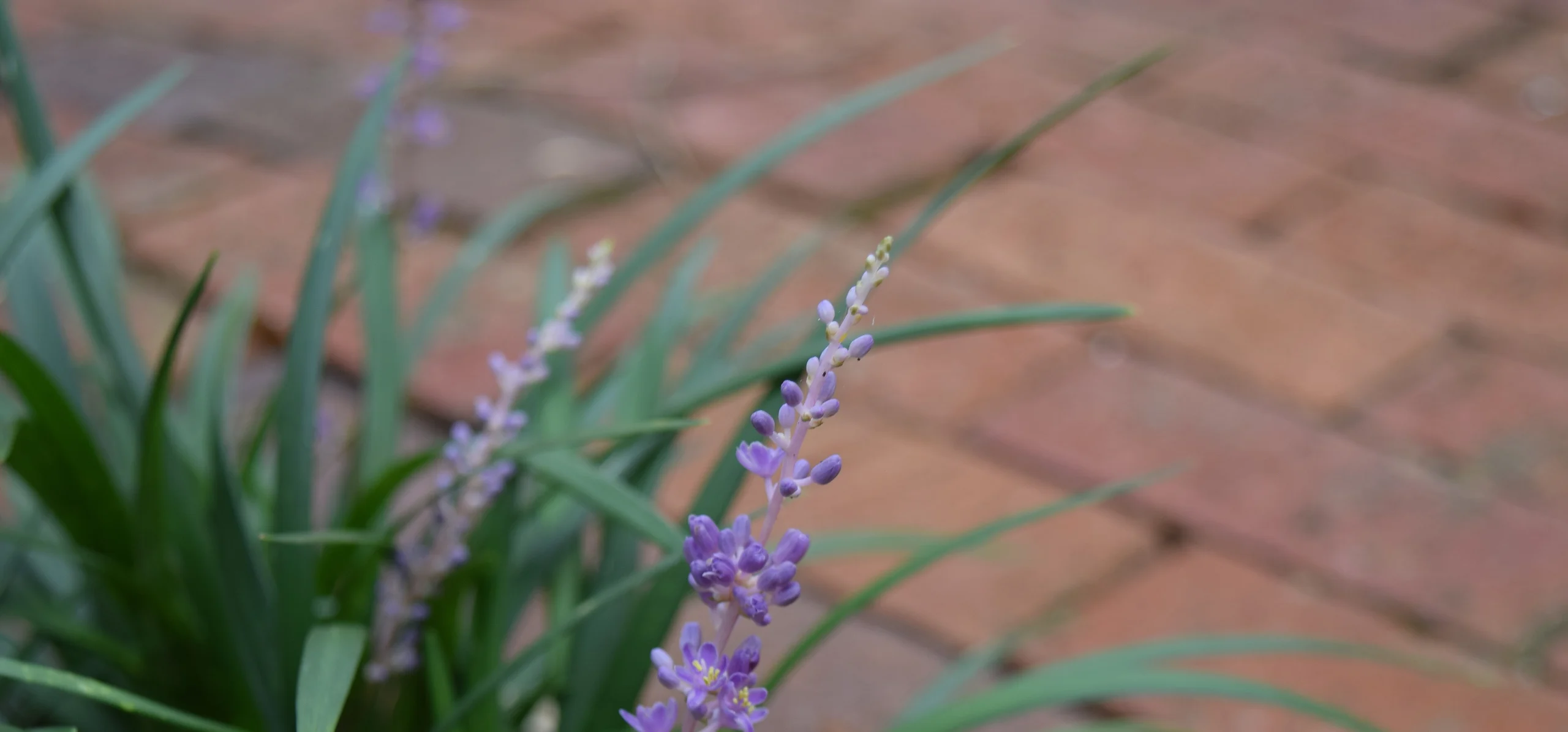
Liriope muscari clumps into neat evergreen edging with purple flower spikes in late summer, takes sun or shade, and stays put where L. spicata roams.
Liriope muscari
Plant profile
- WateringLittleWater every 10 days
- Light exposureIndirect light
- Hardiness zoneUSDA 5–10
Growth
- Family
- Asparagaceae
- Life cycle
- Perennial
- Growth speed
- 4/10
- Mature size
- 30–46 cm
- Spread
- 30–61 cm
- Propagation
- Division
FloweringErect, spike-like purple flowers 6 to 8 in tall in late summer into early fall, followed by round black berries that often persist through winter (NC State Extension)
DormancyEvergreen through most winters within its hardiness range, though the foliage often looks ragged by late winter before new leaves emerge
Time to maturitySeveral years to reach a mature clump width of about 24 in (61 cm) (UF/IFAS)
Soil & climate
- Drought tolerance
- Yes
Soil typesAcidic to neutral, well-drained soil; NC State Extension warns that poor drainage and overwatering predispose the crown to rot
Light & Placement
- Where to place it
- shaded woodland-edge border under trees
- edging along a path or driveway
- full-sun bed where some relief from the hottest afternoon sun helps in warm climates
OriginNative from China to temperate East Asia (POWO); naturalized in parts of the southeastern United States including Alabama, Arkansas and Florida (GBIF/POWO distribution)
Safety
- Toxicity
- CatsSafe
- DogsSafe
- HorsesSafe
Invasive speciesUF/IFAS rates Liriope muscari a moderate risk of invasion in Florida's natural areas and notes it can escape cultivation, though it spreads far more slowly than the rhizome-running Liriope spicata, which UF/IFAS and NC State Extension both flag as the more invasive of the two
Data fromGBIF: Liriope muscari (Decne.) L.H.BaileNC State Extension Gardener Plant ToolboNC State Extension: Anthracnose on LirioUF/IFAS Gardening Solutions: LiriopeASPCA: Toxic and Non-Toxic Plants, Turf
Where it grows
World distribution
Liriope is native to 4 countries: China, Japan, South Korea, and Taiwan.GBIF records 7,268 documented identifications across 34 countries, with the largest concentrations in Japan, South Korea, and United States.
- China
- Japan
- South Korea
- Taiwan
Yellow to orange dots: concentration of documented identifications per country. Green countries: sourced native range. Source: GBIFNative range from POWO (Kew).
A dense clump of narrow, arching dark green leaves that stays put and throws up spikes of small purple flowers in late summer is almost certainly Liriope muscari, sold as big blue lilyturf, border grass, or simply liriope. Despite the grassy foliage and the common name monkey grass, GBIF places it in Asparagaceae, the asparagus family, not among true grasses at all. It is one of the most planted edging and ground-cover perennials across the southeastern United States, valued for holding a tidy clump shape rather than running underground the way its close relative Liriope spicata does.
Origin and Naturalization in the Southeastern US
Plants of the World Online records the native range of Liriope muscari as China to temperate East Asia, with GBIF and POWO distribution data also listing it as naturalized in Alabama, Arkansas and Florida. That naturalized foothold reflects just how long and how widely the species has been planted across the American South: it escapes gardens into roadsides and woodland edges in mild, humid climates, without the underground rhizomes that make L. spicata a true garden escapee elsewhere. A century of use as foundation edging in Southern landscapes has made it feel like a native plant in the region even though it arrived from East Asia.
Choosing a Cultivar: 'Big Blue', 'Variegata' and 'Royal Purple'
NC State Extension's plant toolbox lists 'Big Blue', 'Evergreen Giant', 'Marc Anthony', 'Monroe's White', 'Pee Dee Ingot', 'Royal Purple', 'Silver Sun', 'Silvery Sunproof', 'Variegata' and 'Webster Wideleaf' among the named selections sold under the species. 'Big Blue' is the oldest and most widely sold form, the plain dark green clump most nurseries default to when a label just says liriope. 'Variegata' carries a pale stripe down each leaf margin, chosen for foliage contrast in a bed rather than for heavier flowering. 'Royal Purple' is grown for its deeper-toned flower spikes, while 'Silvery Sunproof' is bred to keep its bright leaf edge without scorching in a fuller-sun spot than most variegated liriope can take. Picking between them is mostly about how much contrast a bed can carry, since all share the same clumping habit and roughly the same hardiness.


Light and Placement: From Deep Shade to Full Sun
NC State Extension rates Liriope muscari tolerant across an unusually wide light range, from deep shade with less than two hours of direct sun to full sun with six hours or more. The catch is bloom quality: flower spikes thin out noticeably once daily direct light drops below about four hours, so a clump tucked into heavy shade for pure ground cover will survive and look fine in leaf but rarely flower well. For the purple spikes that make the species worth growing, a spot with at least half a day of sun, or bright dappled shade under high tree canopy, does more than a fully shaded corner ever will.
Watering, Soil and Drought Tolerance
NC State Extension calls for acidic to neutral, well-drained soil, and rates the species drought-tolerant once it is established. That tolerance is not immediate: a newly planted clump still needs regular watering through its first year while the roots spread out to reach moisture on their own. Once established, established plantings can go through dry spells between waterings without much fuss, which is part of why liriope shows up so often as low-input edging along driveways and foundation beds. The soil requirement that actually matters is drainage rather than moisture: a bed that stays soggy after every rain works against the plant in a way that occasional dry spells never do.
Cutting Back Tatty Foliage in Late Winter
Liriope holds its leaves through most winters, but by late winter the previous year's foliage is often bleached, split at the tips, or flattened by weather, and it never regreens once damaged. NC State Extension's guidance is to mow or trim that old growth back in late winter, before new leaves start pushing up, using a mower set to its highest cutting height or hand shears on a smaller planting, and to take care not to nick or scalp the crown while doing it. Clearing away the cut foliage rather than leaving it in place matters for more than tidiness: NC State Extension's own material on anthracnose in liriope notes that removing old leaf debris cuts down on the fungal spores that overwinter on it, so the late-winter cut doubles as basic disease sanitation ahead of spring growth.
Propagation by Division
NC State Extension lists division as the way to propagate Liriope muscari, and in practice that means lifting an established clump, usually in spring, and pulling or cutting it into rooted sections rather than starting new plants from seed. Each division just needs enough roots attached to reestablish on its own; planted at the same depth it was growing before, without burying the crown, a division typically settles in and starts producing new leaves within the same growing season. Division is also the only reliable way to multiply a named cultivar like 'Royal Purple' or 'Silvery Sunproof' true to type, since seed-grown liriope does not reliably reproduce a parent's exact flower color or leaf variegation.
Muscari or Spicata: Telling the Clumper From the Runner
The two liriope species sold in nurseries are easy to tell apart by habit alone. Liriope muscari forms a single clump that widens gradually, reaching roughly 24 in across only after several years, according to UF/IFAS assessments of the species. Liriope spicata instead spreads by underground rhizomes that travel well beyond the original planting, which is why UF/IFAS and NC State Extension both flag L. spicata as the more invasive of the two and a poor choice next to a lawn or a bed of less vigorous perennials. UF/IFAS itself still rates L. muscari a moderate risk of invasion in Florida's natural areas, since it can seed and naturalize even without running rhizomes, but the difference in how far each species travels from where it was planted is the detail that actually decides whether it stays inside its bed.
Pests, Diseases and Pet Safety
Liriope has no serious pest problems, though NC State Extension notes slugs and snails as occasional visitors worth checking for on new leaves. The more consequential issues are fungal: anthracnose, caused by Colletotrichum species, shows up as reddish-brown spots along leaf margins and tips and becomes more common with frequent rain or overhead irrigation that keeps foliage wet, while crown and leaf rot follow from planting too deep, over-mulching, overwatering, or simply poor drainage. Thinning crowded plantings to improve air circulation, watering at the base rather than overhead, and the late-winter foliage cut described above cover most of what liriope needs on the disease side. On the safety side, the ASPCA lists turf lily, Liriope muscari, as non-toxic to cats, dogs and horses, which makes it one of the more forgiving evergreen edging choices for a yard shared with pets.
Test your plant knowledge
Tap a card to flip it and reveal the answer.
Liriope muscari is a true grass in the Poaceae family. Tap to reveal ✕ False
Liriope muscari spreads mainly by widening its clump in place, unlike the rhizome-running Liriope spicata. Tap to reveal ✓ True
The ASPCA lists Liriope muscari as toxic to cats, dogs and horses. Tap to reveal ✕ False
Mowing or trimming off last year's tattered leaves in late winter, before new growth starts, is a recommended way to reduce anthracnose and refresh the clump. Tap to reveal ✓ True
Liriope muscari thrives in constantly wet, poorly drained soil. Tap to reveal ✕ False
Sources
References consulted for this guide
- GBIF: Liriope muscari (Decne.) L.H.Baileygbif.org
- NC State Extension Gardener Plant Toolbox: Liriope muscariplants.ces.ncsu.edu
- NC State Extension: Anthracnose on Liriopegardening.ces.ncsu.edu
- UF/IFAS Gardening Solutions: Liriopegardeningsolutions.ifas.ufl.edu
- ASPCA: Toxic and Non-Toxic Plants, Turf Lilyaspca.org
- Reference entity : Wikipédiaen.wikipedia.org