Cabbage Tree
Cordyline australis
Family · Asparagaceae
Cordyline australis isn't a true palm: how much cold it tolerates, why coloured cultivars need more protection, and how a frosted stump grows back.
Cordyline australis
Plant profile
- WateringModerateWater every 10 days
- Light exposurePartial sun
- Hardiness zoneUSDA 9–11
Growth
- Family
- Asparagaceae
- Life cycle
- Perennial
- Growth speed
- 4/10
- Mature size
- 183–457 cm
- Spread
- 91–183 cm
- Propagation
- Seed
- Cutting
- Division
FloweringFragrant white flower panicles in late spring to early summer on mature plants; rare on container-grown specimens
DormancyNo true dormancy; growth slows in cool winters
Time to maturityReaches mature landscape size over 20 to 50 years outdoors (RHS); much slower and smaller in a container
Soil & climate
- Drought tolerance
- Yes
Soil typesFertile, well-drained garden soil (chalk, clay, loam or sand), Free-draining, soil-based potting mix in containers
Light & Placement
- Origin
- New Zealand (POWO)
- Where to place it
- Brightest window available; young trunkless plants are often grown as houseplants (Missouri Botanical Garden)
- Full sun to part shade in a warm, sheltered spot (RHS)
- Large, deep container for the taproot (Missouri Botanical Garden)
- Move container plants to a bright, frost-free spot for winter in cold climates
Safety
- Toxicity
- CatsToxic
- DogsToxic
Data fromCordyline australis (G.Forst.) Endl., GBCordyline australis (G.Forst.) Endl. | PHow to grow cordyline, RHS Growing GuideCordyline australis, Plant Finder, MissoGrass Palm, Toxic and Non-Toxic Plants,
Where it grows
World distribution
Cabbage Tree is native to a single country: New Zealand.GBIF records 14,003 documented identifications across 47 countries, with the largest concentrations in New Zealand, United Kingdom, and Australia.
- New Zealand
Yellow to orange dots: concentration of documented identifications per country. Green countries: sourced native range. Source: GBIFNative range from POWO (Kew).
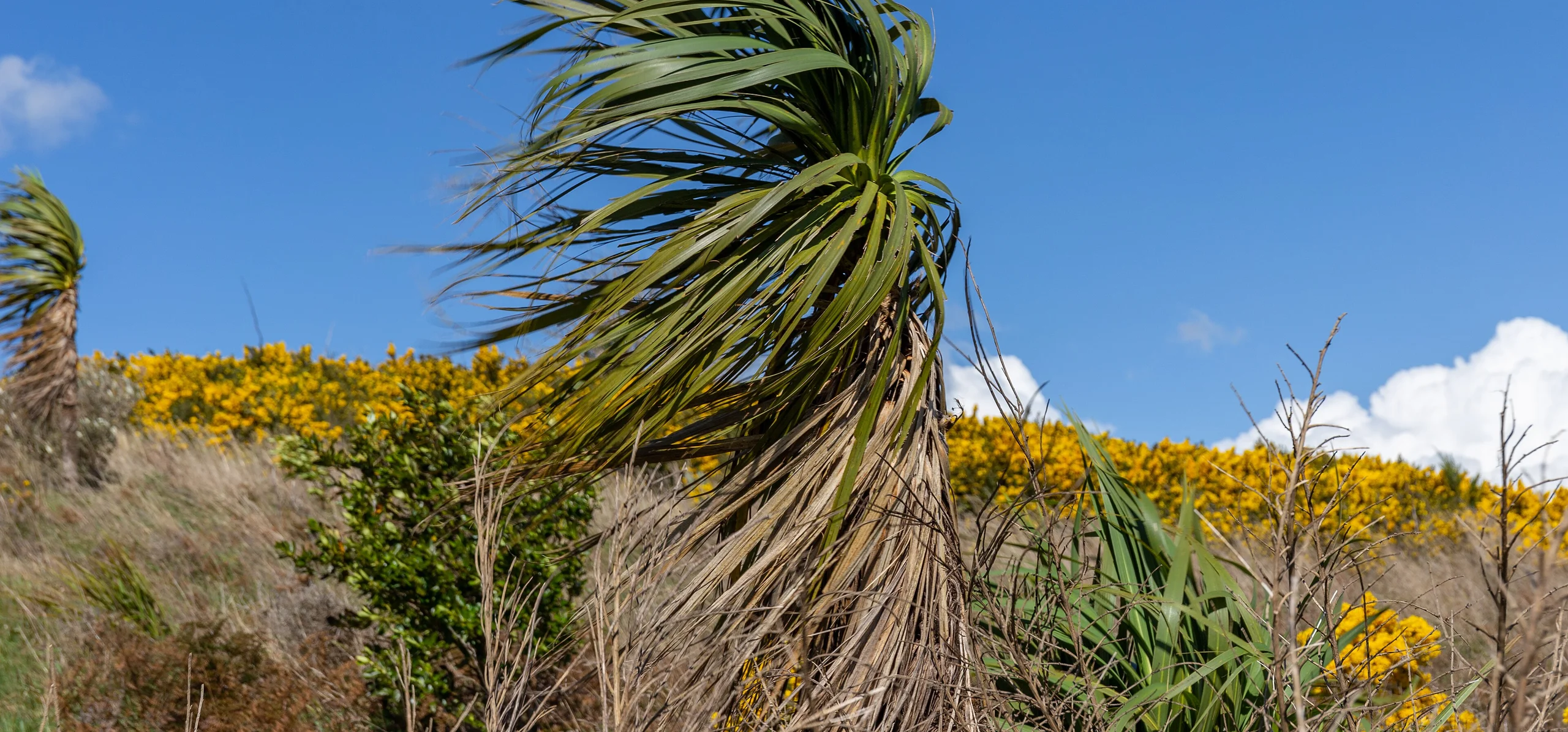
A cabbage tree in a pot looks like a spiky grass fountain with no trunk at all, and a mature one in the ground looks like a small, forked tree topped with sword-like leaves, and both are the same plant at different ages. The name is misleading twice over: it is not a palm, and "cabbage" refers to early settlers eating the tender growing tip, not to anything resembling the vegetable. What matters most when you bring one home is how much cold it can take where you live, because this is the one Cordyline species hardy enough to leave outside in a temperate garden, and even it has limits that catch people out after a hard winter.
Not a palm, and native to a cool country
Cordyline australis sits in the family Asparagaceae, in the same broad group as agaves and yuccas, and has nothing to do with true palms in the family Arecaceae despite the palm-shaped rosette of leaves. GBIF's accepted classification places it in the order Asparagales, class Liliopsida. It is native to New Zealand according to Kew's Plants of the World Online, which also explains the plant's whole personality: tough against wind and salt spray, tolerant of poor soil, but only moderately frost-hardy compared with woody plants from continental climates.
Choosing between the plain species and coloured cultivars
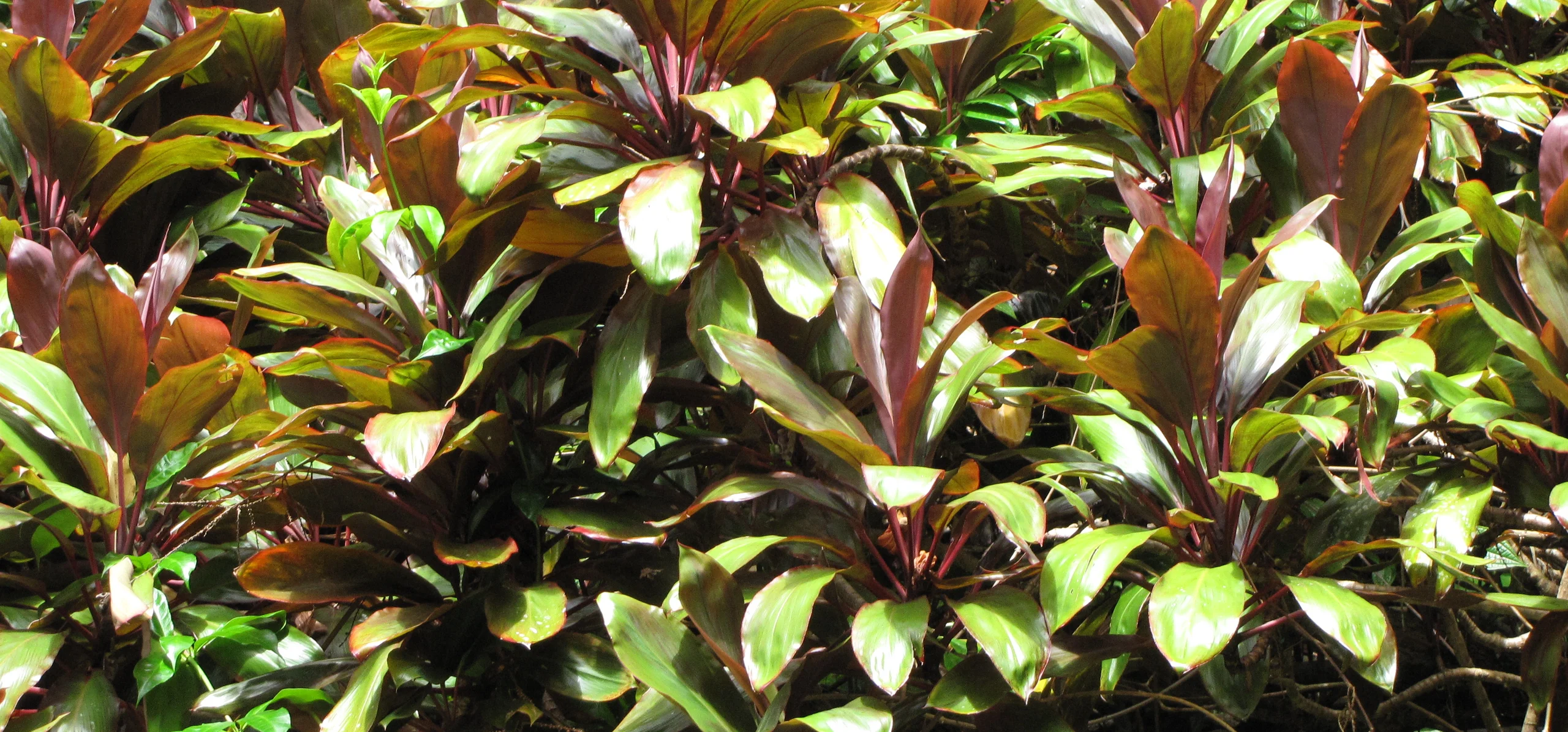
The species itself, with plain grey-green leaves, is by a wide margin the toughest form to grow outdoors. Bronze, purple and striped cultivars such as 'Red Star', 'Red Sensation' and 'Atropurpurea' are bred from it but are consistently more tender, and the RHS is explicit that young plants and coloured-leaf forms need winter protection almost everywhere except the mildest, most sheltered gardens. Other cordylines sold alongside it, including C. stricta, C. fruticosa and C. marginata, are considerably more tender still and belong indoors or in a heated greenhouse over winter rather than in a border at all. If a plant is simply labelled "cordyline" with no species name attached, treat it as tender until proven otherwise.


How much cold it actually tolerates
Missouri Botanical Garden rates Cordyline australis to USDA zones 9 through 11, and even within that range it wants a sheltered position: an exposed, windy site sets it back far more than the same low temperature would in a sheltered corner. In practice this means it survives outdoors year-round only where winter lows rarely dip far below freezing, coastal gardens, city centres with a slight heat-island effect, or genuinely mild climates. Everywhere colder, it needs either a warm wall with a thick mulch over the roots, or a large pot that gets moved under cover before the first hard frost.
Frost damage and cutting back to a stump
A cordyline that takes a hard frost often does not show it right away; the crown collapses, leaves brown and turn slimy at the base, and the growing point can rot out over the following weeks. The fix is not to dig up the whole plant. Wait until spring growth has clearly resumed or clearly stalled, then cut the damaged section back to a sound point on the trunk, below any soft or discoloured tissue, ideally just above a visible side shoot if one is showing. Cut too early, while the extent of the damage is still hidden inside the stem, and healthy tissue gets removed along with the dead. Most plants, even ones reduced to a bare, leafless stump, resprout new shoots from dormant buds lower on the trunk or from the base within a season. The main risk during recovery is cordyline slime flux, a bacterial infection that gets into frost-cracked bark and produces a foul-smelling, oozing wound; clean cuts and avoiding a waterlogged base reduce the odds of it taking hold.
Pot or open ground
This species grows a genuine taproot rather than the shallow, fibrous mat most houseplants have, and Missouri Botanical Garden specifically notes it needs a large, deep container to grow well when it cannot go in the ground. A shallow, wide pot that suits most houseplants stunts it and leaves it prone to toppling once the top growth outweighs what the root ball can anchor. In the ground, an established plant left in well-drained soil is genuinely drought-tolerant and needs no supplemental feeding. In a container the opposite is true: water regularly through the growing season, cut right back in winter, and feed with a balanced liquid fertiliser from spring to late summer, since a pot-bound taproot has none of the reserves a garden-grown plant can draw on.
Keeping the trunk tidy
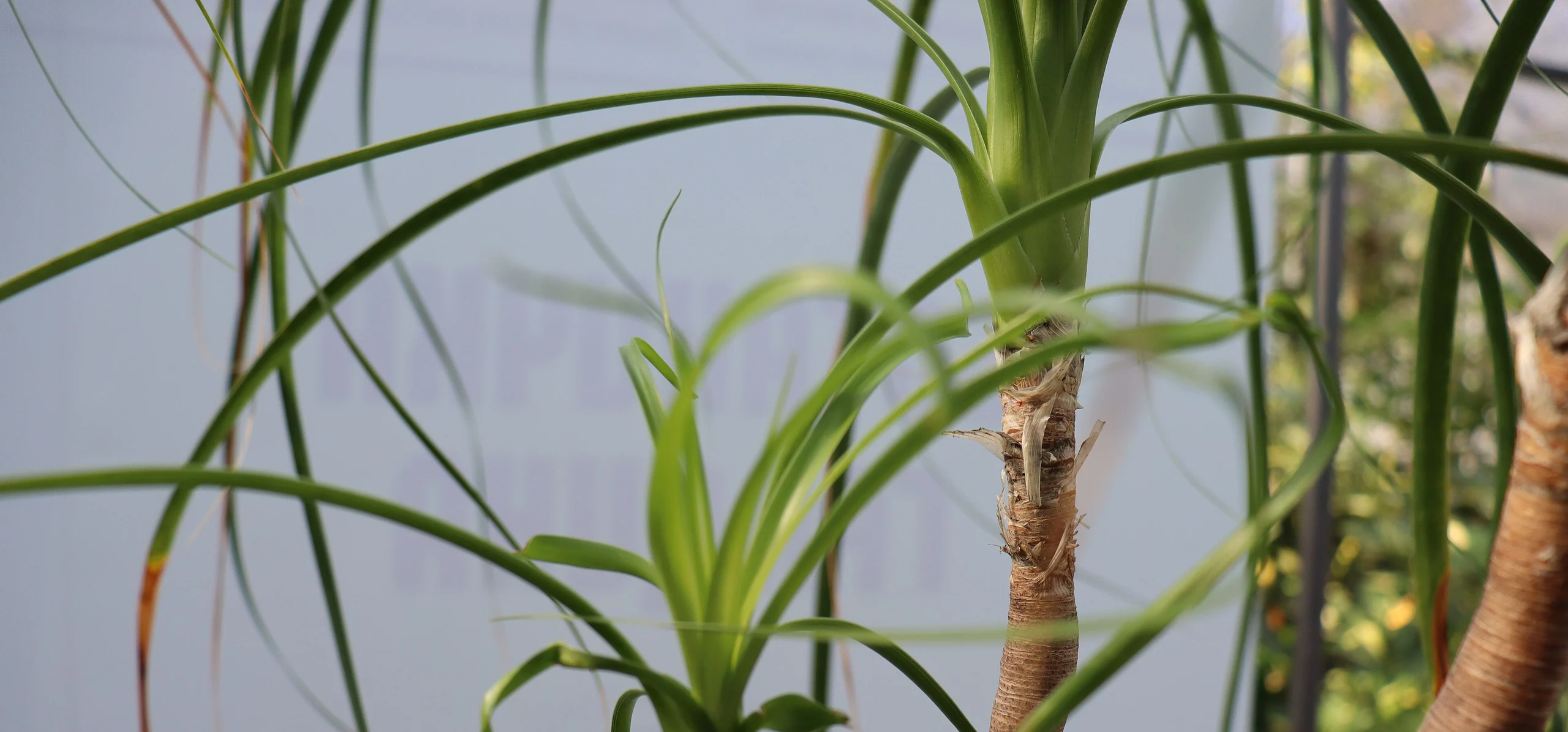
Older leaves die from the tip down and eventually hang as a brown, thatched skirt around the trunk; some gardeners leave this in place as a natural mulch and windbreak for the crown, others strip it off for a cleaner look, and either is fine since it is cosmetic rather than a health issue. Pull or cut fully dead leaves off close to the trunk rather than tearing them away, which can strip live bark with them. Removing the skirt regularly is also what reveals the fibrous, ringed trunk underneath, a texture that only becomes visible after several seasons of leaf removal.
Flowering: a surprising scent from an unshowy plant
Established outdoor plants, generally several years past the trunkless juvenile stage, produce large panicles of small white flowers in late spring into early summer that are distinctly fragrant, carrying well across a garden on a still, warm evening even though the individual flowers are unremarkable up close. Missouri Botanical Garden notes that container-grown specimens rarely flower at all, since they are usually kept too small and too young for the plant to commit resources to blooming. Where flowers do form and are left rather than deadheaded, they are followed by small berries that birds strip quickly once they ripen.
Toxicity: what the ASPCA lists for this species
Under the common name Grass Palm, the ASPCA lists Cordyline australis as toxic to both cats and dogs, naming saponins as the toxic principle. Signs of ingestion include vomiting, sometimes with blood, along with depression, loss of appetite, drooling and, in cats specifically, dilated pupils. The ASPCA's page for this species does not list horses, so that should be treated as unconfirmed rather than assumed safe. Keeping a curious cat or dog from chewing on the strappy leaves, especially on a young trunkless plant sitting at nose height on a patio, avoids the issue entirely.
Test your plant knowledge
Tap a card to flip it and reveal the answer.
Despite the palm-like rosette of leaves, Cordyline australis is not a true palm. Tap to reveal ✓ True
Coloured cultivars like 'Red Star' and 'Red Sensation' are just as frost-hardy as the plain green species. Tap to reveal ✕ False
A cordyline whose crown is destroyed by frost can often resprout if the stem is cut back to sound, undamaged tissue. Tap to reveal ✓ True
Cordyline australis has a shallow, fibrous root system that grows well in a shallow, wide pot. Tap to reveal ✕ False
The ASPCA lists Cordyline australis (Grass Palm) as toxic to cats and dogs. Tap to reveal ✓ True
Sources
References consulted for this guide
- Cordyline australis (G.Forst.) Endl., GBIF Backbone Taxonomygbif.org
- Cordyline australis (G.Forst.) Endl. | Plants of the World Online, Kew Sciencepowo.science.kew.org
- How to grow cordyline, RHS Growing Guiderhs.org.uk
- Cordyline australis, Plant Finder, Missouri Botanical Gardenmissouribotanicalgarden.org
- Grass Palm, Toxic and Non-Toxic Plants, ASPCA Animal Poison Controlaspca.org
- Reference entity : Wikipédiaen.wikipedia.org