Asparagus Fern
Asparagus setaceus
Family · Asparagaceae
Asparagus setaceus is not a fern but a wiry, cladode-covered relative of edible asparagus, with tuberous roots and berries the ASPCA lists as toxic to pets.
Asparagus setaceus
Plant profile
- WateringModerateWater every 6 days
- Light exposureIndirect light
- Ideal temperature13–24 °C
Growth
- Family
- Asparagaceae
- Life cycle
- Perennial
- Growth speed
- 6/10
- Mature size
- 150–250 cm
- Spread
- 10–50 cm
- Flowering
- Small white flowers in summer, followed by deep purple berries
- Propagation
- Seed
- Division
DormancyGrowth slows sharply below about 10 degC
Time to maturityReaches full size in 2 to 5 years
Soil & climate
- Drought tolerance
- Yes
Soil typesPeat-free, loam-based potting compost, General mix loosened with grit or perlite for drainage
Light & Placement
- Origin
- Central Ethiopia to South Africa and the Comoros
- Where to place it
- East- or north-facing window with bright filtered light
- A metre or so back from a south or west window, out of direct sun
- Partial, dappled shade in frost-free or near frost-free climates
- Sheltered south or west aspect out of hot midday sun
- Hanging basket to let the stems cascade
- Wide pot with a small trellis or moss pole for support
Safety
- Toxicity
- CatsToxic
- DogsToxic
- HorsesToxic
- HumansToxic
Invasive speciesNaturalised outside its native range in parts of Australia, New Zealand and other frost-free regions, spread by birds eating the berries
Data fromAsparagus setaceus (Kunth) Jessop, GBIF Asparagus setaceus (Kunth) Jessop, PlantAsparagus setaceus, fern asparagus, RHS Lace Fern, Toxic and Non-Toxic Plants, A
Where it grows
World distribution
Asparagus Fern is native to 12 countries: Botswana, Comoros, Eswatini, Ethiopia, Kenya, Lesotho, Malawi, and Mozambique….GBIF records 8,900 documented identifications across 120 countries, with the largest concentrations in Australia, United States, and South Africa.
- Botswana
- Comoros
- Eswatini
- Ethiopia
- Kenya
- Lesotho
- Malawi
- Mozambique
- South Africa
- Tanzania
- Zambia
- Zimbabwe
Yellow to orange dots: concentration of documented identifications per country. Green countries: sourced native range. Source: GBIFNative range from POWO (Kew).
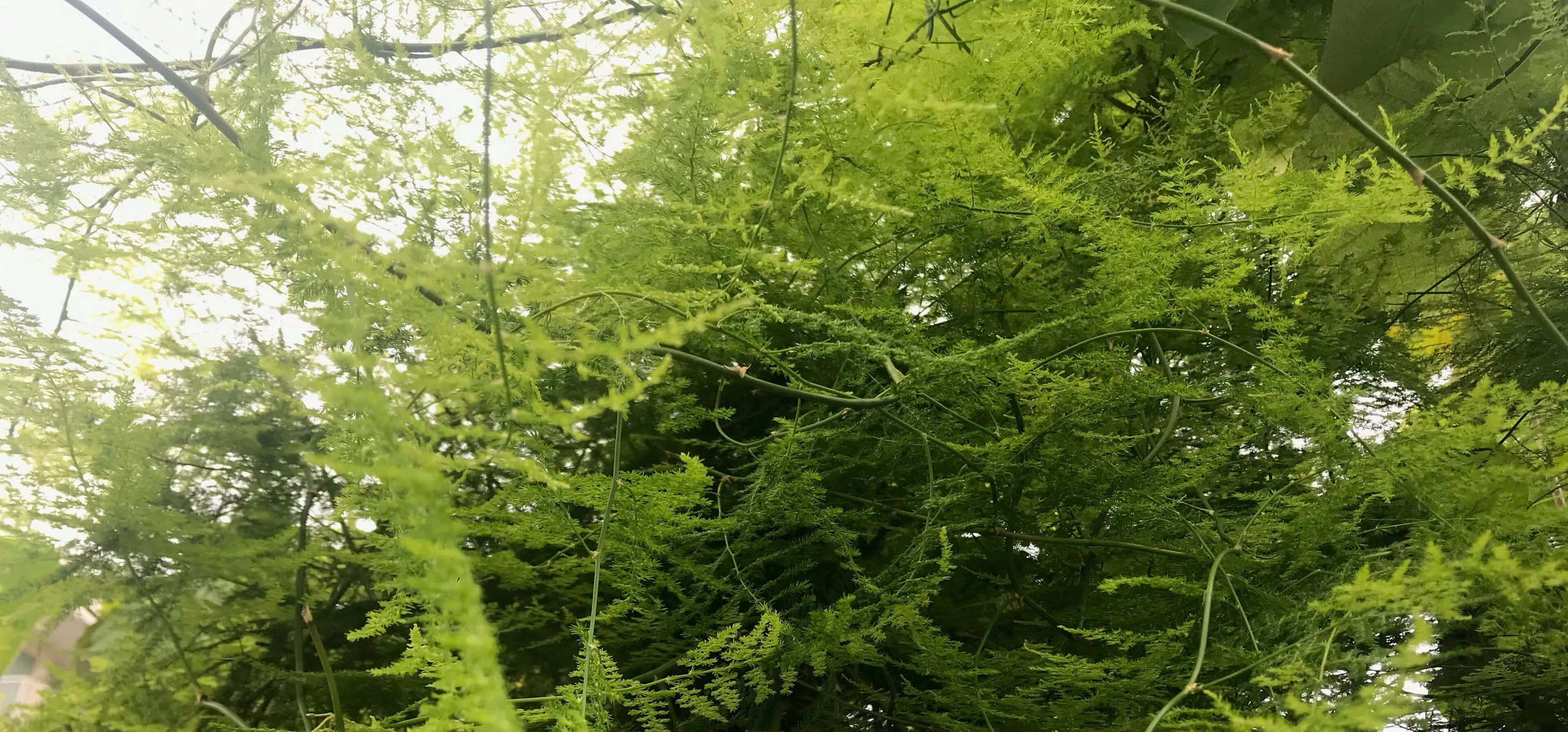
Despite the name, this is not a fern at all: it is a scrambling relative of edible asparagus, grown for foliage so fine it reads as green mist rather than individual leaves. What looks like needle-thin leaves are actually flattened stems called cladodes; the true leaves are reduced to tiny, almost invisible scales along the wiry stems. Indoors it wants bright filtered light, water that never quite dries out in the growing season, and a support to climb once the stems get long, care that sits closer to a vine than to a fern.
Not a fern, and closer kin to the vegetable than it looks
Asparagus setaceus belongs to the family Asparagaceae, order Asparagales, the same genus as the asparagus served on a plate, Asparagus officinalis. Both share the same trick: the feathery green growth is made of cladodes, modified stems that do the work of photosynthesis, while the actual leaves have shrunk to small scale-like structures easy to miss unless a node is examined closely. The plant was long sold and studied under the synonym Asparagus plumosus, which is why older books, plant tags and even the ASPCA's own database still list it as Plumosa Fern or Lace Fern rather than by its accepted name.
Native range, and where it has escaped cultivation
Kew's Plants of the World Online lists the native range as central Ethiopia south to South Africa, and the Comoros, a broad band of seasonally dry, subtropical Africa. Outside that range the plant has proven a determined escapee: it self-seeds readily from bird-dispersed berries and has naturalised in parts of Australia, New Zealand and other frost-free regions, where its scrambling stems and tuberous roots let it outcompete native undergrowth. Grown as a houseplant in a temperate climate this is not a practical concern, but it explains why the species turns up on weed watch-lists in warmer countries, and why spent cuttings and berries are best composted rather than tipped into a hedge.


Light for the feathery foliage
Bright, filtered light suits it best: an east-facing window, or a spot a metre or so back from a south or west window, reproduces the dappled shade it gets scrambling through shrubs in the wild. Direct midday sun scorches the fine cladodes to a dull, bleached green and can dry the plant out faster than it can take up water; deep shade, on the other hand, produces sparse, stretched growth reaching for the light instead of the dense, bushy sprays that make the plant worth growing. Turn the pot occasionally, growth otherwise leans hard toward the brightest side.
Watering, and why the cladodes turn yellow
Water when the top two or three centimetres of compost have dried out, then soak thoroughly and let the excess drain away; keep it evenly moist through spring and summer and cut back noticeably in winter, when growth all but stops. Yellowing is the plant's main complaint, and it has two opposite causes that look almost identical from across the room. Underwatering, or air that is too dry and warm from a radiator, turns whole stems papery and yellow from the tip inward; they will not green up again and are best cut out at the base. Overwatering in compact, waterlogged compost instead yellows the lower, older growth first while the stem bases go soft, a sign to let the pot dry out properly before watering again and to check the drainage holes are not blocked. A little scattered yellowing on the oldest inner stems as the plant sheds them is normal housekeeping, not a symptom of either problem.
Soil, potting and the tuberous roots
Pot it in a peat-free, loam-based mix loosened with grit or perlite so water passes through freely; the plant tolerates a wide range of soil, from chalky to sandy, as long as drainage is decent. Tip the root ball out at repotting time and the reason for that tolerance becomes obvious: beneath the wiry top growth sits a dense mat of thickened, tuberous roots that store water and carbohydrate, the plant's insurance policy against the dry seasons it evolved with. Those roots also mean a rootbound plant can look surprisingly healthy right up until it suddenly cannot take up enough water for the foliage above; repot every year or two into a pot one size up once the tubers start pushing the plant out of its container.
Feeding and training the climbing stems
Feed with a balanced liquid fertiliser at half strength roughly once a month while the plant is actively growing, and stop through autumn and winter. Left alone the wiry stems will scramble and climb over anything nearby, easily reaching well over a metre, so give it a small trellis, moss pole or a hanging position where the stems can cascade instead of tangling with neighbouring plants. Handle the stems with care: they carry small, easily overlooked recurved spines, and gloves are worth wearing when repotting, training stems onto a support, or clearing out a tangle of old growth. The plant does not need shaping cuts, but any stem that has yellowed completely should be cut right back to the base rather than left in place, since cut or dead cladodes never green up again.
Propagation by division or seed
The reliable method is dividing the clump of tuberous roots at repotting time in spring: ease the rootball apart into sections that each keep several stems and a healthy portion of tubers, then pot each piece separately and keep it a little more humid until new growth confirms it has taken. Seed is the other route, sown in a warm propagator around 16 degrees Celsius in autumn or early spring; germination is slow and uneven, and seedlings take a couple of years to reach a size worth potting on, so division is the faster option for anyone who already has a mature plant to split.
Pests, and keeping it away from cats and dogs
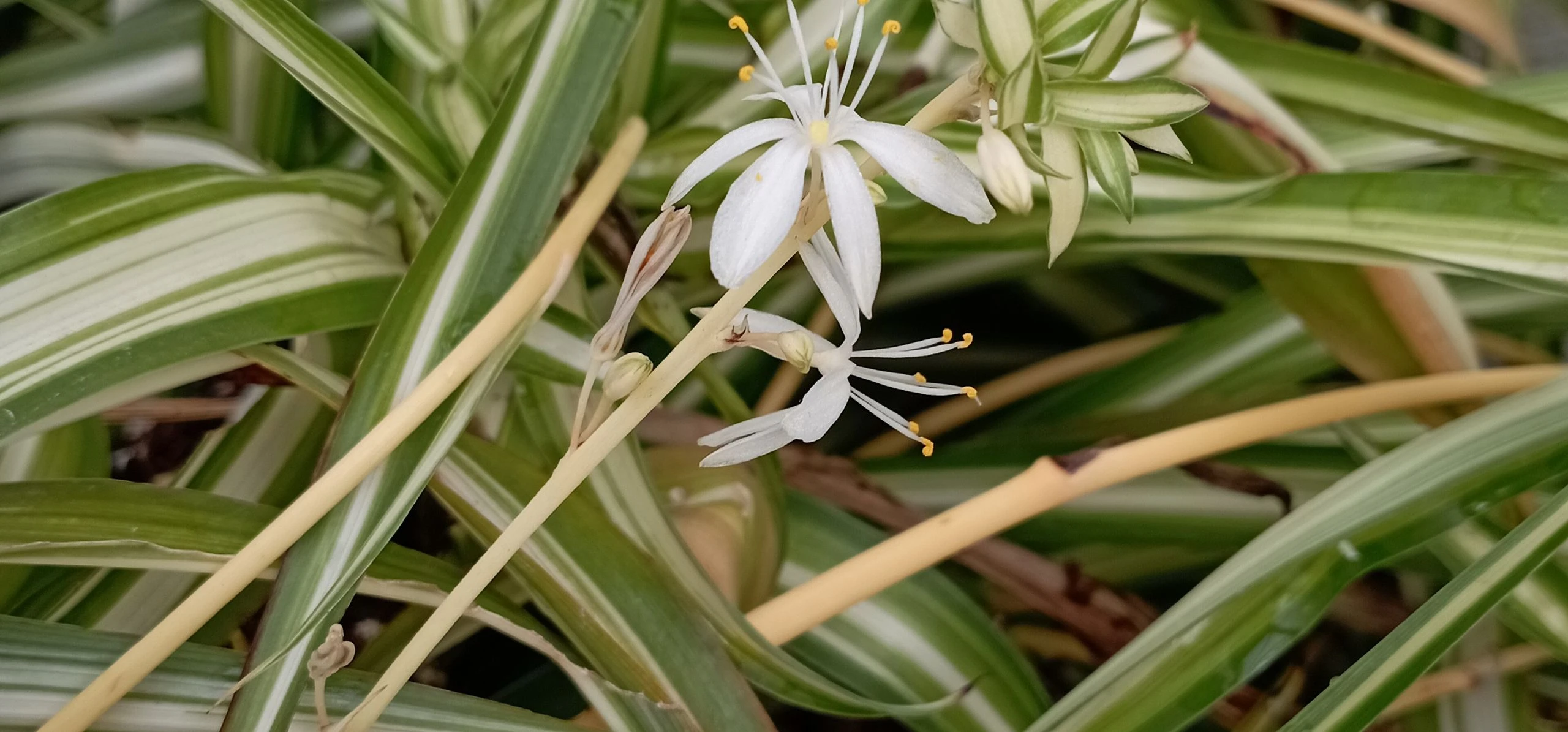
Small white flowers in summer are followed by deep purple berries, and both the berries and the sap are the reason to keep this plant out of reach of pets and small children: the ASPCA lists Asparagus fern species as toxic to cats, dogs and horses, with berry ingestion causing vomiting, abdominal pain or diarrhoea, and repeated skin contact triggering allergic dermatitis in sensitive animals. The Royal Horticultural Society lists the same fruit as harmful if eaten and the plant as a skin irritant, so treat cut stems and fallen berries with the same caution around people. Pest pressure is generally light: watch for asparagus beetle outdoors and the odd slug or snail nibbling new shoots at soil level, while indoors the main risk is scale or mealybug hiding among the dense, feathery growth, where they go unnoticed until a sticky residue gives them away.
Test your plant knowledge
Tap a card to flip it and reveal the answer.
Asparagus setaceus is a true fern. Tap to reveal ✕ False
Its thickened, tuberous roots let it survive an occasional missed watering. Tap to reveal ✓ True
The climbing stems are completely smooth, with no spines. Tap to reveal ✕ False
The berries are listed by the ASPCA as toxic to cats, dogs and horses. Tap to reveal ✓ True
Scattered yellowing on a few of the oldest inner stems always means the plant is dying. Tap to reveal ✕ False
Sources
References consulted for this guide
- Asparagus setaceus (Kunth) Jessop, GBIF Backbone Taxonomygbif.org
- Asparagus setaceus (Kunth) Jessop, Plants of the World Online (Kew)powo.science.kew.org
- Asparagus setaceus, fern asparagus, RHS Plantsrhs.org.uk
- Lace Fern, Toxic and Non-Toxic Plants, ASPCA Animal Poison Controlaspca.org
- Reference entity : Wikipédiaen.wikipedia.org