Peppermint
Mentha piperita
Family · Lamiaceae
Peppermint rarely sets viable seed and spreads by rhizome instead; here is how much sun and moisture it needs, and why the ASPCA lists it as toxic to pets.
Mentha piperita
Plant profile
- WateringHighWater every 3 days
- Light exposureIndirect light
- Hardiness zoneUSDA 5–9
Growth
- Family
- Lamiaceae
- Life cycle
- Perennial
- Growth speed
- 8/10
- Mature size
- 50–100 cm
- Spread
- 100–150 cm
- Flowering
- Tiny pale purple flowers in terminal spikes, late summer (RHS)
- Propagation
- Cutting
- Division
- Layering
DormancyDies back to the rhizomes after the first hard frost, resprouting in spring
Time to maturityReaches full spread in 2 to 5 years (RHS)
Soil & climate
- Soil pH
- pH 6–7
- Soil types
- chalk, clay, loam, sand
- Drought tolerance
- No
Light & Placement
- Where to place it
- Bright windowsill with several hours of direct or bright indirect light
- Partly shaded bed needing as little as 3 hours of direct sun (NC State Extension)
- Full sun to partial shade border (RHS)
- Container at least 12 to 16 inches wide with a solid base to slow rhizome spread (NC State Extension)
OriginNative to Europe to Central Asia (POWO); a naturally occurring hybrid of watermint and spearmint
Safety
- Toxicity
- CatsToxic
- DogsToxic
- HorsesToxic
- HumansSafe
Invasive speciesRHS warns the species may become a nuisance if the root run is not restricted; NC State Extension recommends containing it in a pot or a bed edged with a barrier
Data fromMentha piperita L., GBIF Backbone TaxonoMentha × piperita L., Plants of the WorlRHS: Mentha x piperita (peppermint)ASPCA: Toxic and Non-Toxic Plants, MintNC State Extension Gardener Plant Toolbo
Where it grows
World distribution
Peppermint is native to 22 countries: Austria, Belgium, Bulgaria, Croatia, Czechia, Denmark, France, and Germany….GBIF records 13,026 documented identifications across 110 countries, with the largest concentrations in United States, Germany, and Sweden.
- Austria
- Belgium
- Bulgaria
- Croatia
- Czechia
- Denmark
- France
- Germany
- Greece
- Hungary
- Iran
- Italy
Show 10 more countriesShow fewer countries
- Kyrgyzstan
- Lebanon
- Netherlands
- Palestinian Territories
- Poland
- Romania
- Russia
- Switzerland
- Türkiye
- Ukraine
Yellow to orange dots: concentration of documented identifications per country. Green countries: sourced native range. Source: GBIFNative range from POWO (Kew).
A Naturally Sterile Hybrid Between Watermint and Spearmint
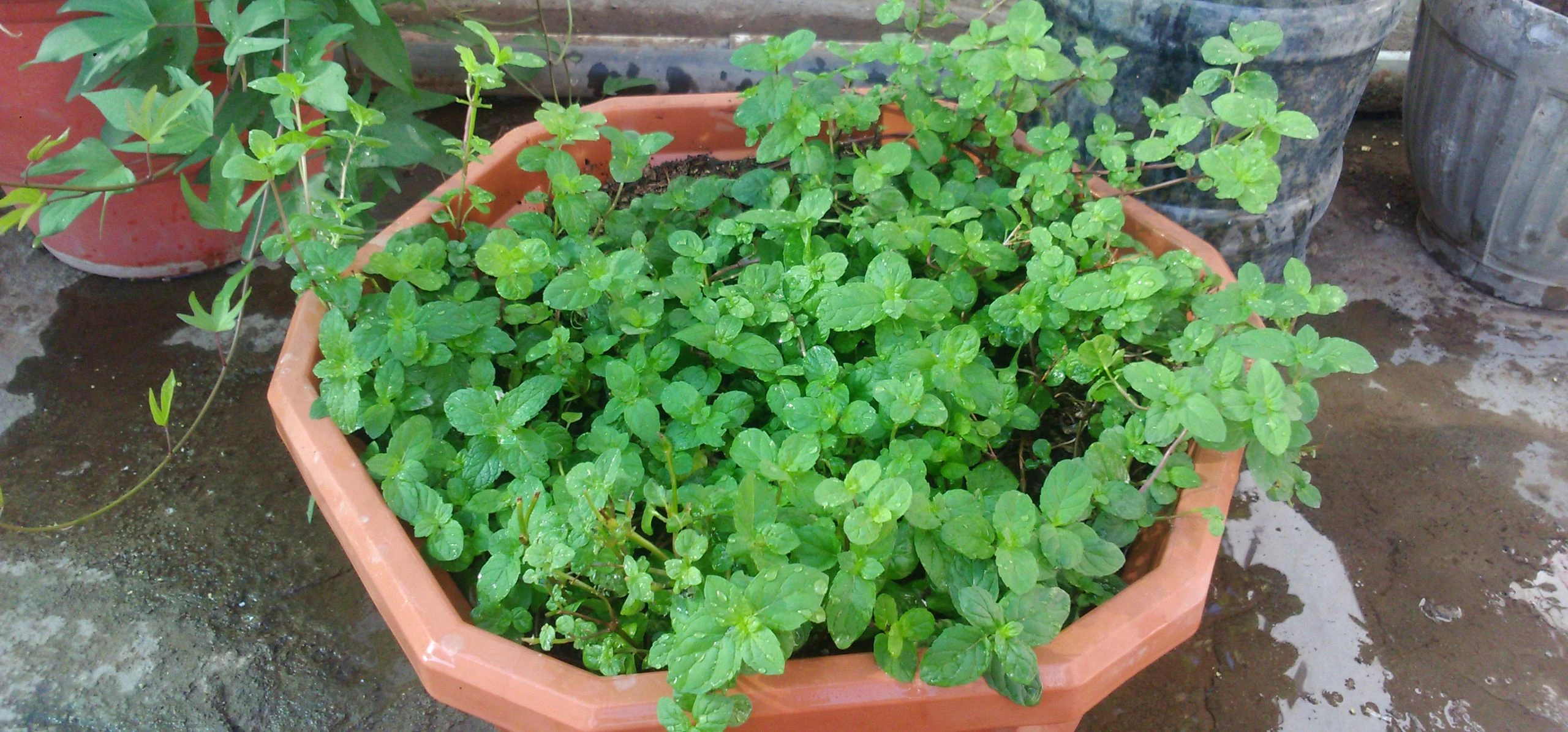
A pot of glossy, purple-tinged leaves with a sharp menthol smell that releases the moment a leaf is bruised is almost certainly peppermint, Mentha piperita. GBIF records the accepted name as Mentha piperita L. (Mentha ×piperita), placing it in the mint family Lamiaceae. It is not a wild species collected from the field but a naturally occurring hybrid between watermint (Mentha aquatica) and spearmint (Mentha spicata), and POWO lists its native range as Europe to Central Asia, where the two parent species overlap. Because it is a hybrid, peppermint sets little to no viable seed, so almost every plant sold or shared is a cutting or division of an existing clone, not a seedling.
Light: Full Sun or Surprisingly Deep Shade
The RHS lists peppermint's sun exposure as full sun or partial shade, and North Carolina State Extension goes further, noting the plant does surprisingly well in shadier sites and needs as little as three hours of direct sun a day to keep producing new growth. A south or west facing bed with strong midday sun works, but so does the north side of a shed or the shaded strip behind a hedge; the main trade off is denser, more compact growth in sun and looser, taller stems in shade. RHS notes the stems and leaves are often flushed with purple, a trait that tends to show up more strongly on plants grown in brighter light.
Soil, pH and Watering
North Carolina State Extension puts peppermint's ideal soil pH at 6.0 to 7.0, in soil kept consistently moist. The RHS lists chalk, clay, loam and sand as all workable, with moisture from moist but well drained to well drained, across acid, neutral or alkaline pH. The one condition none of these sources list as tolerable is dry soil: NC State Extension flags peppermint as tolerant of a wide range of conditions except for dry ones. In a container, that means checking the top inch of soil often through summer and watering before it fully dries, rather than on a fixed schedule.


Containing an Aggressive Spreader
Peppermint spreads by rhizomes, underground stems that push new shoots well beyond the original clump, and the RHS is blunt about the result: the species may become a nuisance, and its root run should either be restricted in a deep, plunged container or planted where it can run unchecked. NC State Extension recommends a pot 12 to 16 inches wide to keep the spread manageable in containers, or spacing plants 18 inches apart if planting directly into a bed with no barrier. A container without a solid, sunk in base is not real containment: rhizomes reach the drainage holes and escape into the surrounding soil within a season.
Propagation by Cutting and Division, Never Seed
Because Mentha piperita is a sterile hybrid, seed sold as peppermint is often mislabeled spearmint or another fertile Mentha species; peppermint itself is multiplied vegetatively. A four inch stem cutting roots readily in a glass of water within one to two weeks, and an established clump can be lifted and divided in spring or fall, with each rhizome section carrying a growth node becoming a new plant. This is also the only reliable way to keep a named selection, such as black peppermint or a citrus scented form, true to type, since it does not come from seed in the first place.
Flowering and Winter Dieback
The RHS records peppermint flowering in late summer, with terminal spikes of tiny, pale purple flowers rising above the foliage. Once flowering starts, energy shifts away from leaf production, so gardeners growing peppermint for the kitchen typically pinch out flower buds to keep the plant leafy. Top growth dies back to ground level after the first hard frost; NC State Extension lists it as reliable in USDA zones 5a to 9b, and the rhizomes survive winter in the soil to resprout the following spring. The RHS gives peppermint its top hardiness rating, H7, meaning it tolerates temperatures below minus 20 degrees Celsius.
A Caution for Cats, Dogs and Horses
The ASPCA lists mint (Mentha sp.) as toxic to dogs, cats and horses, with essential oils named as the toxic principle. The clinical signs on record are vomiting and diarrhea, and the ASPCA specifies these occur with large ingestions. That makes a nibbled leaf a minor concern but a chewed through stand of container mint worth watching, particularly around cats. Keep pots out of reach of pets that graze on houseplants, and contact a veterinarian if a pet eats a substantial amount.
Common Mistakes
Planting peppermint straight into open ground without any barrier is the most common regret; by the time the rhizomes show up in a lawn or a neighboring bed, they are already established and hard to remove completely. The second mistake is treating a dry tolerant reputation, which belongs to Mediterranean herbs like rosemary or thyme, as if it applied here too; NC State Extension is explicit that dry soil is the one condition peppermint does not tolerate well. The third is letting flower spikes develop through the whole summer and then wondering why leaf production has slowed: pinching stems back before buds open keeps the plant in vegetative growth and full flavor.
Test your plant knowledge
Tap a card to flip it and reveal the answer.
Peppermint produces viable seed that grows true to the parent plant. Tap to reveal ✕ False
Peppermint can keep growing with as little as three hours of direct sun a day. Tap to reveal ✓ True
The ASPCA lists mint as toxic to horses as well as cats and dogs. Tap to reveal ✓ True
A pot with no solid base is enough to fully contain peppermint's rhizomes. Tap to reveal ✕ False
Peppermint's ideal soil pH sits between 6.0 and 7.0. Tap to reveal ✓ True
Sources
References consulted for this guide
- Mentha piperita L., GBIF Backbone Taxonomygbif.org
- Mentha × piperita L., Plants of the World Online, Kew Sciencepowo.science.kew.org
- RHS: Mentha x piperita (peppermint)rhs.org.uk
- ASPCA: Toxic and Non-Toxic Plants, Mintaspca.org
- NC State Extension Gardener Plant Toolbox: Mentha x piperitaplants.ces.ncsu.edu
- Reference entity : Wikidatawikidata.org