Coleus
Coleus scutellarioides
Family · Lamiaceae
Coleus scutellarioides wilts fast when dry, scorches in the wrong sun, and declines once it flowers, so timing pinching and light matters most.
Coleus scutellarioides
Plant profile
- WateringHighWater every 4 days
- Light exposureIndirect light
Growth
- Family
- Lamiaceae
- Life cycle
- Perennial
- Growth speed
- 8/10
- Mature size
- 50–100 cm
- Spread
- 10–50 cm
- Flowering
- Small blue flowers on upright spikes to 20 cm, usually pinched off
- Propagation
- Seed
- Cutting
Dormancynone in frost-free climates; treated as an annual elsewhere
Time to maturityfills out within a single growing season
Soil & climate
- Soil types
- chalk, clay, loam, sand
- Drought tolerance
- No
Light & Placement
- Origin
- Indo-China to the Ryukyu Islands (Nansei-shoto) and northern Australia
- Where to place it
- bright east or west-facing windowsill
- a few feet back from a south-facing window
- partly shaded bed for shade-bred cultivars
- full-sun bed for sun-bred cultivars with reliable watering
- porch or patio container
- plastic or glazed container that holds moisture
Safety
- Toxicity
- Not listed by the ASPCA; a close relative, Coleus amboinicus, is listed as toxic
- Pet safe
- No
Invasive speciescan naturalize from stray cuttings and seed in frost-free tropical regions
Data fromGBIF Backbone Taxonomy: Coleus scutellarPlants of the World Online (Kew): ColeusRHS: Coleus scutellarioidesMissouri Botanical Garden Plant Finder:
Where it grows
World distribution
Coleus is native to 15 countries: Australia, Cambodia, China, Indonesia, Japan, Laos, Malaysia, and Myanmar (Burma)….GBIF records 7,317 documented identifications across 144 countries, with the largest concentrations in Australia, Philippines, and Papua New Guinea.
- Australia
- Cambodia
- China
- Indonesia
- Japan
- Laos
- Malaysia
- Myanmar (Burma)
- Papua New Guinea
- Philippines
- Solomon Islands
- Taiwan
- Thailand
- Vanuatu
- Vietnam
Yellow to orange dots: concentration of documented identifications per country. Green countries: sourced native range. Source: GBIFNative range from POWO (Kew).
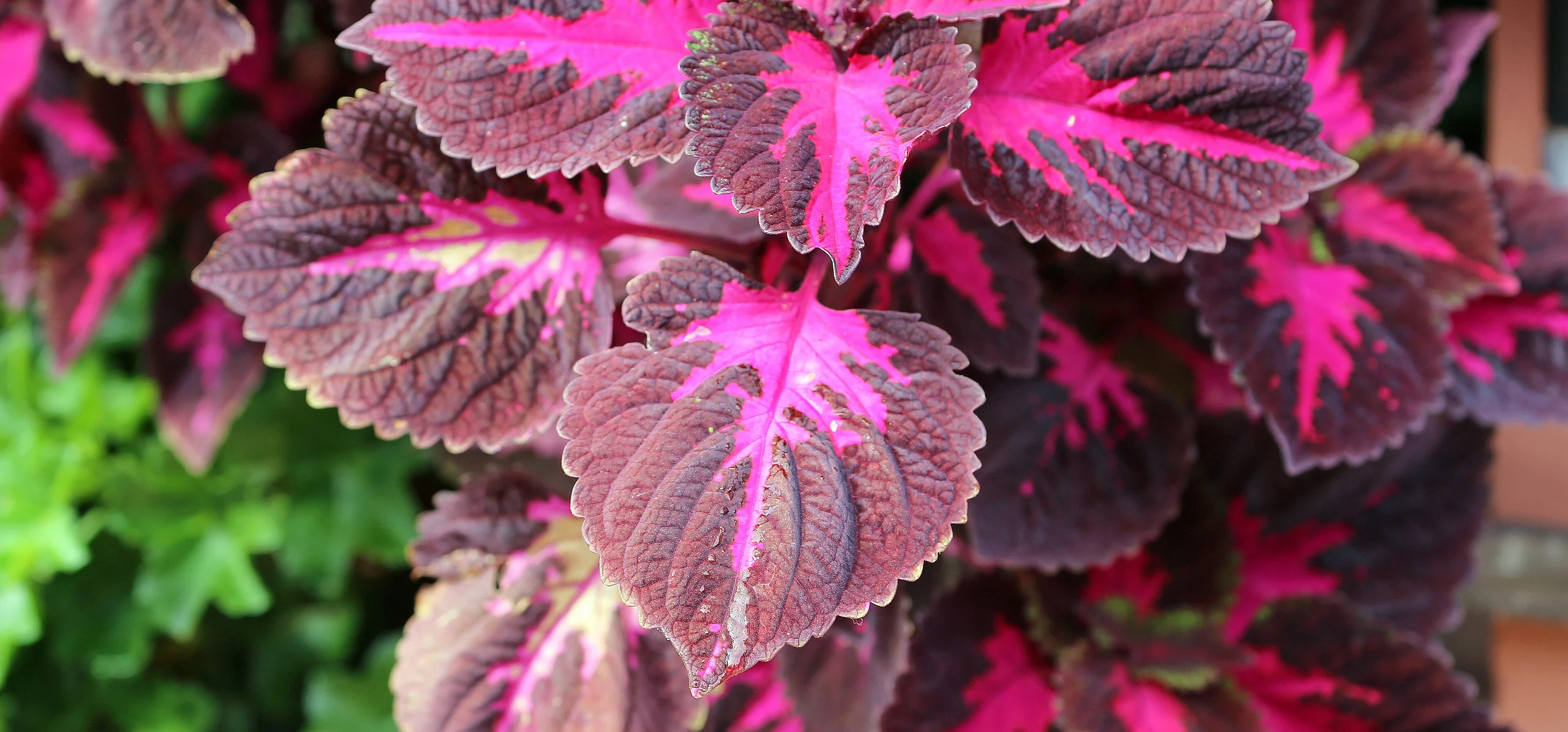
Coleus scutellarioides, still labeled in nurseries under its older names Solenostemon scutellarioides and Plectranthus scutellarioides, is grown almost entirely for its leaves rather than its flowers: centuries of selection since the Victorian conservatory craze have produced hundreds of named cultivars ranging from lime green through magenta to near black. The first task after buying one is figuring out which kind of cultivar you actually have, because a shade bred type and a modern sun coleus are cared for differently even though the tag often just says "coleus." In its native range from Indo China through the Ryukyu Islands to northern Australia it grows as a tropical subshrub, but almost every plant sold in a nursery pot is treated as an annual bedding plant or a houseplant, since a single hard frost kills it outright. Watch how quickly the leaves droop the first time the pot dries out fully; that reaction tells you almost everything you need to know about how often this particular plant will need water for the rest of the season.
Choosing a Cultivar
Older, shade bred coleus lines have thinner leaves that bleach and scorch in strong afternoon sun, while newer "sun coleus" series were bred specifically to hold their color in full sun as long as the soil never dries out. Mounding, upright types suit beds and standard pots; trailing cultivars with a looser, cascading habit are bred for hanging baskets and window boxes. Leaf pattern is not just cosmetic either: solid dark cultivars read almost black in low light and need brighter conditions to show their color, while lace edged and multi colored leaves tend to hold their pattern across a wider range of light levels. If a plant tag or online listing does not specify sun tolerance, assume it is a shade type and start it in bright indirect light before testing it in more sun.
Light and Placement
Give a sun bred cultivar direct sun for most of the day, provided the soil stays reliably moist; the straight species and older shade lines prefer bright indirect light or partial shade, and scorch with pale, papery patches when placed in hot, direct afternoon sun without acclimation. Indoors, an east or west facing windowsill suits most cultivars; a south facing window works too, but move the pot back a few feet from the glass, since sun magnified through a pane can burn leaves that would be fine outdoors in open air. Low light does not kill a coleus outright, but it stretches the stems, fades variegated colors toward plain green, and leaves the plant leggy and thin within a few weeks.
Watering
Keep the soil evenly moist and never let the pot dry out completely; this is the single detail that separates a thriving coleus from a stressed one. The stems are semi succulent and hold some reserve moisture, but nowhere near enough to buffer a full dry down, and a neglected plant wilts dramatically within hours, with the whole canopy collapsing over the rim of the pot. A wilted coleus usually bounces back within an hour of a thorough watering, but repeated wilt and recovery cycles weaken the plant and cause older leaves to yellow and drop even as new growth continues at the tip. In a small pot outdoors in summer heat that can mean watering daily; in a larger container or indoors, checking the topsoil every day and watering whenever it starts to feel dry is a more reliable habit than a fixed schedule.


Soil, Potting, and Feeding
Plant it in a loose, humus rich mix that drains well but holds moisture between waterings; the species tolerates chalk, clay, loam, and sandy soils outdoors as long as drainage is adequate, and a near neutral, peat free potting mix works well in containers. Because a healthy coleus fills a pot within a single season, repot into the next size up as soon as roots start circling the drainage holes, which for a fast growing cultivar can mean two or three repottings between spring and autumn. Feed with a high nitrogen liquid fertilizer roughly every two weeks through the growing season to keep the leaf color dense and the growth vigorous; cut feeding back to nothing once growth slows in autumn, since fertilizer applied to a dormant or resting plant does more harm than good.
Pinching and Flower Spikes
Pinch out the growing tips every couple of weeks through spring and summer; each pinch forces two new shoots from the leaf joint just below the cut, which is what turns a single leggy stem into a dense, well branched mound. Small blue flowers appear on upright spikes up to about 20 cm tall once the plant matures, and while they are not unattractive, letting them develop redirects the plant's energy from leaf production into seed set and noticeably slows new foliage growth. Pinch off flower spikes as soon as they appear unless you specifically want to collect seed from a favorite plant, since a coleus left to flower repeatedly through the season becomes sparse and woody at the base far faster than one that is kept pinched back.
Propagation
Stem cuttings are the fastest way to keep a favorite plant going: snip a four to six inch tip just below a leaf node, strip the lower leaves, and stand it in a glass of water on a bright windowsill, where roots typically appear within a week to ten days and the cutting is ready to pot once they reach an inch or so. Cuttings also root directly in a small pot of moist potting mix if kept out of direct sun for the first week. Seed grown cultivars can be started indoors eight to twelve weeks before the last expected frost date, which is how most large scale bedding plant producers propagate the named seed strains sold in spring; home gardeners get more predictable results from cuttings of a specific named cultivar, since seed grown plants can vary in leaf color and pattern even within the same named line.
Overwintering, Pests, and Common Mistakes
Outside its frost free range, treat this as a plant that cannot survive winter outdoors: bring containers inside before the first frost warning, or dig and pot favorite specimens from the garden bed while the weather is still mild. Indoors over winter, growth slows and the plant needs less water and no fertilizer until spring; taking a fresh round of cuttings in early autumn as insurance is a common habit among gardeners who want a backup in case the parent plant declines indoors. Mealybugs, scale insects, and whitefly are the pests most likely to show up, usually on a plant kept too dry and dusty, and the species is otherwise fairly disease resistant when it gets consistent water and some airflow around the foliage. The most common mistake by far is letting the pot dry out repeatedly; the second is placing a shade bred cultivar in hot, unfiltered afternoon sun and blaming the plant for scorch that the light caused. Coleus scutellarioides does not have its own listing in the ASPCA database, so there is no confirmed record either way for cats, dogs, or horses; a closely related species sold as Cuban oregano, Coleus amboinicus, is listed as toxic due to its essential oils, which is reason enough to keep any coleus out of reach of pets that chew on houseplants.
Test your plant knowledge
Tap a card to flip it and reveal the answer.
Letting the soil dry out completely between waterings suits Coleus scutellarioides better than keeping it evenly moist. Tap to reveal ✕ False
Pinching off the flower spikes as they appear keeps a coleus fuller and slows its decline. Tap to reveal ✓ True
Every coleus cultivar handles full, direct sun equally well. Tap to reveal ✕ False
A single hard frost can kill an outdoor Coleus scutellarioides down to the roots. Tap to reveal ✓ True
Stem cuttings rooted in a glass of water are an unreliable way to propagate a favorite coleus. Tap to reveal ✕ False
Sources
References consulted for this guide
- GBIF Backbone Taxonomy: Coleus scutellarioides (L.) Benth.gbif.org
- Plants of the World Online (Kew): Coleus scutellarioides (L.) Benth.powo.science.kew.org
- RHS: Coleus scutellarioidesrhs.org.uk
- Missouri Botanical Garden Plant Finder: Plectranthus scutellarioidesmissouribotanicalgarden.org
- Reference entity : Wikidatawikidata.org