Ground Ivy
Glechoma hederacea
Family · Lamiaceae
Ground ivy spreads by square stolons that root at every node in shady, damp lawns. Hand-pulling, real lawn fixes, the borax myth, and its actual ASPCA status.
Glechoma hederacea
Plant profile
- WateringModerateWater every 7 days
- Light exposurePartial shade
Growth
- Family
- Lamiaceae
- Life cycle
- Perennial
- Growth speed
- 8/10
- Mature size
- 10–41 cm
- Spread
- 50–100 cm
- Propagation
- Seed
- Division
- Layering
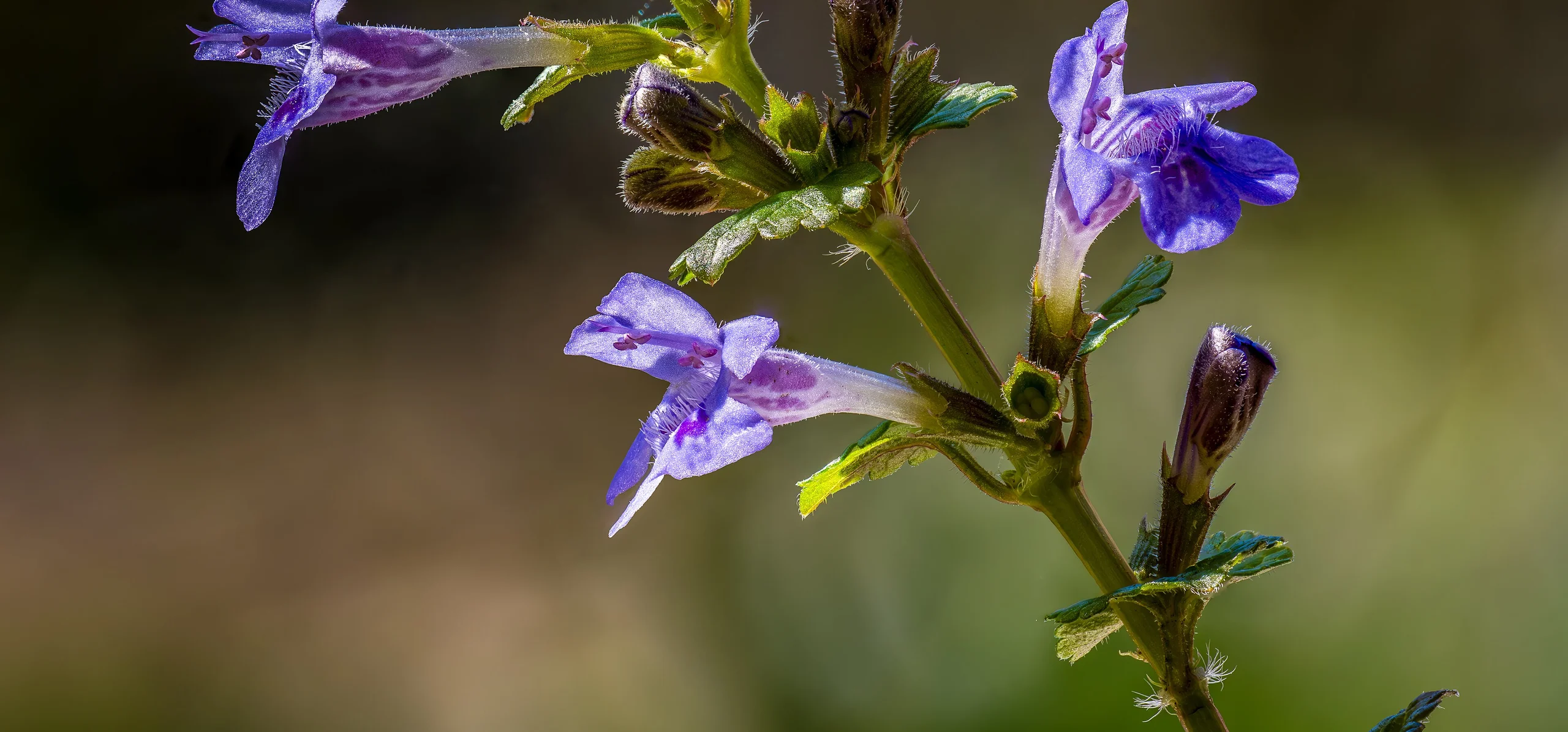
FloweringBlue-violet, two-lipped flowers with purple spotting, 0.5 to 0.9 in (1.3 to 2.3 cm) long, blooming early to mid-spring depending on region
DormancySemi-evergreen; foliage persists through mild winters and dies back in hard frost (USDA NRCS)
Time to maturityThe 'Variegata' cultivar reaches its full spread within 1 to 2 years (RHS)
Soil & climate
- Soil types
- chalk, clay, loam, sand
- Drought tolerance
- No
Light & Placement
- Where to place it
- shaded lawns and turf edges
- woodland-edge borders
- damp path margins
- under trees and shrubs
- hanging baskets (variegated form)
OriginNative to Europe through Siberia and Xinjiang (POWO); brought to North America by early European colonists
Safety
- Pet safe
- No
ToxicityNot listed by the ASPCA for cats, dogs or horses, though veterinary toxicology literature documents toxicosis in horses fed hay heavy with ground ivy
Invasive speciesUSDA NRCS records it established in every US state except New Mexico, Arizona, Nevada and Hawaii, and in every Canadian province but the far northern territories; Connecticut lists it as a noxious species
Data fromGBIF: Glechoma hederacea L.Plants of the World Online (Kew): GlechoUSDA NRCS Plant Guide: Ground Ivy (GlechIowa State University Extension: Can borRHS: Glechoma hederacea 'Variegata'
Where it grows
World distribution
Ground Ivy is native to 33 countries: Albania, Austria, Belarus, Belgium, Bulgaria, China, Croatia, and Czechia….GBIF records 1,339,531 documented identifications across 72 countries, with the largest concentrations in United Kingdom, France, and Netherlands.
- Albania
- Austria
- Belarus
- Belgium
- Bulgaria
- China
- Croatia
- Czechia
- Denmark
- Estonia
- Finland
- France
Show 21 more countriesShow fewer countries
- Georgia
- Germany
- Greece
- Hungary
- Ireland
- Italy
- Kazakhstan
- Kyrgyzstan
- Morocco
- Netherlands
- Norway
- Poland
- Portugal
- Romania
- Russia
- Spain
- Sweden
- Switzerland
- Türkiye
- Ukraine
- United Kingdom
Yellow to orange dots: concentration of documented identifications per country. Green countries: sourced native range. Source: GBIFNative range from POWO (Kew).
Square Stems, Scalloped Leaves and Violet Flowers
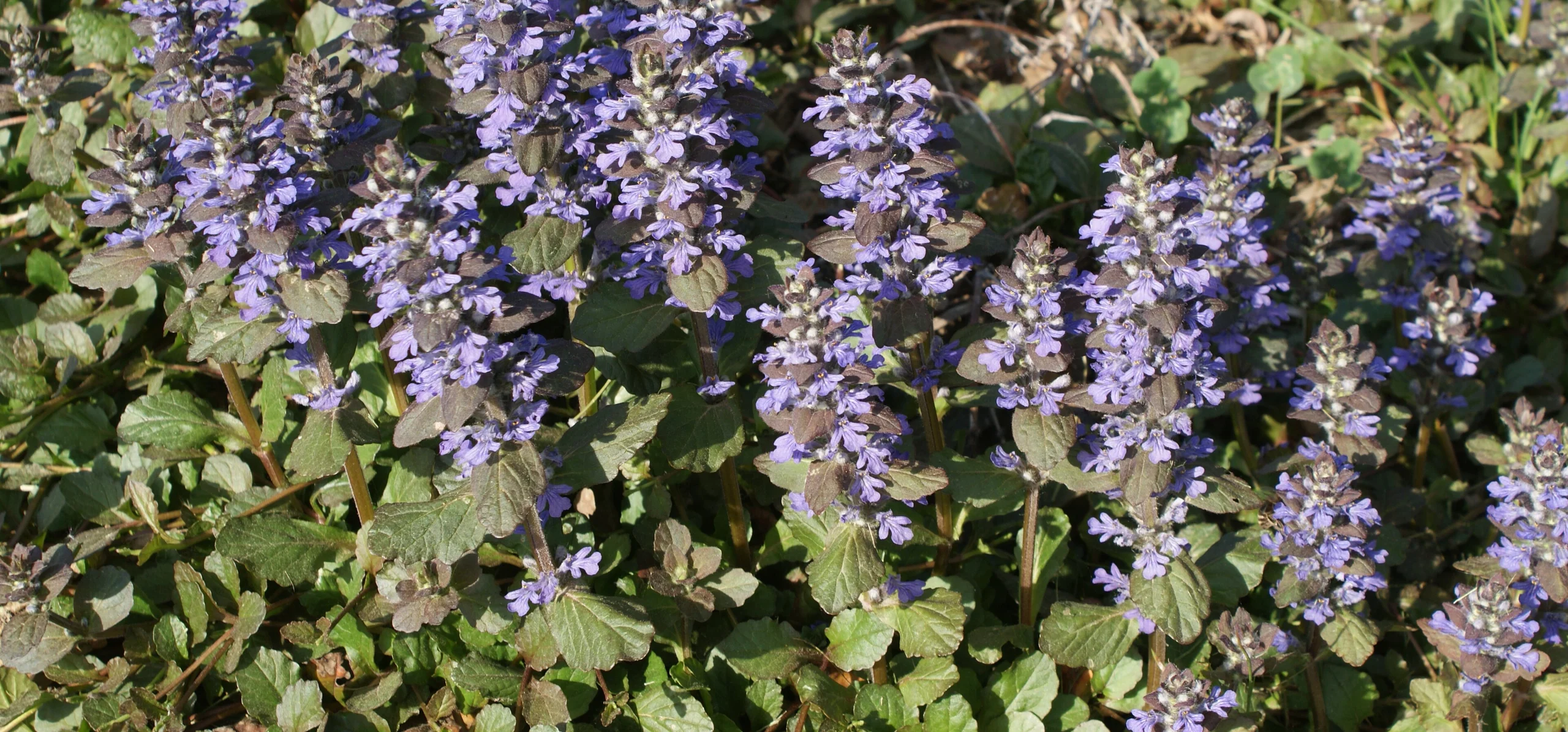
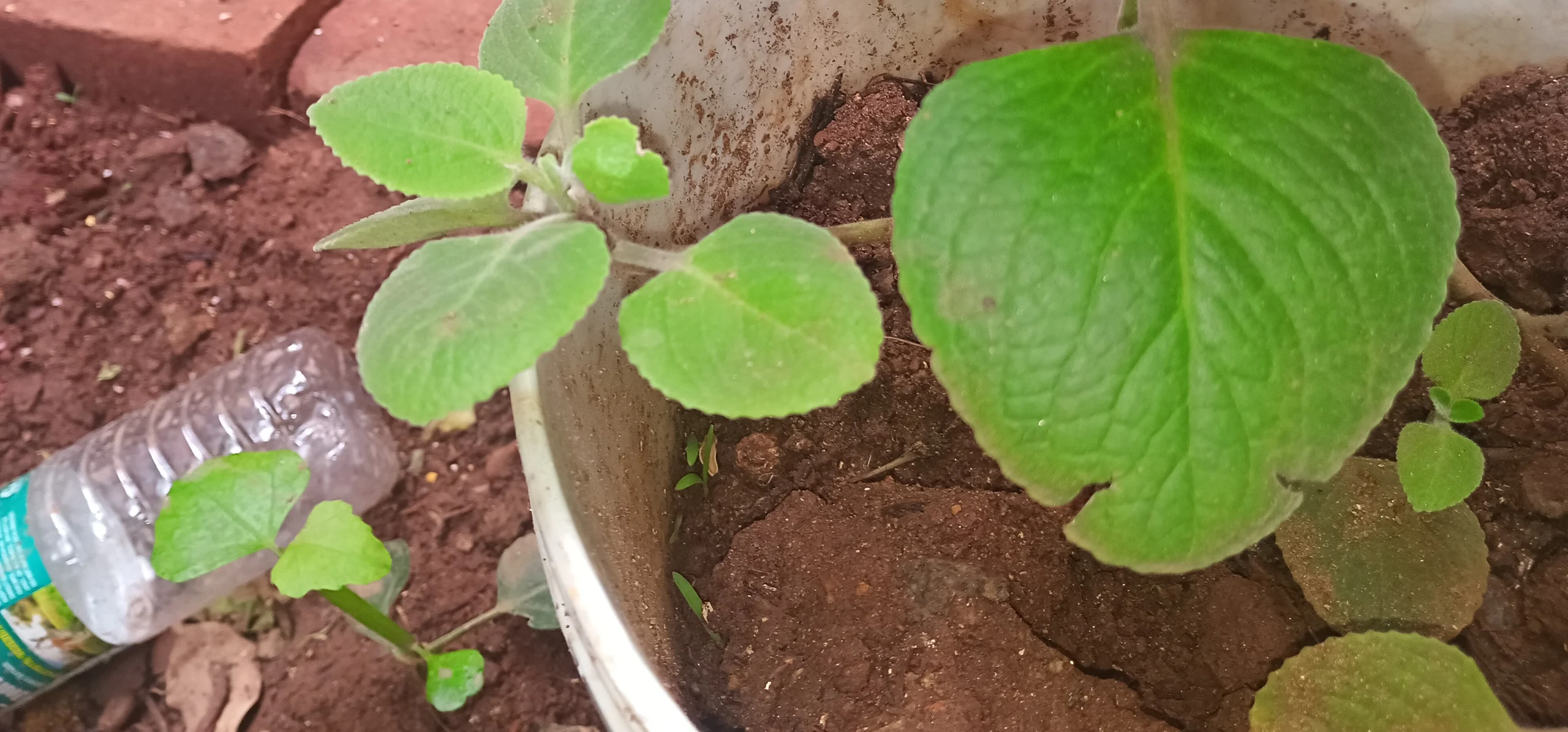
A low mat of green in a shaded, damp corner of the lawn that never seems to die back is very often not clover or wild violet but Glechoma hederacea, ground ivy. GBIF records the accepted name as Glechoma hederacea L., in the mint family Lamiaceae, and the fastest field check is to pinch a stem: mint-family plants have square, four-sided stems, and ground ivy's are slender and hairy at the joints. The leaves grow in opposite pairs on short stalks, kidney- or heart-shaped with rounded, scalloped teeth. From spring into early summer, small tubular flowers open in the leaf axils in whorls of two or three, blue-violet with darker purple spotting on the lower lip, with one large spreading central lobe and two smaller side lobes.
The old country name alehoof preserves its former use as a flavoring and clearing agent in brewing beer before hops reached England, and older taxonomic synonyms such as Nepeta hederacea and Chamaeclema hederacea still turn up on plant tags and in older field guides for the same species.
Why It Wins in Shady, Damp, Thin Lawns
Ground ivy rarely invades a thick, sunny lawn on its own. Extension turf research explains it plainly: shady lawns with poorly drained soil are the classic sites where it becomes a major problem, because grass growing in shade cannot compete against weeds as well as grass in full sun can. USDA NRCS notes it tolerates heavily compacted soils and ground that stays moist without being saturated, conditions that stress turfgrass roots long before they trouble ground ivy's shallow, fibrous stolon roots. Once thin patches open in the canopy, a single rooted node sends out new stolons in every direction, and the plant quickly out-competes weakened grass for that ground.
Pulling and Raking Out Every Rooted Node
Because ground ivy spreads almost entirely through square, ground-hugging stolons that root wherever a leaf node touches soil, USDA NRCS's own guidance on physical control is specific: hand-pulling or raking removes the plant only if every stolon fragment comes out with it. In practice that means raking the mat loose from the turf first, since fibrous roots at each node anchor it into the thatch, then lifting the loosened runners by hand rather than snapping them at the surface, working from the last leaf toward the growing tip so no rooted joint stays buried. Any fragment left behind, even a short piece with a single node, can resprout into a new patch, which is the most common reason a cleared bed or lawn edge is thick with ground ivy again within a month.


Improving the Lawn Is the Real Fix
Pulling buys time, it does not solve the underlying reason ground ivy got a foothold. Turfgrass research recommends treating the lawn itself as the control measure: switch shaded areas to shade-tolerant grasses such as fine fescues, prune back the trees and shrubs casting the densest shade to let more light and air through, aerate compacted soil so roots and water can penetrate, mow at a taller height of around 3 inches to increase leaf surface area, and water less often but more deeply so grass roots grow down instead of staying shallow. None of that removes existing ground ivy by itself, but paired with hand-pulling it denies new stolons the bare, weakened turf they need to root into.
The Borax Myth
A widely repeated home remedy claims a borax-and-water drench selectively kills ground ivy while leaving the lawn unharmed, an idea that traces back to a single 1996 Kentucky bluegrass trial. Iowa State University Extension's verdict on repeating it today is unambiguous: the use of borax as weed control for creeping Charlie is not recommended, because a later University of Wisconsin trial did not reproduce the original result, and too many factors, including soil pH and soil type, influence how borax behaves once it is in the ground. Unlike a conventional herbicide, boron does not break down; repeated applications can accumulate in soil that then stays inhospitable to grass and garden plants alike, with no reliable answer for how long the effect lasts or how much becomes too much. It stays a myth worth retiring, not a shortcut worth reaching for.
'Variegata': the Hanging-Basket Form
The species has one popular ornamental selection, 'Variegata', its leaves splashed cream-white around the scalloped edge, sold as a trailing plant for hanging baskets and mixed containers rather than as a lawn plant. RHS rates it hardy (H6) to about -20 to -15 degrees C, tolerant of full sun to partial shade, and adaptable to chalk, clay, loam or sandy soil, reaching its full trailing spread within 1 to 2 years. USDA NRCS adds a caution worth keeping in mind: in parts of Europe the variegated form has itself escaped cultivation and turned up growing in natural habitats, a reminder that ornamental and well-behaved are not the same claim for this genus. In a basket it is usually less aggressive than the plain green species growing in open ground, since the container limits how far its runners can reach fresh soil to root into, but any trimmed piece that lands in a nearby bed roots there just as readily as the species does.
An Import That Became Invasive Across North America
Ground ivy is native to Europe and temperate Asia, its POWO range running from Europe to Siberia and Xinjiang, and it did not reach North America on its own. USDA NRCS traces the first record to New England in 1672, brought over deliberately by early European colonists as a household herb, and its spread since then has been thorough: it is now established in every US state except New Mexico, Arizona, Nevada and Hawaii, and in every Canadian province outside the far northern territories. Connecticut lists it outright as a noxious species. There is comparatively little documented harm to native plant communities from it directly, but the turfgrass industry treats it as a genuine, persistent problem, and once it has colonized a shaded, damp patch of ground it rarely leaves without direct intervention.
What's Actually Confirmed About Toxicity, and Bees
Ground ivy is not on the ASPCA's toxic or non-toxic plant lists for cats, dogs or horses, so this guide records its status as not-listed rather than a confirmed safe or dangerous verdict either way. Searching the ASPCA's own horse, cat and dog plant pages by both the scientific name and ground ivy turns up nothing; the Creeping Charlie that does appear on the ASPCA's horse list is a different, unrelated plant, Pilea nummulariifolia, also sold as Swedish ivy. That gap is worth noting because veterinary toxicology literature does document real cases: horses fed hay containing 30 percent or more ground ivy, or turned out to graze it almost exclusively, can develop toxicosis with sweating, salivation, labored breathing, dilated pupils and occasionally signs of pulmonary edema, most likely from the volatile oils common across the mint family. Horses generally avoid it fresh because of its bitter taste, which is why documented cases trace back mostly to contaminated hay rather than open pasture grazing. None of that caution applies to pollinators: the flowers open early in the season, and their tubular shape draws long-tongued bees, including bumblebees emerging from hibernation before most other nectar sources are in bloom.
Test your plant knowledge
Tap a card to flip it and reveal the answer.
Ground ivy's square stems are a trait it shares with other mint-family (Lamiaceae) plants. Tap to reveal ✓ True
Hand-pulling permanently removes ground ivy even if a few short stolon fragments are left in the soil. Tap to reveal ✕ False
Extension services currently recommend a borax drench as a safe way to kill ground ivy in lawns. Tap to reveal ✕ False
The ASPCA's official plant lists name ground ivy as toxic to horses. Tap to reveal ✕ False
Ground ivy is native to Europe and temperate Asia, and reached North America with European colonists. Tap to reveal ✓ True
Sources
References consulted for this guide
- GBIF: Glechoma hederacea L.gbif.org
- Plants of the World Online (Kew): Glechoma hederaceapowo.science.kew.org
- USDA NRCS Plant Guide: Ground Ivy (Glechoma hederacea)plants.usda.gov
- Iowa State University Extension: Can borax be used to control creeping Charlie in the lawn?yardandgarden.extension.iastate.edu
- RHS: Glechoma hederacea 'Variegata'rhs.org.uk
- Reference entity : Wikipédiaen.wikipedia.org