Boston Fern
Nephrolepis exaltata
Family · Nephrolepidaceae
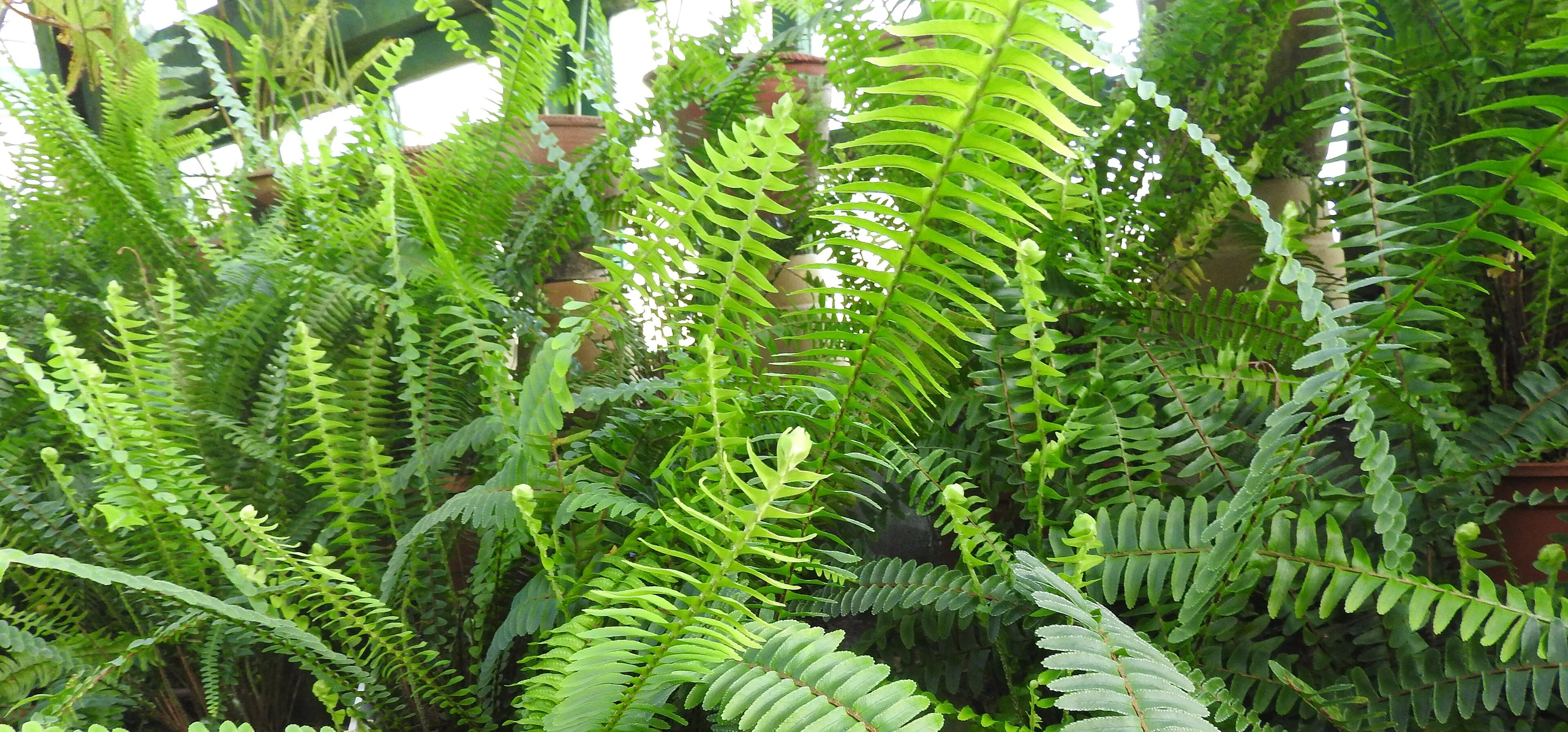
Boston fern fronds brown and drop in dry indoor air. Nephrolepis exaltata needs bright indirect light, a root ball that never dries out, and real humidity.
Nephrolepis exaltata
Plant profile
- WateringHighWater every 5 days
- Light exposurePartial shade
- Hardiness zoneUSDA 10–13
Growth
- Family
- Nephrolepidaceae
- Life cycle
- Perennial
- Growth speed
- 5/10
- Mature size
- 61–91 cm
- Spread
- 61–91 cm
- Flowering
- Non-flowering fern; reproduces by spores and rhizome runners
- Propagation
- Division
- Layering
- Spores
DormancyNo true dormancy indoors; growth slows and watering eases back in winter
Time to maturityReaches full size in 2 to 5 years
Soil & climate
- Soil types
- Loamy, well-drained potting mix, Peat-free, humus-rich compost
- Saline soil
- Not tolerated
- Drought tolerance
- No
Light & Placement
- Origin
- Tropical and Subtropical America
- Where to place it
- North or east facing window a few feet back, out of direct sun
- Humid bathroom or kitchen shelf
- Hanging basket away from heating vents and cold drafts
- Shaded or dappled porch or patio for summer, brought indoors before the first cool night
- Hanging basket for cascading fronds
- Plastic pot or liner to help hold moisture
Safety
- Toxicity
- CatsSafe
- DogsSafe
- HorsesSafe
Data fromNephrolepis exaltata (L.) Schott, GBIF BNephrolepis exaltata subsp. exaltata, PlNephrolepis exaltata 'Bostoniensis', RHSBoston Fern, Toxic and Non-Toxic Plants,Nephrolepis exaltata, NC State Extension
Where it grows
World distribution
Boston Fern is native to 17 countries: Antigua & Barbuda, Bahamas, Bermuda, Bolivia, Brazil, Colombia, Costa Rica, and Cuba….GBIF records 4,547 documented identifications across 105 countries, with the largest concentrations in United States, Brazil, and Jamaica.
- Antigua & Barbuda
- Bahamas
- Bermuda
- Bolivia
- Brazil
- Colombia
- Costa Rica
- Cuba
- Ecuador
- Honduras
- Jamaica
- Mexico
Show 5 more countriesShow fewer countries
- Nicaragua
- Panama
- Puerto Rico
- Turks & Caicos Islands
- United States
Yellow to orange dots: concentration of documented identifications per country. Green countries: sourced native range. Source: GBIFNative range from POWO (Kew).
Nephrolepis exaltata is a much wider ranging fern than the name Boston fern suggests, and the plant most people bring home today, whether labeled 'Bostoniensis', 'Fluffy Ruffles' or 'Dallas', descends from selections chosen for one thing: fronds dense enough to fill a hanging basket. It is not fussy about soil or feeding, but it is unforgiving about air moisture, and a fern that leaves a humid greenhouse for a centrally heated living room often starts shedding crisp, brown leaflets within two or three weeks. None of that means the plant is failing outright. Kept evenly moist at the root, out of direct sun, and given real humidity rather than an occasional misting, it settles in and pushes new fronds within a month.
From a chance sport to a Victorian parlor staple
The species itself is native to Tropical and Subtropical America, according to Plants of the World Online and the NC State Extension Gardener Plant Toolbox, and it grows outdoors year round in frost free climates. The Boston fern proper is a single sport first noticed around 1894 among a shipment of the wild species sent from Philadelphia to a Boston florist, with fuller, more gracefully drooping fronds than the parent plant. Growers propagated that one plant by division rather than spores, which is why 'Bostoniensis' breeds true only vegetatively, and by the early 1900s it had become the default parlor fern, tolerant enough of dim Victorian rooms to survive where most ferns failed outright. That reputation for toughness is only half true: the plant survived low light, but it survived the era's damp, poorly heated houses just as much, a condition modern centrally heated homes rarely reproduce.
'Fluffy Ruffles', 'Dallas' and the other named cultivars
Almost every fern sold as a Boston fern today is a named cultivar rather than the straight species. 'Fluffy Ruffles' is a smaller, more upright sport with narrow, densely wavy-edged fronds and a stiffer habit than the classic drooping form, better suited to a tabletop than a basket. 'Dallas' was selected for a compact habit and unusual tolerance of lower humidity and lower light, which the NC State Extension notes makes it a more forgiving choice than 'Bostoniensis' for a first attempt or a drier room. 'Bostoniensis' itself remains the broad, easy-to-grow standard, its fronds broader and more drooping than the wild species. Each cultivar trades some size or vigor for a habit that copes better with a pot, a basket or an office lobby, but none of them removes the plant's core demand for moisture in the air.
Humidity: the one variable that decides everything
Every common complaint about this fern, fronds browning at the tips, whole pinnae dropping, a basket that looked lush in the shop and skeletal a month later, traces back to air that is too dry rather than a watering mistake. The fronds are finely divided into narrow pinnae with almost no waxy cuticle to slow water loss, so they lose moisture to the air constantly and need consistently high humidity to keep that loss in balance, a requirement both the RHS and NC State Extension describe as moderate to high. A centrally heated room in winter often runs far drier than that, and the fern responds by shedding the fronds it cannot support, starting with the oldest, lowest ones. A bathroom used daily, a kitchen near a sink, or a pebble tray kept topped up with water so the pot sits above the waterline rather than in it are the easiest fixes, and grouping plants together raises the humidity around all of them.


Light: bright and indirect, never direct sun
In the wild this fern grows under a forest canopy in dappled shade, and the NC State Extension lists its light needs as dappled sunlight through to deep shade with under two hours of direct sun a day. Indoors that means bright, filtered light a few feet back from an east or north facing window, or a spot lit only through a sheer curtain in front of a south or west one. Direct sun scorches the thin pinnae within a day, leaving pale, bleached patches that never green back up, while too little light produces sparse, stretched fronds instead of the dense, arching mass the plant is grown for. A covered porch in bright shade suits it as well as any indoor spot, which is part of why it takes so well to a summer outdoors.
Watering: never let the root ball dry out
The roots are fine and fibrous, spread through a shallow root ball that dries out fast in a hanging basket exposed to air on all sides, and the NC State Extension is explicit that the soil should never be allowed to dry out completely. Once it does, the fronds wilt and brown within a day or two, often for good. Water as soon as the surface feels dry to a fingertip, soak thoroughly until water runs from the drainage holes, and do not let the pot sit in runoff for more than an hour. In a hanging basket, water tends to run straight through the driest, most root bound part of the mix, so dunking the whole pot briefly in a basin every week or two often wets the root ball more evenly than watering from above. The RHS recommends easing off to sparing winter watering once growth slows, but the interval should never stretch far, since this species has almost no drought tolerance to fall back on.
Temperature and a summer outdoors
The RHS rates 'Bostoniensis' H1B, needing a minimum of 10 to 15 degrees Celsius and safe outdoors only once summer nights stay above that, which fits a fern with no frost tolerance at all. Cold drafts from a winter windowsill and hot, dry air from a nearby radiator or heating vent both stress the fronds faster than humidity alone can offset, so the safest spot avoids both extremes. Many growers move the basket outdoors for summer into a shaded or dappled porch, where ambient humidity usually beats anything achievable indoors, then bring it back in well before the first cool autumn night. The classic display, a dense mass of arching fronds spilling over a hanging basket rim, plays to the plant's natural habit and keeps it out of reach of pets or passersby brushing past a lower shelf.
Propagation: division and runners
A mature plant increases in two different ways, and both work well. The clump is made of several crowns packed into the pot, and lifting it out to pull or cut the root ball into sections, each with its own crown and share of roots, gives an instant new plant that only needs to settle in. The species also sends out thin, wiry stolons, commonly called runners, that creep across the soil surface or over the pot rim looking for somewhere new to root; pinning one down onto moist potting mix, without cutting it free from the parent plant, lets it root in a few weeks before it is severed and potted on its own. Straight species plants also reproduce by spores carried on the frond undersides, but division and runners are the reliable route for named cultivars and the far faster way to fill a bare basket.
Scale, other pests and pet safety
Scale is the pest most specific to this fern, small brown bumps that sit motionless along the stems and frond undersides and are easy to mistake for part of the plant until a sticky residue appears on nearby surfaces or furniture. They are best removed by hand with a cotton swab dipped in isopropyl alcohol, since general insecticidal soaps struggle to penetrate the waxy scale covering. The same dry indoor air that browns the fronds also favors spider mites, visible as fine webbing and stippled, pale foliage, and raising humidity treats both the plant's stress and the mite problem at once. On the safety side, the ASPCA lists Boston fern as non-toxic to cats, dogs and horses, making it one of the few lush, trailing houseplants safe to hang within reach of a jumping cat.
Test your plant knowledge
Tap a card to flip it and reveal the answer.
The name Boston fern comes from a sport with fuller fronds first noticed in a shipment of the wild species around 1894, not from the plant being native to New England. Tap to reveal ✓ True
Boston fern grows best on a sunny, south-facing windowsill in full midday sun. Tap to reveal ✕ False
Letting the root ball dry out completely usually causes lasting browning and frond loss. Tap to reveal ✓ True
The 'Dallas' cultivar was selected to tolerate lower humidity and lower light better than 'Bostoniensis'. Tap to reveal ✓ True
The ASPCA lists Boston fern as toxic to cats and dogs. Tap to reveal ✕ False
Sources
References consulted for this guide
- Nephrolepis exaltata (L.) Schott, GBIF Backbone Taxonomygbif.org
- Nephrolepis exaltata subsp. exaltata, Plants of the World Online (Kew)powo.science.kew.org
- Nephrolepis exaltata 'Bostoniensis', RHS Plantsrhs.org.uk
- Boston Fern, Toxic and Non-Toxic Plants, ASPCA Animal Poison Controlaspca.org
- Nephrolepis exaltata, NC State Extension Gardener Plant Toolboxplants.ces.ncsu.edu
- Reference entity : Wikipédiaen.wikipedia.org