Sweet Mock Orange
Philadelphus coronarius
Family · Hydrangeaceae
Sweet mock orange rewards little care beyond correct pruning: cut right after the fragrant June bloom or you lose next year's flowers entirely.
Philadelphus coronarius
Plant profile
- WateringLittleWater every 12 days
- Light exposurePartial sun
- Ideal temperature-20–-15 °C
- Hardiness zoneUSDA 4–8
Growth
- Family
- Hydrangeaceae
- Life cycle
- Perennial
- Growth speed
- 6/10
- Mature size
- 150–370 cm
- Spread
- 150–305 cm
- Flowering
- Late spring to early summer, heavily scented white flowers
- Propagation
- Cutting
Dormancydeciduous, leafless and dormant through winter
Time to maturity5-10 years to ultimate size
Soil & climate
- Soil types
- chalk, clay, loam, sand
- Saline soil
- Partially tolerated
- Drought tolerance
- Yes
Light & Placement
- Origin
- Northeastern Turkey to the Caucasus
- Where to place it
- sunny border
- cottage garden
- shrub border
- low screen or hedge
- large container with well-drained, loam-based compost
Safety
- Toxicity
- Not listed by the ASPCA for cats, dogs or horses; toxicity undetermined
- Pet safe
- No
Invasive speciessuckers and can spread gently at the base in loose soil, but is not classed as invasive
Data fromRHS: Philadelphus coronarius (common mocRHS: How to grow philadelphus, growing gNC State Extension Gardener Plant ToolboPhiladelphus coronarius L., GBIF Backbon
Where it grows
World distribution
Sweet Mock Orange is native to 3 countries: Georgia, Russia, and Türkiye.GBIF records 49,194 documented identifications across 69 countries, with the largest concentrations in France, United Kingdom, and Italy.
- Georgia
- Russia
- Türkiye
Yellow to orange dots: concentration of documented identifications per country. Green countries: sourced native range. Source: GBIFNative range from POWO (Kew).
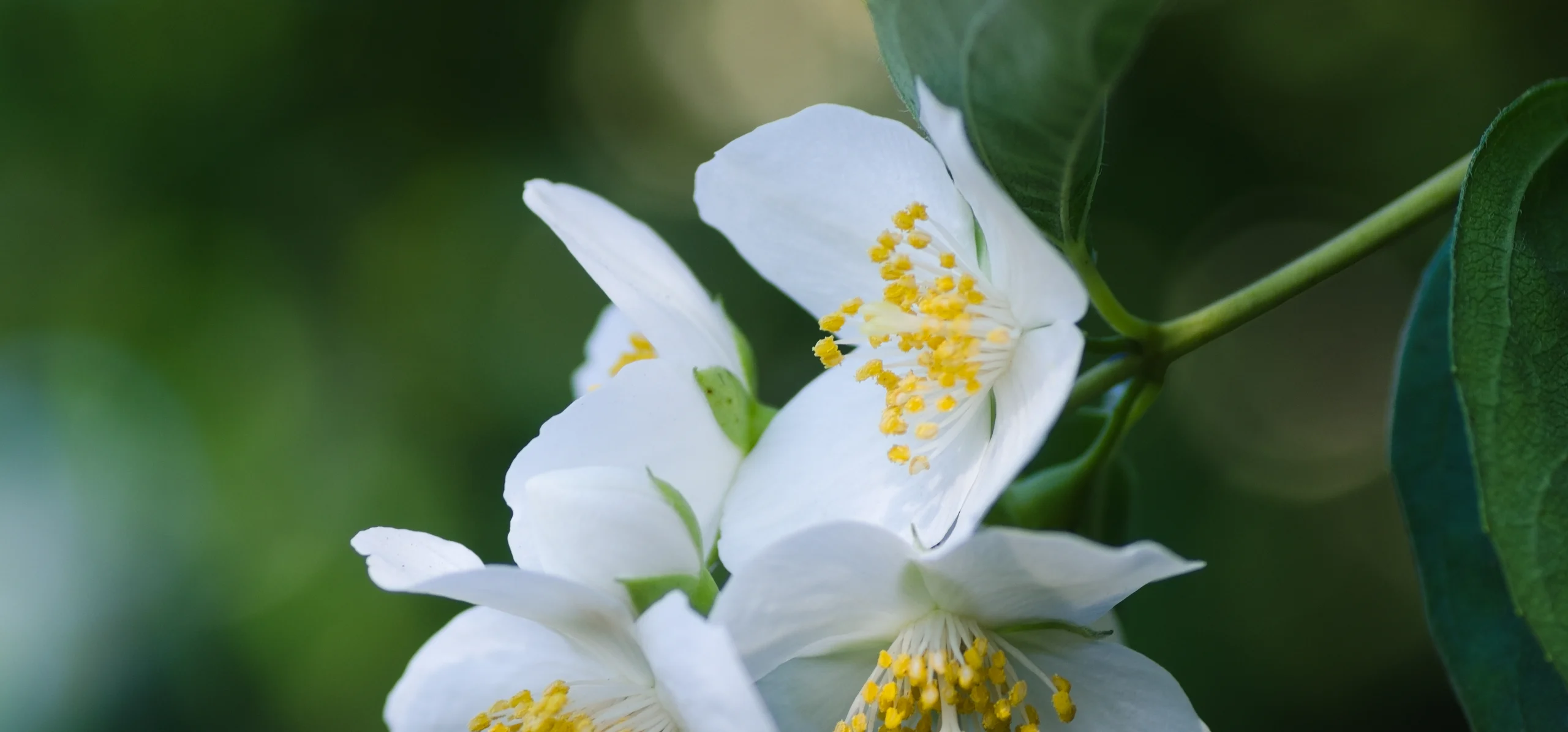
A sweet mock orange in full bloom stops people on the pavement: for two or three weeks in late spring the whole shrub disappears under four-petaled white flowers with a scent close to orange blossom, carried on the air well before you see the plant. The rest of the year it is an unremarkable, dense deciduous shrub with mid-green, slightly toothed leaves, which is exactly why it earns its spot in a border rather than centre stage. It asks for almost nothing: full sun or part shade, ordinary soil, and one correctly timed cut a year. Get the pruning timing wrong, and you simply lose next year's flowers, nothing more dramatic than that.
Origin and What You're Growing
Philadelphus coronarius is native to northeastern Turkey and the Caucasus, a cooler mountain and woodland-edge range that explains why it shrugs off hard winters so easily. It has been grown in European gardens for centuries under the common name mock orange, a name it shares confusingly with several unrelated plants, including Pittosporum tobira and some Prunus and Citrus species, so always check the Latin name before you buy or before you look up toxicity. The species itself is a suckering, multi-stemmed shrub with stiff, arching branches; named forms such as 'Aureus', with soft yellow young foliage, and 'Variegatus', with white-edged leaves, are selections of this same species rather than separate plants.
Light and Site Selection
Give it full sun for the heaviest flowering and the strongest scent, though it tolerates partial shade without complaint, the RHS lists it as suited to sun or semi-shade on any aspect, including a north-facing spot. The one exception is the golden-leaved cultivar: strong midday sun scorches and bleaches 'Aureus' foliage, so plant golden forms where they get some relief from direct afternoon sun. Because the flowers are so strongly scented, a spot near a door, path or window seat gets far more use out of the plant than the same shrub tucked at the back of a border.
Soil and Planting
This is a forgiving shrub on soil: the RHS records it thriving in chalk, clay, loam and sand, and in acid, neutral or alkaline pH, provided the ground is not permanently waterlogged. Plant bare-root specimens in the dormant season, from autumn to late winter, and container-grown plants at any time the ground is workable, watering well until roots establish. Space plants at least 1.5 to 2 m apart, since a mature specimen reaches a similar height and spread in the UK climate; North American growers report considerably larger plants, to 3 or 3.7 m, where longer, hotter summers push more growth each year.
Watering and Feeding
Once established, a sweet mock orange needs very little supplemental water. The RHS notes that mature plants rarely need watering at all except in prolonged drought on very free-draining soil, a contrast with the weekly attention many flowering shrubs demand. Water new plants regularly through their first one to two summers while roots spread, then step back and let rainfall do the work. Feeding follows the same restraint: a spring mulch of garden compost is usually enough, and a balanced fertiliser is worth adding only where the soil is genuinely poor, since overfeeding pushes soft growth at the expense of flower buds.


Pruning: Timing Decides Next Year's Flowers
This is the one step that actually matters. Sweet mock orange flowers on wood made the previous year, so pruning in winter or early spring, when the shrub looks tidiest and most tempting to cut back, removes the very stems that were about to bloom. Instead, prune immediately after flowering finishes in early summer: cut back the shoots that have just flowered to a strong new side shoot lower down, and remove around one stem in five at ground level each year, choosing the oldest and thickest. This keeps the shrub renewing itself from the base instead of turning into a tangle of bare, leggy wood, which is what happens to plants left unpruned for several years.
Propagation by Cuttings
Softwood cuttings taken from soft, flexible young shoot tips between April and June root readily and are the standard way to increase this shrub, according to the RHS growing guide. Take cuttings early in the morning when stems are fully hydrated, strip the lower leaves, and root them in a free-draining cutting mix under cover. Rooted cuttings need a full growing season before they are sturdy enough to plant out, and a young plant typically takes two to three years to flower for the first time, so propagation rewards patience rather than speed.
Pests, Diseases and Common Mistakes
Sweet mock orange has few serious problems. Aphids, including greenfly and blackfly, are the most frequent visitor, curling the newest leaves in late spring; a strong jet of water or an occasional check usually keeps them from doing real damage, and heavy intervention is rarely needed. Extension sources also note occasional leaf spot, powdery mildew and canker, none of which tend to threaten an otherwise healthy plant grown in reasonable drainage. The two mistakes that actually cost gardeners their flowers are pruning at the wrong time of year, covered above, and planting a golden cultivar in baking full sun where the foliage scorches rather than colours. Overcrowding several shrubs too closely is the third common error: without air movement between plants, mildew and aphid populations both build faster.
Toxicity and Pet Safety
Philadelphus coronarius does not appear on the ASPCA's toxic or non-toxic plant lists at all, so its toxicity to cats, dogs and horses is formally undetermined rather than confirmed safe. The only Philadelphus-adjacent entry there under the shared common name mock orange belongs to an unrelated species, Pittosporum tobira, so it tells you nothing about this plant. NC State Extension's profile does not flag toxicity either, but treat any unlisted species with ordinary caution around pets that chew foliage, rather than assuming safety by default.
Test your plant knowledge
Tap a card to flip it and reveal the answer.
Sweet mock orange should be pruned immediately after it finishes flowering. Tap to reveal ✓ True
This shrub needs acidic soil and will fail on chalk. Tap to reveal ✕ False
Established sweet mock orange plants need watering almost every day in summer. Tap to reveal ✕ False
Golden-leaved varieties like 'Aureus' colour best in full, unbroken sun. Tap to reveal ✕ False
The ASPCA lists Philadelphus coronarius as toxic to cats and dogs. Tap to reveal ✕ False
Sources
References consulted for this guide
- RHS: Philadelphus coronarius (common mock orange)rhs.org.uk
- RHS: How to grow philadelphus, growing guiderhs.org.uk
- NC State Extension Gardener Plant Toolbox: Philadelphus coronariusplants.ces.ncsu.edu
- Philadelphus coronarius L., GBIF Backbone Taxonomygbif.org
- Reference entity : Wikipédiaen.wikipedia.org