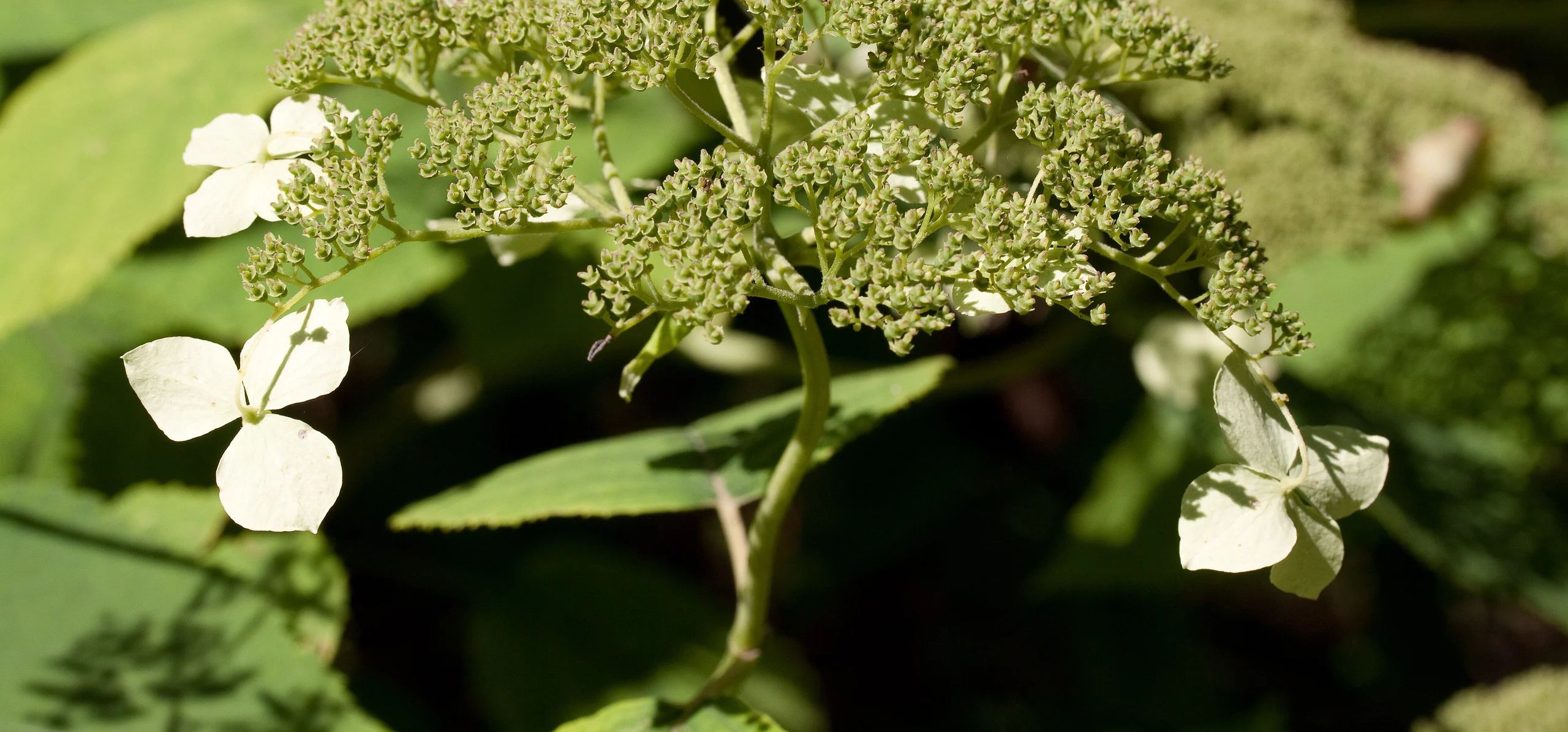
Smooth Hydrangea
Hydrangea arborescens
Family · Hydrangeaceae
Smooth hydrangea flowers on new wood, so a hard late-winter prune is safe, but soft new stems flop under wet flower heads. Why that happens and how to fix it.
Hydrangea arborescens
Plant profile
- WateringHighWater every 5 days
- Light exposureIndirect light
- Hardiness zoneUSDA 3–9
Growth
- Family
- Hydrangeaceae
- Life cycle
- Perennial
- Growth speed
- 7/10
- Mature size
- 90–150 cm
- Spread
- 90–150 cm
- Propagation
- Cutting
- Seed
FloweringLarge rounded white flower clusters from early summer, sometimes a light rebloom in fall
Dormancydeciduous; loses its leaves in winter and is commonly cut back hard to a low woody framework each late winter
Time to maturityflowers in its first or second year after planting; reaches full size within 2 to 3 growing seasons
Soil & climate
- Soil types
- clay, loam, organic-rich soil
- Drought tolerance
- No
Light & Placement
- Origin
- North central and eastern United States
- Where to place it
- woodland edge
- part-shade border
- north- or east-facing foundation bed
- large container for compact Incrediball or Invincibelle-series cultivars
Safety
- Toxicity
- CatsToxic
- DogsToxic
- HorsesToxic
Data fromGBIF Backbone Taxonomy: Hydrangea arborePlants of the World Online (Kew): HydranASPCA: Toxic and Non-Toxic Plants, HydraRHS: Hydrangea arborescensMissouri Botanical Garden Plant Finder:
Where it grows
World distribution
Smooth Hydrangea is native to a single country: United States.GBIF records 15,934 documented identifications across 34 countries, with the largest concentrations in United States, Canada, and Sweden.
- United States
Yellow to orange dots: concentration of documented identifications per country. Green countries: sourced native range. Source: GBIFNative range from POWO (Kew).
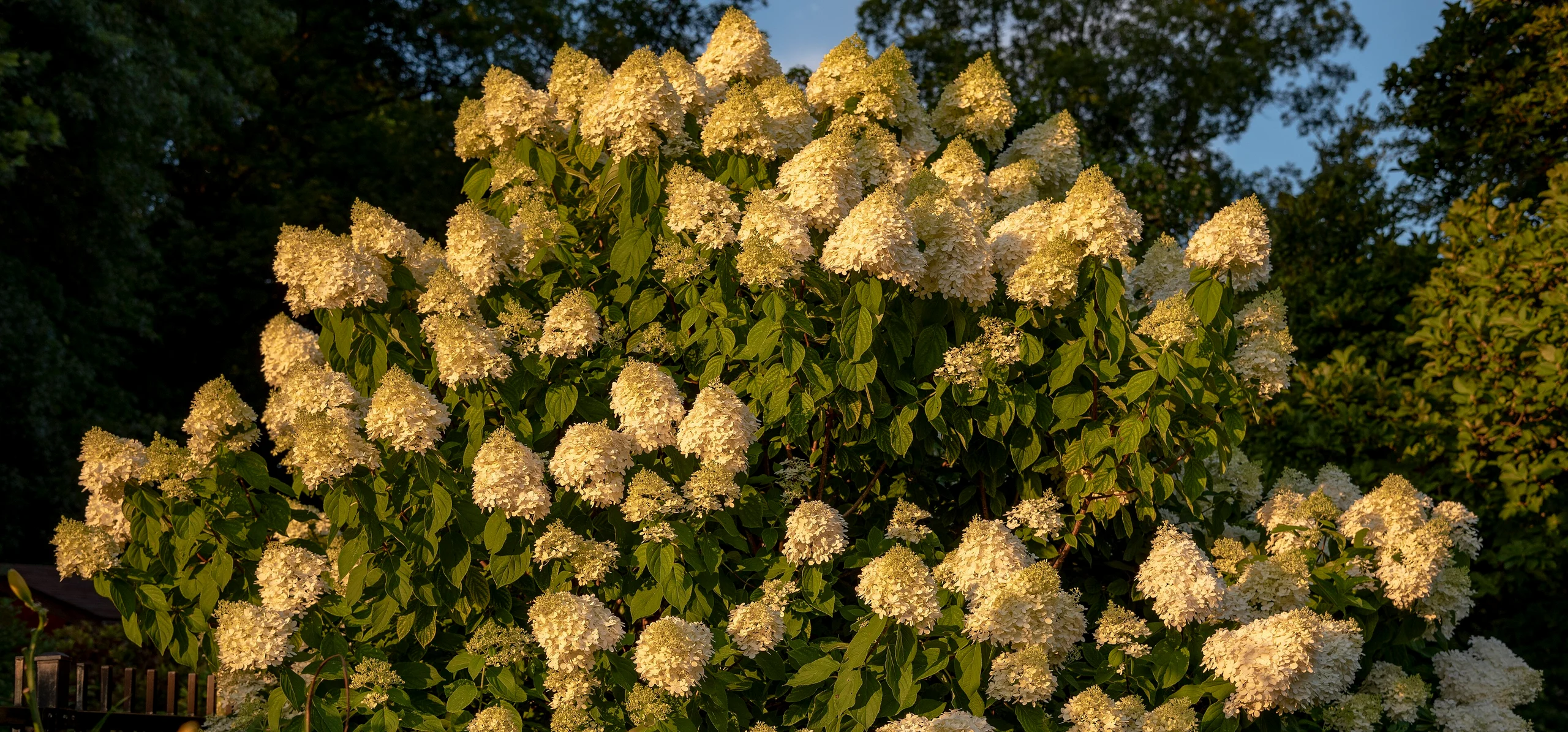
Hydrangea arborescens is a deciduous shrub native to the eastern and north-central United States, grown for the big, rounded clusters of white flowers it throws up from early summer onward. Unlike the mophead and lacecap forms of Hydrangea macrophylla, this species flowers on wood it grows the same spring, so the whole plant can be cut back hard in late winter without losing a single bloom. The trade-off, especially with the older cultivar 'Annabelle', is that a shrub built entirely of new, soft growth cannot always hold up an enormous flower head once it fills with rainwater. Know which cultivar is in the ground and how it was bred before deciding how, or whether, to stake it.
Native Range and Older Names
Plants of the World Online lists the native range of Hydrangea arborescens as north central and eastern U.S.A., where it grows as an understory shrub along stream banks, rocky slopes and the edges of open woodland. Older common names reflect that habitat and its bark: sevenbark, for the way the outer layers peel off in thin curling strips of different colors, and wild hydrangea or hortensia for the plain, white-flowered form found growing wild long before nurseries selected it into a garden shrub. A string of botanical synonyms turns up in older catalogs and herbarium records, including Hydrangea arborescens f. sterilis, the wild sport with all-sterile flower heads that eventually gave rise to 'Annabelle'.
Choosing a Cultivar: Annabelle, Incrediball and Invincibelle
'Annabelle' was found growing wild near Anna, Illinois, and introduced for its huge, all-sterile flower heads, 20 to 30 cm across, held on stems no thicker than the species itself ever had to support. That mismatch between flower weight and stem strength is the plant's one real flaw, and it drove decades of breeding. 'Incrediball' (sold under the trade name Abetwo) and the pink 'Invincibelle Spirit' and its successors were selected specifically for thicker, stiffer stems that carry similarly oversized heads upright through a summer storm instead of splaying them into the mulch. Anyone who has struggled with a flopping 'Annabelle' can solve the problem at the breeding level, not just the pruning level, by switching to 'Incrediball' or a recent Invincibelle-series pink.


Light, Soil and Moisture
Give it part shade, dappled woodland light, or a spot with morning sun and afternoon shade. Full sun is tolerated, but only where the soil stays reliably moist; in a hot, exposed border the same plant needs watering through every dry week rather than the occasional deep soak a part-shade planting gets away with. The soil itself should be moist, well drained and rich in organic matter, ideally clay or loam rather than fast-draining sand. Unlike Hydrangea macrophylla, soil pH here is close to irrelevant to how the plant performs: it grows in acid, neutral or alkaline ground without complaint, so amending pH for this species is wasted effort.
Pruning on New Wood
Because every flower head forms on the current season's growth, late winter or very early spring, before the buds break, is the right time to cut smooth hydrangea back hard. Taking the whole plant down to a low framework 15 to 30 cm above the ground each year keeps it compact, encourages the thickest possible new stems, and does not cost a single flower that summer; this is the opposite of Hydrangea macrophylla, which sets its buds the previous autumn and loses them to the same cut. A lighter alternative, removing only dead, crossing or winter-damaged wood and shortening the rest by about a third, keeps a taller, looser shrub with slightly smaller but more numerous heads. Either approach works; what does not work is skipping pruning for several years and then expecting one hard cut to fix an overgrown, gappy shrub in a single season.
Why Annabelle's Heads Flop, and How to Stop It
A hard annual prune is actually part of the flopping problem with 'Annabelle': cutting back to bare wood forces a flush of tall, fast, entirely new stems every spring, and by midsummer those stems are asked to hold a flower head that can weigh several times what a comparable Incrediball stem carries, especially once soaked by rain. Three adjustments reduce the flop without replacing the plant. First, prune to a slightly taller framework, 45 to 60 cm rather than a bare stub, since a longer stem thickens and stiffens more than one forced to regrow from almost nothing. Second, feed lightly rather than heavily: excess nitrogen pushes soft, fast growth that bends more easily than growth from lean soil. Third, ring the clump early in the season with peony hoops or link stakes pushed into the ground before the stems reach knee height, so foliage grows up through the grid and hides it; trying to stake a plant that has already flopped mostly just breaks stems.
Flower Color Stays White Regardless of Soil pH
Hydrangea macrophylla famously shifts from pink to blue depending on soil aluminum availability, itself governed by pH, and gardeners who know that trick sometimes expect the same from smooth hydrangea. It does not apply here: Hydrangea arborescens flowers open pale green from the bud, turn white as they fully expand, and fade to a papery tan green in autumn regardless of soil pH. The pink Invincibelle-series cultivars owe their color to breeding, not soil chemistry, and no amount of aluminum sulfate or garden lime will turn a white 'Annabelle' head pink or blue.
Hardiness and Watering Through Drought Stress
Smooth hydrangea is one of the hardiest garden hydrangeas, tolerating winter cold down to around -35°C, which puts it comfortably in USDA zone 3 gardens where Hydrangea macrophylla would not survive above ground. That cold tolerance does not carry over to drought tolerance: the same soft, fast stems that flower on new wood also carry large, thin leaves with little reserve, so the whole plant wilts visibly within a day or two of dry soil, particularly in full sun. A wilted smooth hydrangea usually recovers within hours of a deep watering, so treat a midday droop in summer heat as an early warning rather than a crisis, but do not let the soil dry out repeatedly; it costs the plant condition even when it survives.
Toxicity
The ASPCA lists hydrangea, including this species, as toxic to cats, dogs and horses; the toxic principle is a cyanogenic glycoside concentrated in the leaves, bark and flower buds, and ingestion typically causes vomiting, depression or diarrhea rather than the severe cyanide poisoning the term might suggest. Keep grazing horses and chewing dogs away from a hedge or border planting, and rake up pruned stems rather than leaving them where a pet can strip the bark.
Test your plant knowledge
Tap a card to flip it and reveal the answer.
Hydrangea arborescens flowers on wood produced the same year, so a hard prune in late winter does not sacrifice that year's blooms, unlike Hydrangea macrophylla. Tap to reveal ✓ True
'Annabelle' has thinner, softer stems than 'Incrediball', which is one reason its heavy flower heads are more likely to flop after rain. Tap to reveal ✓ True
Like Hydrangea macrophylla, the flower color of Hydrangea arborescens shifts between pink and blue depending on soil pH. Tap to reveal ✕ False
Smooth hydrangea is only hardy to about -20°C, which rules it out for the coldest USDA zone 3 winters. Tap to reveal ✕ False
The ASPCA lists hydrangea, including Hydrangea arborescens, as toxic to cats, dogs and horses because of cyanogenic glycosides. Tap to reveal ✓ True
Sources
References consulted for this guide
- GBIF Backbone Taxonomy: Hydrangea arborescens L.gbif.org
- Plants of the World Online (Kew): Hydrangea arborescens L.powo.science.kew.org
- ASPCA: Toxic and Non-Toxic Plants, Hydrangeaaspca.org
- RHS: Hydrangea arborescensrhs.org.uk
- Missouri Botanical Garden Plant Finder: Hydrangea arborescensmissouribotanicalgarden.org
- Reference entity : Wikipédiaen.wikipedia.org