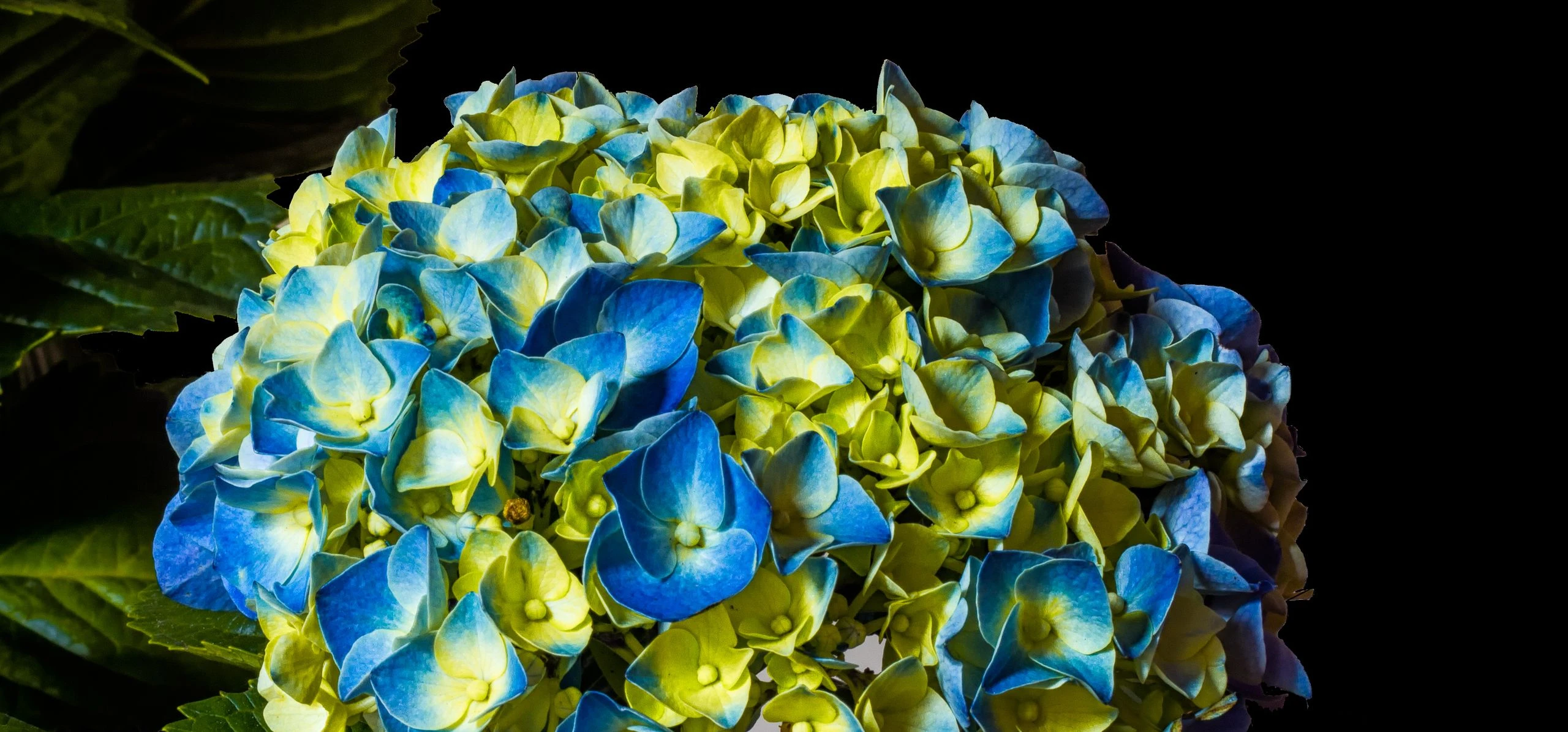
Bigleaf Hydrangea
Hydrangea macrophylla
Family · Hydrangeaceae
Bigleaf hydrangea blooms on old wood and changes color with soil pH; here is how to water, prune after August 1, and protect next year's buds.
Hydrangea macrophylla
Plant profile
- WateringHighWater every 7 days
- Light exposureIndirect light
- Hardiness zoneUSDA 6–11
Growth
- Family
- Hydrangeaceae
- Life cycle
- Perennial
- Growth speed
- 5/10
- Mature size
- 150–250 cm
- Spread
- 150–250 cm
- Propagation
- Cutting
- Layering
FloweringMophead or lacecap clusters in mid to late summer, on the previous year's wood (RHS; NC State Extension)
Time to maturityReaches ultimate height and spread in 5 to 10 years (RHS)
Soil & climate
- Soil pH
- pH 5–7
- Soil types
- clay, loam, sand
- Drought tolerance
- No
Light & Placement
- Origin
- Native to south central Japan, to Izu Oshima and the Kazan Retto islands (POWO)
- Where to place it
- East-facing border with morning sun and afternoon shade
- Sheltered south- or west-facing site, only with consistently moist soil
- Woodland-edge planting under high, dappled canopy
- Large container with reliable drainage, moved under cover for winter
Safety
- Toxicity
- CatsToxic
- DogsToxic
- HorsesToxic
- HumansToxic
Data fromHydrangea macrophylla (Thunb.) Ser., GBIRHS: Hydrangea macrophylla (H) hortensiaNC State Extension Gardener Plant ToolboClemson HGIC Factsheet: Hydrangea (bigleASPCA: Toxic and Non-toxic Plants, Horte
Where it grows
World distribution
Bigleaf Hydrangea is native to a single country: Japan.GBIF records 16,573 documented identifications across 105 countries, with the largest concentrations in Portugal, United Kingdom, and Spain.
- Japan
Yellow to orange dots: concentration of documented identifications per country. Green countries: sourced native range. Source: GBIFNative range from POWO (Kew).
A Japanese Coastal Shrub Behind the Classic Garden Mophead
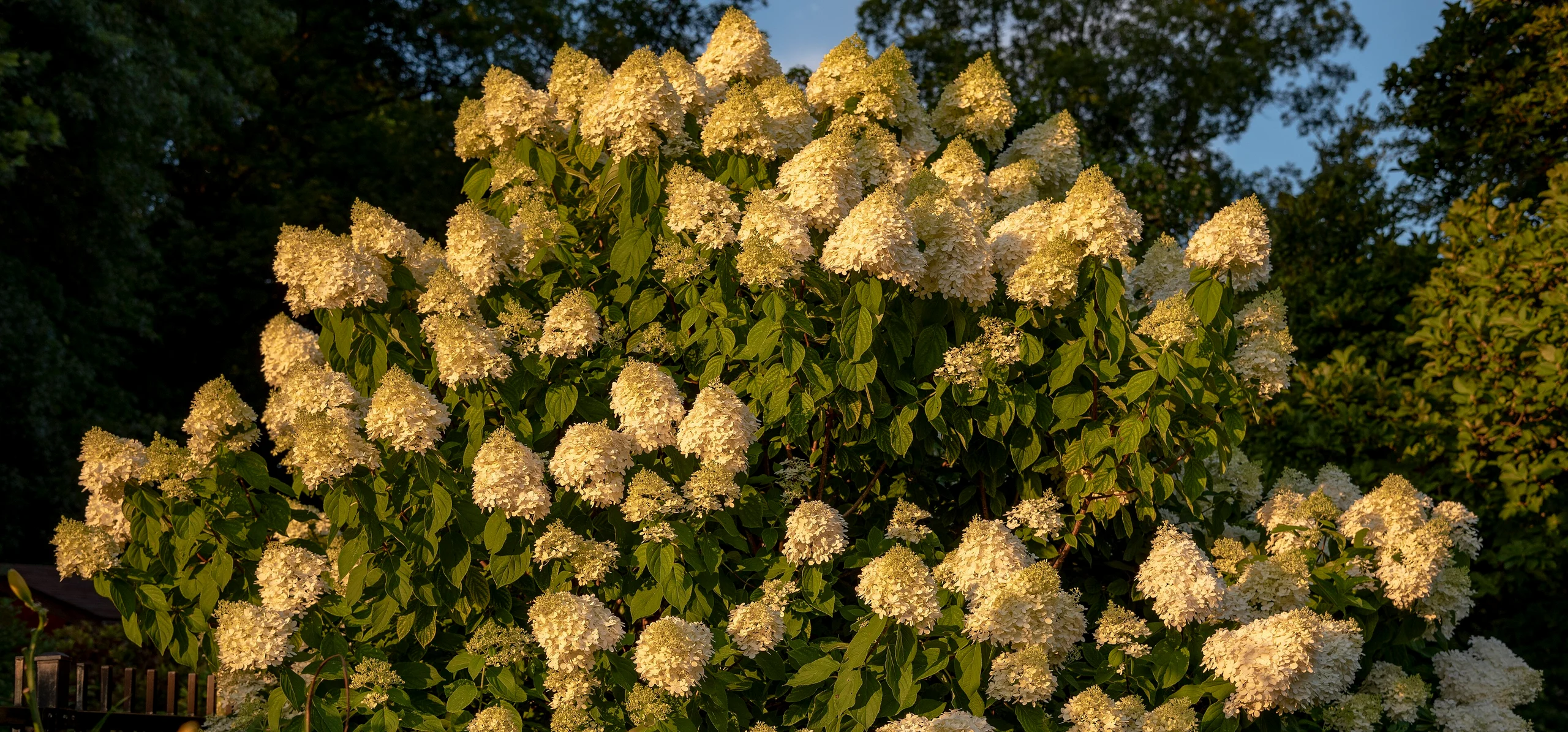
A rounded shrub with huge, globe-shaped flower clusters in blue, pink, purple or white is almost certainly Hydrangea macrophylla, the bigleaf hydrangea. GBIF's backbone taxonomy records the accepted name as Hydrangea macrophylla (Thunb.) Ser., in the family Hydrangeaceae, and Plants of the World Online lists its native range as south central Japan, extending to Izu Oshima and the Kazan Retto islands. NC State Extension catalogues the pile of common names it has picked up along the way: bigleaf hydrangea, French hydrangea, hortensia, lacecap hydrangea, and mop-head hydrangea, all the same species under different flower forms and marketing. The plant's single most important trait for a home grower is that it flowers on wood grown the previous year, which is why pruning timing decides whether a shrub blooms at all.
Mophead or Lacecap: Same Species, Two Flower Forms
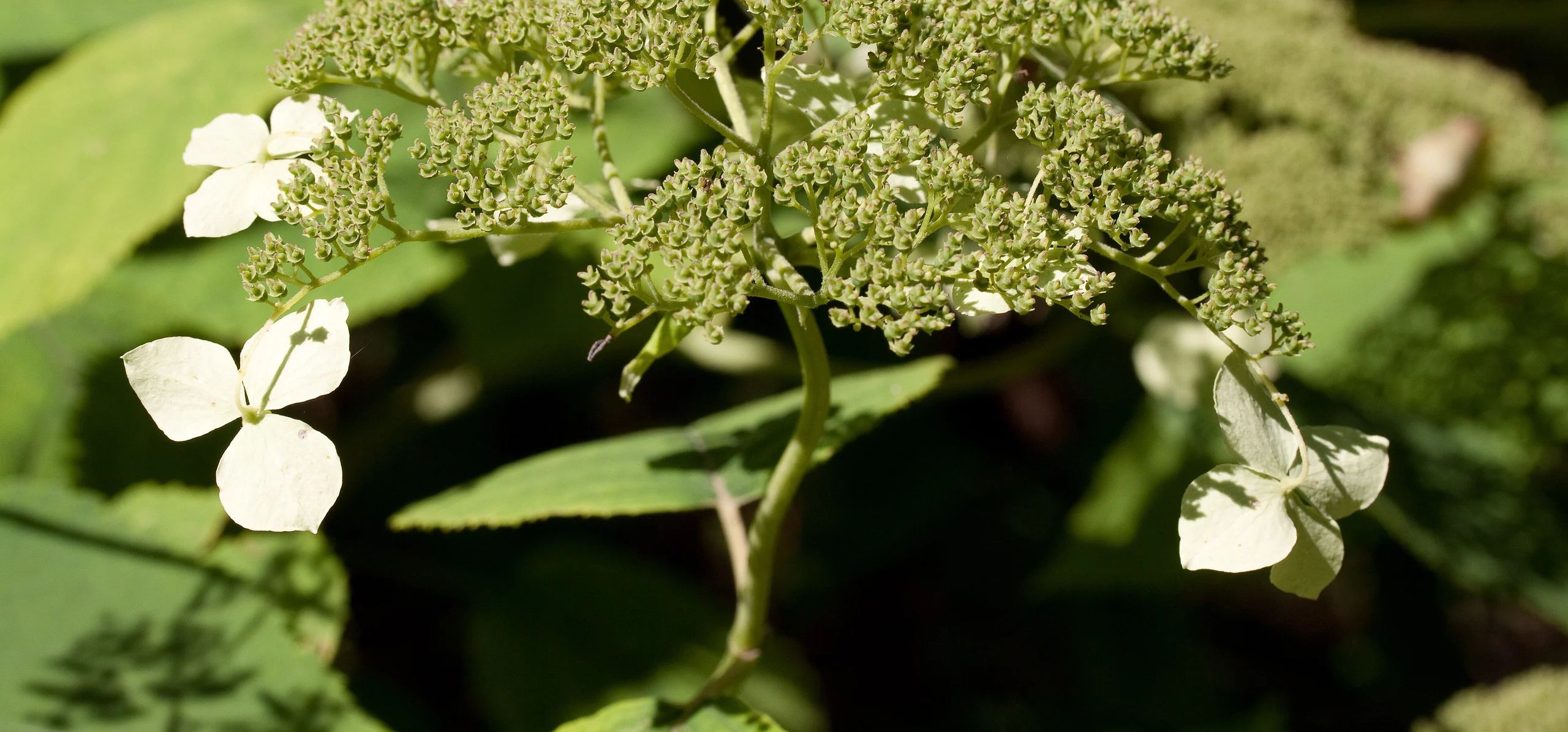
The names hortensia and mop-head hydrangea both describe the familiar dome of showy, mostly sterile florets that gardeners picture first. The lacecap form, listed under the same NC State Extension entry, carries a flatter flowerhead: a ring of large, showy florets around a center of small, fertile ones. Both forms are Hydrangea macrophylla, and both share the same care needs described below; the difference is purely in flower structure, not in how the plant grows, roots, or responds to soil and pruning.
Light and Placement: Morning Sun, Afternoon Shade
The Clemson HGIC factsheet on bigleaf hydrangea is direct about placement: morning sun with afternoon shade, and avoid hot, exposed sites. It names insufficient light as one cause of a shrub that grows leafy but never flowers. RHS lists the species as tolerant of full sun, partial shade, and any compass aspect, north, south, east or west, provided the site is sheltered, but that broader tolerance only holds where soil moisture stays reliable through the afternoon. In practice, an east-facing bed that gets direct sun in the cool morning and shade once the day heats up suits the plant better than a south-facing spot with no relief.


Watering: Deep and Weekly, More Often in Heat
Clemson HGIC recommends deep watering once a week as a baseline, more often during dry conditions, and notes that sandy soils in hot climates often need irrigation twice a week to prevent wilting. RHS's own soil guidance calls for ground that stays moist but well drained, never soggy and never left to dry out between waterings. A midday wilt that recovers once the sun drops is the plant signalling it needs a deeper soak rather than a sign of disease; a wilt that does not recover by evening means the roots have gone dry.
Soil and the pH Trick Behind Blue or Pink Blooms
Bigleaf hydrangea is one of the few garden shrubs where soil chemistry, not genetics, sets the flower color on most cultivars. Clemson HGIC gives exact thresholds: a soil pH of 5.0 to 5.5, kept acidic with sulfur or aluminum sulfate, produces blue blooms, while a pH of 6.0 or higher, raised with garden lime, produces pink. RHS lists the species as tolerant of clay, loam or sandy soil across acid, neutral or alkaline conditions, so the color shift is a matter of adjusting pH within that tolerance rather than changing soil type. White-flowered cultivars stay white regardless of pH, and any color change takes a full growing season to show through fully.
Pruning Without Losing Next Year's Flowers
This is where most flowerless hydrangeas are made. Because Hydrangea macrophylla sets its buds for next year on the current season's stems by late summer, Clemson HGIC's core rule is to avoid pruning after August 1, since later cuts remove the very growth that would have carried next year's blooms. The safe window is right after a flush finishes flowering: cut spent heads back to the first strong pair of buds and remove only dead or damaged stems. NC State Extension adds a useful winter note: dead stems can be cut to 12 to 24 inches and left standing rather than cleared away, since hollow stems of this height support stem-nesting bees over the cold months.
Feeding and Winter Hardiness
Clemson HGIC's fertilizing schedule calls for a balanced 10-10-10 feed at roughly two cups per 100 square feet, applied in March, May and July. For cold hardiness, RHS rates the species H5, hardy in most UK gardens even through severe winters, while NC State Extension lists it across USDA zones 6a to 11b. The plant's own stems tolerate more cold than its old-wood flower buds do, which is why a shrub can survive a hard winter with healthy new leaves and still fail to bloom that summer if the buds themselves were killed by frost.
Common Mistakes
The first mistake is pruning on a fixed autumn or early-spring schedule out of habit: Clemson HGIC's August 1 cutoff exists precisely because later cuts remove next year's buds, so timing has to follow the bloom, not the calendar. The second is planting in a south-facing spot for the sake of more sun without the steady moisture RHS says that placement requires, which leads to scorched leaves and collapsed blooms by midsummer. The third is assuming the plant is safe around animals: the ASPCA lists hydrangea, including the hortensia form of this species, as toxic to cats, dogs and horses, with a cyanogenic glycoside as the toxic principle and vomiting, depression and diarrhea as the typical signs, and NC State Extension separately notes that large quantities can cause nausea, stomach pain, vomiting and sweating in people as well. Keeping pets and children from chewing the leaves and flowers is worth the same attention as getting the pruning date right.
Test your plant knowledge
Tap a card to flip it and reveal the answer.
Hydrangea macrophylla sets its flower buds for next summer on the current season's stems by late summer. Tap to reveal ✓ True
Soil pH can change whether a bigleaf hydrangea's blooms turn blue or pink. Tap to reveal ✓ True
Bigleaf hydrangea flowers best in full, all-day direct sun. Tap to reveal ✕ False
The safest time to prune spent flower heads is in early spring, before new growth starts. Tap to reveal ✕ False
The ASPCA lists hydrangea as toxic to cats, dogs and horses. Tap to reveal ✓ True
Sources
References consulted for this guide
- Hydrangea macrophylla (Thunb.) Ser., GBIF Backbone Taxonomygbif.org
- RHS: Hydrangea macrophylla (H) hortensia, mophead hydrangearhs.org.uk
- NC State Extension Gardener Plant Toolbox: Hydrangea macrophyllaplants.ces.ncsu.edu
- Clemson HGIC Factsheet: Hydrangea (bigleaf hydrangea care)hgic.clemson.edu
- ASPCA: Toxic and Non-toxic Plants, Hortensiaaspca.org
- Reference entity : Wikipédiaen.wikipedia.org