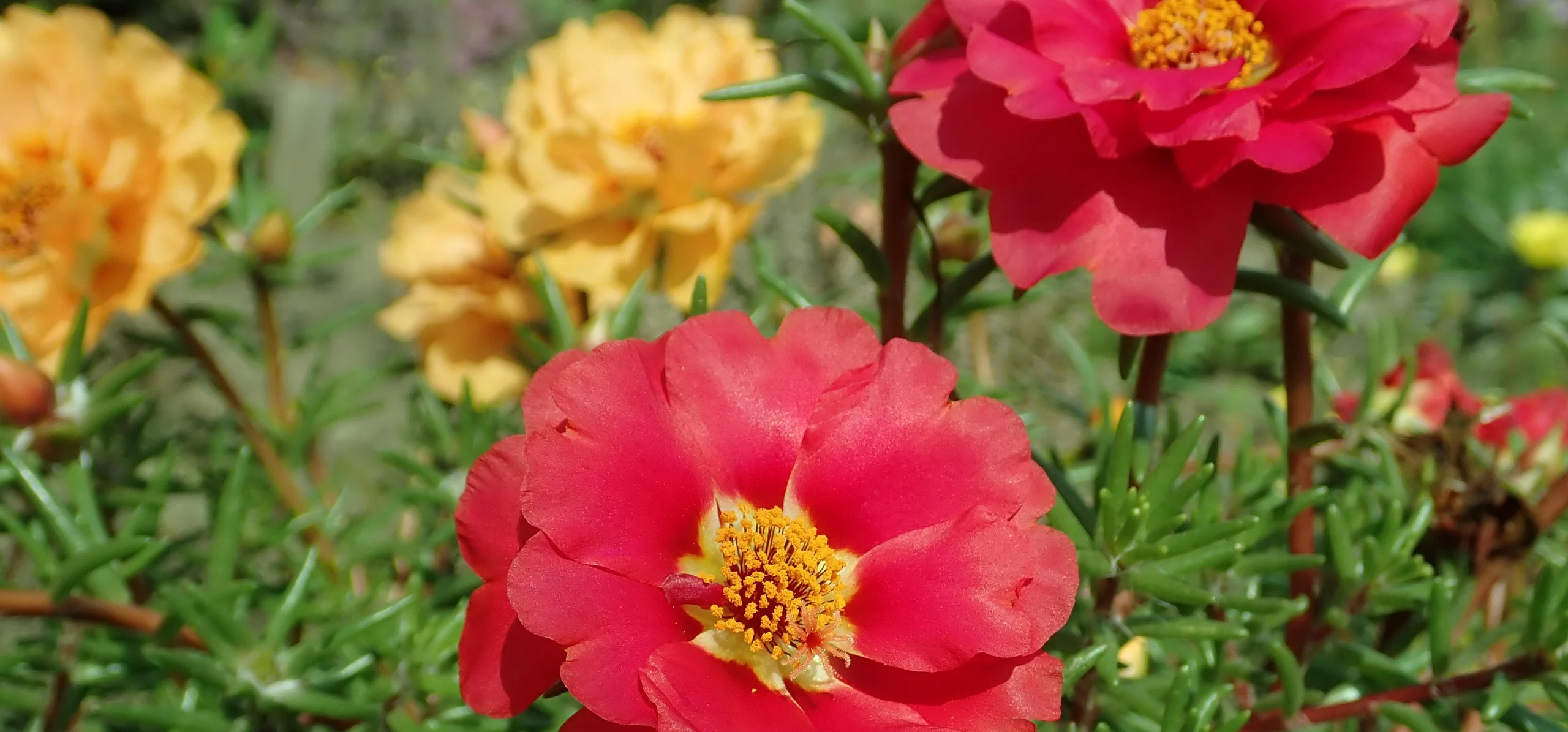
Common Purslane
Portulaca oleracea
Family · Portulacaceae
Common purslane grows as a weed or a vegetable: full sun, near any soil, drought tolerant once rooted, edible and high in omega-3s, but toxic to pets.
Portulaca oleracea
Plant profile
- WateringLittleWater every 5 days
- Light exposureFull sun
- Ideal temperature0–40 °C
- Hardiness zoneUSDA 2–11
Growth
- Family
- Portulacaceae
- Life cycle
- Annual
- Growth speed
- 8/10
- Mature size
- 8–40 cm
- Spread
- 15–90 cm
- Flowering
- Small yellow flowers, summer until frost
- Propagation
- Seed
- Cutting
DormancyNone, killed by frost
Time to maturity6 to 8 weeks to harvest
Soil & climate
- Soil types
- clay, loam, sand, muck
- Drought tolerance
- Yes
Light & Placement
- Origin
- Africa, Mediterranean Europe to South Asia
- Where to place it
- Bright south-facing windowsill for seed trays
- Open vegetable bed
- Raised bed in full sun
- Gravel paths and disturbed soil
- Wide shallow containers
- Window boxes
Safety
- Toxicity
- CatsToxic
- DogsToxic
- HorsesToxic
- HumansSafe
Invasive speciesPersistent weed, seeds stay viable in soil for decades
Data fromGBIF Backbone Taxonomy: Portulaca oleracASPCA Toxic and Non-Toxic Plants: PurslaNC State Extension Gardener Plant ToolboWisconsin Horticulture Extension: Common
Where it grows
World distribution
Common Purslane is native to 74 countries: Afghanistan, Albania, Algeria, Angola, Austria, Belgium, Benin, and British Indian Ocean Territory….GBIF records 197,574 documented identifications across 235 countries, with the largest concentrations in France, United States, and Australia.
- Afghanistan
- Albania
- Algeria
- Angola
- Austria
- Belgium
- Benin
- British Indian Ocean Territory
- Bulgaria
- Burkina Faso
- Burundi
- Cameroon
Show 62 more countriesShow fewer countries
- Cape Verde
- Central African Republic
- Chad
- Comoros
- Congo - Brazzaville
- Congo - Kinshasa
- Côte d’Ivoire
- Croatia
- Czechia
- Egypt
- Eritrea
- Ethiopia
- France
- Gabon
- Gambia
- Georgia
- Germany
- Greece
- Guinea
- Guinea-Bissau
- Hungary
- Iran
- Iraq
- Italy
- Kenya
- Kuwait
- Lebanon
- Liberia
- Libya
- Mali
- Mauritania
- Morocco
- Mozambique
- Netherlands
- Niger
- Nigeria
- Oman
- Pakistan
- Palestinian Territories
- Poland
- Portugal
- Réunion
- Romania
- Russia
- São Tomé & Príncipe
- Saudi Arabia
- Senegal
- Seychelles
- Sierra Leone
- Somalia
- Spain
- St. Helena
- Sudan
- Switzerland
- Tanzania
- Togo
- Tunisia
- Türkiye
- Uganda
- Ukraine
- United Arab Emirates
- Yemen
Yellow to orange dots: concentration of documented identifications per country. Green countries: sourced native range. Source: GBIFNative range from POWO (Kew).
Identifying Common Purslane
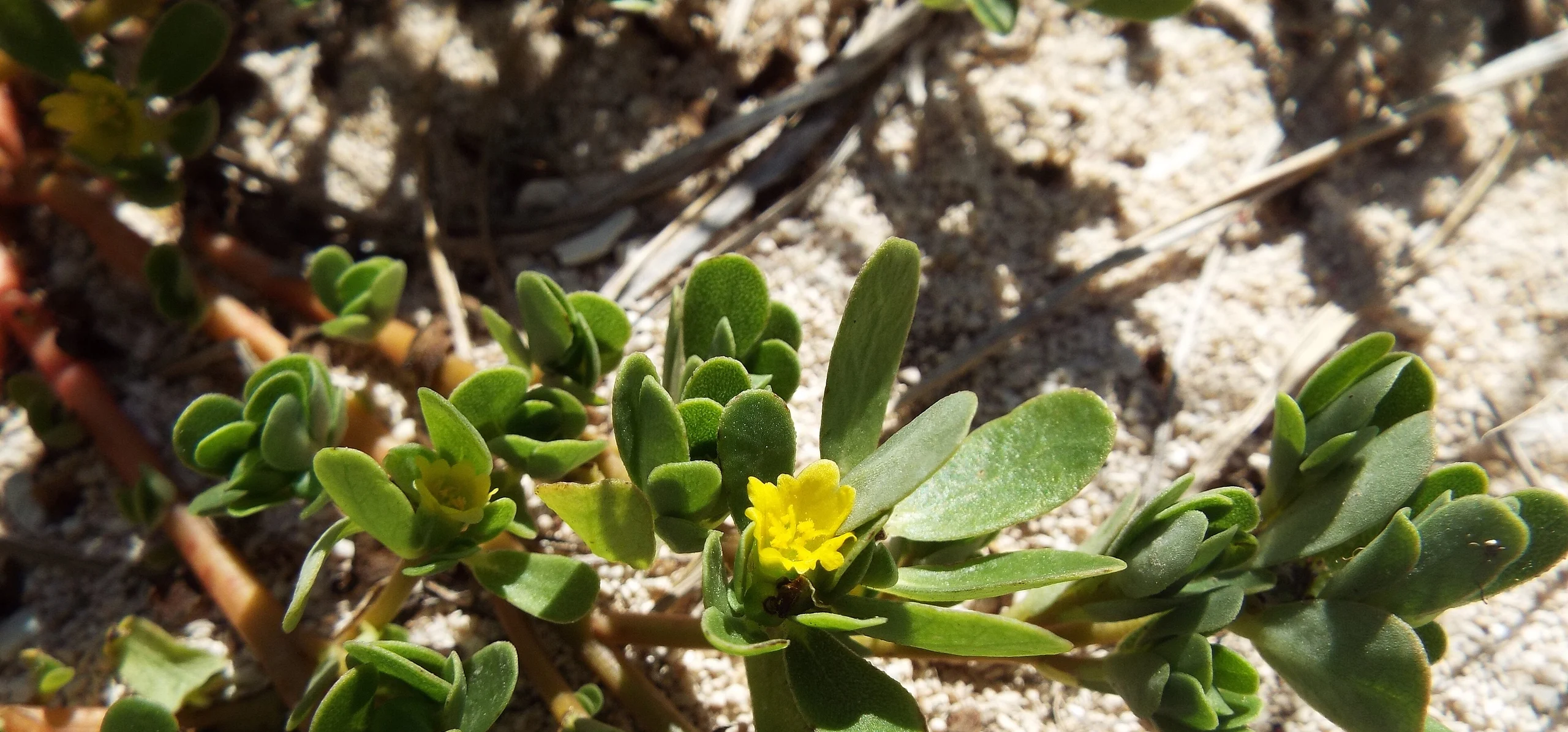
Common purslane grows as a low mat of smooth, reddish stems radiating from a single taproot, with fleshy, paddle-shaped leaves clustered at the joints and stem tips. The small yellow flowers have five notched petals and open only on sunny mornings, closing again by early afternoon. If you pulled this plant out of a vegetable bed or found it colonizing a gravel path, the first question is usually whether it is safe to leave alone or eat, and for humans the answer is yes: it is a genuine vegetable crop in many cuisines, though it carries a warning for pets that matters more than most people expect.
The one look-alike worth learning is prostrate spurge (Euphorbia maculata), which grows in the same cracks and disturbed soil and forms a similar low mat. Snap a stem: purslane bleeds a clear, watery sap, while spurge oozes a milky latex that irritates skin and is toxic if ingested. Purslane leaves are also thicker and glossier, without the small reddish-brown spot spurge often carries mid-leaf.
Growing Conditions: Sun, Soil, and Temperature
Purslane wants full sun, six or more hours of direct light a day, and grows fastest once soil has warmed in late spring. It tolerates almost any soil texture, from muck to heavy clay to poor gravelly ground, provided water does not sit for long. Growth stalls in cool weather and stops entirely at the first fall freeze, which kills the plant outright, so it behaves as a heat-loving annual even though gardeners in USDA zones 2a through 11b can all grow it for one warm season.
Sowing, Spacing, and Early Care
Seeds are dust-fine and need light to germinate, so scatter them on the surface of warm soil and press them in rather than burying them. Germination is quick once the soil holds steady warmth, and seedlings grow fast enough to be ready for a first harvest in six to eight weeks. Space plants anywhere from 12 inches to 3 feet apart depending on whether you want a dense salad patch or a sprawling groundcover, thinning crowded seedlings once the first true leaves appear.


Watering Purslane
Young seedlings need consistent moisture while their root system is shallow, but purslane's fleshy leaves and stems store enough water that established plants shrug off dry spells other vegetables cannot survive. Consistent watering through the growing season keeps the leaves tender and mild; letting the bed dry out repeatedly concentrates the naturally sour, tart flavor, which some cooks actually prefer. Waterlogged, poorly drained soil is more likely to cause problems than drought, since the succulent stems can rot where water pools.
Propagation From Cuttings and Seed
Purslane roots so readily from stem cuttings that this is often the easier route: press a 4 to 6 inch piece into moist soil and it will root at the leaf nodes within days. This same trait makes hand-weeding tricky, a cut stem left lying on damp soil will simply root again where it falls, so pulled plants need to be lifted clear of the bed or left to dry on a hard surface rather than tossed back onto the soil. Seed propagation works too, but the seeds are notorious for persisting in the soil for decades once a plant is allowed to set seed, which is the main reason purslane keeps reappearing in beds where it was never deliberately planted.
Harvesting and Eating Purslane
Cut stems, leaves, and unopened flower buds any time before the plant sets heavy seed; the youngest growth at the tips is the most tender. Harvest in early morning if possible, malic acid concentrations peak then and give the leaves their brightest, most lemony tartness before the midday sun mellows it. Eat purslane raw in salads for its crisp, slightly salty crunch, or cook it briefly, it turns mucilaginous like okra and works as a light thickener in soups. The leaves are a genuinely good source of alpha-linolenic omega-3 fatty acid, vitamin A, vitamin C, and potassium, but they also carry a meaningful oxalate load, so anyone prone to kidney stones should eat it in moderation rather than by the bowlful.
Managing Purslane as a Garden Weed
Where it is not wanted, hoe or hand-pull plants while young and before flowers appear, since a single mature plant can shed seed that stays viable in the soil for years. A layer of mulch thick enough to block light helps, since the dust-fine seeds need light exposure to germinate. Whatever method you use, remove the cut material from the bed rather than leaving it on the surface, purslane's habit of rooting from stem fragments means a weeding session can back-fire into a fresh crop of plants within the week.
Pets, Toxicity, and Safety
The ASPCA lists purslane as toxic to cats, dogs, and horses, the plant's soluble calcium oxalates can cause drooling, muscle weakness, and digestive upset if animals graze on it in quantity, with kidney injury possible in severe cases. Keep grazing horses and outdoor cats or dogs away from dense patches, particularly ones growing unchecked at the edge of a paddock or vegetable garden. For people, purslane has been eaten as a vegetable for thousands of years and is not considered toxic, the same oxalate content that concerns pet owners is simply a reason for moderation rather than avoidance in a normal human diet.
Test your plant knowledge
Tap a card to flip it and reveal the answer.
Common purslane is killed outright by the first fall frost. Tap to reveal ✓ True
Purslane needs shade to avoid scorching its leaves. Tap to reveal ✕ False
A cut purslane stem left lying on damp soil can root again and regrow. Tap to reveal ✓ True
Purslane seeds lose viability within a few weeks of hitting the soil. Tap to reveal ✕ False
The ASPCA lists purslane as toxic to cats, dogs, and horses. Tap to reveal ✓ True
Sources
References consulted for this guide
- GBIF Backbone Taxonomy: Portulaca oleracea L.gbif.org
- ASPCA Toxic and Non-Toxic Plants: Purslaneaspca.org
- NC State Extension Gardener Plant Toolbox: Portulaca oleraceaplants.ces.ncsu.edu
- Wisconsin Horticulture Extension: Common Purslanehort.extension.wisc.edu
- Reference entity : Wikipédiaen.wikipedia.org