Moss Rose
Portulaca grandiflora
Family · Portulacaceae
Moss rose thrives in poor, dry soil and full sun but rots in wet ground. Sowing, spacing, deadheading and the ASPCA mix-up with toxic purslane, explained.
Portulaca grandiflora
Plant profile
- WateringVery littleWater every 12 days
- Light exposureFull sun
Growth
- Family
- Portulacaceae
- Life cycle
- Annual
- Growth speed
- 7/10
- Mature size
- 8–20 cm
- Spread
- 15–30 cm
- Propagation
- Seed
FloweringSingle, semi-double or double flowers in red, orange, yellow, white and pink from summer to first frost; close on cloudy days and at night (Missouri Botanical Garden, RHS)
DormancyNone; dies at first frost
Time to maturityFast-growing annual; blooms from early summer until first frost (Missouri Botanical Garden)
Soil & climate
- Drought tolerance
- Yes
Soil typesPoor to average, well-drained chalk, loam or sand (RHS), Tolerates poor, dry, low-fertility ground (Missouri Botanical Garden)
Light & Placement
- Origin
- Peru to Brazil and Argentina (POWO)
- Where to place it
- Rock gardens, gravel gardens and sunny slopes (RHS)
- Border edging and hot, dry beds (Missouri Botanical Garden)
- Small terracotta or shallow containers with excellent drainage
- Hanging baskets for trailing series (RHS)
Safety
- Pet safe
- No
ToxicityNot listed by the ASPCA; the ASPCA's 'moss rose' and 'Portulaca' pages describe the unrelated, toxic weed Portulaca oleracea (purslane)
Data fromGBIF Backbone Taxonomy: Portulaca grandiPlants of the World Online (Kew): PortulRHS: Portulaca grandiflora (rose moss)NC State Extension: Portulaca grandiflorMissouri Botanical Garden Plant Finder:
Where it grows
World distribution
Moss Rose is native to 6 countries: Argentina, Bolivia, Brazil, Paraguay, Peru, and Uruguay.GBIF records 4,946 documented identifications across 157 countries, with the largest concentrations in United States, Argentina, and Brazil.
- Argentina
- Bolivia
- Brazil
- Paraguay
- Peru
- Uruguay
Yellow to orange dots: concentration of documented identifications per country. Green countries: sourced native range. Source: GBIFNative range from POWO (Kew).
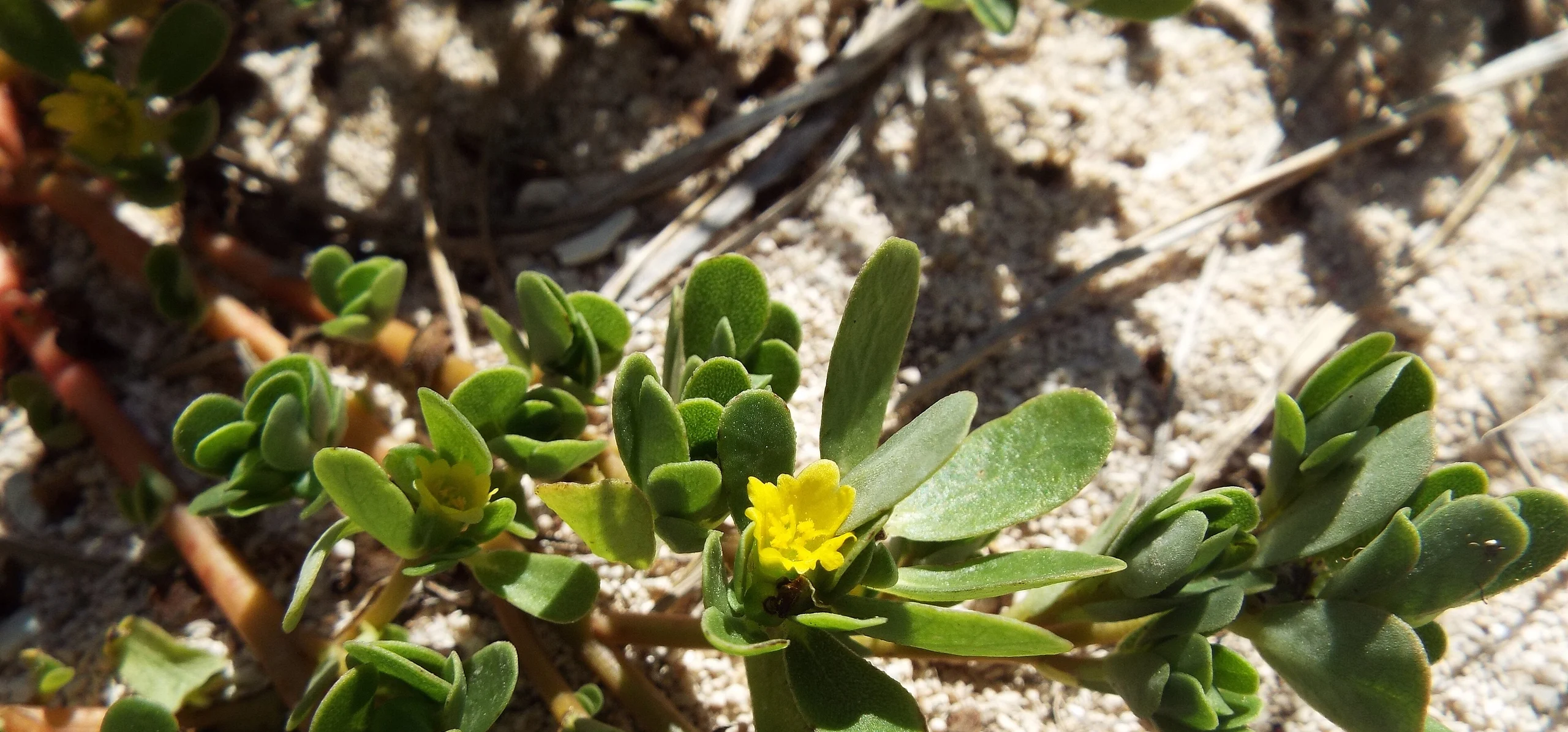
Moss rose earns its common name from the low mat of thread-like, succulent leaves it throws out before the first flower even opens, foliage so fine it reads more like a carpet of green needles than a bedding plant. Portulaca grandiflora is not fussy about soil fertility, but it is uncompromising about two things: full sun and drainage. Give it a gritty, dry spot and it flowers non-stop from early summer to the first frost; give it damp shade and the stems rot at the base within weeks. The ruffled flowers close by early afternoon and stay shut on grey days, which is normal and not a sign of stress.
Choosing a variety and color
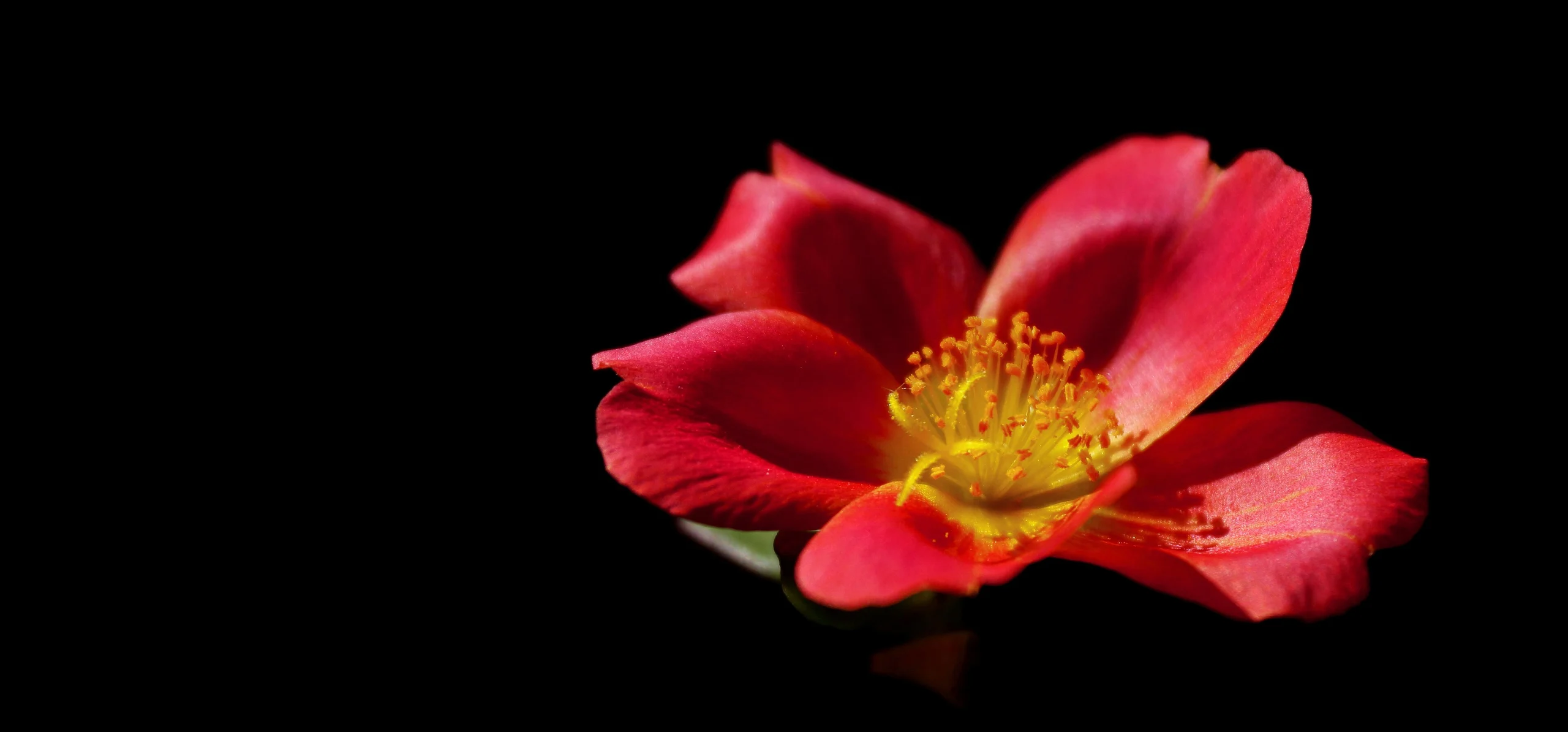
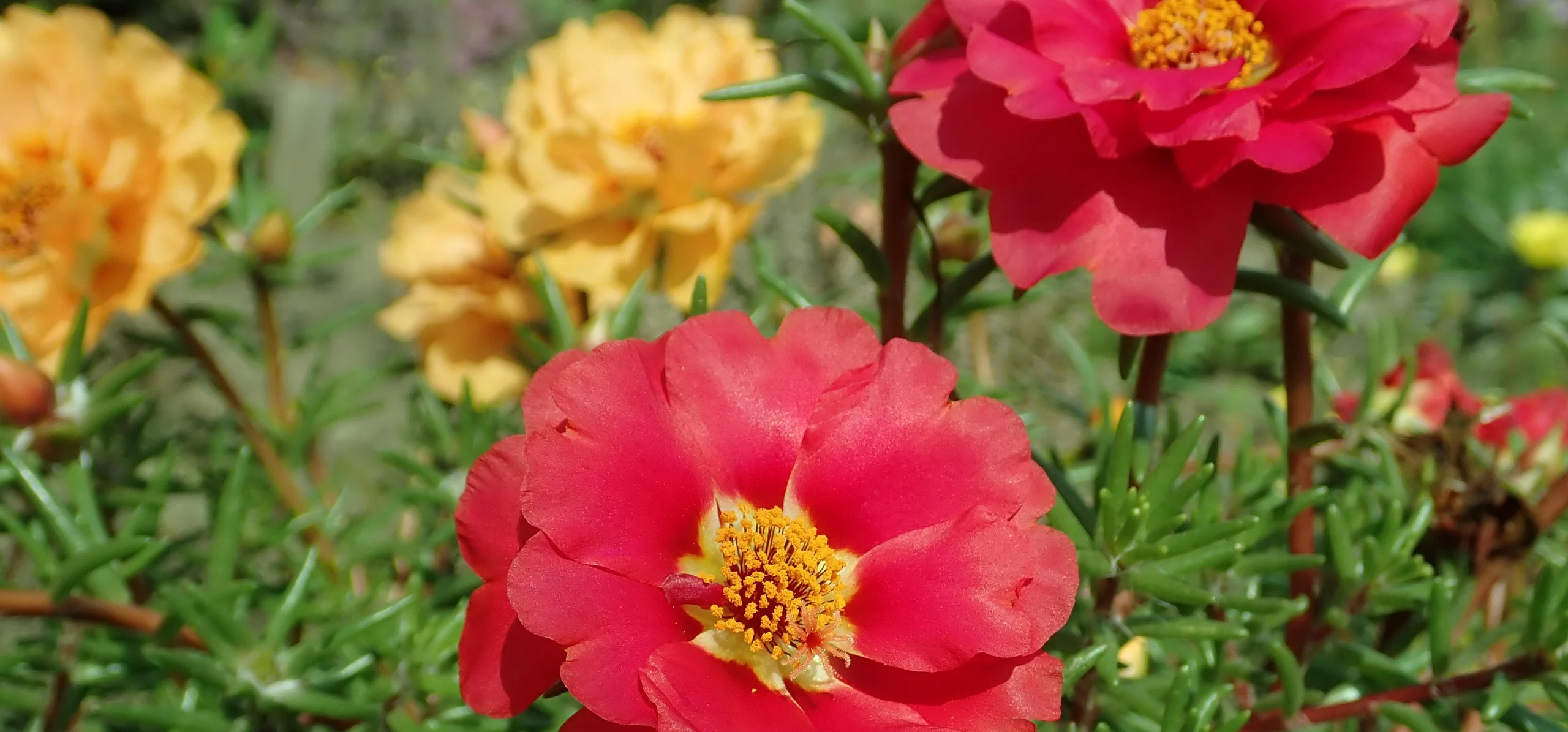
Wild-type plants have single, five-petaled flowers in red, orange, yellow, white or pink, but almost everything sold as bedding plants today is a bred series with semi-double or fully double, rose-like blooms (Missouri Botanical Garden). RHS lists several named series worth knowing when you're shopping:
- Sundial series: compact plants that open earlier in the day and stay open longer than older cultivars
- Happy Trails series: extra-vigorous and trailing, suited to hanging baskets and wall pots
- Fairytales series: large, fully double flowers closer in form to a miniature rose
Double-flowered cultivars set little to no seed, so buying a fresh seed packet or plug tray each spring is normal rather than a failure on your part.
Light and why the flowers close
Moss rose needs full sun, six or more hours of direct sunlight a day, to flower well (NC State Extension); in anything less, growth stretches and the mat of foliage opens into bare, leggy stems. The flowers are photonastic: each bloom opens with the morning light and closes again by early afternoon, staying shut entirely on cloudy or rainy days (Missouri Botanical Garden). Plant it somewhere you actually walk past in the morning, a path edge or a sunny windowsill box, rather than a spot you only see in the evening.


Soil and drainage
This is a plant built for poor ground. RHS growing notes list chalk, loam and sand as suitable, spanning acid to alkaline soils, and Missouri Botanical Garden singles it out as one of the best annuals for hot, dry, low-fertility sites. The one condition it cannot tolerate is standing water: in soil that stays wet after rain, crown rot sets in at the base of the stems within a season (NC State Extension, RHS). If a bed drains slowly, raise the planting area a few centimetres or work coarse grit or sand into the top 15 cm before planting, rather than amending with compost, which holds more moisture than moss rose wants.
Watering and drought tolerance
Once established, moss rose is genuinely drought resistant (RHS, NC State Extension), and the biggest mistake is treating it like a thirsty bedding annual and watering on a fixed schedule. Water new transplants in well for the first week or two while roots establish, then stop unless the soil has been dry for several days and the foliage starts to look slightly deflated. In containers, which dry out faster than open ground, check the pot by feel rather than by the calendar; the thick, water-storing leaves are the plant's own reservoir, and overwatering is far more likely to kill it than underwatering.
Starting from seed and transplanting
Moss rose seed is dust-fine and needs light to germinate, so press it onto the soil surface rather than burying it. RHS recommends sowing under cover at 13 to 18 degrees C in mid-spring, then hardening off and planting out only after the last frost, since seedlings have no frost tolerance. Direct sowing works too once soil has warmed in late spring, though germination is more even in a tray on a warm windowsill than outdoors. Space plants roughly 15 to 30 cm apart (NC State Extension) so trailing stems can fill in without crowding, which also improves airflow around the base and lowers the risk of crown rot.
Deadheading, cutting back and self-seeding
Deadheading is optional on modern double series, which set little seed, but on single-flowered types removing spent blooms keeps the plant flowering instead of ripening seed pods. Left alone, single-flowered moss rose self-seeds readily and often reappears in the same bed the following year without help. If the mat starts to look thin and woody by midsummer, shearing it back by about a third encourages a flush of new, denser growth and a second wave of flowering into autumn.
Pests, diseases and common mistakes
Aphids are the main pest to watch for, usually clustering on new growth tips; a strong jet of water or insecticidal soap clears light infestations (NC State Extension, Missouri Botanical Garden). Slugs occasionally graze young seedlings but rarely bother established plants. Beyond crown rot from wet soil, moss rose has no serious disease problems, though damping off can take out seedlings started in soil kept too consistently damp (RHS).
One naming mix-up worth clearing up: the ASPCA's toxic-plant pages titled "Moss Rose" and "Portulaca" both describe Portulaca oleracea, the edible weed also known as purslane, which the ASPCA lists as toxic to dogs, cats and horses because of soluble calcium oxalates. Portulaca grandiflora, the ornamental species covered here, does not appear on the ASPCA's lists under its own name, so treat its safety around pets as unconfirmed rather than assume it shares its weedy relative's profile either way.
Test your plant knowledge
Tap a card to flip it and reveal the answer.
Moss rose flowers stay closed on cloudy or rainy days. Tap to reveal ✓ True
The ASPCA lists Portulaca grandiflora by name as toxic to dogs, cats and horses. Tap to reveal ✕ False
Wet or poorly drained soil raises the risk of crown rot in moss rose. Tap to reveal ✓ True
Most double-flowered moss rose cultivars sold today are easily grown from seed saved off the previous year's plants. Tap to reveal ✕ False
Moss rose needs at least six hours of direct sun a day to flower well. Tap to reveal ✓ True
Sources
References consulted for this guide
- GBIF Backbone Taxonomy: Portulaca grandiflora Hook.gbif.org
- Plants of the World Online (Kew): Portulaca grandiflora Hook.powo.science.kew.org
- RHS: Portulaca grandiflora (rose moss)rhs.org.uk
- NC State Extension: Portulaca grandifloraplants.ces.ncsu.edu
- Missouri Botanical Garden Plant Finder: Portulaca grandifloramissouribotanicalgarden.org
- Reference entity : Wikipédiaen.wikipedia.org