Elephant Bush
Portulacaria afra
Family · Didiereaceae
Portulacaria afra care: RHS hardiness and sizing, seasonal watering, well-drained soil, pruning into a bonsai shape, and propagation from softwood cuttings.
Portulacaria afra
Plant profile
- WateringLittleWater every 14 days
- Light exposurePartial sun
Growth
- Family
- Didiereaceae
- Life cycle
- Perennial
- Growth speed
- 3/10
- Mature size
- 150–250 cm
- Spread
- 100–150 cm
- Flowering
- Small pale pink flowers in summer clusters (RHS)
- Propagation
- Cutting
Dormancyslows markedly in winter, kept nearly dry
Time to maturityreaches ultimate size in 10 to 20 years (RHS)
Soil & climate
- Soil types
- well-drained loam or sand, cactus/succulent compost
- Drought tolerance
- Yes
Light & Placement
- Origin
- Southern & East Africa (NW Kenya, S Mozambique to S Africa)
- Where to place it
- brightest window available
- sunny conservatory
- sheltered south- or west-facing spot, frost-free season only
- terracotta or any pot with good drainage
Safety
- Toxicity
- Not evaluated by the ASPCA; toxicity undetermined
- Pet safe
- No
Data fromPortulacaria afra Jacq., GBIF Backbone TPortulacaria afra Jacq., Plants of the WRHS
Where it grows
World distribution
Elephant Bush is native to 4 countries: Eswatini, Kenya, Mozambique, and South Africa.GBIF records 4,506 documented identifications across 40 countries, with the largest concentrations in South Africa, Italy, and Spain.
- Eswatini
- Kenya
- Mozambique
- South Africa
Yellow to orange dots: concentration of documented identifications per country. Green countries: sourced native range. Source: GBIFNative range from POWO (Kew).
Portulacaria afra, sold almost everywhere as elephant bush, is the small-leaved, reddish-stemmed succulent that gets mistaken for a miniature jade plant on a nursery shelf, though the two belong to entirely different plant families. It is one of the easiest woody succulents to keep alive: the thick, water-storing stems shrug off a missed watering, and a plant left dry for a few weeks will usually just shed a handful of leaves rather than die outright. What actually kills it is the opposite habit, cold and wet soil through winter, since the RHS rates it hardy only down to 10 to 15°C and treats it as a plant for a bright room or a sheltered summer patio rather than a garden shrub in a temperate climate. Give it strong light, soil that drains fast, and a light hand with the watering can, and the same cutting that arrived as a single stem in a small pot can be trained into a dense little tree within a few years.
Where elephant bush comes from, and why it is not a jade plant
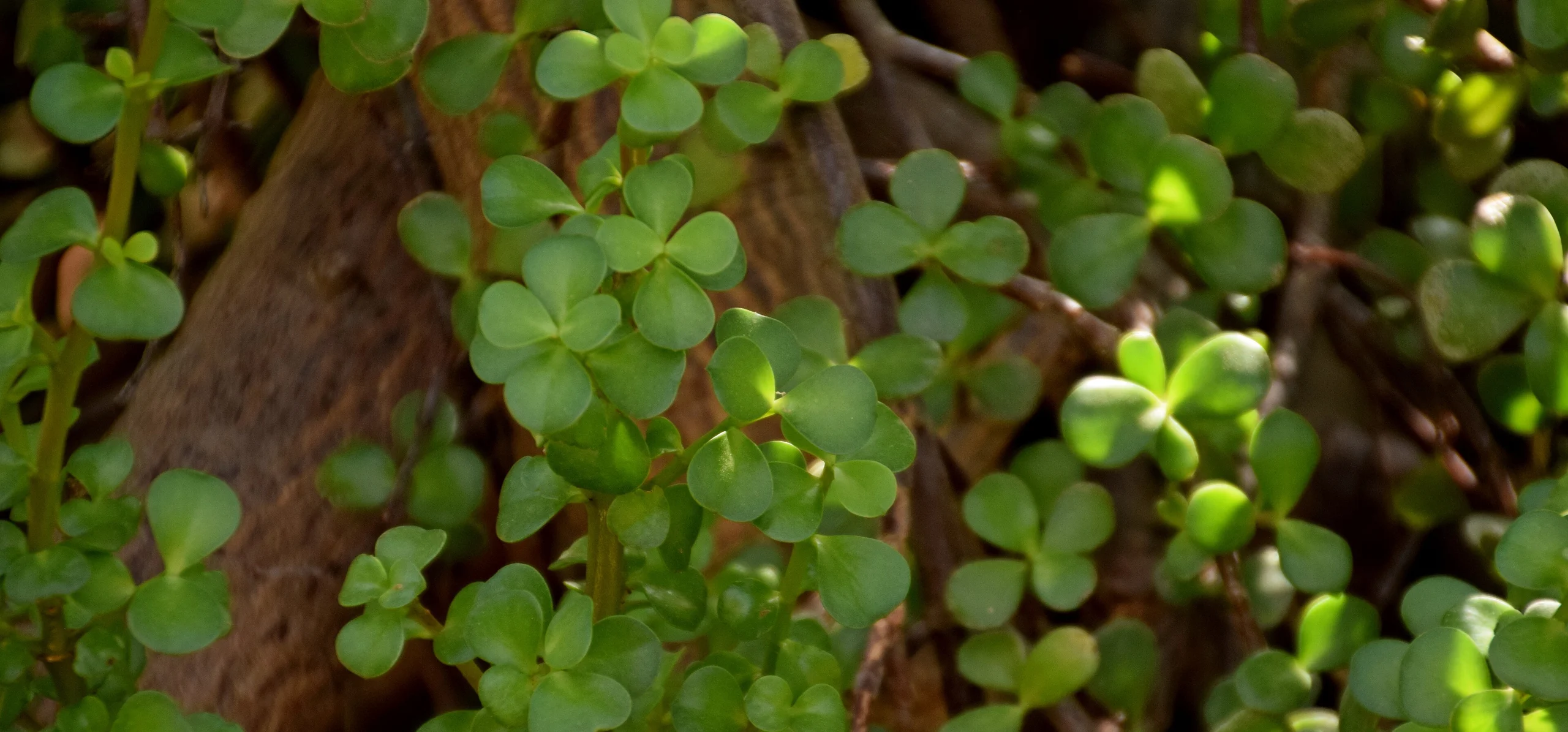
GBIF's accepted name for this species is Portulacaria afra Jacq., placed in the family Didiereaceae, genus Portulacaria, order Caryophyllales. Kew's Plants of the World Online lists its native range as NW Kenya and S Mozambique down to S Africa, with its real stronghold in South Africa's Eastern Cape, where dense stands of elephant bush form thickets browsed heavily by elephants, kudu and tortoises, which is where the common name comes from. Despite the resemblance, it is not related to the jade plant, Crassula ovata, which sits in the separate family Crassulaceae. The giveaway is the foliage: elephant bush carries small, near-round leaves densely packed along thin, wiry, reddish stems, while jade plant has larger paired leaves on thicker, greener stems.
Light and placement
The RHS lists elephant bush for full sun to partial shade, with a south- or west-facing, sheltered aspect as the reference position outdoors. Indoors, give it the brightest window in the house. In lower light the stems stretch and thin out between leaves, the new growth loses the reddish flush that colours healthy stems, and the whole plant leans toward the light source instead of growing upright. A plant that has been indoors all winter benefits from a gradual move into stronger light in spring rather than a sudden jump outdoors, since foliage that adjusted to a dim room can scorch when it meets direct midday sun too quickly.


Watering through the seasons
RHS guidance is specific here: water generously from mid-spring through mid-autumn, then keep the compost almost dry for the rest of the year. The fleshy stems and leaves store enough water to carry the plant through this dry rest without visible stress, so the risk runs almost entirely in one direction. Soil that stays wet through a cool winter is the single most common cause of stem and root rot in this species, far more often than underwatering ever is. During the growing season, let the top of the mix dry out before watering again rather than working to a fixed calendar, since a plant in a bright, warm spot dries out faster than the same plant in a cooler room.
Soil and potting
RHS soil guidance calls for loam or sand, well-drained, tolerant of acid, neutral or alkaline conditions, which in practice means elephant bush is far more particular about drainage than about the exact composition of the mix. A standard cactus compost, or a peat-free potting soil cut with extra sand or grit, works well as long as excess water leaves the pot quickly. Always use a container with a drainage hole. Because the RHS records a time to ultimate height of 10 to 20 years for a full 1.5 to 2.5 metre plant, repotting is an occasional job rather than an annual one, needed mainly when roots fill the pot or the top-heavy stems start to tip it over.
Pruning and training into a bonsai shape
RHS places elephant bush in pruning group 1, meaning it needs little routine pruning to stay healthy, but it tolerates being cut back hard, which is exactly why it is such a popular subject for bonsai and for clipped hedges in frost-free gardens. Pinching the soft tips of young stems forces branching lower down and produces a denser, bushier plant instead of a few long, leggy ones. Any healthy stem removed during shaping is a ready-made cutting, so pruning and propagation tend to happen at the same time on a plant grown for its trunk and branch structure.
Propagation from cuttings
The RHS recommends softwood cuttings taken in spring, rooted with bottom heat. Take a cutting a few centimetres long, remove the lowest leaves, and let the cut end dry in the air until it has formed a firm callus before it goes into gritty, well-drained compost. Keep the cutting on the dry side while it roots, since a fresh wound sitting in damp soil is prone to rot before roots have a chance to form. Because the stems root so readily, elephant bush is one of the more forgiving succulents to propagate from a single stray branch that snaps off during handling.
Winter protection, pests and common mistakes
With an RHS hardiness rating of H1B, elephant bush can only go outside for the warmer months and needs protection once temperatures fall toward 10 to 15°C, since it has no meaningful tolerance for cold, let alone frost. In a temperate climate, that means moving a potted plant to a bright room, conservatory or heated greenhouse well before the first cool autumn nights. The RHS notes it may develop scale insects, seen as small, static brown bumps along the stems, and is otherwise generally disease-free, so check the stems occasionally rather than treating the plant as maintenance-free. The two mistakes that cause the most losses are watering on the same generous schedule through winter that suits the growing season, and leaving the plant too dim for too long, which produces the stretched, pale, upright growth that no amount of later sun fully reverses.
Test your plant knowledge
Tap a card to flip it and reveal the answer.
Elephant bush and the jade plant, Crassula ovata, belong to the same botanical family. Tap to reveal ✕ False
According to the RHS, elephant bush should be watered generously from mid-spring to mid-autumn and kept much drier the rest of the year. Tap to reveal ✓ True
The RHS rates elephant bush hardy enough to survive outdoors through a hard winter frost. Tap to reveal ✕ False
Elephant bush is usually propagated from softwood stem cuttings, often rooted with bottom heat in spring. Tap to reveal ✓ True
Portulacaria afra is native only to South Africa's Eastern Cape and grows wild nowhere else. Tap to reveal ✕ False
Sources
References consulted for this guide
- Portulacaria afra Jacq., GBIF Backbone Taxonomygbif.org
- Portulacaria afra Jacq., Plants of the World Online (Kew)powo.science.kew.org
- RHS - Portulacaria afra (elephant bush)rhs.org.uk
- Reference entity : Wikipédiaen.wikipedia.org