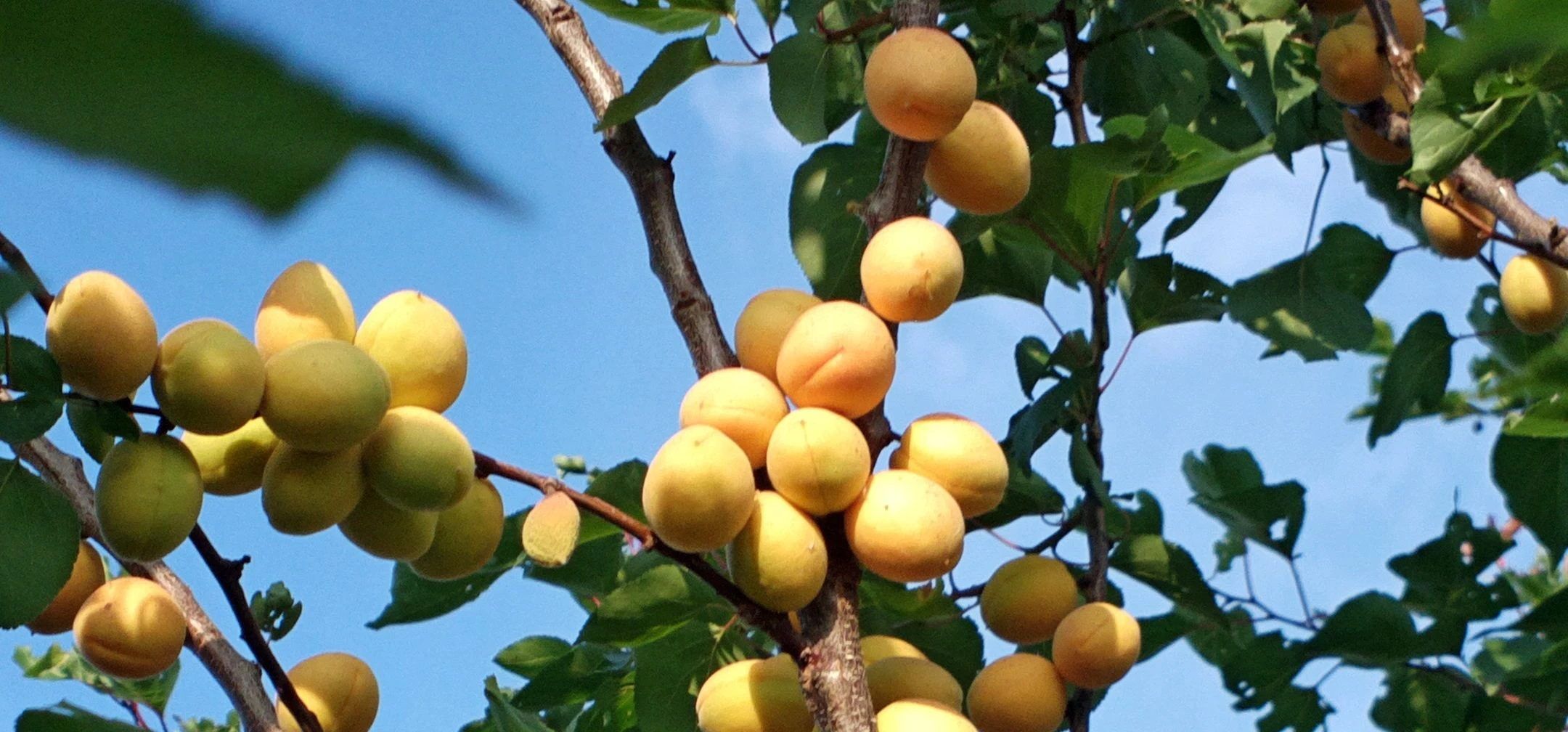
Apricot
Prunus armeniaca
Family · Rosaceae
Apricot trees need 600 to 900 chilling hours, frost-free bloom and late-summer pruning: what the RHS, UC IPM and NC State actually recommend.
Prunus armeniaca
Plant profile
- WateringModerateWater every 14 days
- Light exposureFull sun
- Hardiness zoneUSDA 5–7
Growth
- Family
- Rosaceae
- Life cycle
- Perennial
- Growth speed
- 5/10
- Mature size
- 400–1200 cm
- Spread
- 400–1200 cm
- Flowering
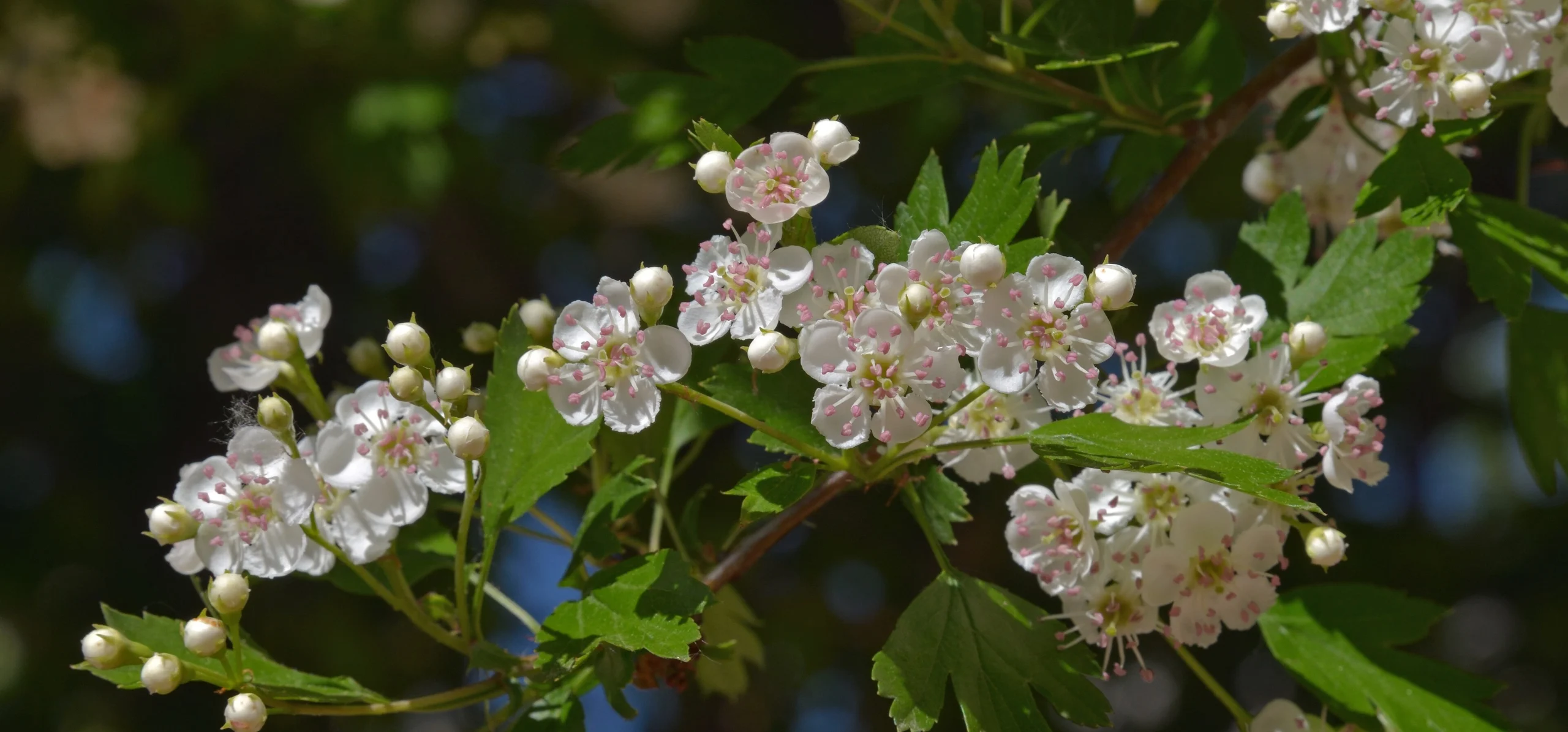
- Blossom in late winter to early spring; fruit ripens through summer
- Propagation
- Cutting
- Grafting
DormancyDeciduous; needs sustained winter chill before spring bud break (UC IPM)
Time to maturityBegins fruiting 3 to 5 years after planting (NC State Extension); reaches full size in 10 to 20 years (RHS)
Soil
- Soil pH
- pH 6–8
- Soil types
- chalk, clay, loam, sand
Light & Placement
- Origin
- Native to Central Asia to northern and central China (POWO)
- Where to place it
- Open, sheltered orchard position in full sun
- South- or west-facing wall for extra warmth and frost protection (RHS)
- Site away from ground prone to late spring frost (UC IPM)
- Dwarf or patio cultivars such as 'Garden Aprigold' in a large container (RHS)
Safety
- Toxicity
- CatsToxic
- DogsToxic
- HorsesToxic
- HumansToxic
Data fromPrunus armeniaca L., GBIF Backbone TaxonRHS: Prunus armeniaca (apricot)North Carolina Extension Gardener Plant UC IPM: Cultural Tips for Growing ApricoASPCA: Toxic and Non-Toxic Plants, Apric
Where it grows
World distribution
Apricot is native to 5 countries: China, Greece, Kazakhstan, Kyrgyzstan, and Uzbekistan.GBIF records 31,708 documented identifications across 91 countries, with the largest concentrations in France, Italy, and United States.
- China
- Greece
- Kazakhstan
- Kyrgyzstan
- Uzbekistan
Yellow to orange dots: concentration of documented identifications per country. Green countries: sourced native range. Source: GBIFNative range from POWO (Kew).
A young Prunus armeniaca in a nursery pot looks unremarkable, low branches, pale green ovate leaves with two small glands where the blade meets the stalk, but it carries a narrow set of demands behind that easy-going look. It needs a real winter, 600 to 900 hours below 45°F for most varieties, to flower on schedule, then a frost-free week or two right when that early blossom opens. Get the site and the chilling right and a single tree typically starts fruiting within three to five years and keeps producing for decades; get either wrong and it survives but blooms erratically or drops a whole crop to one cold night.
A Stone Fruit From Central Asia With a Narrow Comfort Zone
GBIF records the accepted name as Prunus armeniaca L., placing it in the rose family Rosaceae alongside plums, cherries and almonds, all species of the same genus, Prunus. Plants of the World Online gives its native range as Central Asia to northern and central China, a continental origin that explains much of how the tree behaves in a garden far from home. NC State Extension describes the leaves as ovate with serrated margins and two small glands where the blade meets the stalk, and the fruit as fleshy with a large stone, yellow to reddish when ripe. None of that makes the tree hard to keep alive; what makes it moderately demanding is timing. Match its winter chill and spring frost window to your climate and it fruits reliably for decades.
Matching a Variety to Your Winter and Site
Most apricot varieties need 600 to 900 hours below 45°F (about 7°C) over winter before they flower and set fruit properly, according to the University of California's IPM program; a handful of low-chill selections still crop reliably on as little as 350 hours, the number worth checking before planting in a mild-winter region. The RHS lists dozens of cultivars for UK gardens, from the classic, high-chill 'Moorpark' to compact patio forms bred for containers, such as 'Garden Aprigold'. Site selection matters as much as variety: UC IPM calls for full sun, good air circulation, and soil that is well-drained, at least four feet deep, and a fertile, slightly acidic sandy loam, while steering clear of ground prone to flooding, late spring frost or high rainfall. The RHS reaches a compatible conclusion for cooler gardens, rating the species hardy to H4 (average minimum -10 to -5°C) but calling for a south- or west-facing, sheltered aspect, because it is the early blossom, not the wood, that a hard frost actually kills.
Watering: Deep Soaks, Not Sips
A newly planted tree needs up to 3 to 5 gallons of water a week through its first growing seasons, per UC IPM, delivered around the drip line rather than against the trunk, where standing moisture invites root and crown disease. Established trees do better on deep, infrequent irrigation, roughly every 2 to 3 weeks, soaking the soil to a depth of 3 to 6 feet rather than wetting the surface little and often; shallow, frequent watering builds a shallow root system that struggles the moment the weather turns dry. The RHS and NC State Extension both list the tree as needing soil that stays moist but drains freely, chalk, clay, loam or sand all being acceptable as long as water never pools around the roots.


Frost Is the Real Threat to the Crop, Not Cold
The RHS is blunt about the central paradox of growing apricots this far from Central Asia: the tree itself is fully hardy, but it blooms so early that open flowers are routinely killed by a frost the wood itself would shrug off. NC State Extension places bloom time in late winter to early spring, exactly when a clear, cold night is still likely across most temperate climates, which is why the species is described as susceptible to frost damage despite its hardiness. UC IPM's site advice follows the same logic from the other direction: avoid ground prone to late spring frost, not just flooding or heavy rain, when choosing where to plant. On a forecast frosty night during flowering, the RHS's standard advice is to drape the tree with horticultural fleece in the evening and remove it in the morning so pollinators can still reach the flowers, and to hand pollinate with a soft brush if insect activity is low during the bloom window.
Prune Late Summer, Not Winter
The RHS places apricots in pruning group 1, meaning light pruning done ideally in summer specifically to reduce the risk of silver leaf disease, which infects stone fruit through wounds made in cold, damp weather. UC IPM is more specific for wet-winter climates: prune in late August, giving the cuts time to callus over before autumn rain arrives and reducing the entry points for Eutypa dieback. Train a young tree to an open vase or modified vase, with 3 to 4 main scaffold branches and no central leader, cutting a first-year tree back to 24 to 32 inches above the graft union to force that structure; in later years the job is mostly removing dead, damaged and crossing wood and thinning crowded interior shoots so light and air reach the centre of the canopy. UC IPM's disease advice reinforces the same discipline: disinfect pruning tools between cuts and remove diseased wood promptly rather than leaving it in the canopy.
Thin the Fruit, Then Let the Tree Finish the Job
An apricot in full flower routinely sets more fruit than it can properly size, and UC IPM's fix is specific: once the fruitlets reach about an inch across, thin them to 4 to 6 inches apart along the branch, which curbs the alternate-bearing pattern of a huge crop one year and almost nothing the next. NC State Extension notes that most varieties are self-pollinating and that trees typically start bearing 3 to 5 years after planting. Apricots do not sweeten meaningfully once picked, so UC IPM's harvest signal matters: pick when the fruit has turned yellow and is just starting to soften while still firm, not once it has gone fully soft, and expect it to keep only 1 to 3 weeks even stored cool.
Pests, Diseases and the One Real Safety Note
NC State Extension lists the tree's recurring problems as fruit tree leafrollers, peach tree borers, aphids, Japanese beetles, plum curculio and mites among the pests, with brown rot as the major disease alongside bacterial canker, bacterial leaf spot and powdery mildew, and bark described as susceptible to a range of fungal infections, the practical case for the sanitation habits above. The safety note concerns the pits, not the fruit: the ASPCA lists apricot as toxic to dogs, cats and horses, with cyanogenic glycosides concentrated in the stems, leaves and seeds and clinical signs including brick red mucous membranes, dilated pupils, difficulty breathing and shock, worse when the plant material is wilting. NC State Extension adds the human angle: the flesh is edible raw, dried or cooked once pitted, but the leaves, seeds and stems are poisonous; a couple of swallowed pits is unlikely to cause real poisoning, though crushed or chewed seeds are more dangerous. Clear fallen fruit and pits from where pets or young children play rather than relying on the tough seed coat alone.
Test your plant knowledge
Tap a card to flip it and reveal the answer.
Most apricot varieties need 600 to 900 chilling hours below 45°F to flower and fruit well. Tap to reveal ✓ True
Winter is the best time to prune an apricot tree. Tap to reveal ✕ False
A spring frost during bloom can wipe out the crop even though the tree itself is fully hardy. Tap to reveal ✓ True
The ASPCA lists apricot as safe for dogs, cats and horses to eat. Tap to reveal ✕ False
Deep, infrequent watering suits an established apricot better than frequent light watering. Tap to reveal ✓ True
Sources
References consulted for this guide
- Prunus armeniaca L., GBIF Backbone Taxonomygbif.org
- RHS: Prunus armeniaca (apricot)rhs.org.uk
- North Carolina Extension Gardener Plant Toolbox: Prunus armeniacaplants.ces.ncsu.edu
- UC IPM: Cultural Tips for Growing Apricotipm.ucanr.edu
- ASPCA: Toxic and Non-Toxic Plants, Apricotaspca.org
- Reference entity : Wikipédiaen.wikipedia.org