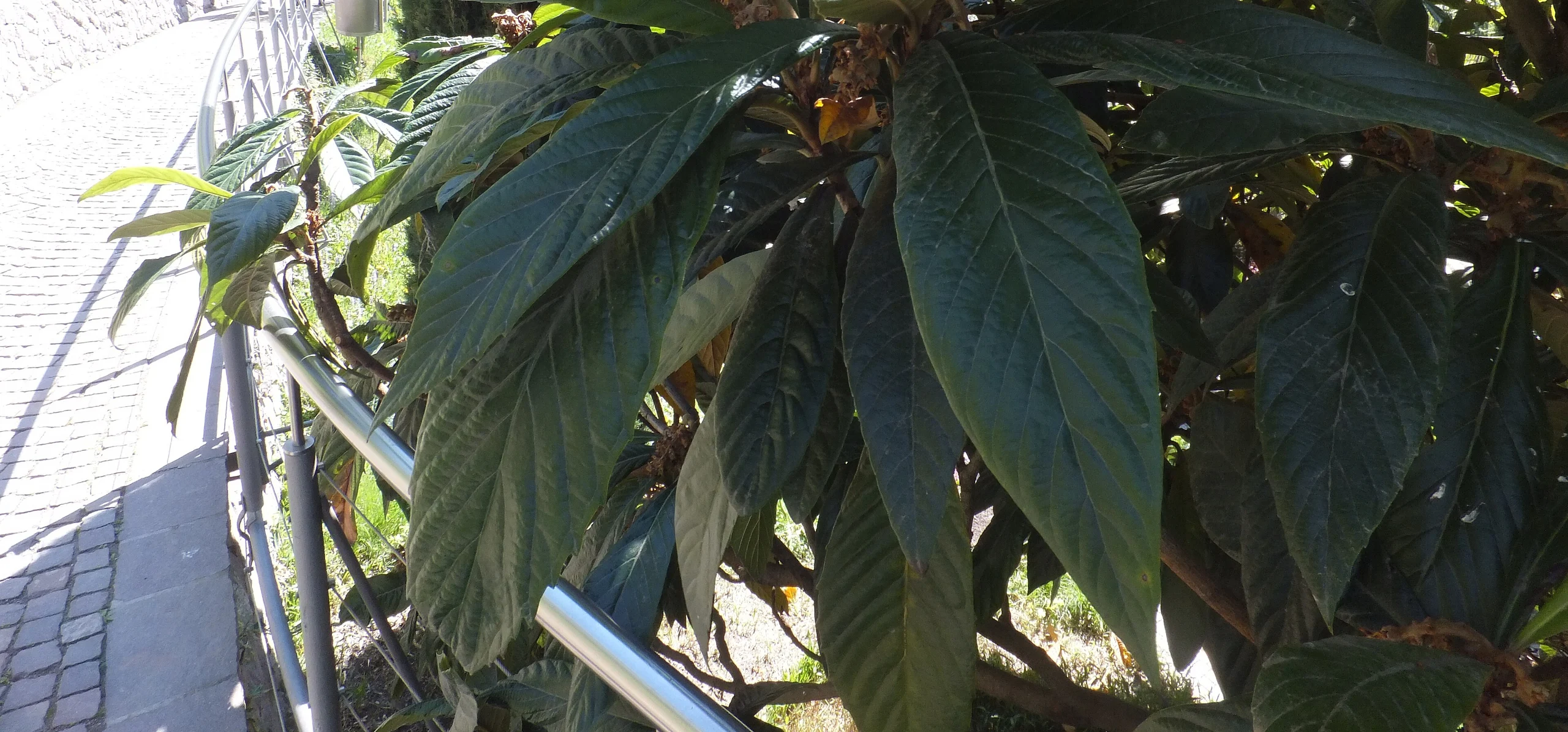
Loquat
Rhaphiolepis bibas
Family · Rosaceae
Loquat (Eriobotrya japonica) care: full sun, USDA zones 8b-11, flowers killed near 27-28°F, drought-tolerant once established, seeds removed before eating.
Rhaphiolepis bibas
Plant profile
- WateringModerateWater every 10 days
- Light exposurePartial sun
- Ideal temperature-11–38 °C
- Humidity30–80 %
- Hardiness zoneUSDA 8–11
Growth
- Family
- Rosaceae
- Life cycle
- Perennial
- Growth speed
- 5/10
- Mature size
- 300–760 cm
- Spread
- 300–760 cm
- Propagation
- Seed
- Cutting
- Grafting
FloweringFragrant white flowers in mid to late autumn; fruit ripens late winter to early spring
Dormancyevergreen, no true winter dormancy in USDA zones 8b-11
Soil & climate
- Soil pH
- pH 5–8
- Soil types
- clay, loam, sand
- Drought tolerance
- Yes
Light & Placement
- Origin
- China (Chongqing, Hubei); long cultivated in Japan
- Where to place it
- bright, 50-70°F room for containers over winter in cold climates
- sheltered full-sun border
- south-facing wall in marginal climates
- large container with loam-based, free-draining potting mix
Safety
- Toxicity
- HumansToxic
Data fromRhaphiolepis bibas, GBIF Backbone TaxonoRhaphiolepis bibas (Lour.) Galasso & BanEriobotrya japonica, Missouri Botanical Eriobotrya japonica (F), RHS GardeningEriobotrya japonica, NC State Extension
Where it grows
World distribution
Loquat is native to a single country: China.GBIF records 58,338 documented identifications across 145 countries, with the largest concentrations in France, Italy, and Spain.
- China
Yellow to orange dots: concentration of documented identifications per country. Green countries: sourced native range. Source: GBIFNative range from POWO (Kew).
A loquat that has just arrived in a garden or on a patio already carries an odd habit: this evergreen from Rosaceae, native to Chongqing and Hubei in China and grown throughout Japan for centuries, flowers in autumn and ripens its fruit in late winter or early spring, the reverse of nearly every other fruit tree. Left alone it becomes a rounded, short-trunked tree ten to twenty-five feet tall, wrapped in glossy, deeply veined leaves that are felted brown underneath. Full sun, sharp drainage and protection from a late frost during flowering decide almost everything else about whether it fruits well.
Why the Tag Might Say Rhaphiolepis
Every nursery tag, cookbook and grocery sticker calls this plant Eriobotrya japonica, and that name is not wrong exactly, it is just no longer the accepted one. GBIF's backbone taxonomy and Kew's Plants of the World Online both now treat Eriobotrya japonica as a synonym folded into Rhaphiolepis bibas, the genus better known for the low, flowering Indian hawthorn shrubs used in parking lot landscaping, following a molecular study published in 2020. The plant itself has not changed: it is the same tree, in the same family as apples, pears and hawthorns, that produces the same soft, apricot-yellow fruit. Gardeners can keep calling it loquat or Eriobotrya japonica; this guide uses the accepted name where it matters for identification and the common name everywhere else.
Light, Site and Hardiness
Give a loquat full sun to light part shade: six or more hours of direct light produces the densest canopy and the best flowering, though the tree tolerates two to six hours of shade without dying. It is winter hardy across USDA zones 8b to 11, and established wood shrugs off temperatures down to about 10 to 15°F. The flowers and young fruit are far less tough: a night near 27 to 28°F during autumn bloom or winter fruit set is usually enough to kill that year's crop even though the tree itself survives untouched. In colder regions the practical choice is a sheltered, south-facing wall, or a large container that can be wheeled into a bright, 50 to 70°F room for winter, watering it sparingly until spring growth resumes.
Soil and Planting
Loquats are not fussy about soil chemistry: they grow in clay, loam or sand and tolerate acid, neutral or alkaline pH. What matters more is drainage, a fertile, evenly moist loam that never sits waterlogged suits the roots best, and a two to three inch mulch ring, kept off the trunk, holds that moisture through summer heat. Plant where the tree can reach its full ten to twenty-five foot spread without crowding a path or a foundation, since the rounded canopy fills out in every direction rather than staying narrow.


Watering and Feeding
A newly planted loquat needs consistent moisture while its roots establish, water deeply whenever the top few inches of soil dry out. Once established, the tree tolerates real drought and needs supplemental water mainly during extended dry spells, particularly while fruit is swelling in late winter and spring. Fertiliser should follow a soil test rather than a routine schedule; loquats do not need heavy feeding, and pushing soft, nitrogen-rich growth only makes the tree more attractive to fire blight, its most serious disease.
An Autumn Bloom, a Spring Harvest
Fragrant, creamy white flower clusters form on the branch tips through mid to late autumn, months after most fruit trees have already dropped their blossom for the year. Most loquat cultivars are self-fertile, so a single tree still sets fruit, though a second tree nearby usually improves the crop. The small green fruit then hangs on through winter and colors up to a full apricot-yellow by late winter or early spring, depending on climate; a hard freeze at either the flowering or the fruit-set stage is the single biggest reason a loquat skips a year, since the flowers and immature fruit die at temperatures the leaves and wood shrug off.
Pruning and Suckers
Prune lightly after harvest to remove dead, crossing or storm-damaged wood and to keep the canopy open enough for light to reach the fruit. Branches that have carried a heavy crop tend to arch and droop with age, so a light annual thinning keeps the shape upright rather than sprawling. Shoots that sprout from low on the trunk or from the base are common and worth removing as they appear, since they divert energy from the main canopy and rarely produce useful fruiting wood. If frost has damaged the tree over winter, wait until new shoots appear before cutting anything back, so the pruning follows what actually survived rather than a guess.
Fire Blight, Aphids and Fruit Drop
Fire blight is the disease to watch for: it can enter through the autumn flowers or through soft young shoots in spring, spreads in wet weather and by visiting insects, and shows up as blackened, wilted shoot tips that look scorched. Cut infected wood back into clean, healthy tissue as soon as it appears and disinfect pruning tools between cuts so the bacteria are not carried to the next cut. Aphids, along with occasional rot, canker, scab and leaf spot, round out the list of problems, none of them usually serious on an otherwise healthy tree. Ripe fruit that drops on its own is normal loquat behaviour rather than a pest problem, and a layer of mulch under the canopy makes the cleanup easier.
Harvest and the Seeds
Loquat fruit does not ripen further once picked, so leave it on the tree until it has fully colored and gives slightly to a gentle squeeze, then pick over the tree every few days as fruit ripens unevenly across the canopy. The flesh is what people eat; the seeds are not. RHS guidance is explicit that the seeds contain toxins and should be removed before the fruit is eaten, and cracking and eating a large quantity of the pits has been linked to weakness, vomiting, laboured breathing, twitching and, in serious cases, convulsions. The North Carolina State Extension plant database lists loquat as non-toxic to cats, dogs and horses, though the species is not individually catalogued by the ASPCA, so no independently verified pet rating exists from that source.
Test your plant knowledge
Tap a card to flip it and reveal the answer.
Loquat flowers in autumn and its fruit ripens in late winter or early spring, the reverse of most fruit trees. Tap to reveal ✓ True
Eriobotrya japonica is still the accepted scientific name in GBIF's taxonomy. Tap to reveal ✕ False
A loquat's wood is about as cold-sensitive as its flowers and fruit. Tap to reveal ✕ False
Loquat seeds should be removed and not eaten along with the fruit. Tap to reveal ✓ True
Fire blight can infect a loquat through its autumn flowers as well as through young spring shoots. Tap to reveal ✓ True
Sources
References consulted for this guide
- Rhaphiolepis bibas, GBIF Backbone Taxonomygbif.org
- Rhaphiolepis bibas (Lour.) Galasso & Banfi, Plants of the World Online (Kew)powo.science.kew.org
- Eriobotrya japonica, Missouri Botanical Garden Plant Findermissouribotanicalgarden.org
- Eriobotrya japonica (F), RHS Gardeningrhs.org.uk
- Eriobotrya japonica, NC State Extension Gardener Plant Toolboxplants.ces.ncsu.edu
- Reference entity : Wikidatawikidata.org