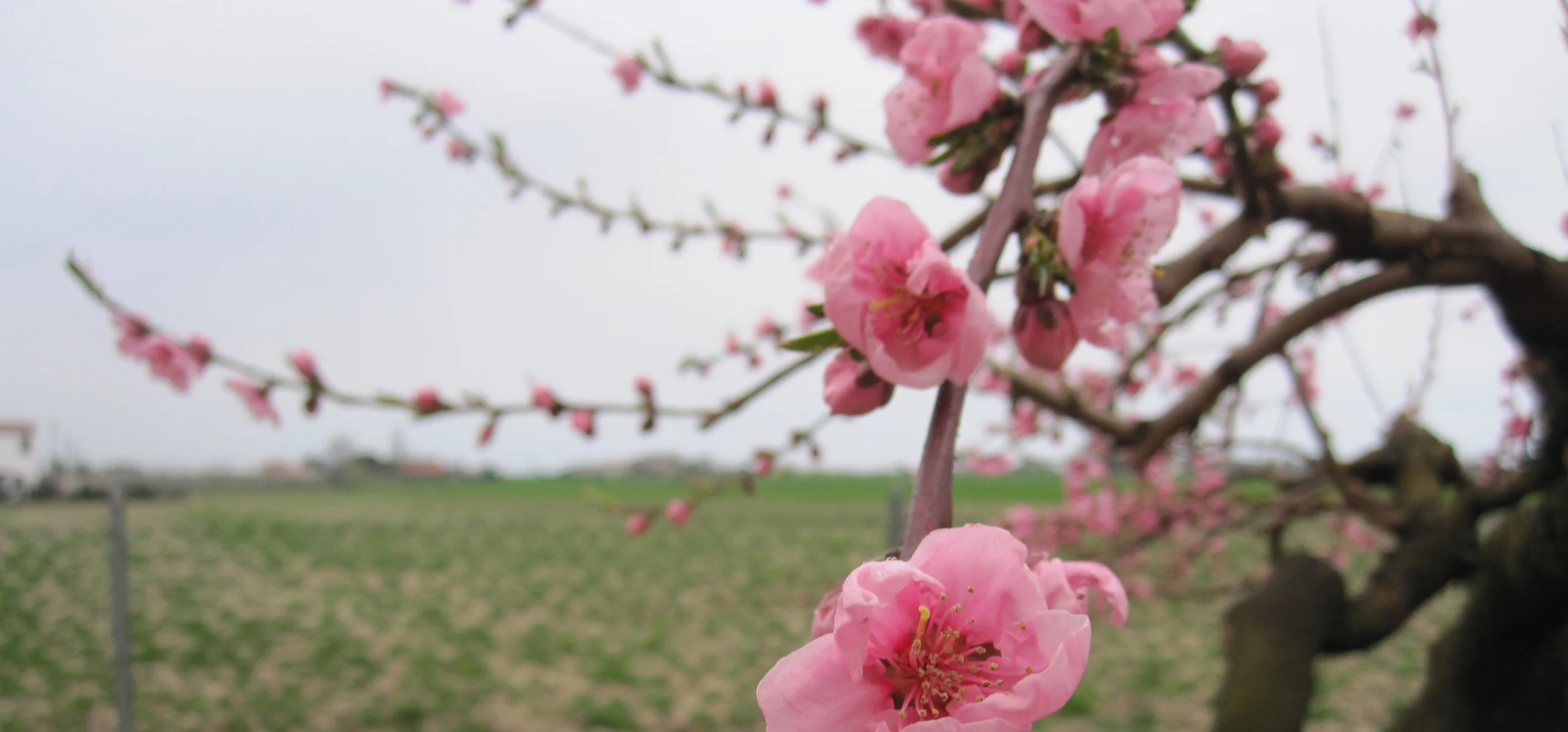
Peach Tree
Prunus persica
Family · Rosaceae
Grow a peach tree that fruits reliably: pick a site that suits its winter chill, prune in dry weather, watch for peach leaf curl, and time the harvest right.
Prunus persica
Plant profile
- WateringModerateWater every 7 days
- Light exposureFull sun
- Ideal temperature-10–-5 °C
- Hardiness zoneUSDA 5–9
Growth
- Family
- Rosaceae
- Life cycle
- Perennial
- Growth speed
- 8/10
- Mature size
- 400–800 cm
- Spread
- 400–800 cm
- Propagation
- Seed
- Grafting
FloweringPink or red blossom in spring before the leaves, downy yellow fruit through summer (RHS, NC State Extension)
DormancyEnters dormancy in autumn; breaking it requires an accumulated period of cold, roughly 32 to 45 degrees F, before buds can resume growth (NC State Extension)
Time to maturityReaches its full mature size within 10 to 20 years (RHS)
Soil & climate
- Soil types
- Chalk, Clay, Loam, Sand
- Drought tolerance
- No
Light & Placement
- Where to place it
- South- or west-facing wall, fan-trained
- Open, sheltered full-sun border
- Free-standing orchard planting in mild regions
OriginCultigen native to north-central China (POWO); reached Europe by way of Persia (Missouri Botanical Garden)
Safety
- Toxicity
- CatsToxic
- DogsToxic
- HorsesToxic
- HumansToxic
Data fromPrunus persica (L.) Stokes, GBIF BackbonPrunus persica (L.) Batsch, Plants of thPrunus persica | peach, RHSPrunus persica (Common Peach), NC State Toxic and Non-toxic Plants: Peach, ASPCA
Where it grows
World distribution
Peach Tree is native to a single country: China.GBIF records 50,831 documented identifications across 143 countries, with the largest concentrations in United States, France, and Italy.
- China
Yellow to orange dots: concentration of documented identifications per country. Green countries: sourced native range. Source: GBIFNative range from POWO (Kew).
A peach tree (Prunus persica) that has just gone into the ground, or one already carrying a light crop, rewards three things above all: a real winter chill, an open sunny site, and a prune done in the right season rather than the wrong one. It is one of the faster-growing common fruit trees but also one of the shorter-lived if bacterial canker or peach leaf curl gets a foothold early. Grown well it can carry a full crop of downy, red-blushed yellow fruit within a handful of years of planting, and despite its scientific and common names pointing toward Persia, the species is native to north-central China.
Origin, Hardiness and Matching a Variety to Your Winter
Plants of the World Online records the native range of Prunus persica as a cultigen from north-central China, and Missouri Botanical Garden notes the tree only reached Europe by way of Persia, which is how both the Latin epithet and the English name settled on the wrong continent. RHS rates the species H4, hardy through most of the UK down to between -10 and -5 degrees C, and NC State Extension places it across USDA zones 5a to 9b in the United States. Within that broad range, variety choice matters more than the species name: NC State Extension notes that every peach needs a specific number of cold hours below about 45 degrees F each winter before its buds will break and flower properly, and that requirement varies enormously between selections, from trees bred for mild, short winters to hardier types that need a long, cold dormancy. Planting a tree suited to a milder climate than yours delays flowering and fruiting unpredictably; planting one suited to a colder climate than yours risks it flowering too early and losing the blossom to frost.
Site, Soil and Planting
RHS recommends full sun with a south- or west-facing aspect and shelter from wind, since an exposed site both slows ripening and increases frost risk to the early spring blossom. Soil can be chalk, clay, loam or sand, acidic through to neutral, so long as it stays moist without waterlogging, what RHS describes simply as moist but well-drained. NC State Extension adds that peach also tolerates soil with a high proportion of organic matter and grows quickest, its listed growth rate is rapid, in fertile ground. Plant bare-root trees in the dormant season and containerised trees whenever the ground is workable. Because RHS lists the species reaching 4 to 8 metres in both height and spread, and taking 10 to 20 years to reach that full size, give a free-standing tree the same distance from its neighbours, or train it flat as a fan against a wall where the space is 4 metres or less.


Watering and Feeding
A newly planted peach needs regular water through its first two summers while the roots spread into the surrounding soil. Once established, keep the root zone moist but never sodden, RHS's own phrase for its soil preference, and pay particular attention to two windows: while the fruit is swelling in early summer, and again just after harvest, when the buds for next year's crop are forming. Letting the soil dry out hard during fruit swell is one of the more common causes of small, stone-hugging fruit that never fills out. A mulch over the root area, kept clear of the trunk, evens out soil moisture and cuts down on watering frequency. Feeding can stay modest: a balanced, general-purpose fertiliser applied in late winter before growth restarts is normally enough, since heavy nitrogen produces soft, sappy shoots that both aphids and canker exploit.
Pruning: Open the Centre, and Only in Dry Weather
RHS lists silver leaf and bacterial canker among the diseases peach is susceptible to, and both infect stone fruit through fresh pruning wounds made in cold, damp conditions. The safe window is dry weather from late spring to late summer, when cuts callus over quickly and fungal spores are scarce in the air. Commercial growers open the centre of a young tree into a vase shape, three or four main scaffold limbs angled outward from a short trunk, so that light and air move freely through what would otherwise be a dense, shaded canopy. RHS notes the species is best grown fan-trained against a wall, though it can be kept as a free-standing bush in the mildest parts of southern England. In later years, pruning is mostly about removing dead, crossing and overcrowded wood and keeping the framework open rather than reshaping it from scratch.
Peach Leaf Curl and Other Diseases
RHS names peach leaf curl specifically among the conditions this species suffers from, alongside bacterial canker, blossom wilt, brown rot, honey fungus and silver leaf, and flags the species as a high-risk host for the bacterium Xylella fastidiosa in regions where it is present. Peach leaf curl shows up as puckered, thickened, reddish new leaves in spring, a sign to act on rather than a normal part of the tree's growth. Because the early blossom is also vulnerable, RHS advises protecting flowers from frost with biodegradable horticultural fleece on cold nights during flowering, removed again in the morning so pollinators can still reach the open flowers.
Pollination, Thinning and Harvest
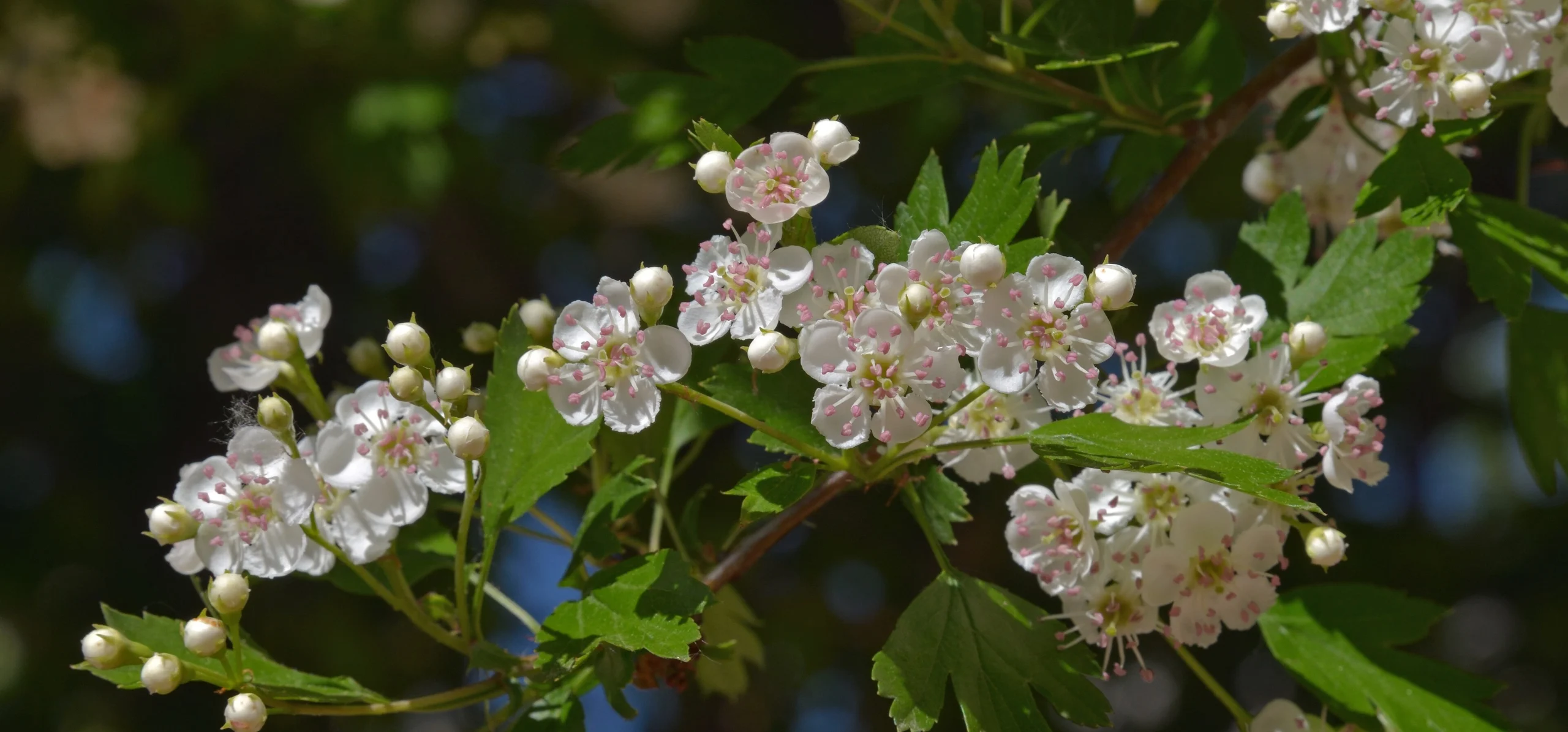
RHS describes the flowers as bowl-shaped, pink or red, about 4 cm across, and produced in spring before the leaves emerge, followed by what RHS calls spherical, downy, edible, red-blushed, yellow fruit. NC State Extension puts the fruit at roughly 3 by 3 inches at maturity, ripening from late spring blossom through to a summer harvest. Where a tree sets more fruit than it can properly size, thinning the smallest fruitlets while they are still young lets the rest grow larger and reduces the strain that a heavy crop puts on young branches. A ripe peach has coloured fully, with none of the hard green shoulder of an unripe one, and comes away from the branch with only a light twist; picking every few days through the harvest window catches fruit at its best rather than stripping the tree in one pass.
Common Pests and a Safety Note
NC State Extension lists peach tree borers, plum curculio, oriental fruit moth, mites, aphids and scale insects among the pests that trouble this species, alongside frost damage to buds and open blossom in cold winters and springs. Curling new shoot tips are usually the work of aphids and respond to a strong jet of water or insecticidal soap before the damage spreads. On safety, NC State Extension records cyanogenic glycosides in the seeds and in wilted leaves, rating the toxicity as medium severity and noting that a stray pit or two swallowed whole is unlikely to cause poisoning, though crushed or chewed pits are a different matter. The ASPCA lists peach as toxic to cats, dogs and horses on the same grounds, so fallen fruit and pits are worth clearing from anywhere pets have access.
Test your plant knowledge
Tap a card to flip it and reveal the answer.
Prunus persica is native to Persia, as both its scientific and common names suggest. Tap to reveal ✕ False
A peach tree needs a period of winter chill before it can flower and fruit normally. Tap to reveal ✓ True
Winter is the safest season to prune a peach tree. Tap to reveal ✕ False
Peach pits, wilted leaves and bark contain compounds that are toxic if eaten. Tap to reveal ✓ True
Puckered, reddish, distorted new leaves in spring are a normal part of a peach tree's growth. Tap to reveal ✕ False
Sources
References consulted for this guide
- Prunus persica (L.) Stokes, GBIF Backbone Taxonomygbif.org
- Prunus persica (L.) Batsch, Plants of the World Online (Kew)powo.science.kew.org
- Prunus persica | peach, RHSrhs.org.uk
- Prunus persica (Common Peach), NC State Extension Gardener Plant Toolboxplants.ces.ncsu.edu
- Toxic and Non-toxic Plants: Peach, ASPCAaspca.org
- Reference entity : Wikipédiaen.wikipedia.org