Callery Pear
Pyrus calleryana
Family · Rosaceae
Callery pear grows fast to 9-15 m, splits at weak branch unions within 15 to 20 years, and is now restricted for sale in several US states.
Pyrus calleryana
Plant profile
- WateringLittleWater every 10 days
- Light exposurePartial sun
- Hardiness zoneUSDA 5–9
Growth
- Family
- Rosaceae
- Life cycle
- Perennial
- Growth speed
- 8/10
- Mature size
- 900–1500 cm
- Spread
- 600–1100 cm
- Propagation
- Seed
- Grafting
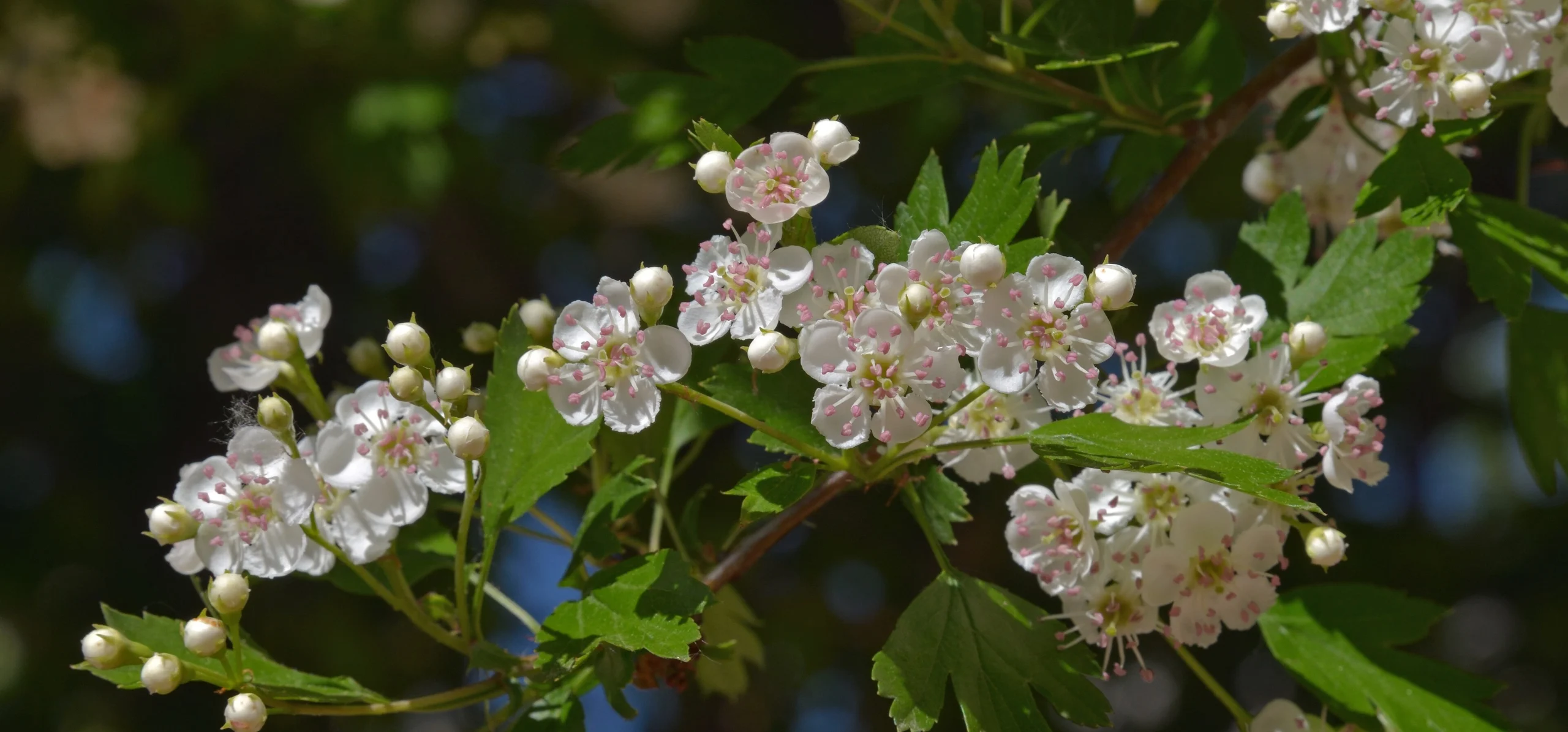
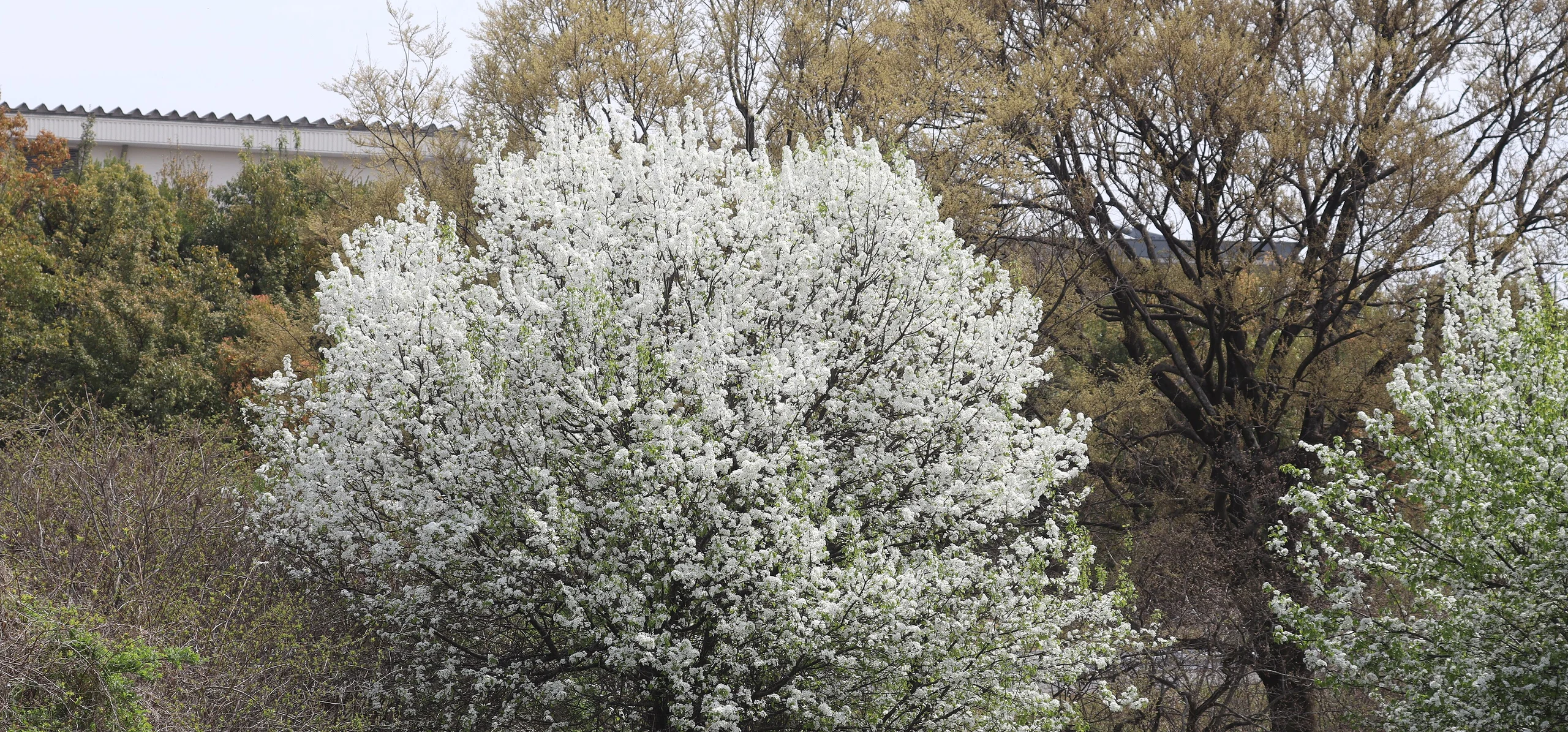
FloweringCreamy white blossom in April and May, before the leaves emerge, with an objectionable smell
Dormancydeciduous, holds leaves late into autumn then turns reddish-purple to bronze-red before dropping (NC State Extension)
Time to maturityreaches full height in roughly 15 to 20 years, the point at which weak-structured cultivars like Bradford begin to split (NC State Extension)
Soil & climate
- Soil types
- clay, loam, sand
- Drought tolerance
- Yes
Light & Placement
- Origin
- Central and southern China to Vietnam, central Japan and Taiwan (POWO)
- Where to place it
- street tree or specimen lawn tree in full sun
- large garden with room for a 9 to 15 m canopy
- buffer or screen planting away from storm-prone open sites
Safety
- Toxicity
- Not evaluated by the ASPCA; toxicity undetermined
- Pet safe
- No
Invasive speciesRegarded as invasive in parts of the eastern and central United States; Pennsylvania has listed it as a noxious weed since 2024 with sale enforcement from 2025, and other states have added their own restrictions, since cross-pollinated cultivars set fertile fruit that birds spread into wild areas (NC State Extension; Penn State Extension; University of Illinois Extension).
Data fromGBIF Backbone Taxonomy: Pyrus calleryanaPlants of the World Online (Kew): Pyrus NC State Extension Gardener Plant ToolboUniversity of Georgia Extension: BradforPenn State Extension: Don't Sell or Buy University of Illinois Extension: Invasi
Where it grows
World distribution
Callery Pear is native to 5 countries: China, Japan, South Korea, Taiwan, and Vietnam.GBIF records 179,733 documented identifications across 41 countries, with the largest concentrations in United States, Germany, and China.
- China
- Japan
- South Korea
- Taiwan
- Vietnam
Yellow to orange dots: concentration of documented identifications per country. Green countries: sourced native range. Source: GBIFNative range from POWO (Kew).
Pyrus calleryana, the Callery pear, is the tree behind the white-blossomed streets and shopping-center rows planted across the United States since the 1960s under the name Bradford pear. It grows fast, shrugs off poor urban soil, and covers itself in creamy white flowers before the leaves even open in spring, but two things define how to treat it today: the original Bradford form is prone to splitting apart at its own branch unions within fifteen to twenty years, and the species has escaped cultivation into wild areas across the eastern and central United States, prompting several states to restrict its sale outright. If a Callery pear is already on your property, the priority is understanding its branch structure and pruning around the weak point. If you are choosing a new tree, the case against planting a straight Bradford comes first.
Where It Comes From, and How a Rootstock Became a Street Tree
GBIF's Backbone Taxonomy accepts the name Pyrus calleryana Decne., and Kew's Plants of the World Online gives its native range as central and southern China through to Vietnam, central Japan and Taiwan. The species arrived in the United States in 1908, not as an ornamental but as breeding stock: West Coast pear orchards were being devastated by fire blight, and Callery pear showed strong natural resistance to the disease, per University of Georgia Extension. Seeds collected from China in 1919 were grown out at the USDA's Plant Introduction Station in Glenn Dale, Maryland, and in 1952 horticulturist John Creech noticed one thirty-three-year-old tree in the planting with an unusually neat, globular crown and none of the sharp thorns typical of the wild species. He grafted scions from it, and the resulting cultivar, Bradford, went on sale commercially in 1961. Every straight Bradford pear planted since traces back to that one tree.
Choosing a Variety, or Choosing Not To
Bradford's popularity was also its undoing. Its main branches grow in a tight cluster from nearly the same point on the trunk, at narrow angles that trap a wedge of bark inside the joint instead of forming a solid union. NC State Extension notes the tree develops weak crotches that break apart under wind, ice or simply its own weight as it matures, typically once it reaches fifteen to twenty years old. Later cultivars corrected this: 'Aristocrat' has noticeably wider, stronger branch angles, though it is more prone to fire blight, while 'Chanticleer', also sold as 'Cleveland Select' or 'Select', grows a narrower, more upright crown with good fire blight resistance; Bradford itself remains the most fire-blight-resistant of the group. None of that solves the bigger problem covered below, so before planting any Callery pear cultivar, check whether it is restricted where you live: Pennsylvania has listed it as a noxious weed since 2024, with sale enforcement beginning in 2025, and other states have added their own sales restrictions in recent years, per Penn State Extension.


Site, Soil and Light
Where it is still legal to plant, Callery pear is close to indifferent about soil. NC State Extension rates it tolerant of clay, loam or sand, of acid soil below pH 6 through alkaline soil above pH 8, and of moist or occasionally dry ground, provided drainage is reasonable. Give it full sun, six hours or more, for the densest bloom and the tightest, most symmetrical crown; it tolerates two to six hours of light shade but flowers and fills out less completely there. Plant with the mature spread in mind: 6 to 11 m (20 to 35 ft) wide on a tree that reaches 9 to 15 m (30 to 50 ft) tall, well clear of a house wall, driveway or power line, and hardy through USDA zones 5a to 9b.
Watering and Establishment
A newly planted Callery pear needs deep, regular watering through its first two growing seasons while roots spread into the surrounding ground, roughly a slow soak once a week in the absence of rain. After that it is genuinely drought tolerant, one of the reasons it became a default choice for parking-lot islands and compacted street verges, and established trees rarely need supplemental water outside of prolonged summer drought. Its rapid growth rate also makes it visibly punish a poor first year: a tree left too dry too often while young stays thin and stunted rather than filling out into the dense, pyramidal form the species is known for.
Why the Branches Split, and How to Prune Around It
The structural weakness is specific and worth understanding rather than just avoiding. On Bradford in particular, several main limbs originate from almost the same height on the trunk, so as they thicken with age they push against each other and trap bark inside the union instead of growing a strong collar around it, what arborists call included bark. Formative pruning in the tree's first five to ten years, removing or shortening competing leaders so a single trunk clearly dominates and spacing the main scaffold branches vertically along it, does far more to prevent later splitting than any amount of pruning once the tree is mature. On an older Bradford already showing this pattern, thinning the canopy to reduce wind resistance and cabling major limbs are damage-control measures, not fixes: the underlying union never gets stronger.
Bloom, Fruit and Why the Smell Puts People Off
Flowering runs through April and May, before the leaves emerge, in dense clusters of small five-petaled white flowers that cover the crown so completely the branches all but disappear. NC State Extension is blunt about the trade-off: the blossom carries an objectionable, foul smell, unmistakable from close range even though it barely reaches passers-by on a street. The flowers set into pea-sized fruit, about half an inch across, green ripening to brown with small pale spots, per University of Illinois Extension, which birds readily eat and carry off. A single cultivar's own fruit is usually infertile, but when two different cultivars, or a cultivar and a nearby seedling, cross-pollinate, the resulting seed is fertile, and Illinois Extension notes birds spread it well beyond the original planting into fence lines, pastures and forest edges, where naturalized trees revert to a thornier, more aggressive form than any cultivar sold in a nursery.
Fall Color and Seasonal Interest
Callery pear holds its glossy dark green leaves later into autumn than most deciduous trees, then turns reddish-purple to bronze-red, with some cultivars leaning more toward orange or yellow, per NC State Extension. It is one of the last trees in a mixed planting to color and drop, part of why it was planted so widely as a low-effort three-season tree: white bloom in spring, dense shade in summer, and color that lingers into November across most of its hardiness range.
Fire Blight and Other Problems
Fire blight, the bacterial disease that got this species introduced to America in the first place, still occasionally affects it: Bradford remains the most resistant cultivar by NC State Extension's account, while Aristocrat is noted as more susceptible. Watch for blackened, scorched-looking shoot tips that curl into a shepherd's-crook shape in late spring, and prune them out well below the visible damage, disinfecting tools between cuts. Beyond that, an established Callery pear is largely trouble-free, tolerant of urban pollution and compacted soil, exactly why it was planted at this scale in the first place, and exactly why removing or not replacing it has become a slower project than planting it ever was.
Test your plant knowledge
Tap a card to flip it and reveal the answer.
Pyrus calleryana is hardy across USDA zones 5a to 9b and tolerates both strongly acidic and alkaline soil. Tap to reveal ✓ True
The Bradford cultivar has the strongest, most storm-resistant branch structure of all Callery pear cultivars. Tap to reveal ✕ False
A single Callery pear cultivar's own fruit is usually infertile, but cross-pollination between two different cultivars produces viable seed. Tap to reveal ✓ True
Callery pear blossom is prized for its pleasant fragrance. Tap to reveal ✕ False
Pennsylvania has listed Callery pear as a noxious weed and is phasing out its sale. Tap to reveal ✓ True
Sources
References consulted for this guide
- GBIF Backbone Taxonomy: Pyrus calleryana Decne.gbif.org
- Plants of the World Online (Kew): Pyrus calleryana Decne.powo.science.kew.org
- NC State Extension Gardener Plant Toolbox: Pyrus calleryanaplants.ces.ncsu.edu
- University of Georgia Extension: Bradford Pears, How Did They Get Here?site.extension.uga.edu
- Penn State Extension: Don't Sell or Buy Callery Pear in Pennsylvaniaextension.psu.edu
- University of Illinois Extension: Invasive Callery Pearextension.illinois.edu
- Reference entity : Wikipédiaen.wikipedia.org