Northern Red Oak
Quercus rubra
Family · Fagaceae
Northern red oak grows fast, needs lime-free soil to avoid chlorosis, and should never be pruned in spring or summer where oak wilt is established.
Quercus rubra
Plant profile
- WateringLittleWater every 10 days
- Light exposurePartial sun
- Hardiness zoneUSDA 4–8
Growth
- Family
- Fagaceae
- Life cycle
- Perennial
- Growth speed
- 7/10
- Mature size
- 1500–2300 cm
- Spread
- 1500–2300 cm
- Flowering
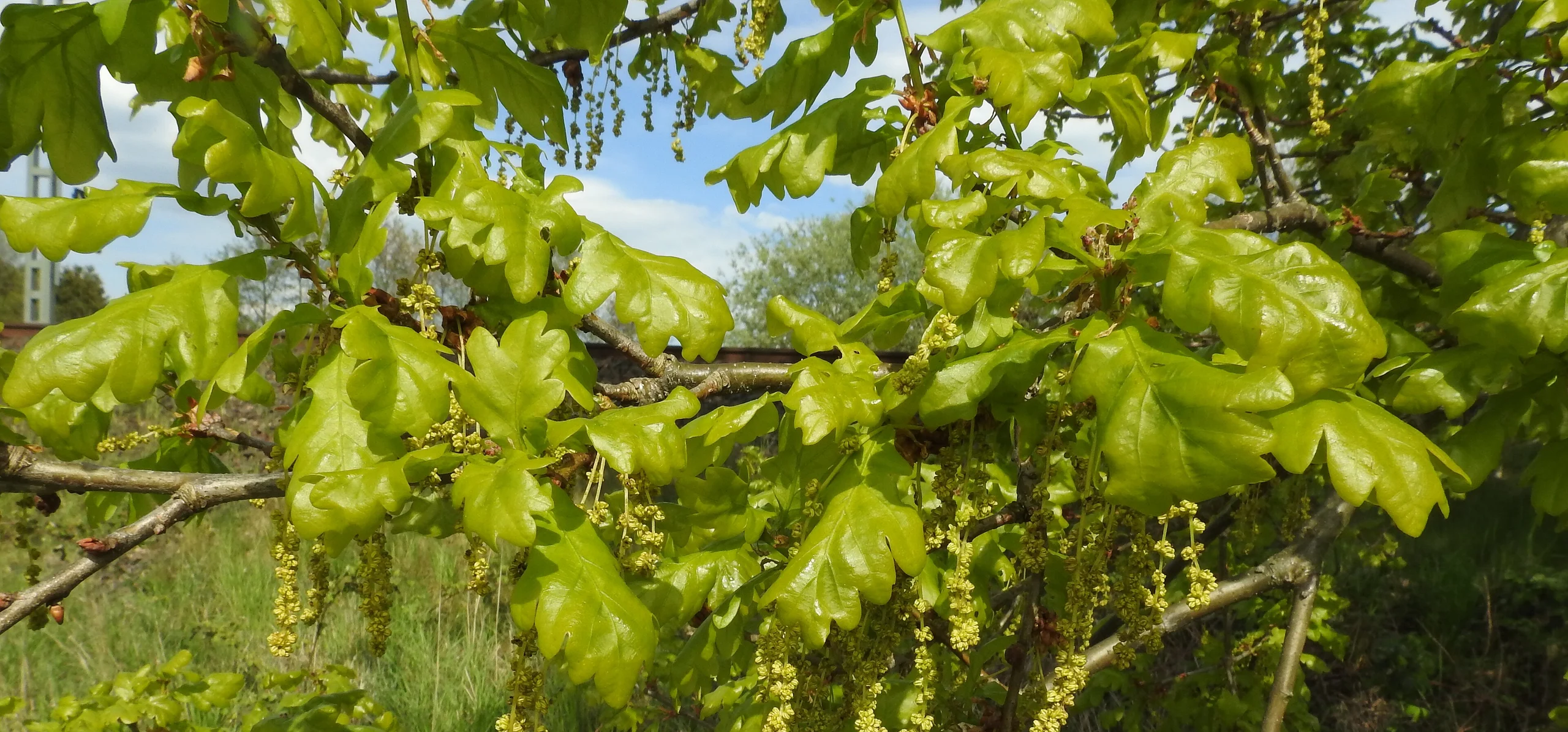
- Inconspicuous catkins in spring with the leaves; acorns take two years to ripen
- Propagation
- Seed
- Cutting
Dormancydeciduous, dormant in winter
Time to maturityfirst acorns at 20 to 25 years, heavy crops from 40 to 50 years
Soil & climate
- Soil types
- clay, loam, sand
- Drought tolerance
- Yes
Light & Placement
- Origin
- Southeastern Canada to north-central and eastern United States
- Where to place it
- shade tree
- street tree
- parkland
- lawn specimen
Safety
- Toxicity
- CatsSafe
- DogsSafe
- HorsesToxic
Invasive speciesRegarded as invasive in parts of Europe, including Belgium and many Polish national parks
Data fromGBIF Backbone Taxonomy: Quercus rubra L.Plants of the World Online (Kew): QuercuASPCA: Toxic and Non-toxic Plants, OakUSDA NRCS Plant Guide: Northern Red Oak CABI Compendium: Quercus rubra (northern
Where it grows
World distribution
Northern Red Oak is native to 2 countries: Canada and United States.GBIF records 236,252 documented identifications across 55 countries, with the largest concentrations in United States, Germany, and Belgium.
- Canada
- United States
Yellow to orange dots: concentration of documented identifications per country. Green countries: sourced native range. Source: GBIFNative range from POWO (Kew).
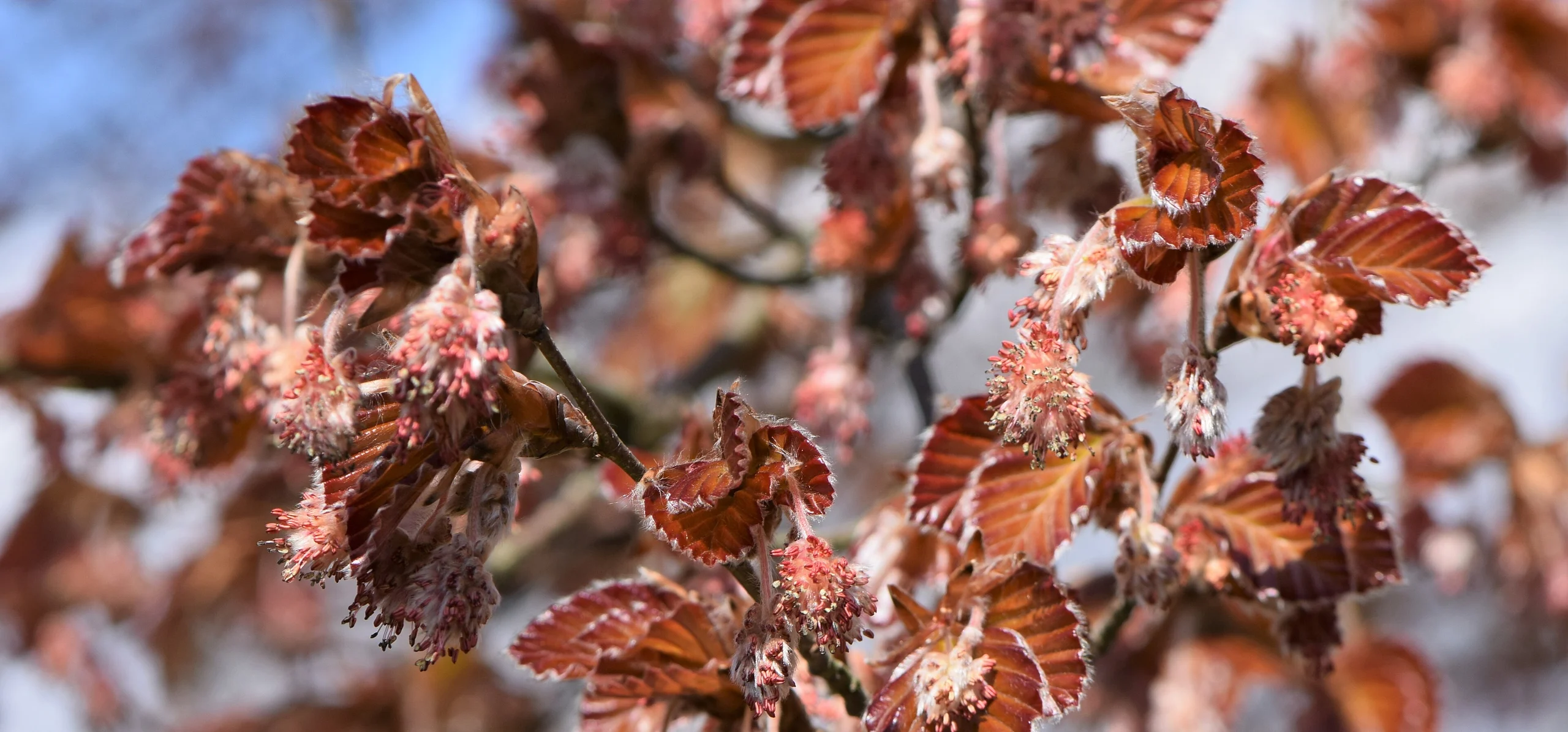
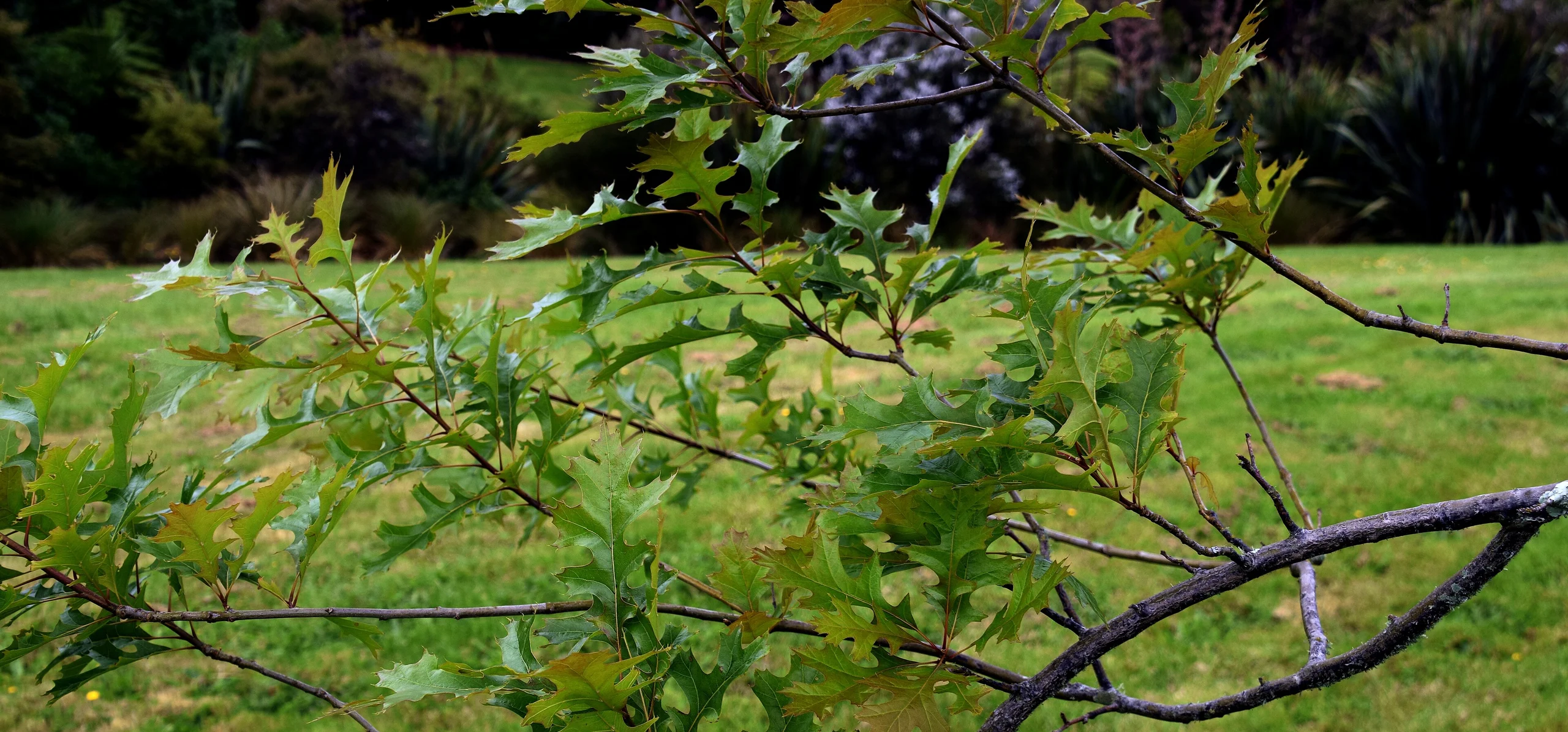
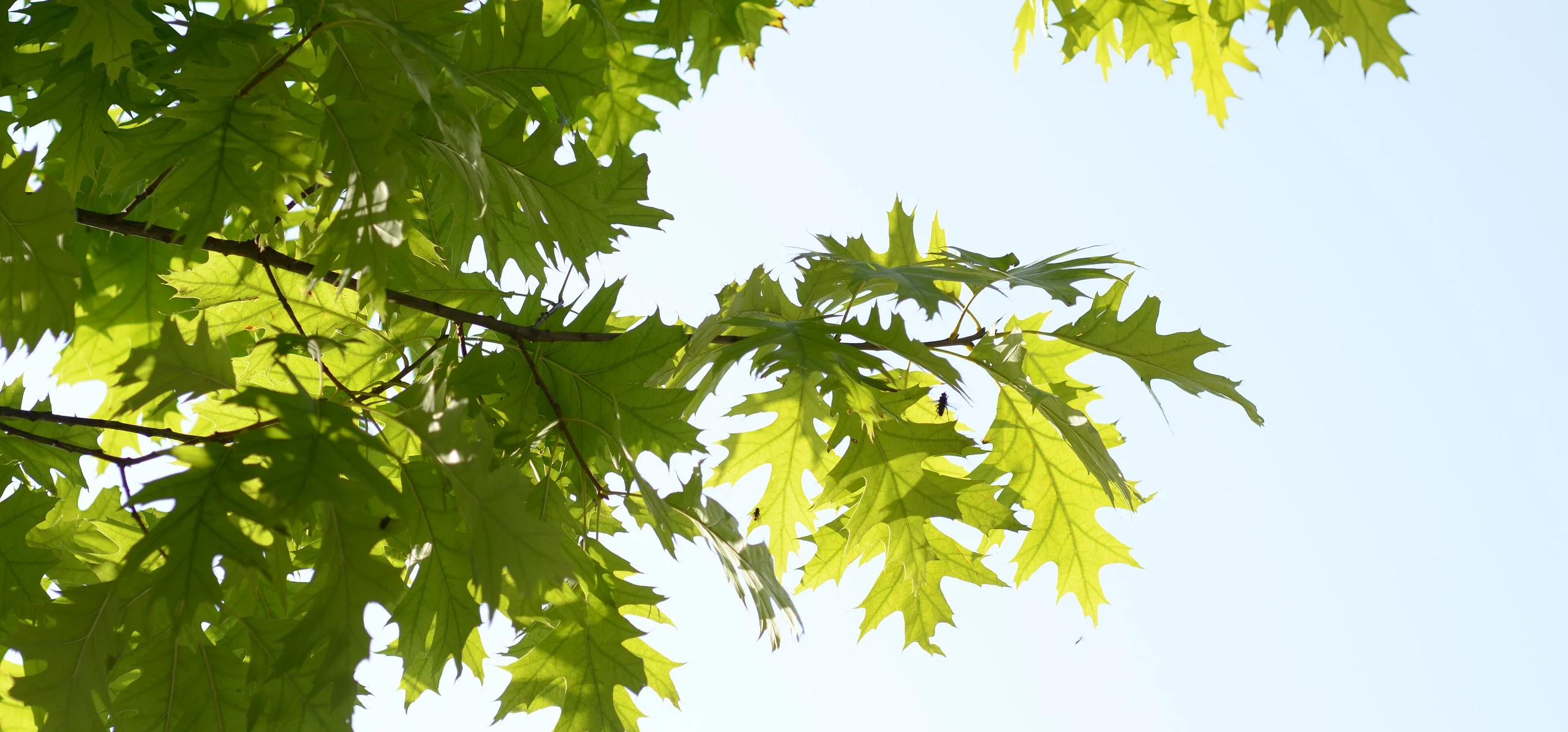
A young northern red oak with smooth-sided, bristle-tipped lobes and a single straight leader is doing exactly what Quercus rubra is built for: it is putting on height faster than almost any native oak, commonly 60 to 90 cm a year once established, and it will eventually spread as wide as it is tall. That speed, together with a crown that colours brick-red rather than the dull brown of many oaks, is why it has been planted as a shade and street tree across eastern North America and, for centuries, across Europe. It asks for very little once it is in the ground: acid to neutral soil, full sun to light shade, and enough room that the roots and the crown are not fighting a house wall twenty years from now.
Origin and Native Range
Plants of the World Online (Kew) gives the native range of Quercus rubra as south-eastern Canada to north-central and eastern USA, and the USDA's own distribution notes place it from Quebec, Ontario, Nova Scotia and New Brunswick south to Georgia, Alabama and northern Mississippi, and west through Minnesota and Iowa to eastern Oklahoma. The GBIF Backbone Taxonomy places it in the beech family, Fagaceae, order Fagales, alongside the other oaks, chestnuts and beeches. Within the genus it belongs to the red oak group, section Lobatae, a grouping that matters more than it sounds: how long the acorns take to ripen and how the tree responds to a serious fungal disease both trace back to it.
Growing From Acorn: The Two-Year Cycle
Red oak acorns do not ripen in one season the way a white oak's or bur oak's do. POWO's own description of the species notes the nut takes two years to mature, and the USDA Plant Guide adds that trees rarely bear fruit in any quantity before 20 to 25 years old, with heavy crops only from 40 to 50 years, arriving every two to five seasons. Collected acorns keep for two to three years in cold storage if held at 1 to 3 degrees Celsius, and germinate best when sown as soon as they are ripe, either straight into their final position or into a seedbed protected from rodents, since acorns left exposed on bare soil are heavily predated. Under natural conditions the acorn overwinters and germinates the following spring, and a covering of leaf litter measurably improves the odds over acorns lying on open ground.


Siting, Spacing and Roots Near the House
Bare-root whips transplant easily, largely because young red oak builds a fibrous root system before the taproot takes over, and the USDA guide lists spring as the best time to move bare-root stock. The tree that results is not a small one: cultivated specimens commonly reach 15 to 23 metres tall and equally wide, and wild trees in good forest conditions grow taller still. That eventual size is why most planting guidance keeps a red oak several metres clear of a foundation, driveway or drain: the same vigorous root growth that makes the tree easy to establish will, given enough years, follow moisture into soft ground under paving and around pipework. Plant it where the mature crown can clear roof lines and where nothing important sits underneath, not somewhere it will need fighting back for the next fifty years.
Soil, pH and Chlorosis on Lime
Northern red oak wants acid to neutral ground. The RHS lists it as requiring lime-free soil, and university extension services describe the same tree developing iron chlorosis, a yellowing between the leaf veins, when it is planted on distinctly alkaline soil. The mechanism is not a shortage of iron in the ground but a soil pH high enough to lock the iron already there out of a form the roots can absorb. It tolerates clay, loam and sandy soils and, once established, both dry spells and occasionally damp ground, which is part of why it outperforms fussier trees on ordinary garden soil. A chalky or heavily limed site is the one situation this species does not shrug off.
Oak Wilt: Why Pruning Timing Matters
Oak wilt is the disease that makes pruning timing non-negotiable for red oak. It is a fungal infection of the water-conducting vessels, and the USDA describes the red oak group, which includes Quercus rubra along with black oak and live oak, as far more susceptible than the white oak group: an infected tree can wilt from the leaf margins inward and die within one to three months. The fungus spreads in two ways, through root grafts between neighbouring oaks and by sap-feeding beetles drawn to the smell of a fresh wound, which is exactly why guidance in areas where the disease is established tells growers never to prune, or otherwise wound, a red oak in spring or summer. Where oak wilt is present, the only safe pruning window is the dormant season, and an infected tree is removed rather than treated, since once established the disease is rarely survivable.
An American Ornamental Turned Invasive in Parts of Europe
The same vigour that makes red oak a reliable street tree has made it a management concern in the forests it was introduced to. Planted across Europe as an ornamental since the seventeenth century for its shade and its autumn colour, Quercus rubra now ranks among the most widespread non-native broadleaf trees in Central European forestry, is treated as invasive in Belgium, and turns up in the large majority of surveyed Polish national parks. Its dense, slow-to-decompose leaf litter and heavy tannin content change soil chemistry and nitrogen cycling under a closed canopy, crowding out native ground flora in a way a single garden specimen never will. It is not on the European Union's list of invasive species of Union concern, but several national authorities actively manage or remove it from protected woodland.
Acorn and Leaf Toxicity to Horses and Dogs
The ASPCA lists oak, genus Quercus, as toxic to horses: the toxic principle is gallotannin, and ingestion, most often of new spring growth or of fallen acorns in a year when other forage is scarce, causes abdominal pain, constipation followed by diarrhoea that is occasionally bloody, depression, and discoloured urine. Oak does not appear on the ASPCA's separate toxic plant lists for cats or dogs, but the same tannins are still a practical concern: a dog that works through a large number of fallen acorns can develop vomiting and stomach upset from the tannin load, on top of the mechanical risk of a swallowed acorn causing an obstruction. Raking up fallen acorns where grazing horses or a persistent dog can reach them is a more useful precaution than assuming the tree is not a problem.
Test your plant knowledge
Tap a card to flip it and reveal the answer.
Northern red oak acorns take two years to mature on the tree. Tap to reveal ✓ True
Northern red oak grows well in alkaline, lime-rich soil without any issues. Tap to reveal ✕ False
Pruning a red oak during spring or summer increases its risk of oak wilt infection. Tap to reveal ✓ True
The ASPCA lists northern red oak as toxic to cats. Tap to reveal ✕ False
In parts of Europe, northern red oak is considered an invasive tree. Tap to reveal ✓ True
Sources
References consulted for this guide
- GBIF Backbone Taxonomy: Quercus rubra L.gbif.org
- Plants of the World Online (Kew): Quercus rubra L.powo.science.kew.org
- ASPCA: Toxic and Non-toxic Plants, Oakaspca.org
- USDA NRCS Plant Guide: Northern Red Oak (Quercus rubra)plants.usda.gov
- CABI Compendium: Quercus rubra (northern red oak)cabi.org
- Reference entity : Wikipédiaen.wikipedia.org