European Beech
Fagus sylvatica
Family · Fagaceae
European beech keeps copper leaves all winter and thrives on chalk, but sulks on wet clay where hornbeam succeeds. Planting, clipping and disease notes.
Fagus sylvatica
Plant profile
- WateringLittleWater every 9 days
- Light exposurePartial sun
- Hardiness zoneUSDA 4–7
Growth
- Family
- Fagaceae
- Life cycle
- Perennial
- Growth speed
- 2/10
- Mature size
- 1500–1800 cm
- Spread
- 1100–1500 cm
- Propagation
- Seed
- Grafting
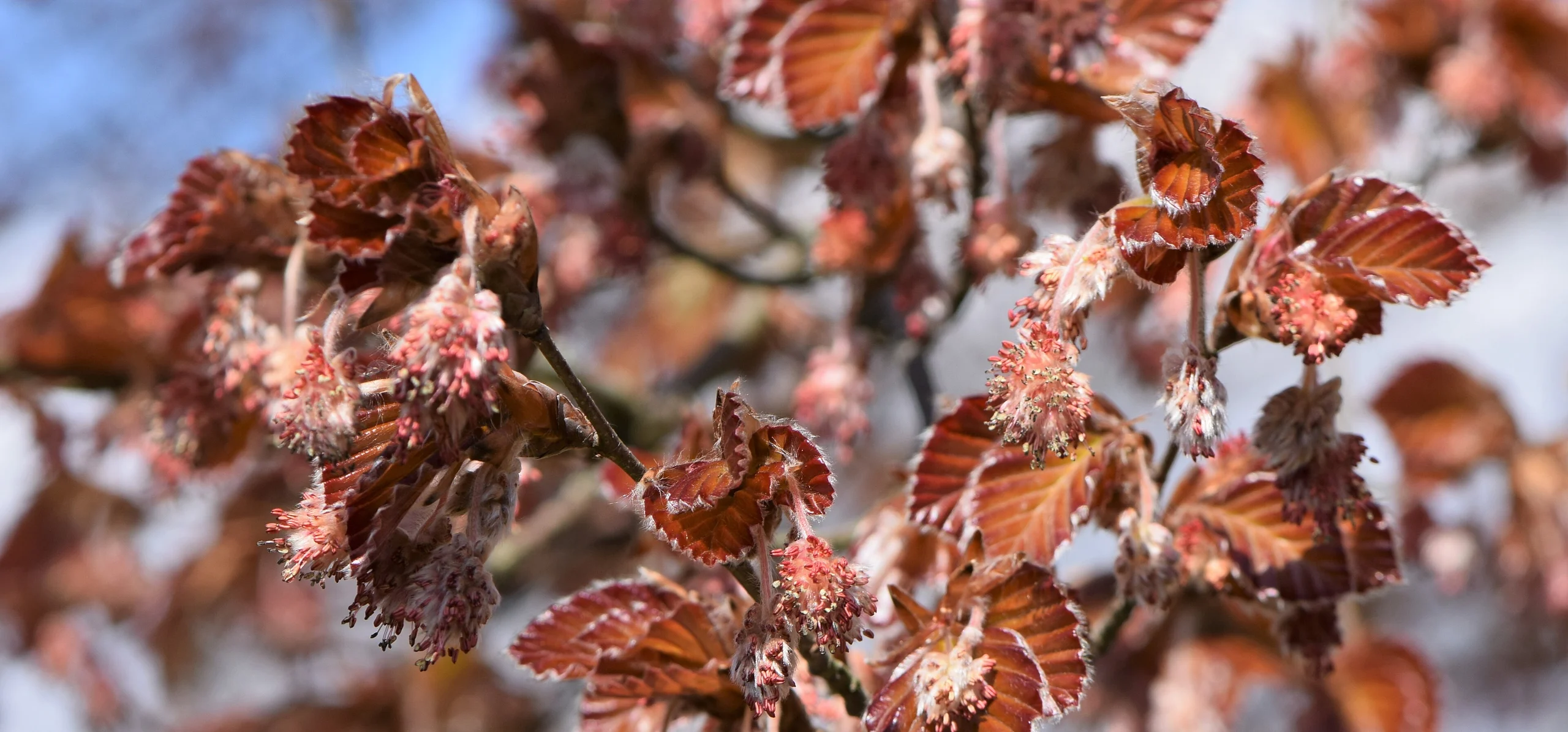
FloweringInconspicuous yellow-green catkins in spring, followed by bristly husks holding a pair of edible beechnuts in autumn
Dormancydeciduous, marcescent through winter
Time to maturityslow growing; first meaningful beechnut crops appear around 30 years of age
Soil & climate
- Soil pH
- pH 5–8
- Soil types
- chalk, loam, sand
- Drought tolerance
- No
Light & Placement
- Where to place it
- clipped hedge
- parkland specimen
- chalk downland
- woodland shade tree
OriginEurope, from Britain and Scandinavia south to Spain and Sicily, east to Ukraine and Turkiye
Safety
- Toxicity
- Not evaluated by the ASPCA; toxicity undetermined
- Pet safe
- No
Data fromGBIF Backbone Taxonomy: Fagus sylvatica NC State Extension Gardener Plant ToolboRHS: Fagus sylvatica (common beech)Missouri Botanical Garden Plant Finder:
Where it grows
World distribution
European Beech is native to 23 countries: Albania, Austria, Belgium, Bulgaria, Croatia, Czechia, Denmark, and Estonia….GBIF records 1,599,913 documented identifications across 69 countries, with the largest concentrations in France, United Kingdom, and Sweden.
- Albania
- Austria
- Belgium
- Bulgaria
- Croatia
- Czechia
- Denmark
- Estonia
- France
- Germany
- Greece
- Hungary
Show 11 more countriesShow fewer countries
- Italy
- Netherlands
- Norway
- Poland
- Romania
- Spain
- Sweden
- Switzerland
- Türkiye
- Ukraine
- United Kingdom
Yellow to orange dots: concentration of documented identifications per country. Green countries: sourced native range. Source: GBIFNative range from POWO (Kew).
A beech hedge that still holds a skirt of copper, crackling leaves in February is not failing to shed, it is doing exactly what Fagus sylvatica does: like its relative the hornbeam, common beech is marcescent, keeping many of its dead leaves clipped to the twigs from autumn until new growth finally pushes them off in spring. That single trait, paired with the tree's tolerance for chalk downland and its total refusal to thrive on heavy, waterlogged clay, explains both why beech has been the default formal hedge across lowland Europe for centuries and why it sulks in gardens where hornbeam would be the safer choice. Left unclipped it becomes something else entirely: one of the largest native forest trees in Europe, casting a shade so dense that almost nothing grows on the ground beneath it.
Origin and Classification
Fagus sylvatica belongs to the beech family, Fagaceae, in the order Fagales, according to the GBIF Backbone Taxonomy. Plants of the World Online lists its native range as Europe, from Britain and Scandinavia south to Spain, Sicily and Greece, and east through central Europe to Ukraine and Turkiye. Within that range it is a tree of lowland and hill woodland on free-draining ground, most abundant on chalk and limestone, and it has been planted as hedging, parkland and avenue timber well beyond those native limits for so long that it now reads as native almost everywhere in temperate gardens.
Why Beech Fails on Wet Clay and Thrives on Chalk
North Carolina State University's Extension Gardener Plant Toolbox is blunt about the tree's one real limitation: beech is described as intolerant of wet soils or poorly drained soils, and it performs poorly wherever the ground stays compacted or waterlogged, even briefly. On chalk, well-drained loam, sand or shallow rocky soil, acid to alkaline, it is untroubled and grows into one of the most reliable specimen or hedging trees available. This is the opposite profile to the common hornbeam, Carpinus betulus, which tolerates heavy clay and occasionally wet ground that beech cannot handle at all; anyone planting a boundary hedge on ground that puddles after rain gets a far more forgiving result from hornbeam, while beech is the better choice on chalk downland, dry banks and any free-draining garden where its finer, silvery-grey bark and denser winter screen are worth the extra care over soil.


The Forest Giant and Its Dense Shade
Unclipped, Fagus sylvatica grows into a large deciduous tree reaching roughly 15 to 18 metres tall and 11 to 15 metres wide under typical cultivation, with a dense, oval to rounded crown carried on smooth, pewter-grey bark that stays unbroken by the plates or fissures that develop on oak or ash. That crown is the point: beech canopy closes so completely that little light reaches the forest floor, and a mature stand or specimen tree typically has almost bare ground beneath it, carpeted at most with the tree's own leaf litter and a scatter of spring ephemerals that finish flowering before the canopy fills in. Growth is classed as slow, which is part of why an old beech avenue or forest stand reads as a permanent, unhurried landscape rather than something recently planted.
'Purpurea' and 'Pendula': the Copper and Weeping Forms
The Atropurpurea Group, sold as 'Purpurea' or copper beech, opens purple in spring, softens toward green through summer, then turns copper to yellow in autumn, on a tree that North Carolina State's extension toolbox lists at 18 to 24 metres tall and 12 to 17 metres wide, with the same winter leaf retention as the species. 'Pendula', the weeping beech, keeps an upright central trunk with major branches reaching out horizontally before drooping sharply to the ground, reaching roughly 11 to 15 metres tall and 6 to 12 metres wide; young trees usually need staking to keep the leader vertical, since left alone the weeping habit spreads wide rather than up. Both cultivars share the species' dislike of wet, poorly drained soil and its slow growth rate.
Planting and Clipping a Beech Hedge
Plant bare-root whips in the dormant season, from autumn to late winter while the soil is workable, spacing them 45 to 60 cm apart in a single row or staggered in a double row for a faster-filling screen. A single clip in August, once the season's growth has hardened, is what locks in the coppery, leaf-holding hedge that beech is grown for; clip earlier in the season and the hedge sheds more of its leaves cleanly like an ordinary deciduous plant instead of holding them through winter. Avoid cutting hard into old wood during the coldest weeks of winter, when frost can damage exposed cuts, and never plant on ground that stays wet after rain regardless of how well the rest of the site suits beech.
Beech Bark Disease and Drought Stress in Hot Summers
Beech bark disease is a two-part problem: a beech scale insect colonises the bark and opens the way for a canker fungus that can girdle and kill weakened branches or whole trees over time. The RHS lists it among the tree's occasional problems alongside bracket fungi and powdery mildew, and European beech is generally less severely affected by the disease complex than the American beech it devastated after arriving in North America, though it is not immune. The other real vulnerability is heat: a beech that copes with an ordinary dry spell once established can still suffer leaf scorch, early autumn colour and branch dieback in a hot, dry summer, and closely spaced hot summers do more cumulative damage than a single one, since the tree has less reserve left to recover before the next stress arrives.
Beechnuts and Mast Years
The small, bristly husks that split open in autumn each hold a pair of triangular beechnuts, edible to people in small quantities and a significant food source for wildlife where mature trees grow. A beech rarely produces a meaningful crop before about 30 years of age, and even mature trees do not mast, meaning fruit heavily, every year: flower and seed production is typically abundant only in years that follow a hot, sunny, dry summer, and rarely in two consecutive years. Fagus sylvatica does not appear on the ASPCA's toxic or non-toxic plant lists for cats, dogs or horses, so no claim of pet safety can be made either way from that source.
Test your plant knowledge
Tap a card to flip it and reveal the answer.
Common beech is marcescent, keeping many dead leaves attached to the twigs through winter. Tap to reveal ✓ True
Beech tolerates heavy, waterlogged clay as well as hornbeam does. Tap to reveal ✕ False
The Atropurpurea Group ('Purpurea', copper beech) opens with purple spring leaves that turn copper to yellow in autumn. Tap to reveal ✓ True
Beech bark disease is caused by a fungus alone, with no insect involved. Tap to reveal ✕ False
A mature beech tree produces a heavy beechnut crop (mast year) every single year. Tap to reveal ✕ False
Sources
References consulted for this guide
- GBIF Backbone Taxonomy: Fagus sylvatica L.gbif.org
- NC State Extension Gardener Plant Toolbox: Fagus sylvatica (European Beech)plants.ces.ncsu.edu
- NC State Extension Gardener Plant Toolbox: Fagus sylvatica Atropurpurea Group 'Purpurea'plants.ces.ncsu.edu
- NC State Extension Gardener Plant Toolbox: Fagus sylvatica f. pendulaplants.ces.ncsu.edu
- RHS: Fagus sylvatica (common beech)rhs.org.uk
- Missouri Botanical Garden Plant Finder: Fagus sylvaticamissouribotanicalgarden.org
- Reference entity : Wikipédiaen.wikipedia.org