Japanese Knotweed
Reynoutria japonica
Family · Polygonaceae
Identify Japanese knotweed by its hollow purple-flecked stems and zigzag leaves, understand the UK legal rules, and remove it without spreading more rhizome.
Reynoutria japonica
Plant profile
- WateringHighWater every 7 days
- Light exposurePartial sun
Growth
- Family
- Polygonaceae
- Life cycle
- Perennial
- Growth speed
- 9/10
- Mature size
- 200–400 cm
- Spread
- 90–600 cm
- Flowering
- Small creamy-white flower clusters, late summer to early autumn
- Propagation
- Division
- Cutting
DormancyDeciduous, dies back to ground in winter
Soil
- Soil types
- clay, loam, sand, silt
Light & Placement
- Origin
- Russian Far East to China and temperate East Asia
- Where to place it
- Not recommended, do not plant
Safety
- Toxicity
- Not listed as toxic by the ASPCA
- Pet safe
- Yes
Invasive speciesListed on Schedule 9 of the UK Wildlife and Countryside Act 1981; causing it to grow in the wild is an offence, and cut material is controlled waste under the Environmental Protection Act 1990.
Data fromGBIF: Reynoutria japonica Houtt.Plants of the World Online (Kew): ReynouRHS: Japanese KnotweedCABI Compendium: Fallopia japonica (JapaNC State Extension Gardener Plant Toolbo
Where it grows
World distribution
Japanese Knotweed is native to 5 countries: China, Japan, Russia, South Korea, and Taiwan.GBIF records 543,958 documented identifications across 65 countries, with the largest concentrations in United Kingdom, Belgium, and France.
- China
- Japan
- Russia
- South Korea
- Taiwan
Yellow to orange dots: concentration of documented identifications per country. Green countries: sourced native range. Source: GBIFNative range from POWO (Kew).
A stand of hollow, bamboo-like canes with reddish-purple speckles and spade-shaped leaves set in a neat zigzag rarely means what a nervous new homeowner hopes it means. If that description fits, you are very likely looking at Reynoutria japonica, Japanese knotweed, one of the few weeds with its own line on UK property disclosure forms. This guide covers how to identify it against common look-alikes, why a single missed rhizome fragment can restart the whole problem, and how to remove it without making the infestation worse, because the instinctive response of mowing or digging it out casually is usually the one thing that spreads it fastest.
Origin and How It Became a Problem Elsewhere
Japanese knotweed is native to the Russian Far East, China, and temperate East Asia, where natural predators and diseases keep it in balance with the plants around it. It arrived in Europe in the nineteenth century as a prized ornamental, valued for its bamboo-like canes and dense summer foliage, and was later carried to North America for the same reasons. Outside its native range it lost every natural check on its growth, and it now forms dense, near single-species stands from riverbanks to abandoned lots across the UK, mainland Europe, North America, and parts of Oceania. Almost every plant found in the UK descends from a single female clone, so garden populations spread only by rhizome and stem fragments, never by viable seed.
Identifying Japanese Knotweed: Stems, Leaves, and Flowers
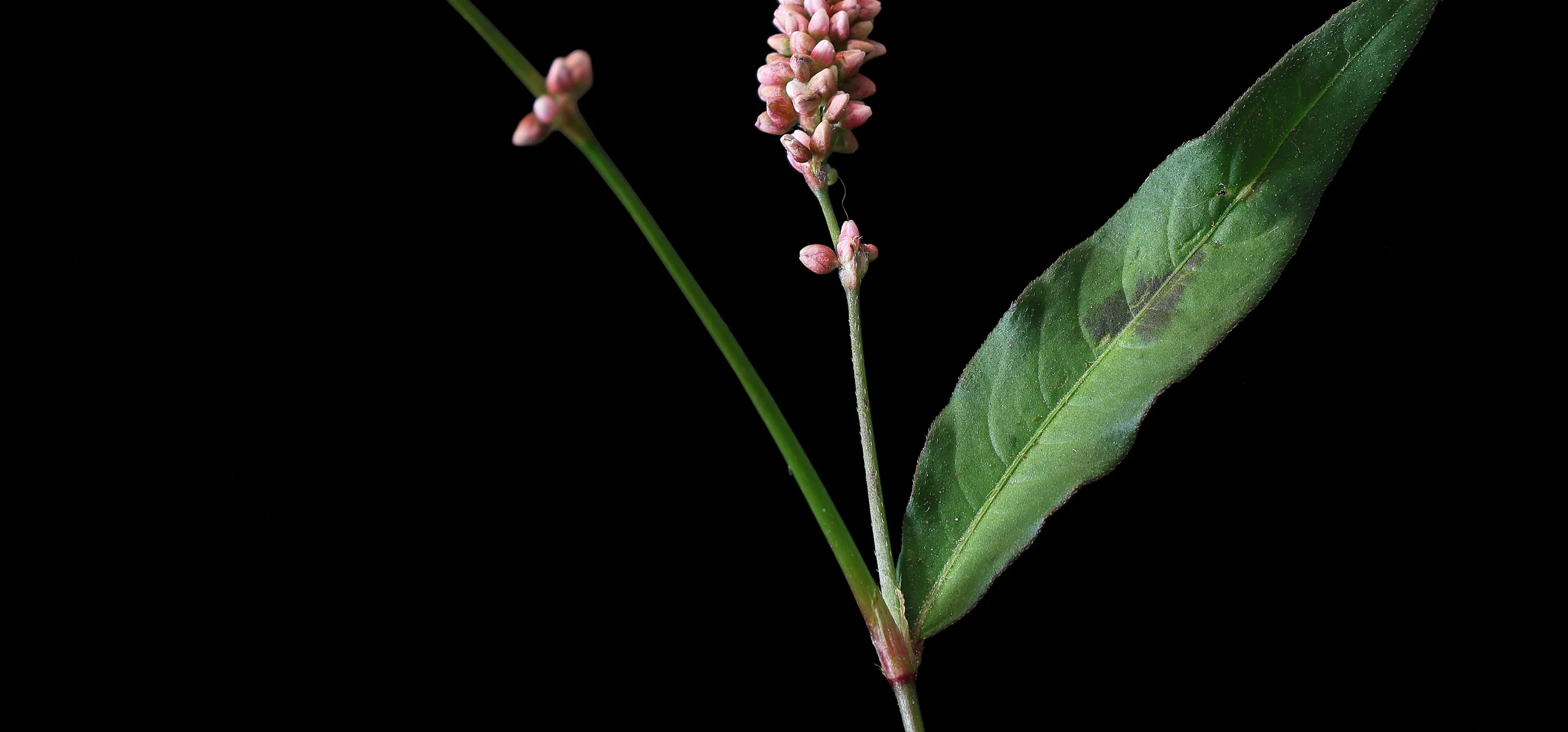
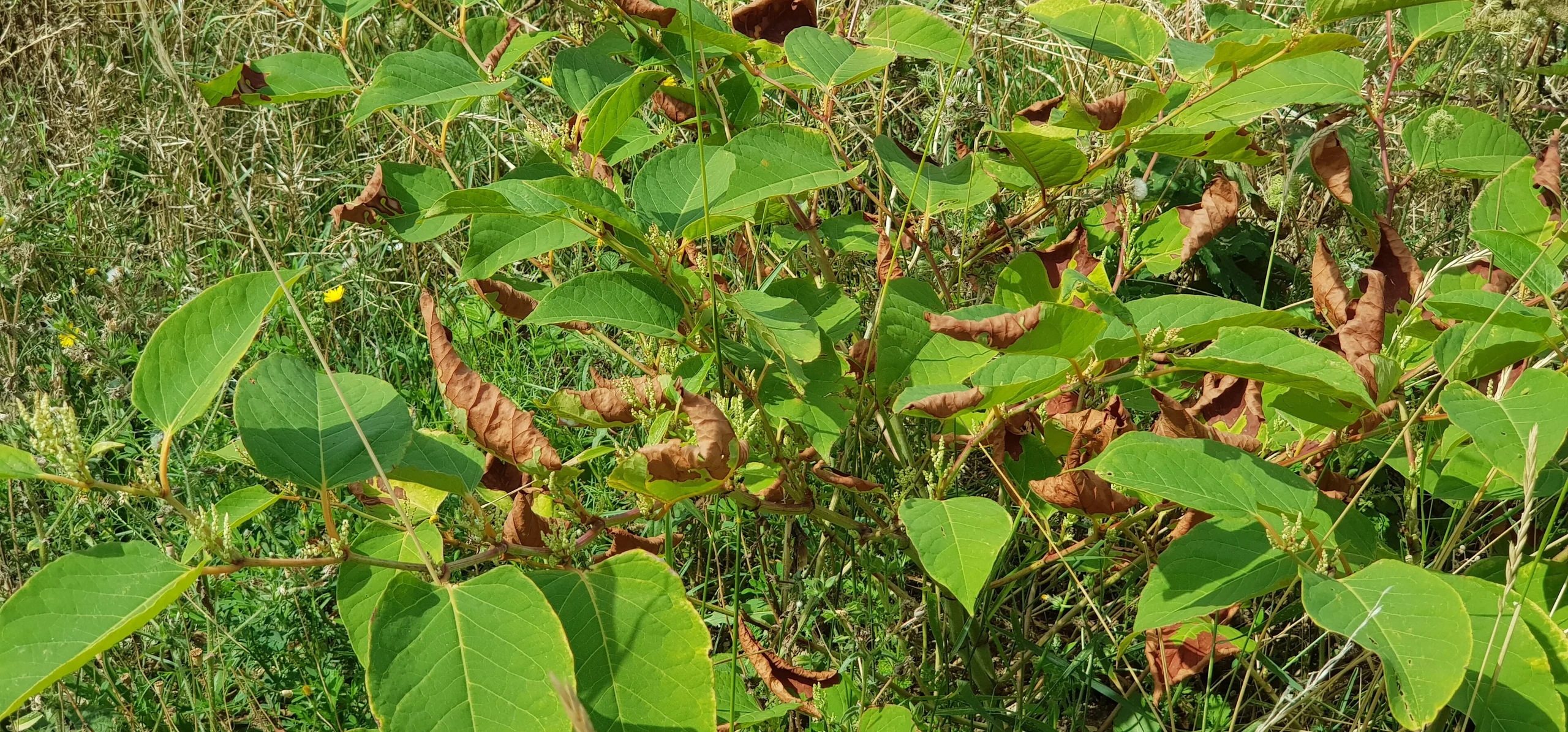
In spring, rounded pink buds push up at ground level and unfurl into reddish shoots that thicken fast into hollow, bamboo-like canes with conspicuous nodes and reddish-purple speckling. Left alone, the canes arch over as they climb, typically reaching 2 to 4 m (6 to 13 ft) by midsummer. The leaves are spade-shaped with a flat base and a pointed tip, growing to about 14 cm long and arranged alternately in a distinctive zigzag along each stem, never opposite each other. From late summer into early autumn, loose sprays of small, creamy-white flowers open at the stem tips, and after the first hard frost the whole cane collapses into a mat of brittle, tan, dead stems that persist through winter over the dormant rhizome.
Japanese Knotweed vs Look-Alikes
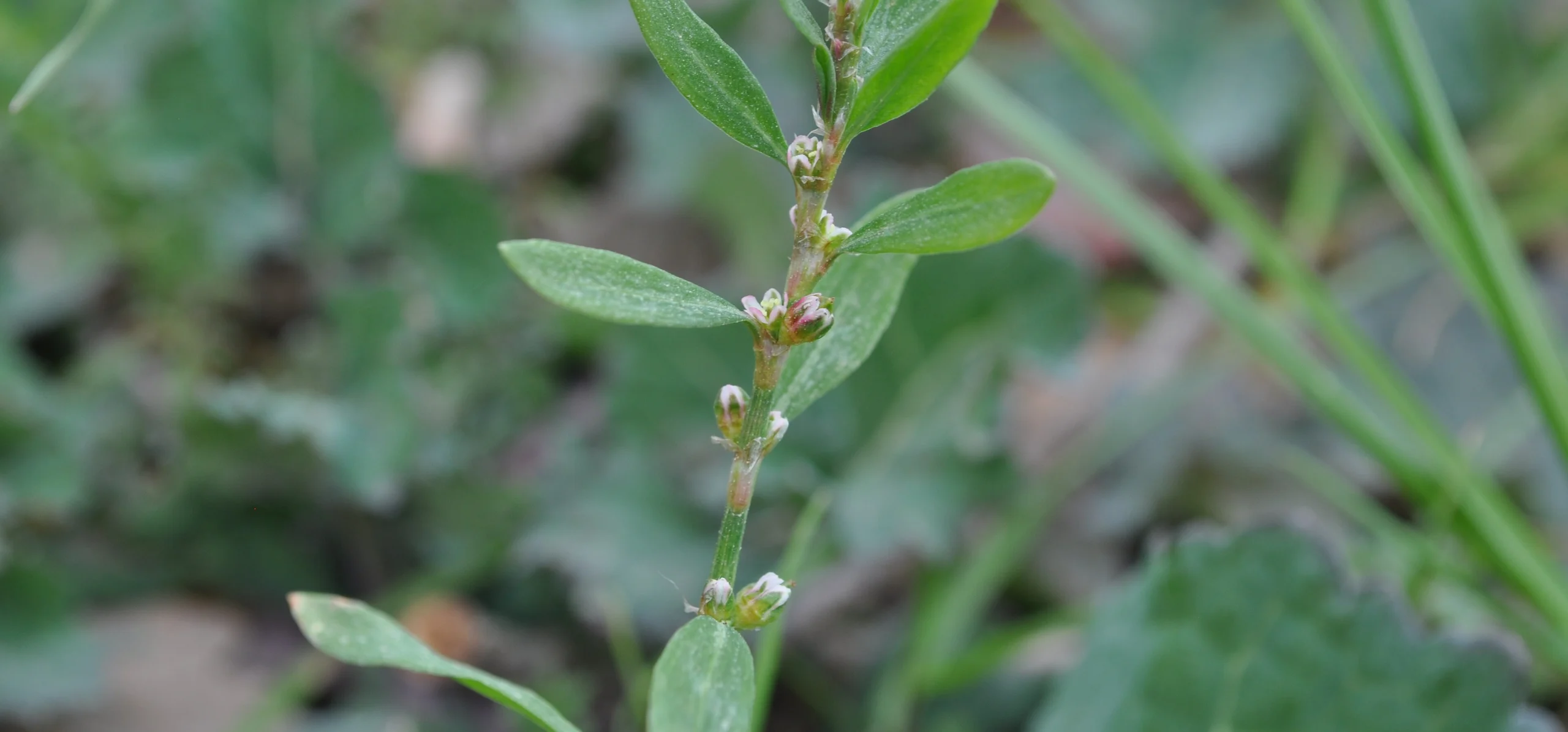
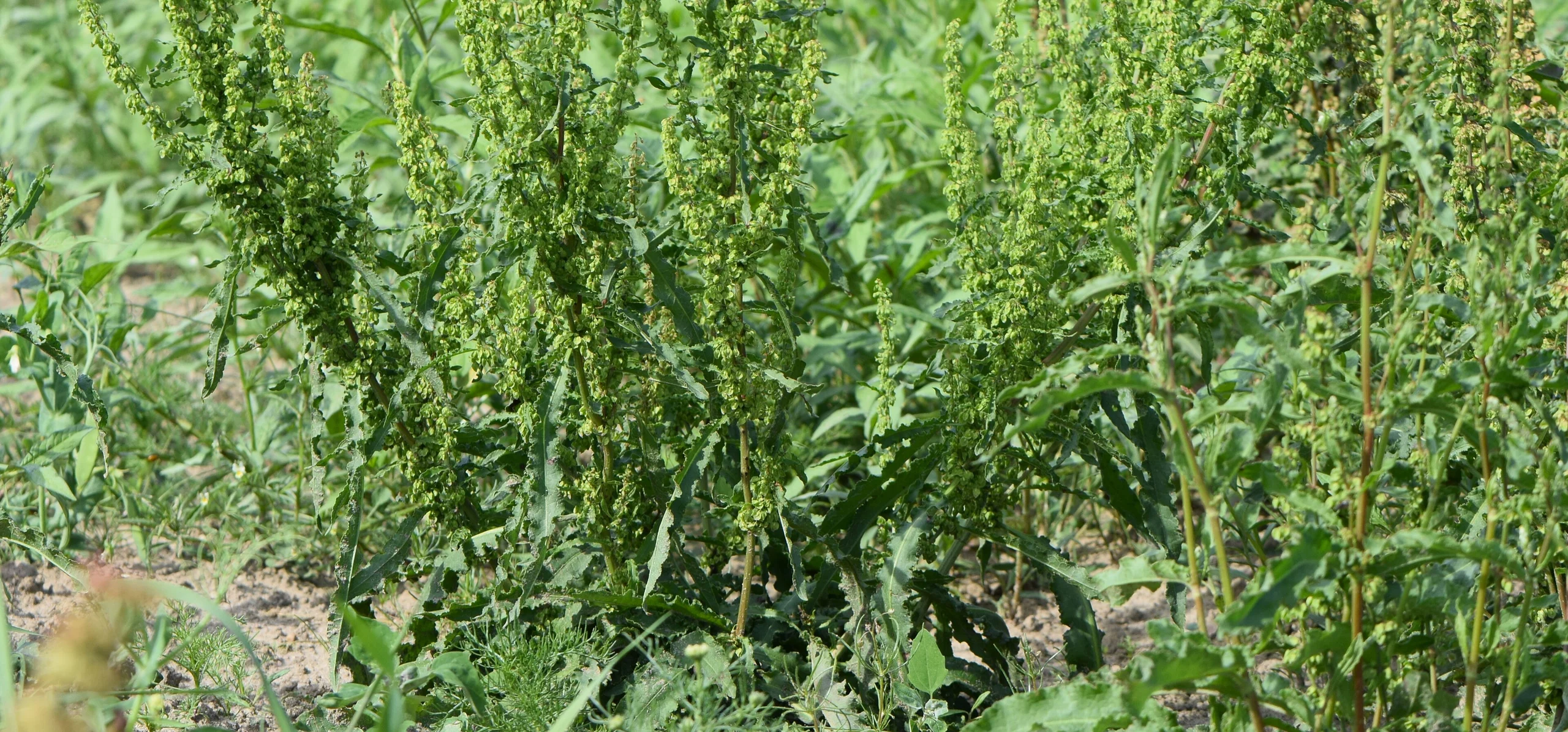
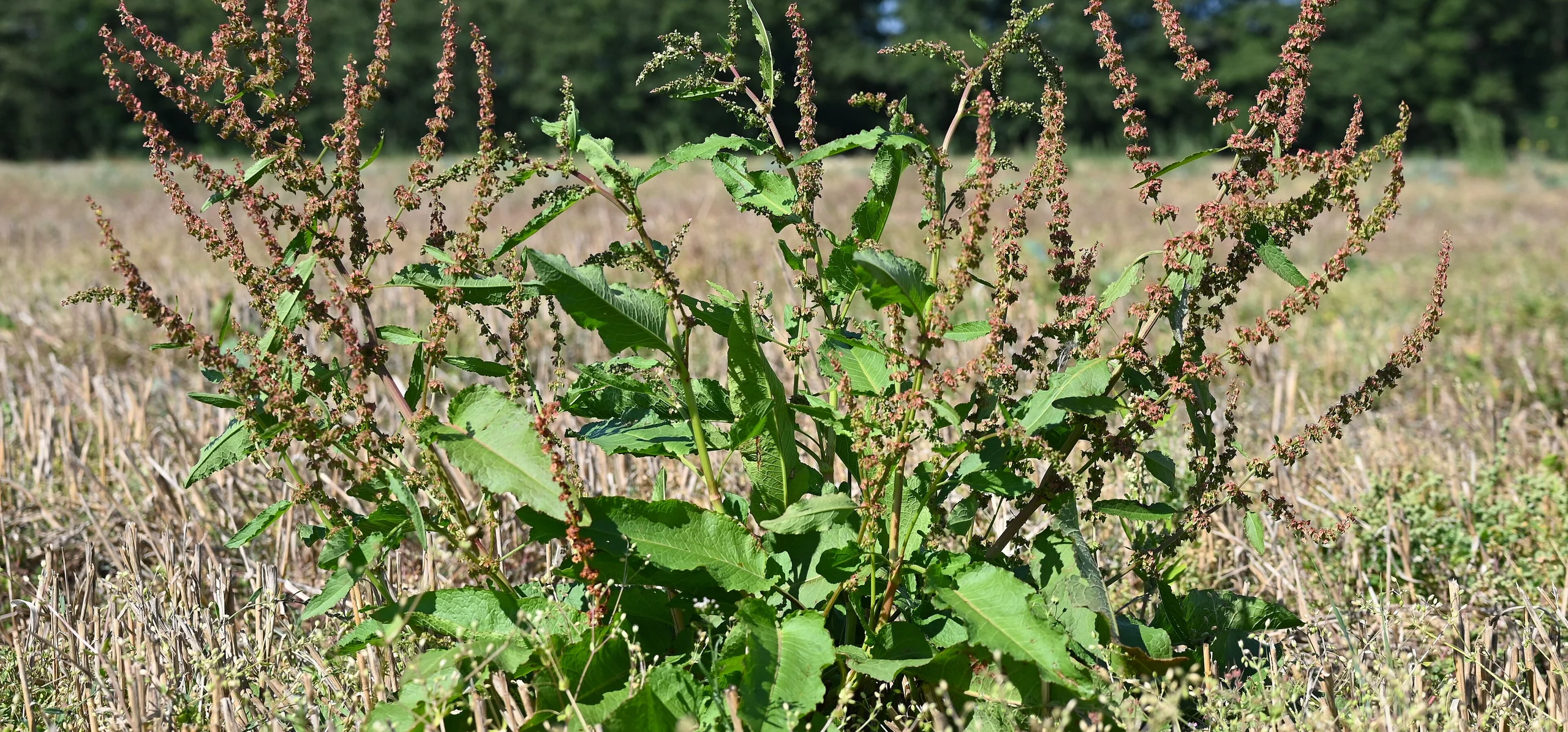
Most "is this knotweed" questions turn out to be something else. Bindweed shares the heart-shaped leaves but twines and climbs around anything upright rather than standing as a self-supporting cane, and its flowers are white or pink trumpets, not creamy sprays. Ornamental Persicaria and Fallopia baldschuanica (Russian vine) are close botanical relatives with a similar leaf outline, but Persicaria stems are slender and solid rather than hollow, rarely pass waist height, and often carry a dark chevron marking that true knotweed never shows. Leycesteria formosa (Himalayan honeysuckle) also has hollow, cane-like stems, but narrower, more pointed leaves and hanging, purple-bracted flowers instead of upright sprays. Young dogwood shoots and Houttuynia cordata, a low, heart-leaved ground cover under 30 cm tall, round out the usual list of mistaken identities. When in doubt, wait until the leaves are fully expanded before judging, and treat a confident identification from a single photo with some caution.


The Rhizome Network: Why a Fragment Restarts Everything
The visible canes are the least of the problem. Underneath, the plant builds a dense crown of thick, woody rhizomes, orange inside a dark brown skin, that can extend more than a metre down into the soil and spread laterally well beyond the edge of the canes visible above ground. A rhizome fragment as small as a centimetre across can regenerate into a fully independent plant, and cut or broken stems will root on their own if left on damp soil or dropped in water. That combination, an aggressive root system plus fragments that root from almost anywhere, is why knotweed shrugs off casual digging, why it turns up downstream of construction sites and flooded gardens, and why its rhizomes are documented pushing up through tarmac, foundations, drains, and retaining walls in search of light and moisture.
Legal Status and Why It Affects Property Sales
In the UK, Japanese knotweed is listed on Schedule 9 of the Wildlife and Countryside Act 1981. It is not an offence to have it growing in your own garden, but it is illegal to cause it to spread into the wild, and any cut or excavated plant material is classified as controlled waste under the Environmental Protection Act 1990, so it cannot go in the household bin or a normal green waste collection. Anyone selling a UK property must declare its presence on the standard TA6 conveyancing form, and mortgage lenders routinely ask for a management plan or a professional treatment guarantee before lending against a property with knotweed nearby. Outside the UK, individual countries and US states regulate the species separately as it establishes, but the underlying biology, an aggressive rhizome network that ignores property lines, is the same wherever it grows.
How to Control and Remove It Without Spreading It Further
Herbicide is the most reliable route for an established stand. Glyphosate applied to actively growing foliage from midsummer into early autumn, when the plant is moving sugars down into the rhizome for winter, carries the chemical where it does the most damage; treatment earlier in the season only burns off the top growth and the rhizome resprouts regardless. Even with correct timing, a glyphosate program typically needs at least three growing seasons to exhaust the rhizome, with a follow-up spray for any regrowth the next spring a near certainty. Digging out the crown and rhizome by hand is possible for a small, recently arrived patch, but every rhizome fragment left behind, and they snap easily, can restart the infestation, so the work has to be thorough and the area monitored for years afterward. Whichever method you use, never compost the material, put it in green waste, or leave cut canes lying on bare soil; dispose of it through a registered waste carrier to a licensed site, or dry and burn it on site where that is permitted. For anything beyond a small patch, a specialist invasive-weed contractor offering an insurance-backed guarantee is usually the fastest way to a mortgage-ready property.
Common Mistakes
Mowing or strimming a stand feels productive but does the opposite: every severed stem and root fragment is a potential new plant, so the mower or strimmer becomes a propagation tool. Rotavating or tilling a bed where knotweed is present chops the rhizome into dozens of viable pieces and buries them at planting depth. Piling cut canes on a compost heap, or bagging them for the regular household or green waste collection, breaks the controlled-waste rules and can restart growth wherever the pile ends up. Treating in spring because that is when other garden jobs happen wastes the herbicide on top growth alone, and stopping the follow-up sprays after one good-looking season almost always lets a surviving rhizome fragment come back the year after. The last common error runs the other way: pulling out ornamental Persicaria, Russian vine, or young dogwood on a hunch, and either paying for unnecessary treatment or leaving real knotweed untouched because a neighbour or an online photo said it looked fine.
Test your plant knowledge
Tap a card to flip it and reveal the answer.
Japanese knotweed's hollow stems are marked with reddish-purple speckles. Tap to reveal ✓ True
Mowing or strimming a knotweed stand is an effective way to get rid of it. Tap to reveal ✕ False
In the UK, it is illegal to simply have Japanese knotweed growing in your own garden. Tap to reveal ✕ False
A glyphosate herbicide programme typically needs at least three growing seasons to eradicate an established stand. Tap to reveal ✓ True
The ASPCA lists Japanese knotweed as toxic to cats and dogs. Tap to reveal ✕ False
Sources
References consulted for this guide
- GBIF: Reynoutria japonica Houtt.gbif.org
- Plants of the World Online (Kew): Reynoutria japonicapowo.science.kew.org
- RHS: Japanese Knotweedrhs.org.uk
- CABI Compendium: Fallopia japonica (Japanese knotweed)cabi.org
- NC State Extension Gardener Plant Toolbox: Reynoutria japonicaplants.ces.ncsu.edu
- Reference entity : Wikipédiaen.wikipedia.org