Curly Dock
Rumex crispus
Family · Polygonaceae
Curly dock forms a deep taproot and a seed bank that lasts decades. Learn to identify the rosette, forage young leaves safely, and control an established patch.
Rumex crispus
Plant profile
- WateringLittleWater every 12 days
- Light exposurePartial sun
- Ideal temperature-34–35 °C
- Humidity40–90 %
- Hardiness zoneUSDA 4–8
Growth
- Family
- Polygonaceae
- Life cycle
- Perennial
- Growth speed
- 6/10
- Mature size
- 60–150 cm
- Flowering
- Summer; greenish flowers ripen to reddish-brown seed
- Propagation
- Seed
Dormancydies back to rootstock in winter
Soil & climate
- Soil types
- clay, loam, silt, sand, rocky
- Drought tolerance
- Yes
Light & Placement
- Origin
- Native to Macaronesia, North Africa, and temperate Eurasia
- Where to place it
- ditches and roadsides
- pastures and disturbed ground
- vegetable garden edges
Safety
- Toxicity
- CatsToxic
- DogsToxic
- HorsesToxic
Invasive speciesseed remains viable in soil for up to 50 years, cut flower stalks before the seed heads turn brown to stop a patch from spreading
Data fromGBIF: Rumex crispus L.Plants of the World Online (Kew): Rumex ASPCA: Toxic and Non-toxic Plants, DockNC State Extension Gardener Plant ToolboUC IPM: Curly Dock Weed Identification
Where it grows
World distribution
Curly Dock is native to 53 countries: Afghanistan, Albania, Algeria, Austria, Belarus, Belgium, Bulgaria, and Cape Verde….GBIF records 799,371 documented identifications across 137 countries, with the largest concentrations in United Kingdom, France, and Netherlands.
- Afghanistan
- Albania
- Algeria
- Austria
- Belarus
- Belgium
- Bulgaria
- Cape Verde
- China
- Croatia
- Cyprus
- Czechia
Show 41 more countriesShow fewer countries
- Denmark
- Egypt
- Estonia
- Finland
- France
- Georgia
- Germany
- Greece
- Hungary
- India
- Iran
- Iraq
- Ireland
- Italy
- Kazakhstan
- Kyrgyzstan
- Lebanon
- Libya
- Mongolia
- Morocco
- Myanmar (Burma)
- Netherlands
- Norway
- Palestinian Territories
- Poland
- Portugal
- Romania
- Russia
- Saudi Arabia
- South Korea
- Spain
- Sweden
- Switzerland
- Taiwan
- Tajikistan
- Thailand
- Tunisia
- Türkiye
- Ukraine
- United Kingdom
- Uzbekistan
Yellow to orange dots: concentration of documented identifications per country. Green countries: sourced native range. Source: GBIFNative range from POWO (Kew).
Curly dock (Rumex crispus) is the tall, rust-colored weed that shows up in disturbed soil, ditches, and the edges of vegetable beds, easy to dismiss until its wavy-edged leaves and towering seed stalks return every summer no matter how often the top growth gets cut. It is a perennial anchored by a thick, branched taproot, which is why pulling the rosette rarely finishes the job. The same plant that frustrates gardeners has been foraged as a spring green for generations, and understanding its life cycle is the key to either eating it or getting rid of it for good.
Identifying Curly Dock at Every Stage
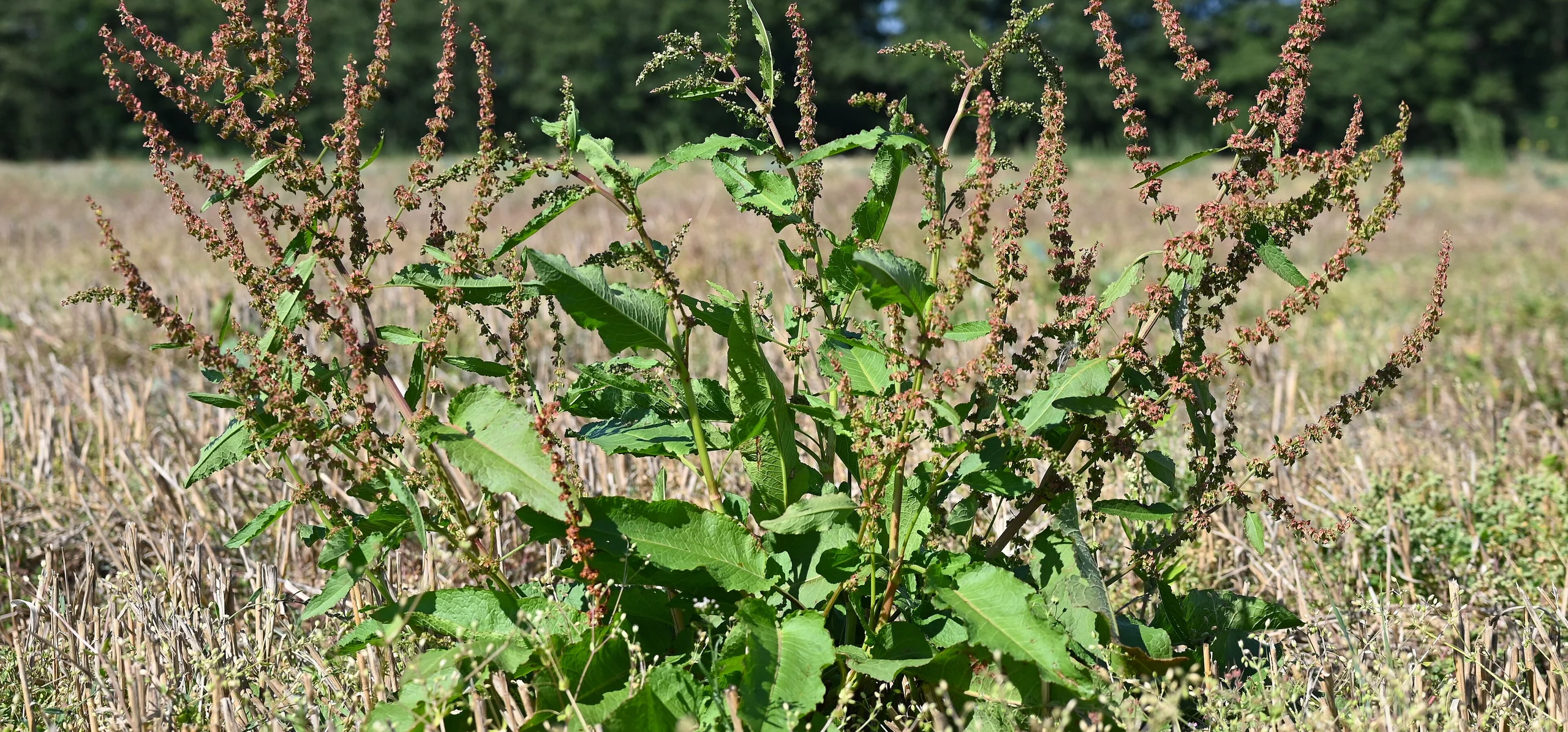
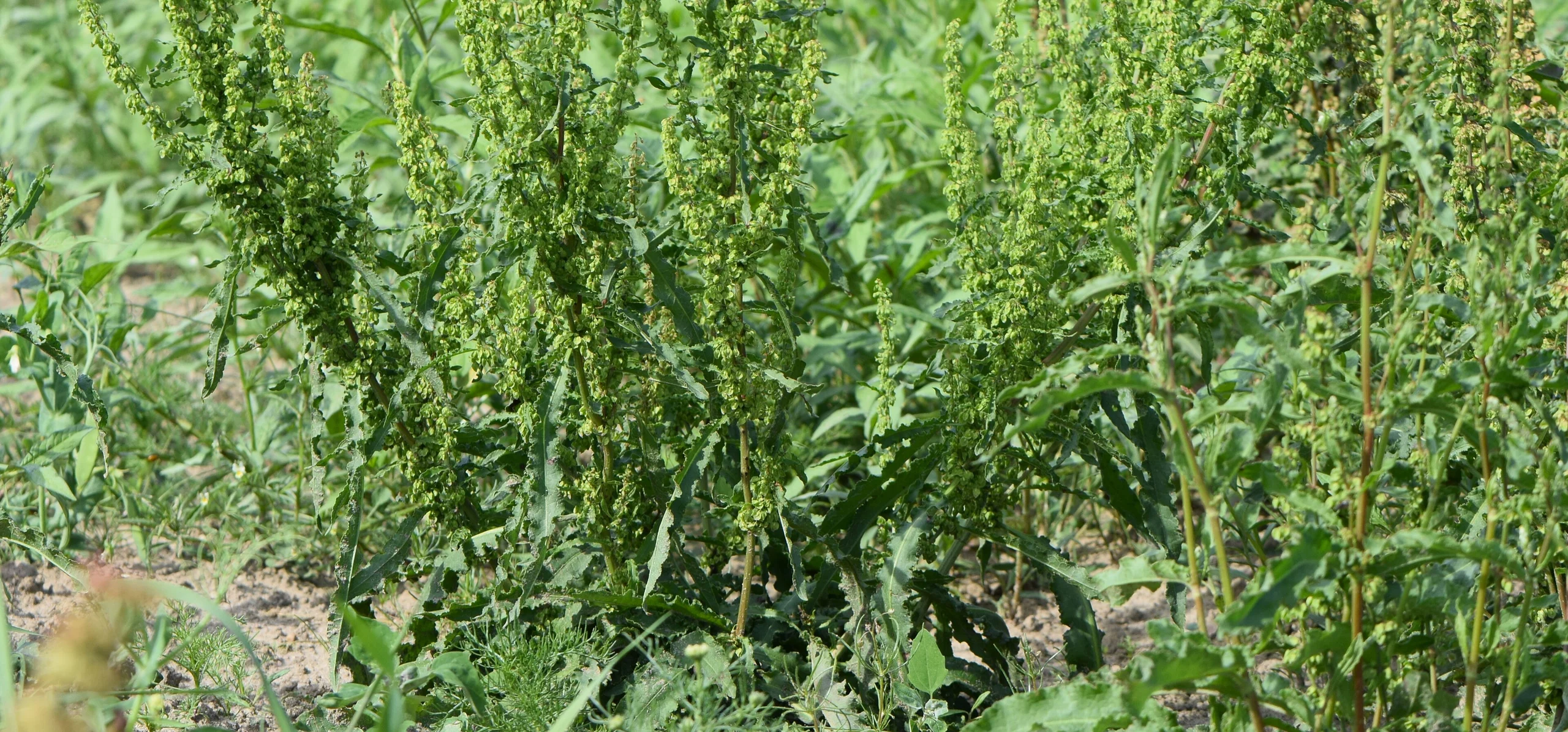
The first-year plant is a basal rosette of lance-shaped leaves with strongly wavy, crimped margins, the feature that gives the species its common name. The leaves are hairless and alternate along the stem once the flowering stalk rises, typically reaching 60 cm to 1.5 m tall in its second year and beyond. Flowers appear in dense whorls along the upper stalk in summer, small and greenish at first, then reddish-brown as the three-winged papery fruits mature and dry on the stem. Those rust-colored seed heads are usually what catch a gardener's eye long before the leaves do, since they persist through autumn and into winter.
Where It Grows and Why It Keeps Coming Back
Curly dock tolerates almost any soil, clay, loam, silt, sand, or shallow rocky ground, and is equally at home in full sun or partial shade. It turns up in ditches, roadsides, wetlands, pastures, orchards, and any disturbed or unmanaged corner of a property, and it copes with both drought and temporary flooding once established. That range of tolerance is the reason it survives conditions that kill more particular garden plants, a patch that looks stressed by summer heat will often recover fully after the next rain.
The Taproot Problem
The thick, branched taproot is the plant's real strength. Cutting or mowing the top growth removes the visible weed but leaves the root intact, and the rosette regrows from the crown within weeks. Hand-pulling only works reliably on young plants in loose, moist soil, where the whole root comes up in one piece, on established plants, a digging fork or dandelion weeder worked in a full circle around the crown is needed to sever the root well below the surface. Any root fragment left behind with a growing point can resprout, which is why repeated shallow hoeing tends to thicken a patch rather than clear it.


Foraging the Leaves and Shoots
The young rosette leaves, picked before the flowering stalk rises, are the part traditionally cooked as a spring green, boiled or sauteed like spinach, which tames both the sour, lemony tang and the astringency of older growth. Like spinach and sorrel, curly dock leaves contain soluble oxalates, so they are best eaten cooked rather than raw, and in moderate portions rather than as a staple green. The reddish-brown seeds, once fully dried, have also been ground into flour in some traditions, though they need thorough cleaning to remove the papery wings first.
Controlling an Established Patch
Because a single mature plant can drop enough seed to restock the soil for decades, the buried seed bank outlasts almost any one season of control effort. Cutting the flower stalks before the seed heads turn brown is the single most effective thing a gardener can do to stop a small patch from becoming a large one. Combine that with digging out the crown and taproot of each plant, and check the same ground again the following spring, since buried seed keeps germinating in flushes whenever the soil is disturbed. Persistent mulching starves new seedlings of the light they need to establish, and is more effective over a full season than any one round of pulling.
Look-Alikes Worth Knowing
Broadleaf dock (Rumex obtusifolius) is the most common source of confusion, its leaves are broader, less crimped at the margin, and often heart-shaped at the base, compared with the narrower, tightly wavy-edged leaves of curly dock. The two species readily grow side by side in the same disturbed ground and even hybridize, so a patch may show intermediate leaf shapes. Neither should be confused with true sorrel (Rumex acetosa), which is smaller, more arrow-shaped at the leaf base, and grown deliberately as a culinary herb rather than treated as a weed.
Toxicity for Pets and People
Curly dock is listed by the ASPCA as toxic to cats, dogs, and horses because of its soluble calcium oxalate content, ingestion can cause drooling and tremors, and kidney failure is possible but rare. The plant does not cause contact dermatitis, so handling it while weeding is not a hazard, the risk is specifically from eating it in quantity. For humans, the same oxalates are the reason the leaves are traditionally cooked rather than eaten raw and kept to modest portions, particularly for anyone prone to kidney stones.
Test your plant knowledge
Tap a card to flip it and reveal the answer.
Curly dock regrows from its taproot even after the top growth is cut or mowed. Tap to reveal ✓ True
Curly dock only grows in dry, sandy soil. Tap to reveal ✕ False
The wavy, crimped leaf margins of the basal rosette are a reliable way to identify curly dock before it flowers. Tap to reveal ✓ True
Curly dock seeds lose the ability to germinate after about two years in the soil. Tap to reveal ✕ False
The ASPCA lists curly dock as toxic to cats, dogs, and horses. Tap to reveal ✓ True
Sources
References consulted for this guide
- GBIF: Rumex crispus L.gbif.org
- Plants of the World Online (Kew): Rumex crispuspowo.science.kew.org
- ASPCA: Toxic and Non-toxic Plants, Dockaspca.org
- NC State Extension Gardener Plant Toolbox: Rumex crispusplants.ces.ncsu.edu
- UC IPM: Curly Dock Weed Identificationipm.ucanr.edu
- Reference entity : Wikipédiaen.wikipedia.org