Lady's Thumb
Persicaria maculosa
Family · Polygonaceae
Lady's Thumb (Persicaria maculosa) is a damp-loving annual with a dark leaf blotch and pink flower spikes. Covers ID, range, soil, control and pet safety.
Persicaria maculosa
Plant profile
- WateringHighWater every 4 days
- Light exposurePartial sun
Growth
- Family
- Polygonaceae
- Life cycle
- Annual
- Growth speed
- 7/10
- Mature size
- 50–100 cm
- Spread
- 10–50 cm
- Flowering
- Midsummer to early autumn
- Propagation
- Seed
DormancyNone; a true annual killed outright by the first hard autumn frost, overwintering only as seed
Time to maturityOne growing season: germinates in spring, flowers from midsummer to early autumn and sets seed before dying the same year (RHS)
Soil & climate
- Soil types
- clay, loam
- Drought tolerance
- No
Light & Placement
- Where to place it
- pond and stream margins
- bog gardens and damp meadow edges
- moist waste ground and vegetable bed margins
OriginTemperate Eurasia to Indo-China, Macaronesia and North Africa; naturalized in North America since at least 1843
Safety
- Toxicity
- Not listed by the ASPCA
- Pet safe
- Yes
Invasive speciesIntroduced and now naturalized through most of North America, first documented in the Great Lakes region in 1843; self-seeds freely and can compete strongly with crops in moist ground (CABI, RHS)
Data fromRHS: Persicaria maculosa (redshank)Persicaria maculosa Gray, GBIF Backbone POWO: Persicaria maculosa GrayCABI Compendium: Persicaria maculosa (reTexas A&M AgriLife Extension, Aquaplant:
Where it grows
World distribution
Lady's Thumb is native to 55 countries: Afghanistan, Albania, Algeria, Austria, Bangladesh, Belarus, Belgium, and Bhutan….GBIF records 465,962 documented identifications across 106 countries, with the largest concentrations in United Kingdom, France, and Netherlands.
- Afghanistan
- Albania
- Algeria
- Austria
- Bangladesh
- Belarus
- Belgium
- Bhutan
- Bulgaria
- China
- Croatia
- Czechia
Show 43 more countriesShow fewer countries
- Denmark
- Egypt
- Estonia
- Finland
- France
- Georgia
- Germany
- Greece
- Hungary
- India
- Iran
- Iraq
- Ireland
- Italy
- Japan
- Kazakhstan
- Kyrgyzstan
- Laos
- Lebanon
- Morocco
- Myanmar (Burma)
- Nepal
- Netherlands
- Norway
- Pakistan
- Poland
- Portugal
- Romania
- Russia
- Saudi Arabia
- South Korea
- Spain
- Sweden
- Switzerland
- Tajikistan
- Tunisia
- Türkiye
- Turkmenistan
- Ukraine
- United Kingdom
- Uzbekistan
- Vietnam
- Yemen
Yellow to orange dots: concentration of documented identifications per country. Green countries: sourced native range. Source: GBIFNative range from POWO (Kew).
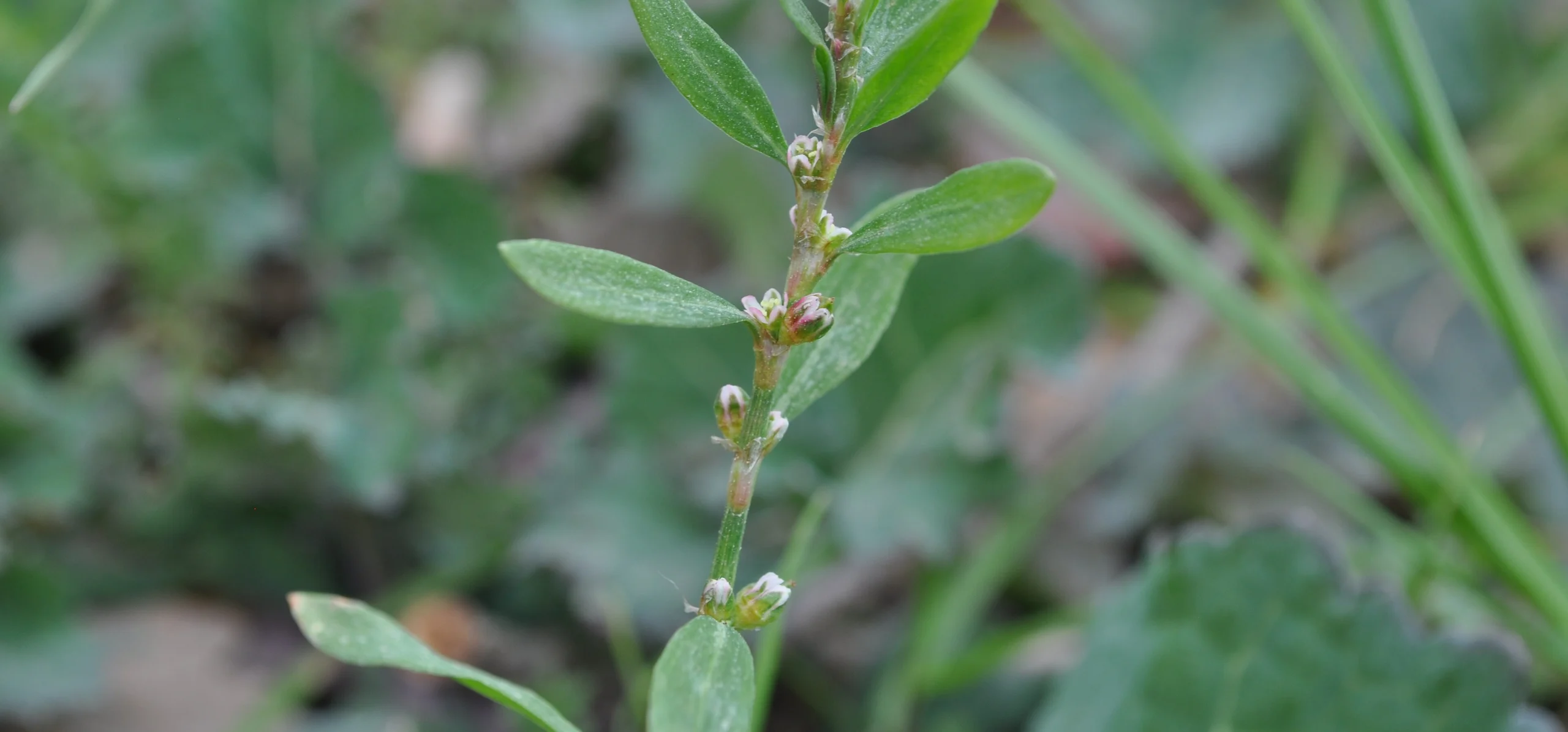
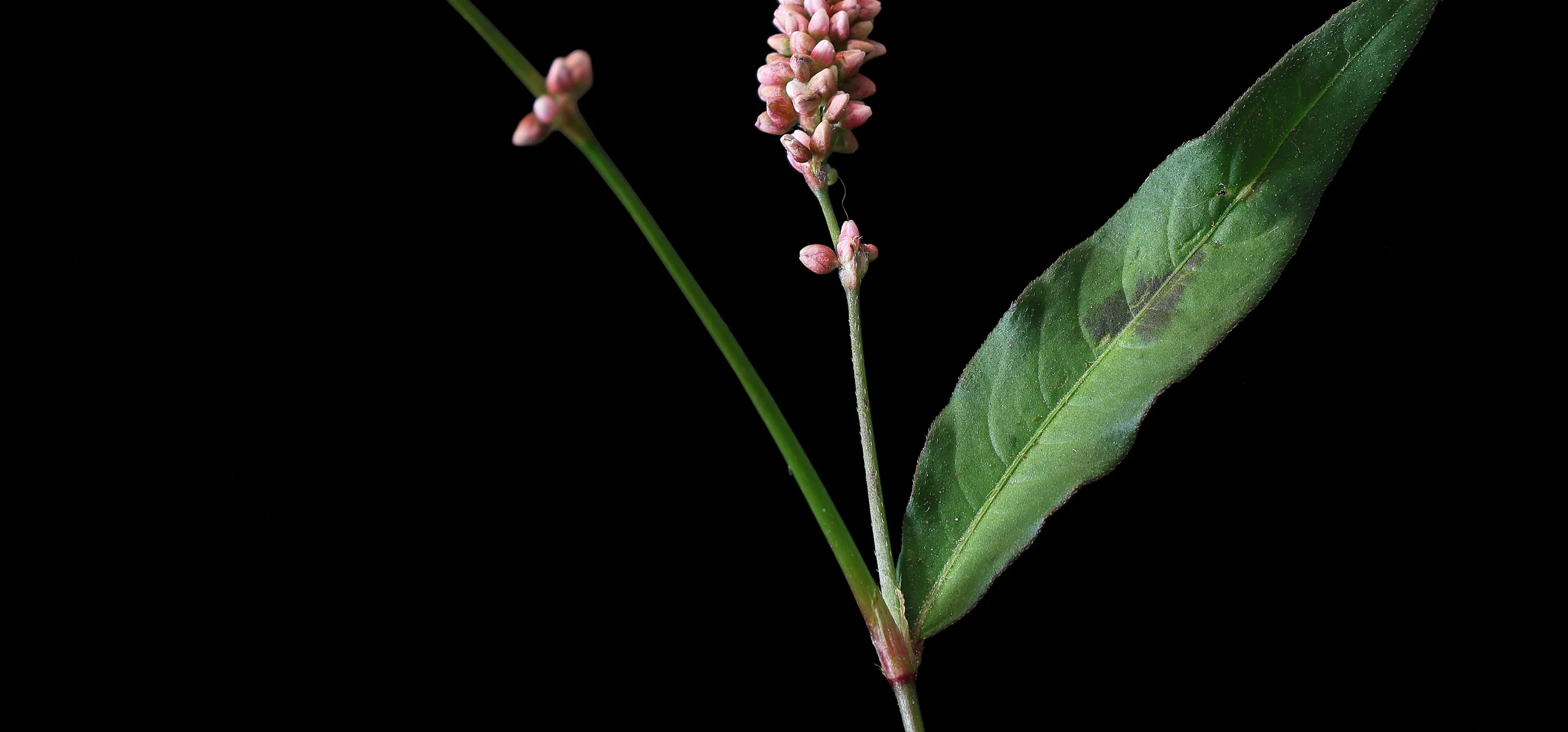
Persicaria maculosa turns up on its own more often than it gets planted on purpose: a low, branching annual with jointed, often reddish stems and narrow leaves that each carry a dark, almost black blotch across the centre, like a thumbprint pressed into the blade. From midsummer into early autumn it sends up short, dense spikes of pink buds that open pale pink to white, unremarkable from a distance but easy to recognise up close once the leaf mark is known. If it has appeared in damp soil near a pond, a vegetable bed or a gravel path, this is almost certainly the plant, and the question that follows is usually whether to pull it, leave it, or grow it on purpose.
Identifying Lady's Thumb
The giveaway feature is the leaf: narrowly ovate, entire-edged, and, per the RHS, often marked with a dark, almost black blotch roughly in the centre of the blade. At each leaf joint a papery, bristle-fringed sheath called an ocrea wraps around the stem, a family trait shared with docks and other Polygonaceae that helps separate Persicaria from unrelated weeds with similar flower spikes. Stems are jointed, frequently flushed red, and root where they touch damp soil, which lets a single plant sprawl into a low mat rather than staying upright. RHS cultivation notes give a height of 0.5 to 1 metre and a spread of 10 to 50 centimetres, though plants growing in poorer or drier ground often stay shorter and more compact than that.
Native Range and How It Got Everywhere
Kew's Plants of the World Online lists the native range as temperate Eurasia through to Indo-China, extending to Macaronesia and North Africa, which covers most of Europe and much of temperate Asia. It reached North America early: the CABI Compendium records the first documented occurrence in the Great Lakes region in 1843, and the species has since spread through most of the continent as an introduced plant of disturbed, moist ground. That history explains why it behaves so differently depending on where it turns up: an unremarkable native wildflower of damp meadows across much of its native range, and a genuinely competitive weed of crop margins and waste ground through North America.
Soil and Watering
This is not a plant that tolerates drying out. The RHS lists moist-but-well-drained to poorly-drained clay and loam as its preferred ground, and in the wild it favours pond edges, ditches, streambanks and other consistently damp sites, a pattern Texas A&M AgriLife Extension's aquatic plant database confirms for naturalised populations around marshes, ponds, lakes and streams. Where it is welcome, in a bog garden or along the damp margin of a wildlife pond, keep the soil constantly moist through the growing season rather than watering on a fixed schedule; where it is not welcome, letting a bed dry out between waterings is one of the few things that slows it down. RHS lists acid to neutral soil as suitable, with no strong preference for one texture over another as long as moisture stays reliable.


Light and Where It Grows
Full sun produces the densest flower spikes and the most compact habit, but the RHS also lists partial shade as tolerated, so plants along a shaded ditch or under the dappled edge of shrubs still flower, just more sparsely and on longer, floppier stems reaching for light. It has no indoor role and is not sold as a container plant: this is a damp-ground species for pond margins, wildlife meadow edges and the moist gaps of a vegetable garden or waste ground, not a candidate for pots or dry beds.
Managing It in the Garden
Most gardeners meet this plant as a volunteer rather than a purchase, and in a wildlife-friendly corner or a damp meadow planting it can earn its place: the flowers draw hoverflies and small bees, and the CABI Compendium lists a range of insect natural enemies that use it as part of its ecology. In a vegetable bed or nursery border, though, it competes hard with young crops in moist soil and self-seeds so freely that one missed plant becomes dozens the following year. Hand-pulling works well while the soil is damp and the shallow root pulls free easily, ideally before the flower spikes open and set seed; hoeing seedlings in spring, before a season's main flush of germination has finished, removes most of a year's plants in one pass.
Look-Alikes Among the Smartweeds
Persicaria maculosa is easy to confuse with other Persicaria species that share pink flower spikes and jointed, swollen stems. Persicaria longiseta carries a longer fringe of bristles on its ocrea and typically lacks the leaf blotch; Persicaria pensylvanica tends to grow taller, with glandular hairs on the flower stalks that this species does not have. The leaf blotch is the fastest field check: when it is clearly present, Lady's Thumb is the safer identification, though the RHS notes the mark appears only "often", not on every leaf, so it is worth checking several leaves on a plant rather than just one before deciding.
Pets, People and the Life Cycle
The ASPCA's toxic and non-toxic plant lists carry no entry for Persicaria maculosa, lady's thumb, redshank or smartweed under any name checked, so no toxicity rating is given here rather than guessed at. As a true annual it completes its whole life in a single season: seed germinates through spring, plants flower from midsummer into early autumn, and the first hard frost kills the top growth outright, leaving the following year's population to come entirely from seed shed that autumn. That single-season habit is also why control works best in spring, when a flush of seedlings can be hoed or pulled well before any of them reach flower.
Test your plant knowledge
Tap a card to flip it and reveal the answer.
The RHS says the dark leaf blotch on Persicaria maculosa is present on every single leaf, without exception. Tap to reveal ✕ False
Persicaria maculosa is a true annual that dies back completely after the first hard autumn frost. Tap to reveal ✓ True
Kew's Plants of the World Online lists North America as part of the native range of this species. Tap to reveal ✕ False
The ASPCA's toxic and non-toxic plant lists include a specific entry rating Persicaria maculosa as toxic to cats and dogs. Tap to reveal ✕ False
RHS cultivation notes describe this plant's preferred soil as moist to poorly-drained, tolerating clay and loam. Tap to reveal ✓ True
Sources
References consulted for this guide
- RHS: Persicaria maculosa (redshank)rhs.org.uk
- Persicaria maculosa Gray, GBIF Backbone Taxonomygbif.org
- POWO: Persicaria maculosa Graypowo.science.kew.org
- CABI Compendium: Persicaria maculosa (redshank)cabi.org
- Texas A&M AgriLife Extension, Aquaplant: Spotted Lady's Thumb (Persicaria maculosa)aquaplant.tamu.edu
- Reference entity : Wikipédiaen.wikipedia.org