Common Knotgrass
Polygonum aviculare
Family · Polygonaceae
Identify prostrate knotweed by its wiry mat, swollen leaf joints, and love of compacted soil, plus how its life cycle shapes real control options.
Polygonum aviculare
Plant profile
- WateringVery littleWater every 14 days
- Light exposurePartial sun
- Hardiness zoneUSDA 2–10
Growth
- Family
- Polygonaceae
- Life cycle
- Annual
- Growth speed
- 3/10
- Mature size
- 8–20 cm
- Spread
- 60–90 cm
- Flowering
- Midsummer to early fall
- Propagation
- Seed
DormancyOverwinters as seed
Time to maturityNoticeable by midsummer
Soil & climate
- Soil types
- clay, sand, rocky, compacted
- Drought tolerance
- Yes
Light & Placement
- Origin
- Macaronesia to Eritrea, temperate Eurasia
- Where to place it
- lawns
- pavement cracks
- gravel paths
- compacted or bare soil
Safety
- Toxicity
- Not evaluated by ASPCA
Invasive speciesAggressive weed of compacted soil, turf, and crop fields; not cultivated intentionally
Data fromGBIF: Polygonum aviculare L.Plants of the World Online (Kew): PolygoNC State Extension Gardener Plant ToolboPenn State Extension: Prostrate KnotweedUSDA PLANTS Database: Polygonum avicular
Where it grows
World distribution
Common Knotgrass is native to 60 countries: Afghanistan, Albania, Algeria, Austria, Belarus, Belgium, Bhutan, and Bulgaria….GBIF records 802,973 documented identifications across 127 countries, with the largest concentrations in United Kingdom, France, and Netherlands.
- Afghanistan
- Albania
- Algeria
- Austria
- Belarus
- Belgium
- Bhutan
- Bulgaria
- China
- Croatia
- Cyprus
- Czechia
Show 48 more countriesShow fewer countries
- Denmark
- Egypt
- Eritrea
- Estonia
- Ethiopia
- Faroe Islands
- Finland
- France
- Georgia
- Germany
- Greece
- Hungary
- Iceland
- India
- Iran
- Iraq
- Ireland
- Italy
- Japan
- Kazakhstan
- Kyrgyzstan
- Lebanon
- Libya
- Morocco
- Myanmar (Burma)
- Nepal
- Netherlands
- Norway
- Pakistan
- Palestinian Territories
- Poland
- Portugal
- Romania
- Russia
- Saudi Arabia
- South Korea
- Spain
- Sweden
- Switzerland
- Taiwan
- Tajikistan
- Tunisia
- Türkiye
- Turkmenistan
- Ukraine
- United Kingdom
- Uzbekistan
- Yemen
Yellow to orange dots: concentration of documented identifications per country. Green countries: sourced native range. Source: GBIFNative range from POWO (Kew).
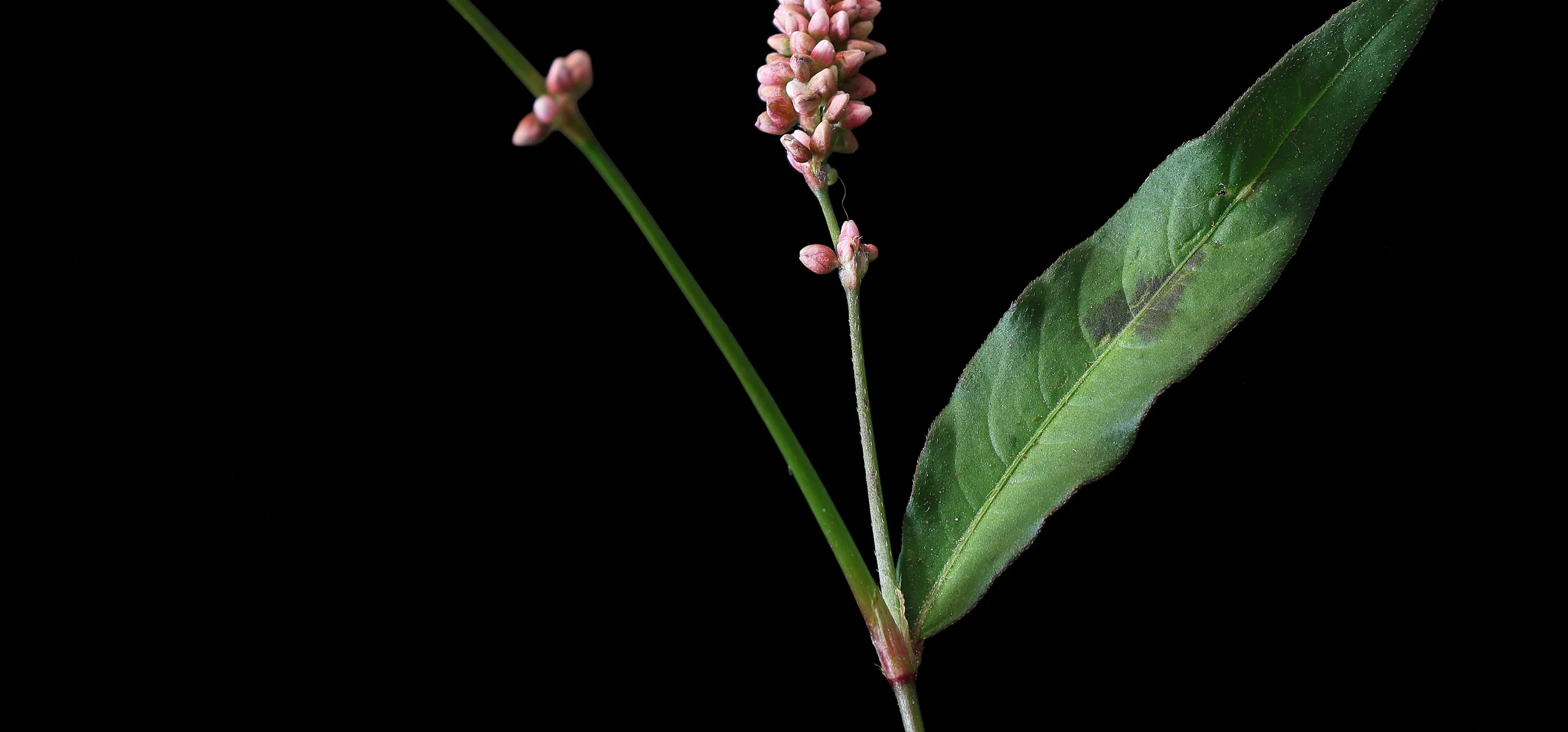
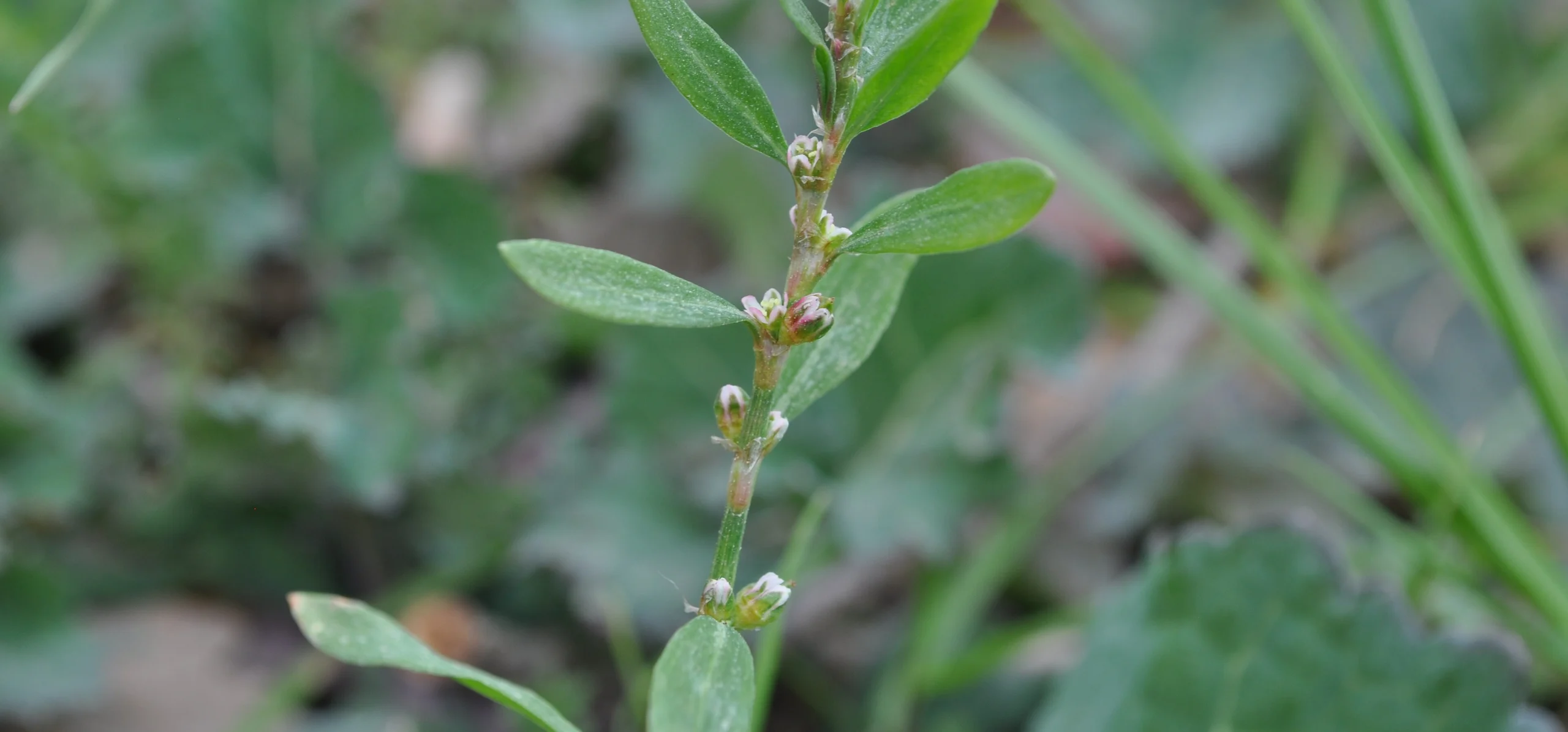
If you have found a wiry, low mat of small blue-green leaves spreading across a gravel path, a bare patch of lawn, or a crack in the pavement, you are most likely looking at Polygonum aviculare, common knotgrass, also widely called prostrate knotweed. It is a member of the buckwheat family, Polygonaceae, and its stems radiate outward from a small central taproot rather than growing upright. Each node along the stem is swollen and wrapped in a thin, papery sheath called an ocrea, a feature that separates it at a glance from unrelated prostrate weeds such as spurge. Tiny pink and white flowers open in the leaf axils from midsummer into early autumn.
Origin and Where It Grows Today
Polygonum aviculare is native to Macaronesia through temperate Eurasia. From that native range it has naturalised across most of the temperate world, and in the United States it has been recorded in all fifty states. Its accepted botanical name and full classification, family Polygonaceae, order Caryophyllales, are catalogued by GBIF, and the native range above is drawn from the taxon record at Plants of the World Online (Kew).
Life Cycle: Spring Seedling to Autumn Seed Bank
Seeds germinate very early in spring, often before most garden plants have woken up. Growth is slow at first, which is why the plant is easy to miss in April, but the mat becomes obvious by midsummer as stems lengthen and branch outward. Flowering runs from midsummer to early fall, and each plant produces thousands of small, brown, three-angled seeds that stay viable in the soil for years. That seed bank is the single fact that should shape any management plan: removing this year's plants after they have already flowered does almost nothing to reduce next year's germination.
Why It Grows Where Nothing Else Will
Common knotgrass specialises in stressed ground. It favours compacted soil and low fertility, exactly the conditions that discourage turfgrass and most garden plants, which is why it turns up along foot-worn paths, gateways, driveway edges, and pavement joints. It tolerates clay, sand, and shallow rocky soil, grows in soil ranging from acid to alkaline, and copes with full sun or several hours of partial shade. It is resistant to drought, poor soil, and repeated foot traffic, and needs no supplemental watering once established, it relies on whatever rain falls.
Look-Alikes: Telling It Apart from Close Relatives
The species most often confused with common knotgrass is Polygonum arenastrum, sometimes called common knotweed, which shares the same prostrate habit and swollen, sheathed nodes. The reliable difference is in the flower and fruit: in P. arenastrum the tepals are fused for one third to one half of their length and the achenes run 1.4 to 2.5 mm, while true P. aviculare has tepals fused for less than a third of their length and larger achenes, 2 to 3.5 mm. In practice a hand lens is needed to separate them with confidence, and since both behave the same way in a garden or lawn, misidentifying one for the other rarely changes what you should do about it.


Getting Rid of It Without Chemicals
The taproot is small, so hand-pulling is genuinely effective, especially right after rain when the soil is soft and the whole root lifts cleanly. Because the enormous seed bank is the real long-term problem, timing matters more than technique: pulling or hoeing plants before they flower in midsummer prevents that year's seed contribution, while pulling in autumn after seed has already dropped barely dents next year's population. Relieving soil compaction through core aeration, and topping bare or thin turf with compost or mulch, removes the exact conditions the plant depends on and lets grass or ground cover outcompete it over a season or two.
Chemical Control, When It Is Warranted
Where hand control is not practical, a pre-emergent herbicide applied in early spring, before soil temperatures allow germination, prevents that season's flush from establishing. Established plants respond better to a targeted post-emergent broadleaf treatment while they are still young and small, since older, hardened stems are noticeably more resistant. Because knotgrass grows flat against the ground, mowing passes over its growing points without cutting them, so mowing alone, at any height, will not control it.
Traditional Uses and Wildlife Value
The seeds are edible, raw or ground into flour, and the leaves have historically been used to produce blue or green dye. Plants of the World Online also lists traditional food and medicinal uses for the species. In the garden it is not without value either: it serves as a food plant for caterpillars, giving it a small but real role in a lawn or border's insect life even where it is unwelcome as a weed.
Common Mistakes When Managing It
The most frequent mistake is mowing a lawn short and expecting that to control the weed, when its flat growth habit means the blades never touch the stems. The second is pulling plants late in the season, after flowering, which feels productive but leaves the seed bank untouched for years to come. The third is treating the underlying compaction as unavoidable: since this species specifically exploits compacted, low-fertility ground, aerating and rebuilding soil structure removes its advantage and is usually more durable than repeated pulling or spraying alone.
Test your plant knowledge
Tap a card to flip it and reveal the answer.
Prostrate knotweed thrives in compacted, low-fertility soil where most garden plants struggle. Tap to reveal ✓ True
Mowing a lawn short effectively controls common knotgrass. Tap to reveal ✕ False
A single plant can produce thousands of seeds that stay viable in the soil for years. Tap to reveal ✓ True
Its deep, thick taproot makes hand-pulling difficult. Tap to reveal ✕ False
The swollen stem nodes wrapped in a papery sheath (ocrea) help distinguish it from unrelated prostrate weeds. Tap to reveal ✓ True
Sources
References consulted for this guide
- GBIF: Polygonum aviculare L.gbif.org
- Plants of the World Online (Kew): Polygonum avicularepowo.science.kew.org
- NC State Extension Gardener Plant Toolbox: Polygonum aviculareplants.ces.ncsu.edu
- Penn State Extension: Prostrate Knotweedextension.psu.edu
- USDA PLANTS Database: Polygonum aviculareplants.usda.gov
- Reference entity : Wikipédiaen.wikipedia.org