Multiflora Rose
Rosa multiflora
Family · Rosaceae
Multiflora rose forms thorny, seed-heavy thickets from a shrub once promoted as a living fence. How to identify it, understand how it spreads, and manage it.
Rosa multiflora
Plant profile
- WateringModerateWater every 9 days
- Light exposurePartial sun
- Hardiness zoneUSDA 5–9
Growth
- Family
- Rosaceae
- Life cycle
- Perennial
- Growth speed
- 9/10
- Mature size
- 183–457 cm
- Spread
- 244–549 cm
- Propagation
- Seed
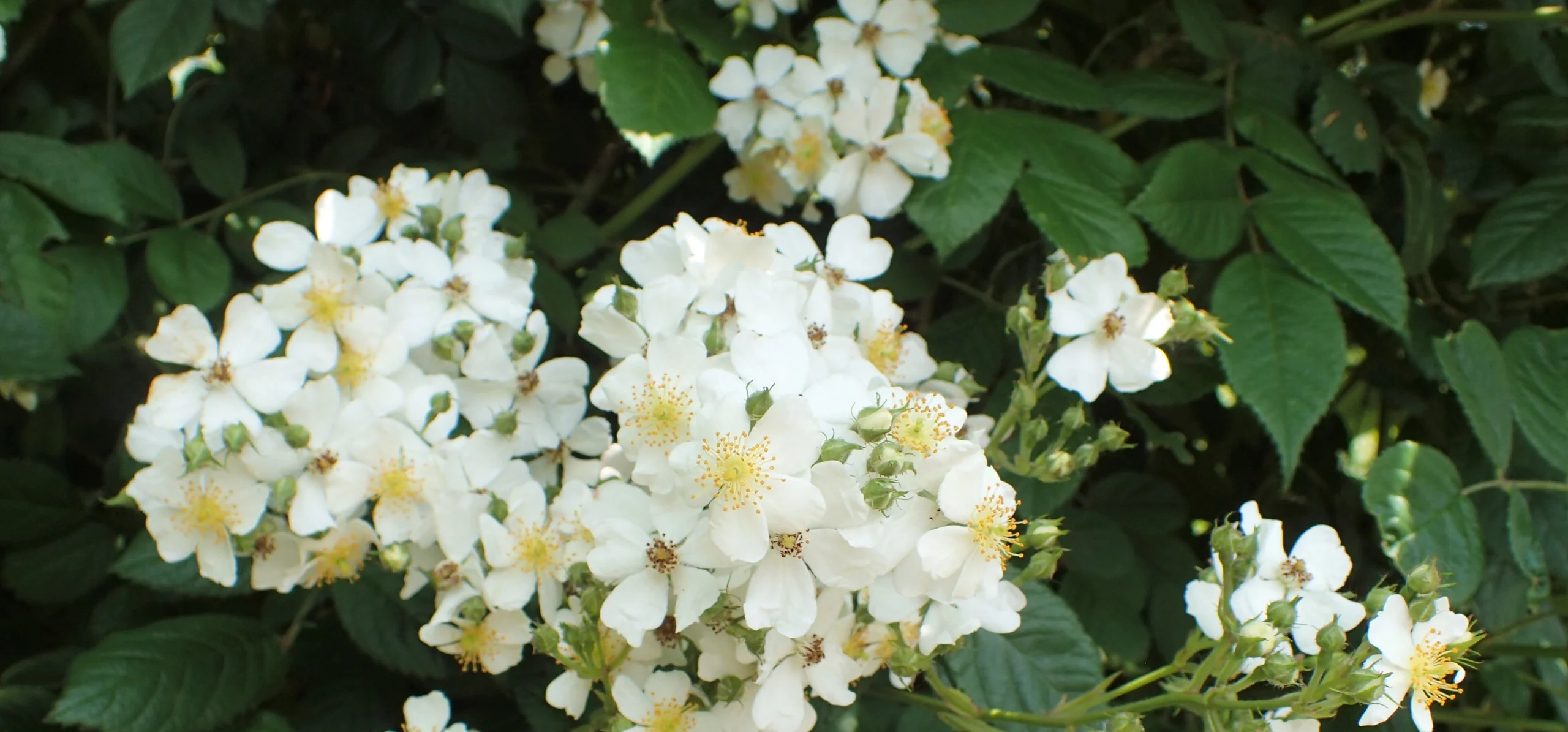
FloweringFragrant white to pale pink flowers in clusters of up to 30, late spring into June, followed by small red hips through fall
Dormancydeciduous, bare in winter
Time to maturityspreads into thickets within a few years
Soil
Soil typesDeep, fertile, medium-moisture, well-drained soil; tolerant of poor ground once naturalized
Light & Placement
- Where to place it
- fence line
- pasture edge
- roadside
- field margin
OriginArunachal Pradesh across China to Korea and Japan; naturalized and invasive in the eastern US
Safety
- Toxicity
- CatsSafe
- DogsSafe
- HorsesSafe
Invasive speciesMissouri Botanical Garden advises against planting it except as grafted rootstock; naturalizes into invasive thickets in the eastern US
Data fromGBIF Backbone Taxonomy: Rosa multiflora Plants of the World Online (Kew): Rosa mASPCA: Toxic and Non-Toxic Plants, RoseMissouri Botanical Garden Plant Finder: NC State Extension Gardener Plant Toolbo
Where it grows
World distribution
Multiflora Rose is native to 4 countries: Bhutan, China, Japan, and South Korea.GBIF records 117,798 documented identifications across 67 countries, with the largest concentrations in United States, Canada, and Netherlands.
- Bhutan
- China
- Japan
- South Korea
Yellow to orange dots: concentration of documented identifications per country. Green countries: sourced native range. Source: GBIFNative range from POWO (Kew).
A tangled thicket along a fence line or field edge, arching canes eight to fifteen feet out in every direction and smothered in late spring with small white or pale pink flower clusters, is very likely Rosa multiflora rather than a garden rose gone feral. It was planted on purpose across huge areas of the eastern United States decades ago, for hedging and wildlife cover, and it spread far beyond where it was put. Finding it on a property usually means one of two things: deciding whether to remove it, or simply understanding what has taken over that corner.
Identifying Multiflora Rose: Leaves, Stems and Stipules
The leaves are alternate and pinnately compound, three to five inches long, made up of five to eleven finely serrated leaflets, dark green above and noticeably paler underneath. The detail worth checking is the stipule, the small flap of tissue where each leaf joins the stem: on Rosa multiflora it is fringed like a comb along its edge, a trait that separates it from the native wild roses it is so often mistaken for. Stems stay green even as canes age, and are armed with sturdy, backward-curving prickles rather than straight thorns, which is what makes a mature stand so unpleasant to push through.
Origin and How It Reached North America
Plants of the World Online records its native range as stretching from Arunachal Pradesh across China to Korea and Japan; the Missouri Botanical Garden narrows this in practice to Japan and Korea, where it grows as an ordinary understory rose rather than a problem plant. In North America it was introduced as rootstock for grafting ornamental roses, then later promoted as a living fence and wildlife cover crop, planted deliberately along fields and roadsides. The same vigor that made it useful for those jobs is what let it escape cultivation entirely.


Flowers and Rose Hips
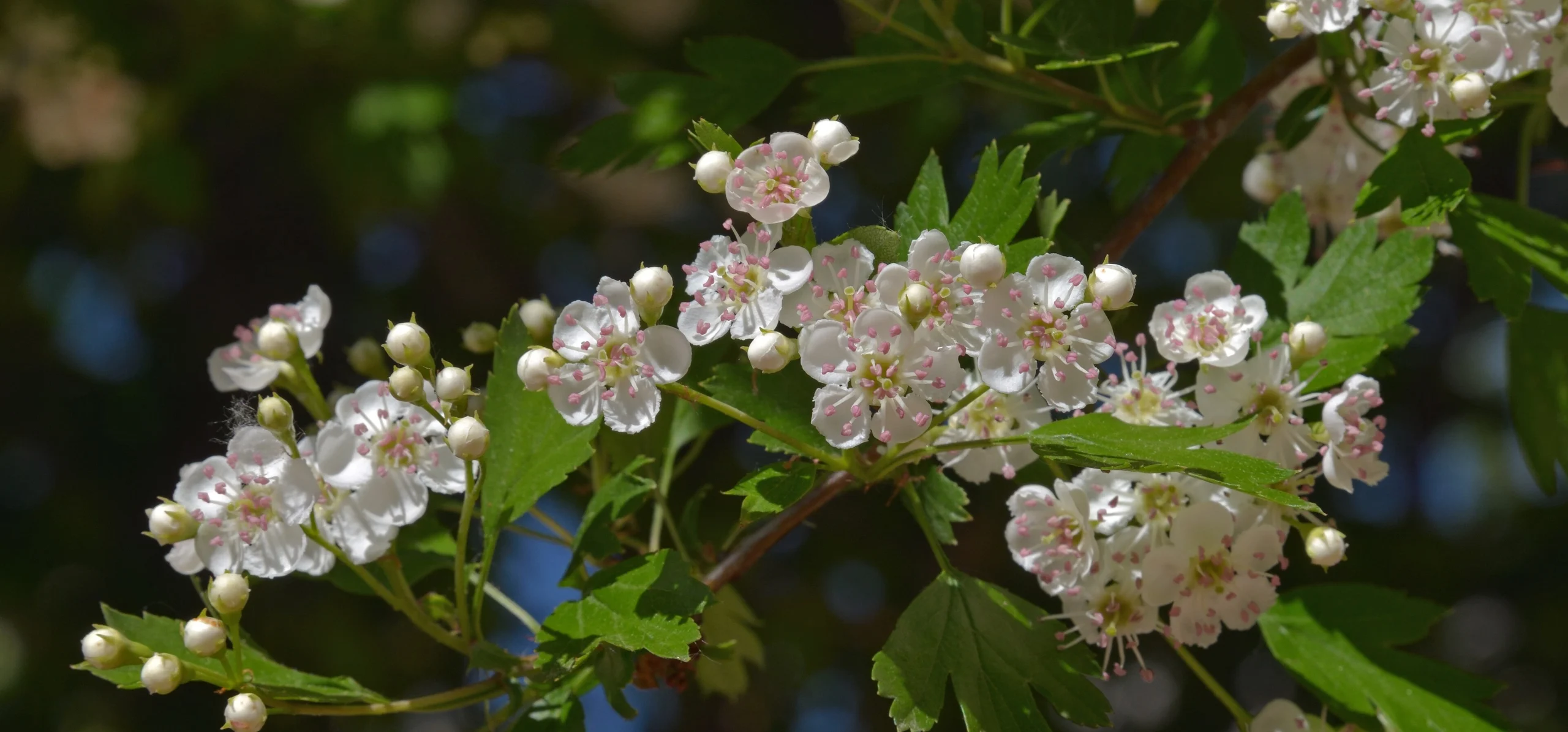
Flowering runs from late spring into June: five white to pale pink petals, half an inch to an inch and a half across, fragrant, gathered into pyramidal to globular clusters that the Missouri Botanical Garden records holding up to thirty blooms on a single vigorous cane, which is where the name multiflora comes from. Small, quarter-inch red hips follow through late summer and persist on the bare canes into fall. Those hips are the plant's real engine: NC State Extension records a single mature shrub producing around five hundred thousand seeds in a season, with a seed bank in the surrounding soil that stays viable for ten to twenty years, which is why a stand cut down once can keep resprouting from seed long after the visible plant is gone.
Size, Growth Rate and Habit
The Missouri Botanical Garden lists a mature height of six to fifteen feet with a spread of eight to eighteen feet, and describes the habit as rambling and arching rather than upright, closer to a bramble than a shrub rose. NC State Extension rates its growth as rapid, and notes it tends to leaf out earlier in spring than the native plants around it, giving it a head start on light before the surrounding canopy closes in. Left alone it does not stay a single bush; canes press outward year after year until a small original planting becomes a continuous thicket several yards across.
Where It Grows Best, and Where It Is a Problem
It tolerates full sun to fairly deep shade and, per the Missouri Botanical Garden, does best in deep, fertile, medium moisture, well-drained soil, with best flowering and disease resistance in full sun and some shade tolerance rare among roses. That range of tolerance is exactly why it has naturalized so widely through pastures, old fields, fence lines and roadside ditches rather than staying confined to cultivated ground. The Missouri Botanical Garden is explicit that it should not be planted or grown in the state of Missouri at all, except as rootstock grafted under a cultivated variety, describing the wild form as a serious weed problem across agricultural and rural land there.
Managing an Established Stand
A young plant can be dug out by hand as long as the whole root crown comes with it, since anything left in the ground resprouts. On an established stand the practical approach is repeated cutting: canes cut back to the ground and mown or cleared again each time regrowth appears, over more than one season, to exhaust the root reserves rather than expecting one cut to finish the job. Because the seed bank persists for a decade or two, a cleared site needs watching and repeat weeding for years afterward, not just the season the visible canes come down.
Wildlife Value Versus Its Downsides
None of this cancels out what an established thicket does while it stands: dense, thorny cover for nesting songbirds and small mammals, and persistent winter hips for birds when little else on the landscape still carries fruit, which is exactly why conservation agencies encouraged planting it in the first place. That value is real on a patch left alone in a hedgerow corner, and it is worth weighing against removal urgency there. It carries much less weight on a stand actively spreading into a garden, pasture or young woodland, where the thicket it eventually forms crowds out the native shrubs that would otherwise be doing the same job.
Toxicity and Safety
The ASPCA lists rose, genus Rosa, as non-toxic to dogs, cats and horses, and that covers Rosa multiflora along with cultivated garden roses. The practical hazard around it is entirely mechanical: the recurved prickles tear skin and clothing readily, and a dense stand can hide ground-nesting birds or resting animals that startle when disturbed, so clearing or control work is usually done in heavy gloves and long sleeves rather than bare hands, whatever method is chosen.
Test your plant knowledge
Tap a card to flip it and reveal the answer.
The comb-like, fringed stipule at the base of each leaf is a reliable way to tell Rosa multiflora from native wild roses. Tap to reveal ✓ True
Rosa multiflora canes are reddish-brown and armed with straight thorns. Tap to reveal ✕ False
A single mature multiflora rose can produce roughly half a million seeds in a year, with a seed bank that stays viable in the soil for up to two decades. Tap to reveal ✓ True
The Missouri Botanical Garden lists multiflora rose as fine to plant anywhere in Missouri. Tap to reveal ✕ False
The ASPCA lists rose, genus Rosa, as toxic to dogs, cats and horses. Tap to reveal ✕ False
Sources
References consulted for this guide
- GBIF Backbone Taxonomy: Rosa multiflora Thunb.gbif.org
- Plants of the World Online (Kew): Rosa multiflora Thunb.powo.science.kew.org
- ASPCA: Toxic and Non-Toxic Plants, Roseaspca.org
- Missouri Botanical Garden Plant Finder: Rosa multifloramissouribotanicalgarden.org
- NC State Extension Gardener Plant Toolbox: Rosa multiflora (Multiflora Rose)plants.ces.ncsu.edu
- Reference entity : Wikipédiaen.wikipedia.org