Allegheny Blackberry
Rubus allegheniensis
Family · Rosaceae
Allegheny blackberry canes fruit only in their second year and root wherever a tip touches soil. Here is how to prune, feed and contain this native bramble.
Rubus allegheniensis
Plant profile
- WateringModerateWater every 7 days
- Light exposurePartial sun
- Hardiness zoneUSDA 3–8
Growth
- Family
- Rosaceae
- Life cycle
- Perennial
- Growth speed
- 8/10
- Mature size
- 122–244 cm
- Spread
- 122–305 cm
- Flowering
- White blossom May to July, fruit ripens 4 to 6 weeks later
- Propagation
- Layering
- Cutting
- Division
DormancyDeciduous, canes dormant over winter
Time to maturityCanes flower and fruit in their second year
Soil & climate
- Soil pH
- pH 5–6
- Soil types
- clay, loam, shallow rocky soil, organic-rich soil
- Drought tolerance
- Yes
Light & Placement
- Origin
- Eastern Canada to north-central and eastern United States
- Where to place it
- Fence lines and hedgerows
- Naturalized thickets and woodland edges
- Open meadow plantings
Safety
- Toxicity
- Not listed by the ASPCA for pets; fruit is edible
- Pet safe
- No
Invasive speciesNative to eastern North America, not regulated as invasive, but spreads readily by tip-rooting canes and can be difficult to remove once established
Data fromGBIF: Rubus allegheniensis PorterPlants of the World Online (Kew): Rubus NC State Extension Gardener Plant ToolboUSDA PLANTS Profile: Rubus allegheniensi
Where it grows
World distribution
Allegheny Blackberry is native to 2 countries: Canada and United States.GBIF records 16,940 documented identifications across 25 countries, with the largest concentrations in United States, Canada, and Germany.
- Canada
- United States
Yellow to orange dots: concentration of documented identifications per country. Green countries: sourced native range. Source: GBIFNative range from POWO (Kew).
Rubus allegheniensis is the wild blackberry most people in eastern and central North America meet first, at a woodland edge, along a fence line, or in an old field left unmowed for a season. It asks for little: two prickly, red-purple canes and a sunny spot are enough to produce sheets of white bloom in early summer and black, seedy fruit by midsummer. The trade-off for that ease is vigor. Left alone, a single planting spreads by rooting its own cane tips and can claim several metres of ground within two or three seasons, so the real skill with this species is managing size, not coaxing growth.
Origin and Habitat
Plants of the World Online lists the native range as eastern Canada through the north-central and eastern United States, and the USDA records it as established across roughly three dozen states and several Canadian provinces, making it the most widespread highbush blackberry in the region. In the wild it colonizes disturbed ground: forest edges, clearings opened by logging or fire, hedgerows, and abandoned pasture, where thin, acidic soil and the part shade of young trees suit it better than deep, mature woodland. That history explains why it thrives on ground most fruiting shrubs reject and sulks in a tidy, fully shaded border.
The Two-Year Cane Cycle
Every cane this plant produces lives exactly two seasons, and understanding that cycle is the difference between a pruning routine that works and one that strips next year's crop. A first-year cane, called a primocane, grows fast and upright from the base, stays green to red-purple, and carries no flowers. That same cane overwinters, becomes a floricane in its second spring, produces the white, five-petaled flowers and the fruit, then dies back to the ground once fruiting finishes. At any point in summer a healthy plant is running both generations at once, young primocanes bulking up beneath a canopy of fruiting floricanes. Confusing the two and cutting the wrong ones is the single most common way a gardener accidentally sacrifices a season's harvest.
Site, Sun and Soil
Give it full sun, six hours or more, for the heaviest fruit set; it tolerates two to six hours of shade but flowers and fruits more sparsely there. Soil pH matters more than soil type: Allegheny blackberry wants acidic ground, below pH 6.0, and shrugs off clay, sandy loam and shallow rocky soil as long as drainage is reasonable. It handles occasional dryness once established, but a season of waterlogging around the crown invites root problems. If a soil test comes back above pH 6.5, work in pine bark fines or elemental sulfur the season before planting rather than trying to correct it after canes are already in the ground.


Planting and Spacing
Set new plants roughly 90 to 180 cm apart, in rows spaced further apart if you want to mow or mulch between them; a single unmanaged clump reaches 1.2 to 3 metres wide within a few years. The habit that surprises new growers is tip layering: an arching cane that touches soil roots at the tip and starts a new, independent plant within weeks. That is a free source of new stock, but it is also how a small planting becomes a thicket that swallows a fence line. Mow or dig out any cane tip that roots outside the bed you intend to keep, and expect to police the perimeter every year, not only at planting.
Watering and Feeding
Water new plants weekly through their first summer while roots establish, then let the drought tolerance take over; established plants generally need supplemental water only during extended dry spells and while fruit is swelling in early summer. A light application of a balanced, slightly nitrogen-forward fertilizer in early spring, before new primocanes push, is enough. Overfeeding produces soft, overlong canes that flop and are more prone to cane borers, so resist the urge to feed again mid-season.
Pruning and Propagation
Cut spent floricanes to the ground right after the last fruit is picked; they will not flower again and only crowd next year's canes. In late winter, before growth starts, thin primocanes to the strongest four to six per 30 cm of row and tip them back by 10 to 15 cm to encourage side branching, which means more flower clusters the following spring. Leave some cut stubs 30 to 60 cm tall rather than flush with the ground, since hollow, dead stems left standing are used as nest sites by solitary, stem-nesting bees.
Propagation follows the plant's own habit: peg an arching cane tip down in late summer, cover it with a few centimetres of soil, and it roots within a month or two; sever it from the parent cane the following spring. Root cuttings taken in late winter, or division of an established crown, work as well, and both give a fruiting plant faster than starting from seed.
Flowers, Fruit and Harvest
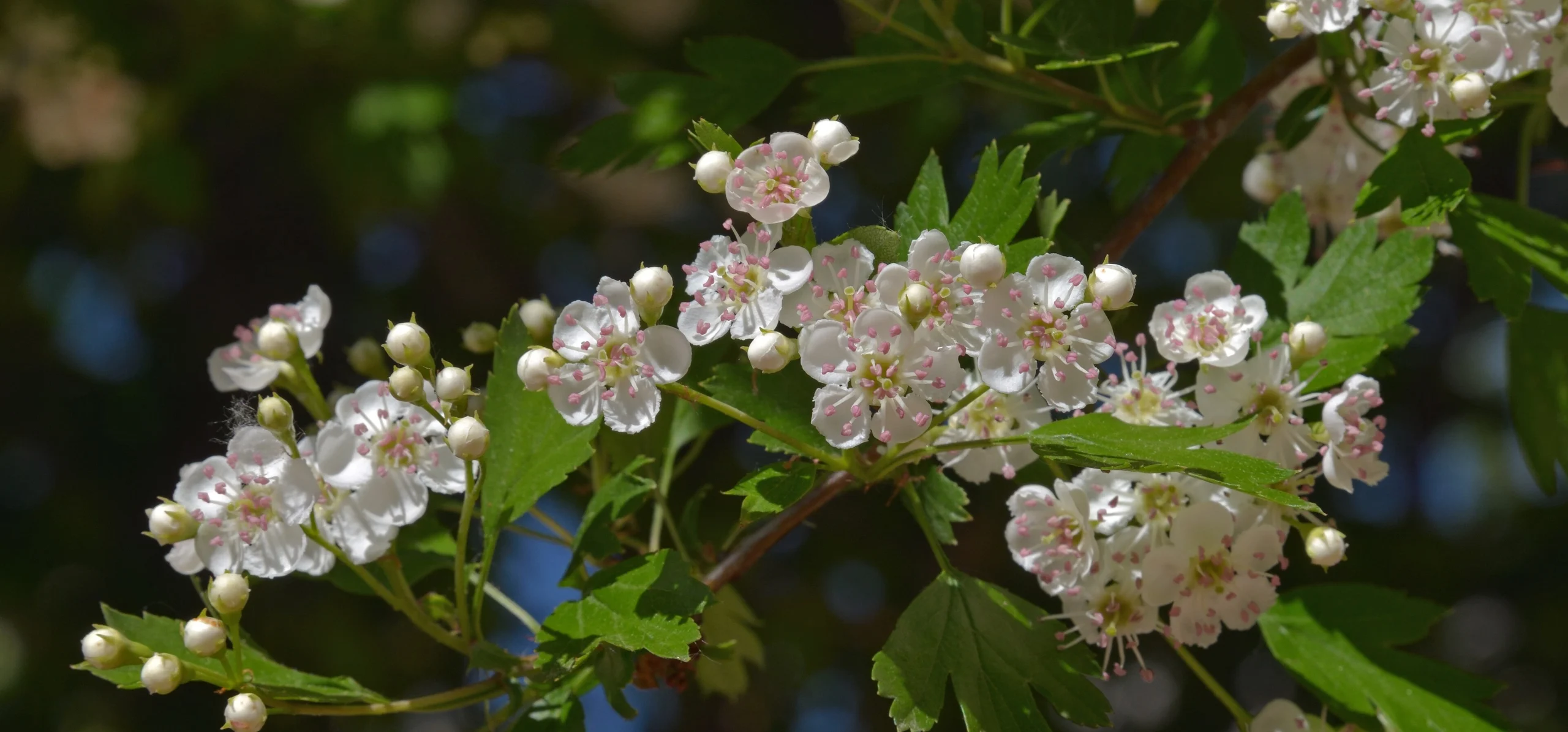
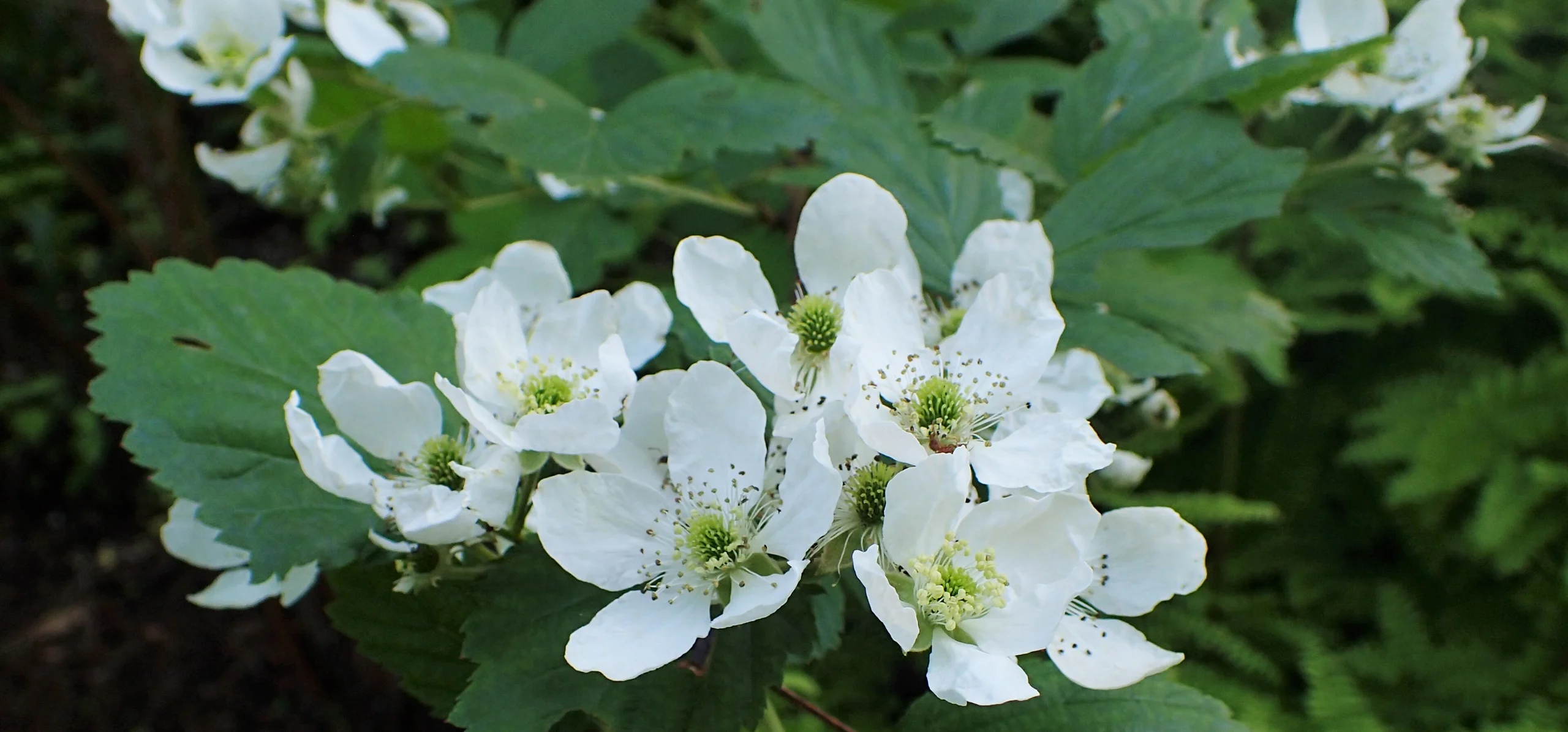
Flowering runs from May into June or July depending on latitude, with loose clusters of white, five-petaled blossoms about 2 cm across drawing long-tongued and short-tongued bees along with a range of butterflies. Fruit follows four to six weeks later: each berry is an aggregate of small drupelets that starts pale green, turns red, and finally ripens to glossy black. Colour alone is not the harvest signal; a fully ripe berry also loses some of its shine and pulls free of the stem with almost no resistance. Picked too early, off a still-red or barely black fruit, it stays sharp and seedy rather than sweet. Songbirds, foxes, raccoons and small mammals compete for the crop, so netting part of the row is worth it if the fruit is meant for the kitchen rather than the wildlife.
Pests, Diseases and Common Mistakes
Rednecked cane borer and raspberry cane borer are the two insects most often blamed for swollen, split or wilting canes; cut and destroy affected canes well below the visible damage rather than leaving them, since the larvae overwinter inside. Fusarium wilt shows up as canes that collapse suddenly in summer despite adequate water, usually from soil that stays too wet; improving drainage before replanting is the only real fix. Extension programs otherwise rate the species as largely trouble-free.
The recurring mistake is treating this like a tidy garden shrub instead of the native colonist it is: planting it against a border it is expected to fill politely, skipping the yearly cane count, or leaving spent floricanes standing where they shade out next year's crop. The other frequent error is pruning by calendar instead of by cane; if a first-year primocane cannot be told apart from a fruiting floricane at a glance, tag them with coloured twine the first season so the distinction becomes automatic by the second.
Test your plant knowledge
Tap a card to flip it and reveal the answer.
A first-year Allegheny blackberry cane, called a primocane, flowers and fruits. Tap to reveal ✕ False
Allegheny blackberry can spread by rooting at the tips of its arching canes. Tap to reveal ✓ True
This species prefers strongly alkaline soil above pH 7. Tap to reveal ✕ False
The ASPCA lists Allegheny blackberry as toxic to cats and dogs. Tap to reveal ✕ False
Cutting spent floricanes to the ground right after harvest is good practice. Tap to reveal ✓ True
Sources
References consulted for this guide
- GBIF: Rubus allegheniensis Portergbif.org
- Plants of the World Online (Kew): Rubus allegheniensis Porterpowo.science.kew.org
- NC State Extension Gardener Plant Toolbox: Rubus allegheniensisplants.ces.ncsu.edu
- USDA PLANTS Profile: Rubus allegheniensis (Allegheny blackberry)plants.usda.gov
- Reference entity : Wikipédiaen.wikipedia.org