Coppertone Sedum
Sedum adolphi
Family · Crassulaceae
Sedum adolphi, sold as Sedum nussbaumerianum or Coppertone Sedum, needs full sun, cactus compost, and a dry winter to keep its copper color.
Sedum adolphi
Plant profile
- WateringLittleWater every 14 days
- Light exposureFull sun
Growth
- Family
- Crassulaceae
- Life cycle
- Perennial
- Growth speed
- 3/10
- Mature size
- 10–50 cm
- Spread
- 10–50 cm
- Flowering
- Small white star shaped flowers in spring
- Propagation
- Cutting
DormancySlows down in winter
Time to maturityReaches full size in 2 to 5 years
Soil & climate
- Soil types
- Standard cactus and succulent compost, Gritty loam and sand mix, well drained
- Drought tolerance
- Yes
Light & Placement
- Origin
- Central Veracruz, Mexico
- Where to place it
- South or west facing windowsill
- Bright, unshaded conservatory or greenhouse
- Sheltered, full sun rockery or raised bed (frost free climates)
- Shallow terracotta pot, 4 to 6 inches wide
Safety
- Toxicity
- No ASPCA listing; related Sedum species are non-toxic
- Pet safe
- No
Data fromSedum adolphi Raym.-Hamet, GBIF BackboneSedum adolphi Raym.-Hamet, Plants of theSedum nussbaumerianum (Coppertone StonecSucculents, UC Master Gardener Program o
Where it grows
World distribution
Coppertone Sedum is native to a single country: Mexico.GBIF records 115 documented identifications across 13 countries, with the largest concentrations in Mexico, Germany, and United States.
- Mexico
Yellow to orange dots: concentration of documented identifications per country. Green countries: sourced native range. Source: GBIFNative range from POWO (Kew).
A succulent that changed its name
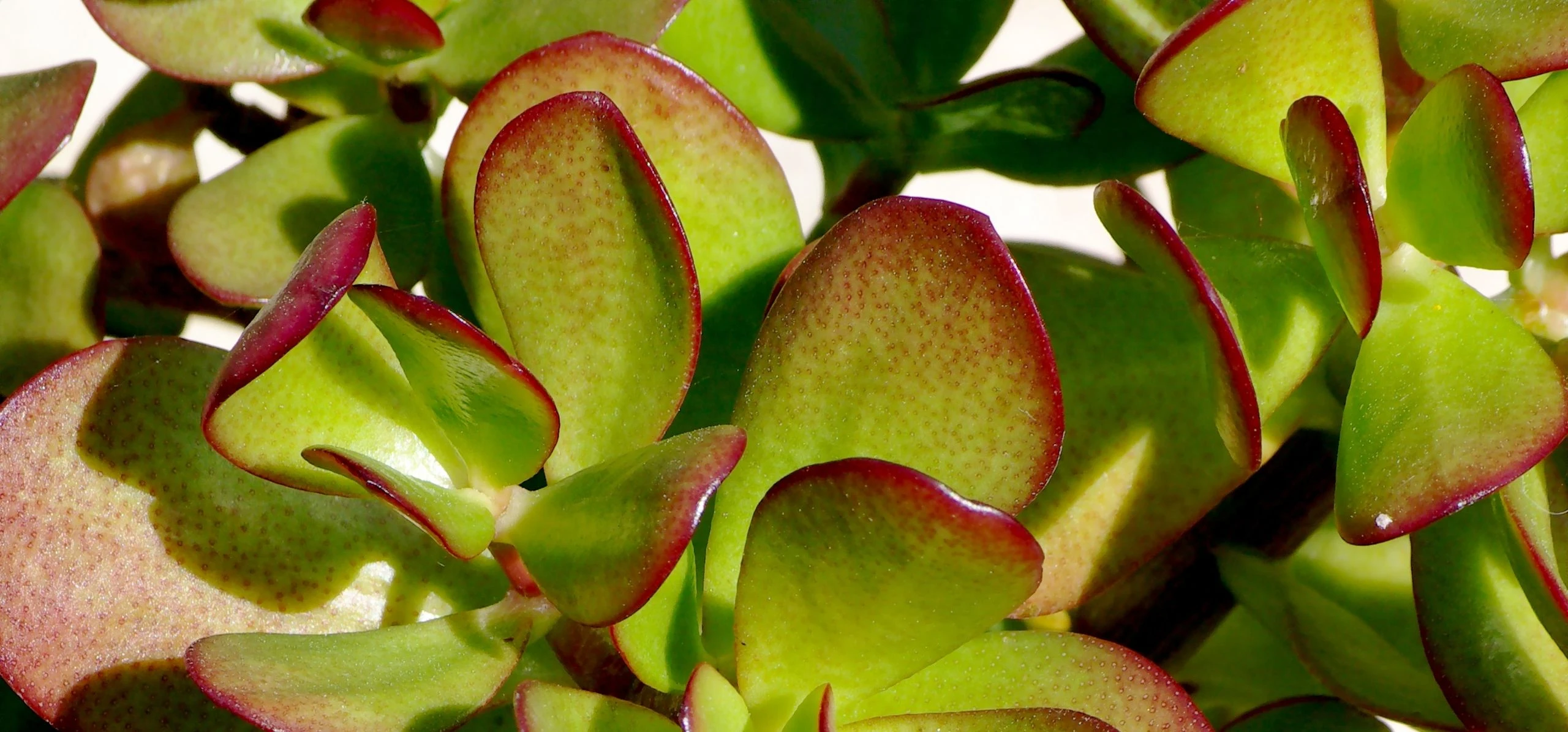
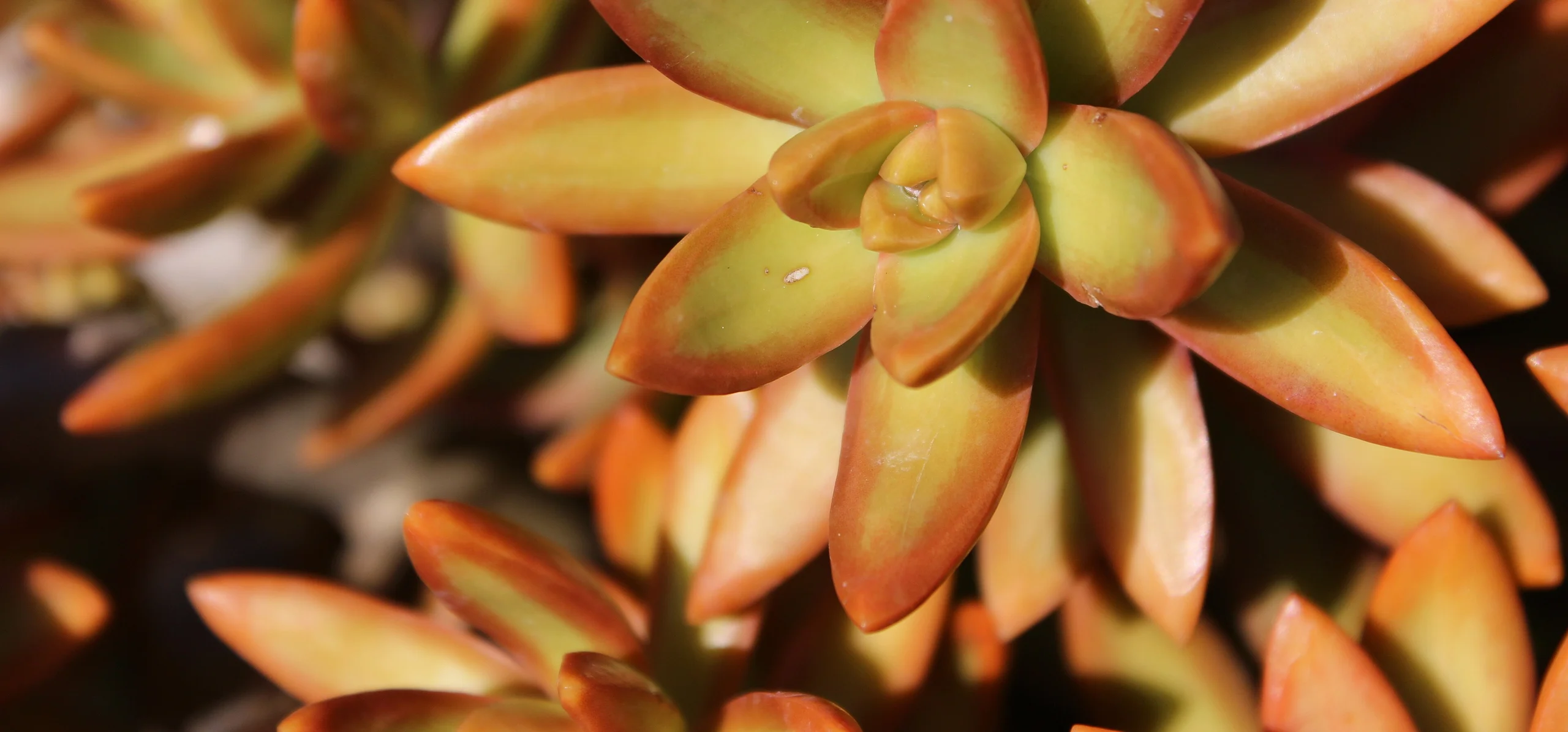
Sedum nussbaumerianum is the label still printed on most nursery tags, but the plant's currently accepted botanical name is Sedum adolphi. GBIF's backbone taxonomy lists Sedum nussbaumerianum Bitter as an exact synonym of Sedum adolphi Raym.-Hamet, so a "Coppertone Sedum" or "Coppertone Stonecrop" bought under either name is the same rosette forming succulent in the family Crassulaceae. Plants of the World Online places its native range in Mexico, specifically central Veracruz, where it grows as a low, sprawling subshrub on rocky slopes. The leaves are the main event: chunky, glossy, lime green in shade, and capable of shifting to deep copper orange once the plant sits in strong light with a bit of stress.
Light and the copper color
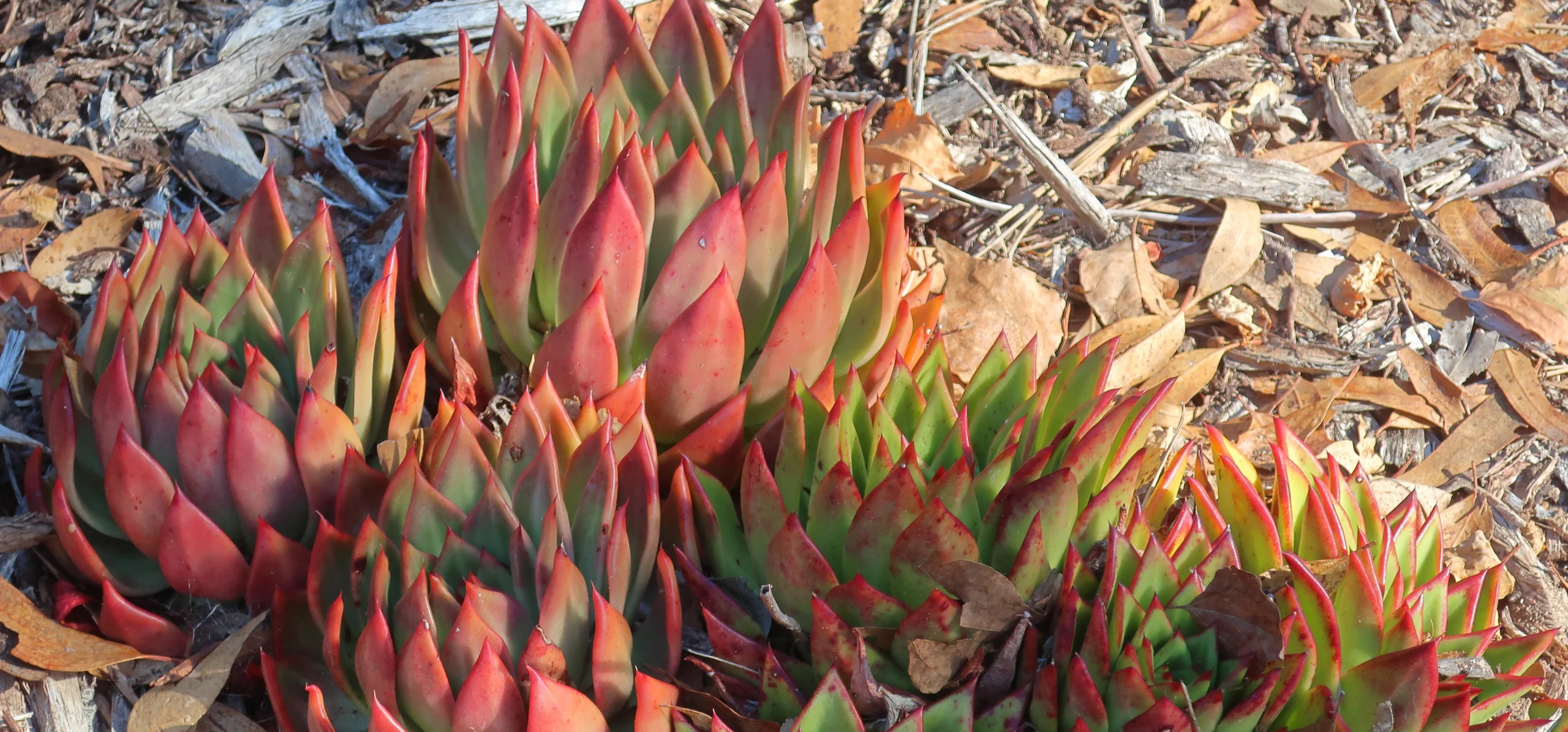
This is a full sun succulent. The Royal Horticultural Society lists its light requirement plainly as full sun, with an east, south, or west aspect, and that exposure is what produces the coppery tint the plant is named for. Indoors, a south facing windowsill or a bright, unshaded conservatory works well; outdoors, choose a sheltered spot rather than one fully exposed to wind. Give it only filtered brightness and the rosettes stay flat lime green, plump but plain. Push it into hot, direct sun, especially with a little water stress, and the leaf tips flush orange within a couple of weeks, deepening further as the rosette matures. Growers chasing the strongest color often keep the plant slightly underwatered in the brightest spot available, treating flat green growth as a sign of too little light rather than a health problem.
Watering without rotting the roots
Like most Crassulaceae, Sedum adolphi stores water in its leaves and tolerates drought far better than excess moisture. RHS cultivation notes are direct: water freely while the plant is actively growing, then cut back sharply and water only sparingly through winter. In practice that means soaking the compost until it drains, then waiting until it is fully dry before watering again, a rhythm that in a warm room can mean every ten to fourteen days in summer and closer to once a month in winter. Overwatering shows up fast: lower leaves turn translucent and mushy, and the base of the rosette can rot within days. If a leaf drops off on its own and looks plump and firm, that is normal for this species; if it falls off soft and dark, the plant is sitting too wet.


Soil and potting
Standard cactus and succulent compost is what the RHS recommends, and it matters here more than pot size or material. A gritty mix of loam and coarse sand drains within seconds of watering, which is exactly what keeps the fine roots from sitting wet. A shallow terracotta pot, four to six inches across, suits the trailing rosettes better than a tall, deep container, since the roots stay shallow and unused soil volume in a deep pot only holds moisture the plant does not need. Repotting is rarely urgent: this is a slow grower that can stay in the same pot for two or three years before sizing up, a need usually signaled by stems spilling well over the rim rather than by roots filling the pot.
Propagation from stems and fallen leaves
Propagation is one of the easiest parts of growing this plant. The RHS method is softwood stem cuttings: take a two to three inch tip cutting, let the cut end callus over for two or three days in open air, then set it on top of dry cactus compost and mist lightly until roots form. University of California cooperative extension notes describe a second, almost effortless route: chunky, inch long leaves that fall from the stem on their own will root and produce new plantlets right where they land, a trait shared across many Crassulaceae. Left undisturbed on the soil surface in bright light, a single fallen leaf can become a rooted rosette within a few weeks with no intervention from the grower.
Overwintering and cold tolerance
This is not a frost hardy plant. The RHS rates it H2, tolerant of low temperatures but not of being frozen, which in practice means protection whenever temperatures drop toward one to five degrees Celsius. In climates with real winters, that means growing it under glass, on a bright windowsill, or in an unheated but frost free greenhouse from autumn through spring. Frost turns the leaves translucent and collapses the tissue within hours, and a rosette that has frozen solid does not recover. Where winters stay mild and frost free, the plant can live outdoors year round in a sheltered, well drained bed or rockery.
Pests and common mistakes
Mealybugs are the pest most likely to show up, tucked into the tight gaps between leaves at the center of the rosette; the RHS lists the species as susceptible to them and otherwise largely disease free. Treat an infestation early with a cotton swab dipped in isopropyl alcohol, dabbing each visible cluster, then recheck weekly for a month since eggs hatch in waves. The two mistakes that account for most failures are watering on a fixed calendar instead of checking the compost, which leads to root rot, and leaving the plant in low light for the sake of a tidy placement, which produces stretched, pale green growth with none of the copper color that makes this succulent worth growing in the first place.
Is it safe around pets
The ASPCA does not carry a specific entry for Sedum nussbaumerianum, Sedum adolphi, or the Coppertone Sedum trade name, so there is no official toxic or non-toxic ruling for this exact species. The ASPCA has, however, evaluated several close relatives in the same genus, including burro's tail (Sedum morganianum), ghost plant (Sedum weinbergii), and Sedum album, and lists all three as non-toxic to cats, dogs, and horses. Based on that pattern within the genus and the absence of any reported toxicity, most growers treat this succulent as pet friendly, though anyone with an animal that chews houseplants should still discourage the habit, since mild stomach upset is possible after ingesting almost any non-food plant.
Test your plant knowledge
Tap a card to flip it and reveal the answer.
Sedum nussbaumerianum is a trade name for a plant now botanically accepted as Sedum adolphi. Tap to reveal ✓ True
This succulent should be watered generously on the same schedule all year round. Tap to reveal ✕ False
Bright, direct sun combined with a bit of water stress deepens the coppery orange leaf color. Tap to reveal ✓ True
A leaf that falls off the stem on its own can root and grow into a new plant without any help. Tap to reveal ✓ True
The ASPCA has published a species-specific toxicity entry for Sedum nussbaumerianum or Sedum adolphi. Tap to reveal ✕ False
Sources
References consulted for this guide
- Sedum adolphi Raym.-Hamet, GBIF Backbone Taxonomygbif.org
- Sedum adolphi Raym.-Hamet, Plants of the World Online (Kew)powo.science.kew.org
- Sedum nussbaumerianum (Coppertone Stonecrop), RHSrhs.org.uk
- Succulents, UC Master Gardener Program of Sonoma County (UC ANR)ucanr.edu
- Reference entity : Wikidatawikidata.org