Lamb's Ear
Stachys byzantina
Family · Lamiaceae
Lamb's ear (Stachys byzantina) wants full sun and sharp drainage. Covers siting, watering, dividing, removing flower spikes and why humid summers cause rot.
Stachys byzantina
Plant profile
- WateringLittleWater every 14 days
- Light exposureFull sun
- Hardiness zoneUSDA 4–9
Growth
- Family
- Lamiaceae
- Life cycle
- Perennial
- Growth speed
- 6/10
- Mature size
- 10–50 cm
- Spread
- 50–100 cm
- Flowering
- Purplish-pink spikes in summer, often removed
- Propagation
- Seed
- Cutting
- Division
Dormancysemi-evergreen; the felted mat collapses in wet or severe winters and regrows from the crown in spring
Time to maturity2-5 years to full spread
Soil & climate
- Soil types
- chalk, loam, sand
- Drought tolerance
- Yes
Light & Placement
- Origin
- Krym, N. Turkiye to Caucasus and N. Iran
- Where to place it
- sunny border edging
- rock or gravel garden
- children's sensory garden
- south-facing bed
- wide, shallow container with a fast-draining, gritty mix
Safety
- Toxicity
- Not listed by the ASPCA for cats, dogs or horses
- Pet safe
- No
Invasive speciesspreads into a dense mat by rooting stems and self-seeding; can crowd out low, slow neighbours if left undivided
Data fromStachys byzantina K.Koch, GBIF Backbone Stachys byzantina K.Koch, Plants of the RHS: Stachys byzantina (lamb's ear)Missouri Botanical Garden: Stachys byzanNC State Extension: Stachys byzantina Pl
Where it grows
World distribution
Lamb's Ear is native to 5 countries: Georgia, Iran, Russia, Türkiye, and Ukraine.GBIF records 27,239 documented identifications across 67 countries, with the largest concentrations in France, United Kingdom, and Sweden.
- Georgia
- Iran
- Russia
- Türkiye
- Ukraine
Yellow to orange dots: concentration of documented identifications per country. Green countries: sourced native range. Source: GBIFNative range from POWO (Kew).
What Lamb's Ear Actually Is
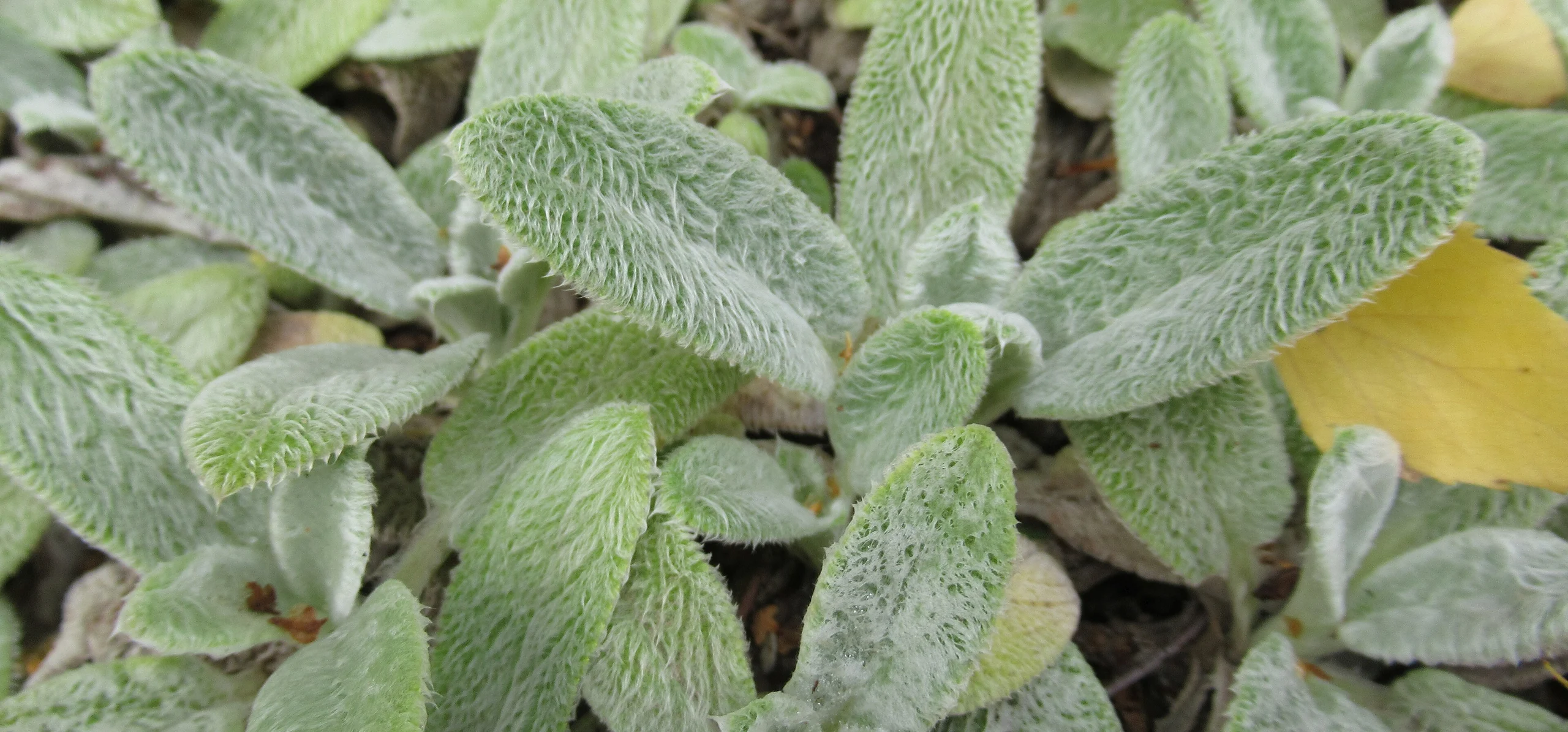
Stachys byzantina, commonly sold as lamb's ear, is a low, spreading perennial in the mint family, Lamiaceae, grown almost entirely for its leaves rather than its flowers. Each leaf is thick, oblong and covered in a dense coat of white hairs that gives the whole plant a felted, silver-grey look and a texture closer to flannel than foliage. It forms a mat 10 to 50 cm tall and eventually 50 to 100 cm across, according to the RHS, spreading by rooting stems rather than staying in a tidy clump. In its native range, from Crimea and northern Turkey through the Caucasus into northern Iran (Plants of the World Online), it grows on dry, rocky slopes, which explains almost everything about how it behaves in a garden: it wants sun, poor soil and sharp drainage, and it resents being pampered.
The plant is semi-evergreen. In mild winters the felted rosettes persist; in wet or severe ones the outer leaves collapse into a grey mush and the plant regrows from the crown once the weather turns. Missouri Botanical Garden notes the foliage will depreciate considerably in harsh winters, so a scruffy late-winter clump is normal, not a sign of failure.
Light and Where to Plant It
Give it full sun. The RHS lists a south-facing aspect as ideal, and in cool climates that is straightforward: the more light it gets, the denser and more compact the foliage mat stays. In hot, humid regions the calculation changes. NC State Extension recommends afternoon shade where summers are intense, since the combination of full sun and high humidity is what triggers the leaf rot described below. Treat the amount of shade as a dial you adjust for your own summer rather than a fixed rule: a plant in a coastal, humid climate needs more relief from the sun than the same plant in a dry, continental bed.
Soil: the One Rule That Actually Matters
Everything else about lamb's ear is forgiving. Drainage is not. The RHS lists chalk, loam and sand as suitable soil types and reports it growing in acid, neutral or alkaline ground alike, so pH is rarely the limiting factor. What kills it is water sitting around the crown. If you garden on heavy clay, work coarse grit into the top 20 cm before planting or set the plants on a slight mound, anything that gets winter rain moving away from the roots. A bed that stays visibly damp for more than a day after rain is the wrong spot for this plant, no matter how well it scores on paper for soil type.


Watering Without Rotting It
Water new divisions or nursery plants every few days for their first three to four weeks, until you feel new growth resisting a gentle tug. After that, back off. Established lamb's ear is drought tolerant and typically needs supplemental water only every 10 to 14 days in summer, less in a rainy season. The instinct to water more when leaves look dull or dusty is usually wrong here, dull, matte foliage is what dry-adapted felted leaves are supposed to look like. Soggy, dark, collapsed leaves are the real warning sign, and the fix is to stop watering and improve drainage, not to water more.
Why Humid Summers Are the Real Test
The species' biggest weakness is not cold, it easily survives winter to USDA zone 4, but wet heat. NC State Extension lists it as susceptible to leaf rot with high humidity or excessive rain and flags southern bacterial wilt as an additional risk in the same conditions. Gardeners in humid summer climates sometimes watch the centre of a mat turn to black slime by midsummer even when the plant was never overwatered by hand, because ambient humidity alone is enough. Thinning crowded clumps for airflow, avoiding overhead watering, and spacing plants generously all reduce the risk. Non-flowering cultivars such as 'Big Ears' (also sold as 'Helene von Stein') carry larger, thicker leaves that shed rain better than the wild species and are a common recommendation for humid gardens.
Should You Let It Flower?
Lamb's ear blooms in summer, sending up furry flowering stems tipped with whorled spikes of small purplish-pink flowers, sometimes appearing striped, as the RHS describes them. Bees work the flowers steadily, but many gardeners cut the stems out as soon as they appear. The RHS is explicit that removing the flowers prolongs the life of the plant, and Missouri Botanical Garden makes a related point: without the flowering stems, the low, silver groundcover effect stays intact instead of being interrupted by taller, less tidy stalks. Leave a few stems if you want the bees and the contrast; cut the rest at the base with clean shears.
Dividing and Propagating
Lift and divide congested clumps every two to four years, the interval NC State Extension recommends, in early spring before new growth is far along or in autumn. The roots are shallow and fibrous, so a clump usually pulls apart by hand into rooted sections rather than needing a spade. Replant divisions immediately at the same depth they were growing, water them in well, then treat them as new plants for their first month. The RHS also lists propagation from seed sown in autumn or spring, though named cultivars grown from seed will not come true and are better increased by division.
Keeping Its Spread in Check, Pests and Toxicity
Left alone in a bed it likes, lamb's ear spreads steadily as stems root where they touch soil, and NC State Extension notes it can spread aggressively in favourable conditions. In a mixed border, edge the planting with a mowing strip or a sunk barrier, or simply plan to lift and thin the outer edge once a year. On the upside, the same felted texture that makes it unappealing to most chewing pests also makes it deer and rabbit resistant, per NC State Extension, and its low, tactile foliage is a common choice for children's sensory gardens. It is not currently listed by the ASPCA as toxic to cats, dogs or horses; treat that as an absence of data rather than a guarantee, and keep an eye on any pet that regularly chews the leaves.
Test your plant knowledge
Tap a card to flip it and reveal the answer.
Lamb's ear needs full sun to stay compact and keep its felted texture. Tap to reveal ✓ True
Rich, regularly fed soil produces the healthiest lamb's ear plants. Tap to reveal ✕ False
Standing water or high humidity is the main reason lamb's ear plants die. Tap to reveal ✓ True
Cutting off the flower spikes can extend the plant's life. Tap to reveal ✓ True
The ASPCA lists lamb's ear as toxic to cats and dogs. Tap to reveal ✕ False
Sources
References consulted for this guide
- Stachys byzantina K.Koch, GBIF Backbone Taxonomygbif.org
- Stachys byzantina K.Koch, Plants of the World Online (Kew)powo.science.kew.org
- RHS: Stachys byzantina (lamb's ear)rhs.org.uk
- Missouri Botanical Garden: Stachys byzantina Plant Findermissouribotanicalgarden.org
- NC State Extension: Stachys byzantina Plant Toolboxplants.ces.ncsu.edu
- Reference entity : Wikipédiaen.wikipedia.org