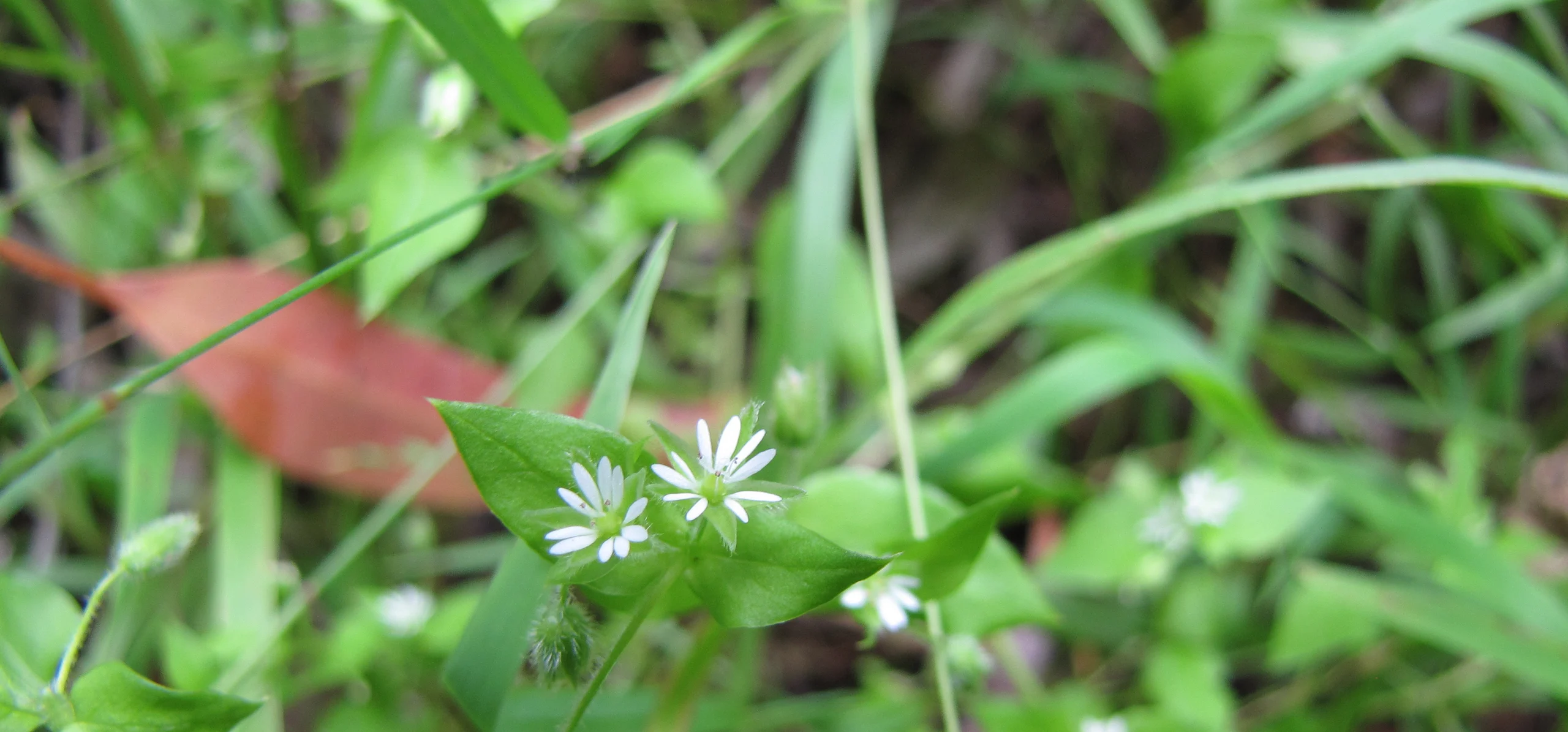
Common Chickweed
Stellaria media
Family · Caryophyllaceae
Identify chickweed by its single-line hairy stem, tell it apart from toxic scarlet pimpernel, and manage or harvest this fast, cool-season groundcover.
Stellaria media
Plant profile
- WateringModerateWater every 3 days
- Light exposureIndirect light
- Hardiness zoneUSDA 4–11
Growth
- Family
- Caryophyllaceae
- Life cycle
- Annual
- Growth speed
- 8/10
- Mature size
- 10–50 cm
- Spread
- 10–30 cm
- Flowering
- Year-round in mild climates, peak in spring
- Propagation
- Seed
- Cutting
Dormancykilled by hard frost, seed overwinters
Time to maturityflowers in 5 to 8 weeks
Soil & climate
- Soil types
- clay, loam, high organic matter
- Drought tolerance
- No
Light & Placement
- Origin
- Temperate Eurasia, N. and NE. tropical Africa
- Where to place it
- cool bright windowsill
- shaded border
- vegetable bed edge
- cold frame
- shallow tray
- window box
Safety
- Toxicity
- HumansSafe
Invasive speciesself-seeds aggressively, hard to eradicate
Data fromGBIF: Stellaria media (L.) Vill.Plants of the World Online: Stellaria meRHS: Stellaria media (common chickweed)NC State Extension Gardener Plant ToolboUSDA PLANTS Database: Stellaria media
Where it grows
World distribution
Common Chickweed is native to 64 countries: Afghanistan, Albania, Algeria, Austria, Belarus, Belgium, Bhutan, and Bulgaria….GBIF records 822,208 documented identifications across 159 countries, with the largest concentrations in United Kingdom, France, and Netherlands.
- Afghanistan
- Albania
- Algeria
- Austria
- Belarus
- Belgium
- Bhutan
- Bulgaria
- China
- Croatia
- Cyprus
- Czechia
Show 52 more countriesShow fewer countries
- Denmark
- Djibouti
- Egypt
- Eritrea
- Estonia
- Ethiopia
- Faroe Islands
- Finland
- France
- Georgia
- Germany
- Greece
- Hungary
- Iceland
- India
- Iran
- Iraq
- Ireland
- Italy
- Japan
- Kazakhstan
- Kuwait
- Lebanon
- Libya
- Morocco
- Myanmar (Burma)
- Nepal
- Netherlands
- Norway
- Oman
- Pakistan
- Palestinian Territories
- Poland
- Portugal
- Réunion
- Romania
- Russia
- Saudi Arabia
- South Korea
- Spain
- Sri Lanka
- Sudan
- Sweden
- Switzerland
- Tajikistan
- Tunisia
- Türkiye
- Turkmenistan
- Ukraine
- United Kingdom
- Uzbekistan
- Yemen
Yellow to orange dots: concentration of documented identifications per country. Green countries: sourced native range. Source: GBIFNative range from POWO (Kew).
If chickweed has appeared uninvited in a bed, a lawn edge, or a seed tray, it is almost certainly Stellaria media: a low, sprawling mat of bright green leaves and tiny white star-shaped flowers that thrives in cool, moist soil. It is edible, fast-growing, and mostly harmless in the garden, but it is often confused with a genuinely toxic look-alike, so the first job is confirming what you are actually looking at. From there, it either gets pulled before it seeds, or deliberately kept and harvested.
Identifying Common Chickweed
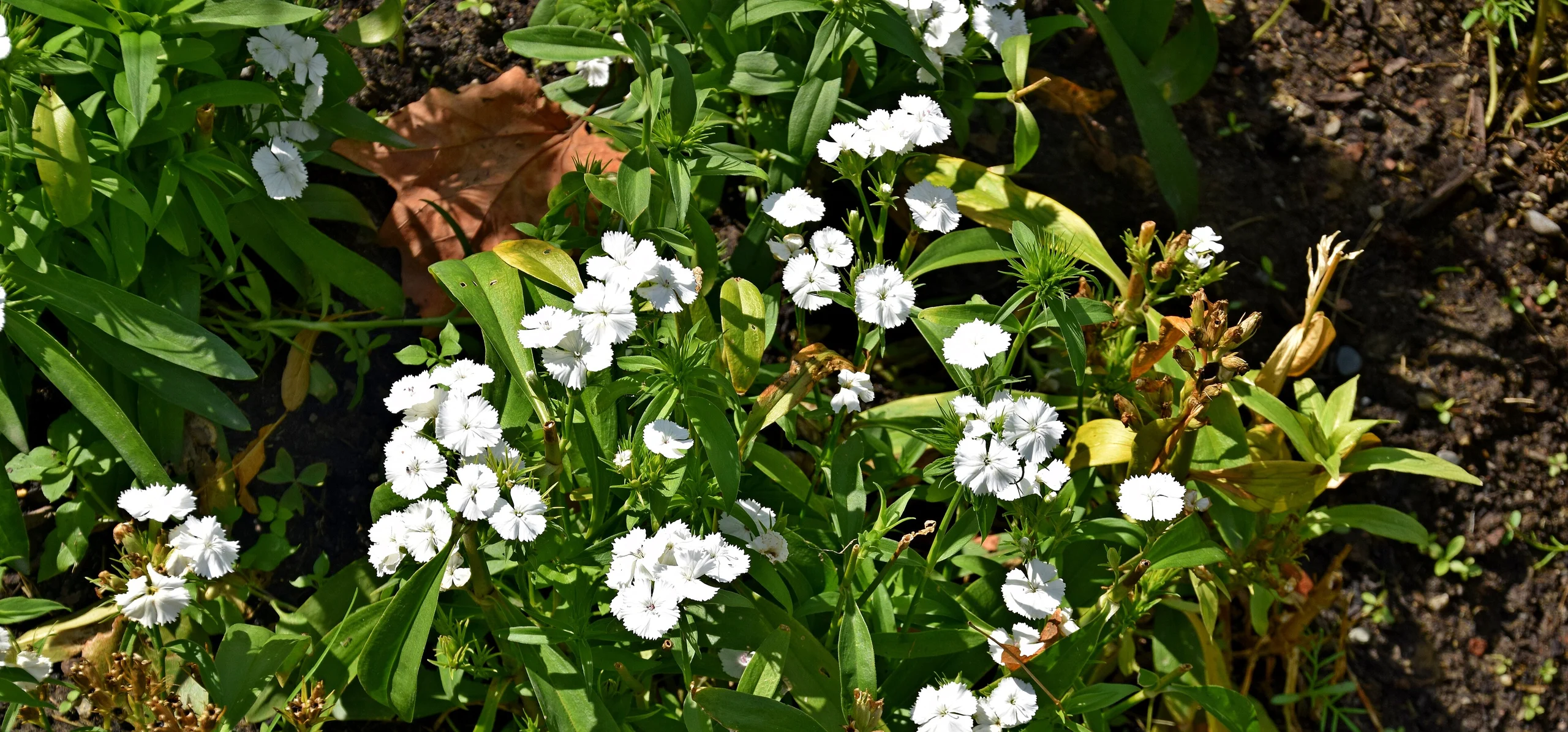
Look closely at the stem: a single line of fine white hairs runs down one side, then switches to the opposite side at each leaf node, alternating along the length of the stem. This detail alone separates true chickweed from mouse-ear chickweed (Cerastium), whose stems are uniformly hairy all the way round. The flowers have five deeply notched white petals, split almost to the base, so at a glance the plant looks like it has ten thin petals instead of five. Each flower opens in the morning and stays open for roughly twelve hours before closing.
The look-alike that matters is scarlet pimpernel (Anagallis arvensis), which is toxic to livestock and can cause gastrointestinal upset in people and pets. It has square, hairless stems, small dark spots on the underside of the leaves, and salmon-orange flowers rather than white ones. If the stem is square in cross-section or the flowers lean orange, stop and treat it as pimpernel, not chickweed.
Origin and Growth Habit
Chickweed is native to temperate Eurasia and northern and northeastern tropical Africa, and has naturalised across most of the temperate world, including USDA hardiness zones 4 through 11. It grows as a sprawling annual, 10 to 50 cm tall with stems that spread 10 to 30 cm and root wherever a node touches damp soil, which is how a single plant becomes a dense patch within weeks. Under good conditions it flowers and sets seed in as little as five to eight weeks from germination, so several generations can pass through a single bed in one season.
Light and Soil
It grows in partial shade to full sun, needing as little as two to three hours of direct light in cool weather, and prefers clay or loam soils with plenty of organic matter. A patch of vigorous chickweed is usually a fair sign the soil underneath is fertile and holds moisture well, gardeners who forage it often use its presence as a rough read on bed quality before planting anything else there. It does not tolerate compacted, bone-dry ground; in those conditions it germinates thinly and stalls rather than spreading.


Watering
Consistent moisture is what keeps chickweed growing; the foliage wilts within a day or two once the top few centimetres of soil dry out, and a hard dry spell in summer heat will usually kill the top growth outright. This is a cool-season plant at heart: growth is most vigorous in late winter and early spring, slows as temperatures climb, and can restart in autumn once the soil cools again. If growing it deliberately in a tray or shallow container for cutting, water little and often rather than deeply and rarely, the shallow, fibrous roots dry out fast.
Propagation and Controlling Spread
Chickweed propagates itself, by seed and by stem nodes rooting on contact with soil, more efficiently than almost anything else grown in a garden bed. A single plant produces seed in the thousands, and that seed can remain viable in the soil for up to 25 years, which is why chickweed reappears in beds that have not seen it in years the moment they are disturbed and light reaches the seed bank. To keep it from taking over, hoe or hand-pull before the first flush of flowers sets seed, ideally within the five-to-eight-week window before maturity, and avoid leaving cut stems lying on damp soil, since nodes in contact with the ground will root and regrow. Deliberate propagation, for a kitchen-garden patch, is as simple as scattering seed on bare, moist soil in a cool spot or pressing a cut stem into damp compost.
Harvesting and Eating Chickweed
The stems, leaves, and flowers are all edible, with a mild flavour often compared to spinach or fresh corn silk. Harvest young growth before the plant has flowered heavily, older stems turn stringy and the flavour gets grassier. It contains saponins, which are poorly absorbed and largely broken down by cooking, so a quick blanch is the more forgiving option for anyone eating it in quantity rather than as a small salad handful. The common name itself comes from its traditional use as feed for young poultry, and it remains a favourite fresh green for chickens, rabbits, and guinea pigs.
Common Mistakes
The most consequential mistake is misidentifying scarlet pimpernel as chickweed and eating or feeding it to animals, always check the stem cross-section and flower colour before harvesting from an unfamiliar patch. The second is letting a tolerated patch flower unchecked; because seed stays viable for decades, one missed season of flowering can mean pulling seedlings out of that bed indefinitely. The third is assuming chickweed is drought-tolerant because it behaves like a tough weed, it is not, and beds that dry out in summer will simply lose it until autumn rain returns.
Pests and Diseases
Aphids and spider mites occasionally settle on chickweed, but the plant is more often useful than troubled: its early flowers draw hoverflies and other beneficial insects into the garden before most crops are blooming, which can help suppress aphids elsewhere. Chickweed can also host a rust fungus that overwinters on its leaves and shoots before spreading spores to other plants, and it is a known reservoir for several viruses that affect vegetable crops, including cucumber mosaic virus. For that reason, a deliberately kept patch is best sited away from susceptible vegetables such as cucumbers, squash, and peppers.
Test your plant knowledge
Tap a card to flip it and reveal the answer.
Common chickweed can flower and set seed in as little as five to eight weeks from germination. Tap to reveal ✓ True
Chickweed seed loses the ability to germinate after one growing season in the soil. Tap to reveal ✕ False
A single line of fine hairs that switches sides of the stem at each leaf node is a reliable way to identify true chickweed. Tap to reveal ✓ True
Scarlet pimpernel, a toxic look-alike, can be told apart from chickweed by its square stems and salmon-orange flowers. Tap to reveal ✓ True
Chickweed is drought-tolerant and grows fastest in hot, dry summer soil. Tap to reveal ✕ False
Sources
References consulted for this guide
- GBIF: Stellaria media (L.) Vill.gbif.org
- Plants of the World Online: Stellaria media (L.) Vill.powo.science.kew.org
- RHS: Stellaria media (common chickweed)rhs.org.uk
- NC State Extension Gardener Plant Toolbox: Stellaria mediaplants.ces.ncsu.edu
- USDA PLANTS Database: Stellaria mediaplants.usda.gov
- Reference entity : Wikipédiaen.wikipedia.org