Common Thyme
Thymus vulgaris
Family · Lamiaceae
Common thyme needs full sun, fast-draining soil and light pruning to stay compact. Covers RHS hardiness H5, drought tolerance and harvest timing.
Thymus vulgaris
Plant profile
- WateringVery littleWater every 12 days
- Light exposureFull sun
- Hardiness zoneUSDA 5–9
Growth
- Family
- Lamiaceae
- Life cycle
- Perennial
- Growth speed
- 5/10
- Mature size
- 15–30 cm
- Spread
- 15–40 cm
- Flowering
- Small white or pink flowers in early summer
- Propagation
- Seed
- Cutting
- Division
- Layering
Dormancyevergreen, no true dormancy
Time to maturity5 to 10 years to ultimate size (RHS)
Soil & climate
- Soil pH
- pH 6–8
- Soil types
- chalk, loam, sand
- Drought tolerance
- Yes
Light & Placement
- Origin
- Southwestern Europe and southeastern Italy
- Where to place it
- sunny, south-facing kitchen windowsill
- sunny herb bed or border
- raised bed or gravel garden
- edge of a sun-baked path or wall
- terracotta or clay pot with drainage holes
Safety
- Toxicity
- CatsSafe
- DogsSafe
- HorsesSafe
Data fromThymus vulgaris L., GBIF Backbone TaxonoPOWO: Thymus vulgaris L.RHS: Thymus vulgaris (common thyme)NC State Extension Gardener Plant ToolboASPCA Toxic and Non-Toxic Plants: Thyme
Where it grows
World distribution
Common Thyme is native to 3 countries: France, Italy, and Spain.GBIF records 123,219 documented identifications across 95 countries, with the largest concentrations in France, Spain, and Italy.
- France
- Italy
- Spain
Yellow to orange dots: concentration of documented identifications per country. Green countries: sourced native range. Source: GBIFNative range from POWO (Kew).
A newly potted Thymus vulgaris wants the opposite of pampering: full sun, lean and fast-draining soil, and a light hand with the watering can. This is a low, woody-based evergreen subshrub in the mint family, not a soft annual herb, so it keeps its aromatic grey-green leaves through most winters and slowly turns woody at the base as it ages. Cut it back lightly and often and a single plant can supply a kitchen for years; leave it unpruned and it collapses into a sparse, leggy mat within a few seasons. Get the drainage right from day one, since standing winter wet is the one condition this plant tolerates worst.
A Mediterranean Native in the Mint Family
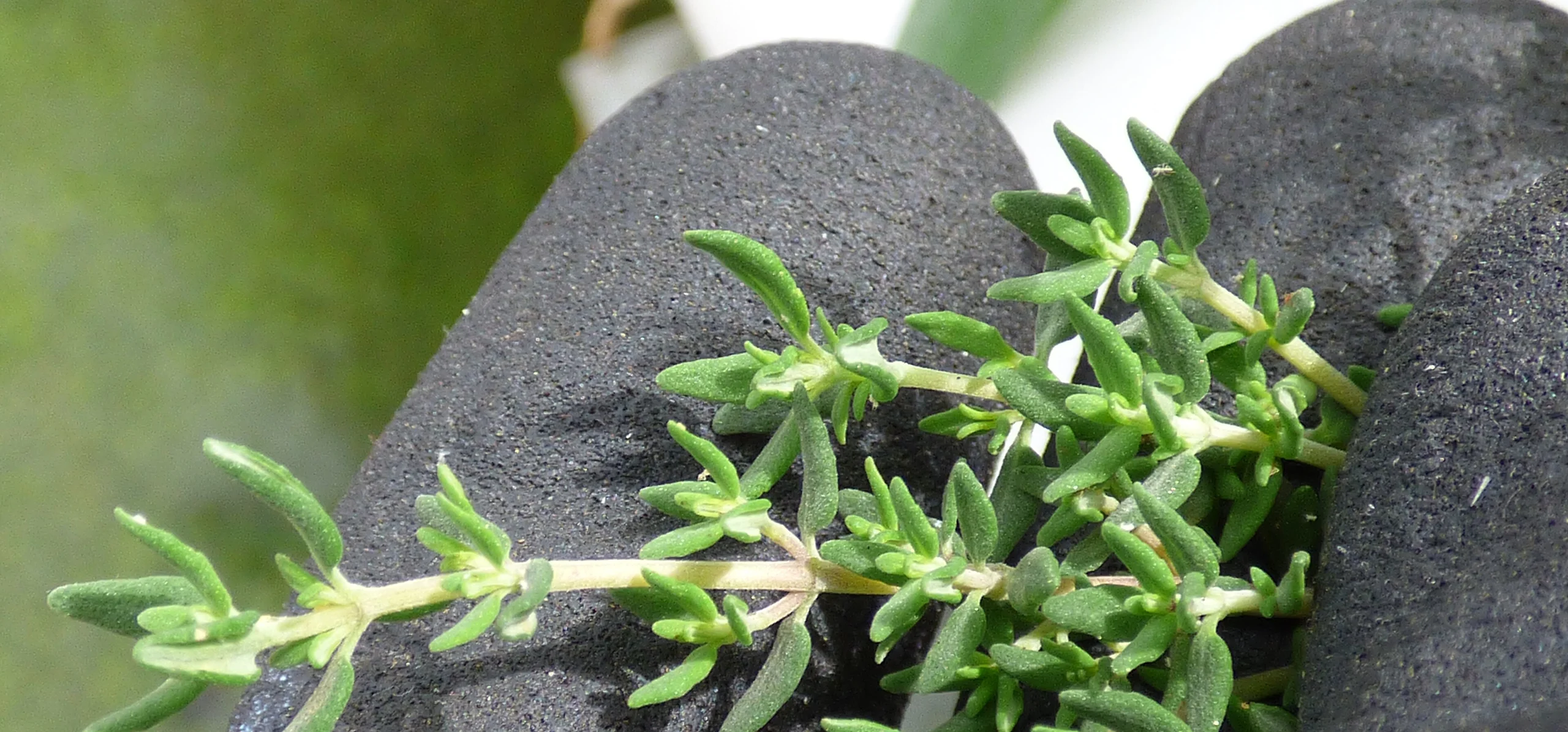
Thymus vulgaris belongs to the mint family, Lamiaceae, in the order Lamiales, alongside rosemary, lavender and sage. Plants of the World Online at Kew gives its native range as southwestern Europe and southeastern Italy, and NC State Extension describes the same origin in everyday terms as southwestern Europe and the mountains of southern Italy, where thin, rocky, alkaline soil and long dry summers are the norm. The RHS describes the plant as a bushy, dwarf evergreen shrub up to 30cm tall and 40cm wide, with small, linear to ovate, aromatic, dark grey-green leaves and terminal spikes of small white or pink flowers in early summer. Everything about growing it well traces back to that native habitat: plenty of direct sun, sharp drainage, and no patience for rich, moisture-retentive ground.
Choosing a Thyme for the Kitchen or the Border
Common names attached to Thymus vulgaris vary by strain rather than by botanical species. The RHS lists cultivars such as a 'French' form, 'Deutsche Auslese' and the compact 'Compactus', all sold under this same species name. A plant label reading only "thyme" or "culinary thyme" does not specify which strain is in the pot, so choosing a named cultivar is the more reliable way to know what leaf size and growth habit to expect, since plants raised from seed vary more than cutting-grown, named stock.
Sun, Soil and Planting
Both the RHS and NC State Extension are specific about placement: full sun, six or more hours of direct light a day, in soil the RHS describes as chalk, loam or sand and NC State Extension describes as loam, sand or shallow rocky ground, with a pH from about 6.0 to 8.0, neutral to alkaline. Drainage matters more than soil type. The RHS advises that if the ground is heavy or stays damp, especially in winter, thyme should go into a container or raised bed instead of the open soil. On heavy clay, plant on a raised mound or work coarse grit into the top of the bed before planting rather than trying to amend the whole area.


Watering a Drought-Tolerant Herb
New plants need regular watering for the first few weeks while roots spread into the surrounding soil. After that, the RHS notes that thyme is drought tolerant and rarely needs watering except when newly planted or grown in containers, and NC State Extension lists it as thriving in dry conditions with only occasional extra moisture. In containers, let the top of the mix dry out before watering again; in the ground, an established plant usually only needs help during an extended dry spell. Overwatering, not underwatering, is the mistake that actually threatens this herb, since roots sitting in wet soil rot faster than dry roots recover.
Pruning to Prevent Woodiness
Left untrimmed, thyme thickens into bare, woody stems with just a thin fringe of leafy growth at the tips. The RHS recommends lightly trimming shrubby thyme in mid to late spring and again soon after flowering to keep it compact and bushy, and NC State Extension adds that cutting back in early spring and summer reduces the woody growth that builds up over time, while always leaving some live growth on the plant rather than cutting into bare wood. A stem that has already gone hard and woody at the base rarely resprouts, so light, regular trims from the first year matter more than any single hard renovation cut attempted later.
Propagation by Cuttings, Layering and Division
The RHS lists softwood or semi-ripe cuttings, layering, and division of established plants as propagation methods for Thymus vulgaris, and NC State Extension adds seed to that list while noting that seed germinates unevenly. Cuttings are the more reliable route for a named cultivar, since an exact leaf shape or growth habit is not guaranteed to come true from seed. Take a short, non-flowering shoot, strip the lower leaves, and insert it into free-draining cutting mix kept lightly moist and out of direct sun until roots form.
Harvesting for Flavor
NC State Extension recommends harvesting just before the plant flowers, when the essential oil content of the leaves is at its peak, and cutting back the top growth while always leaving some growth behind so the plant can recover. Because the plant is evergreen, leaves can technically be picked year round, but flavor is strongest in that pre-flowering window during the growing season. Regular light harvesting through spring and summer doubles as the trim that keeps the plant compact, so a kitchen thyme plant that gets used often rarely needs a separate pruning session.
Pests, Diseases and Pet Safety
NC State Extension lists Thymus vulgaris as having no significant pest or disease problems, and the RHS agrees the species is generally trouble free, though it flags slugs and snails on young shoots and occasional damage from rosemary beetle and sage leafhopper. Most problems that do appear trace back to poor drainage rather than pests, since wet, heavy soil over winter is what actually threatens this plant. On pet safety, the ASPCA lists Thymus vulgaris, common thyme, as non-toxic to dogs, cats and horses, making it one of the few culinary herbs that is safe to grow within reach of curious pets.
Test your plant knowledge
Tap a card to flip it and reveal the answer.
Thyme is highly drought tolerant and rarely needs watering once it is established. Tap to reveal ✓ True
Common thyme grows best in rich, moisture-retentive soil. Tap to reveal ✕ False
The ASPCA lists Thymus vulgaris as toxic to cats, dogs and horses. Tap to reveal ✕ False
Trimming thyme in spring and after flowering helps keep it compact and prevents it from becoming too woody. Tap to reveal ✓ True
Thymus vulgaris is native to South America. Tap to reveal ✕ False
Sources
References consulted for this guide
- Thymus vulgaris L., GBIF Backbone Taxonomygbif.org
- POWO: Thymus vulgaris L.powo.science.kew.org
- RHS: Thymus vulgaris (common thyme)rhs.org.uk
- NC State Extension Gardener Plant Toolbox: Thymus vulgarisplants.ces.ncsu.edu
- ASPCA Toxic and Non-Toxic Plants: Thymeaspca.org
- Reference entity : Wikipédiaen.wikipedia.org