Poison Ivy
Toxicodendron radicans
Family · Anacardiaceae
Poison ivy shows three variable leaflets and climbs by hairy aerial roots. How to identify it, avoid urushiol contact, and remove it from a garden safely.
Toxicodendron radicans
Plant profile
- WateringVery littleWater every 14 days
- Light exposurePartial sun
Growth
- Family
- Anacardiaceae
- Life cycle
- Perennial
- Growth speed
- 8/10
- Mature size
- Groundcover, shrub, or climbing vine depending on site
- Flowering
- Small greenish white flowers, followed by white berries into winter
- Propagation
- Seed
- Layering
DormancyDeciduous; loses its leaves in winter after red to orange fall color
Time to maturityNot documented on the authorized reference sites
Soil & climate
- Soil types
- woodland soil, disturbed ground, sandy or rocky ground, roadside verges
- Drought tolerance
- Yes
Light & Placement
- Origin
- North America to Guatemala, Bahamas, Bermuda
- Where to place it
- Forest edge
- Fence line
- Hedgerow
- Waste ground
Safety
- Toxicity
- CatsSafe
- DogsSafe
- HorsesSafe
- HumansToxic
Invasive speciesSpreads readily by bird-dispersed seed and by rooting stems; not regulated as noxious in most jurisdictions but aggressively colonizes disturbed and wild ground alike
Data fromGBIF: Toxicodendron radicans (L.) KuntzePOWO (Kew): Toxicodendron radicans (L.) ASPCA: Toxic and Non-toxic Plants, PoisoMissouri Botanical Garden Plant Finder: Penn State Extension: Manage Poison Ivy Penn State Extension: Virginia Creeper a
Where it grows
World distribution
Poison Ivy is native to 6 countries: Bahamas, Bermuda, Canada, Guatemala, Mexico, and United States.GBIF records 116,095 documented identifications across 34 countries, with the largest concentrations in United States, Canada, and Mexico.
- Bahamas
- Bermuda
- Canada
- Guatemala
- Mexico
- United States
Yellow to orange dots: concentration of documented identifications per country. Green countries: sourced native range. Source: GBIFNative range from POWO (Kew).
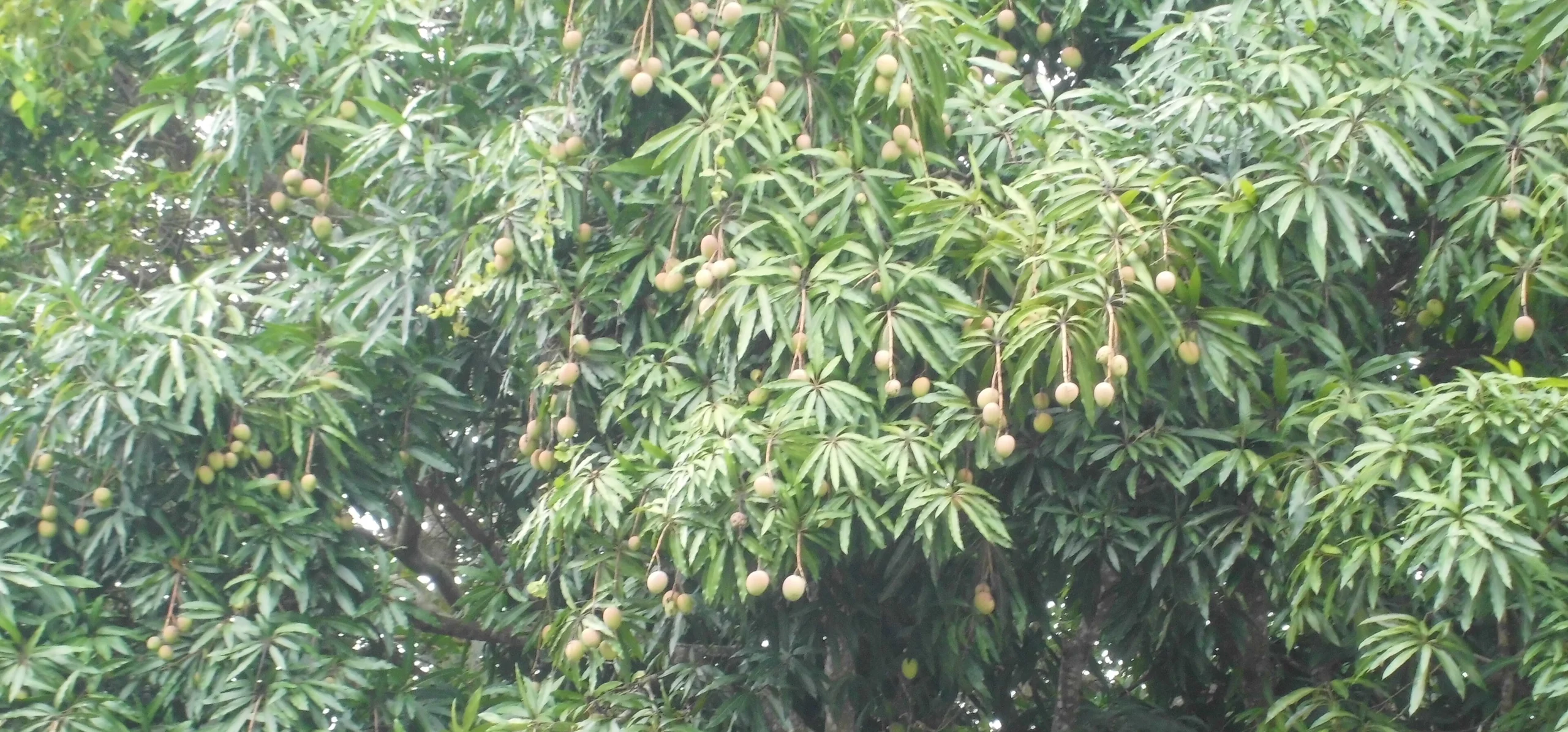
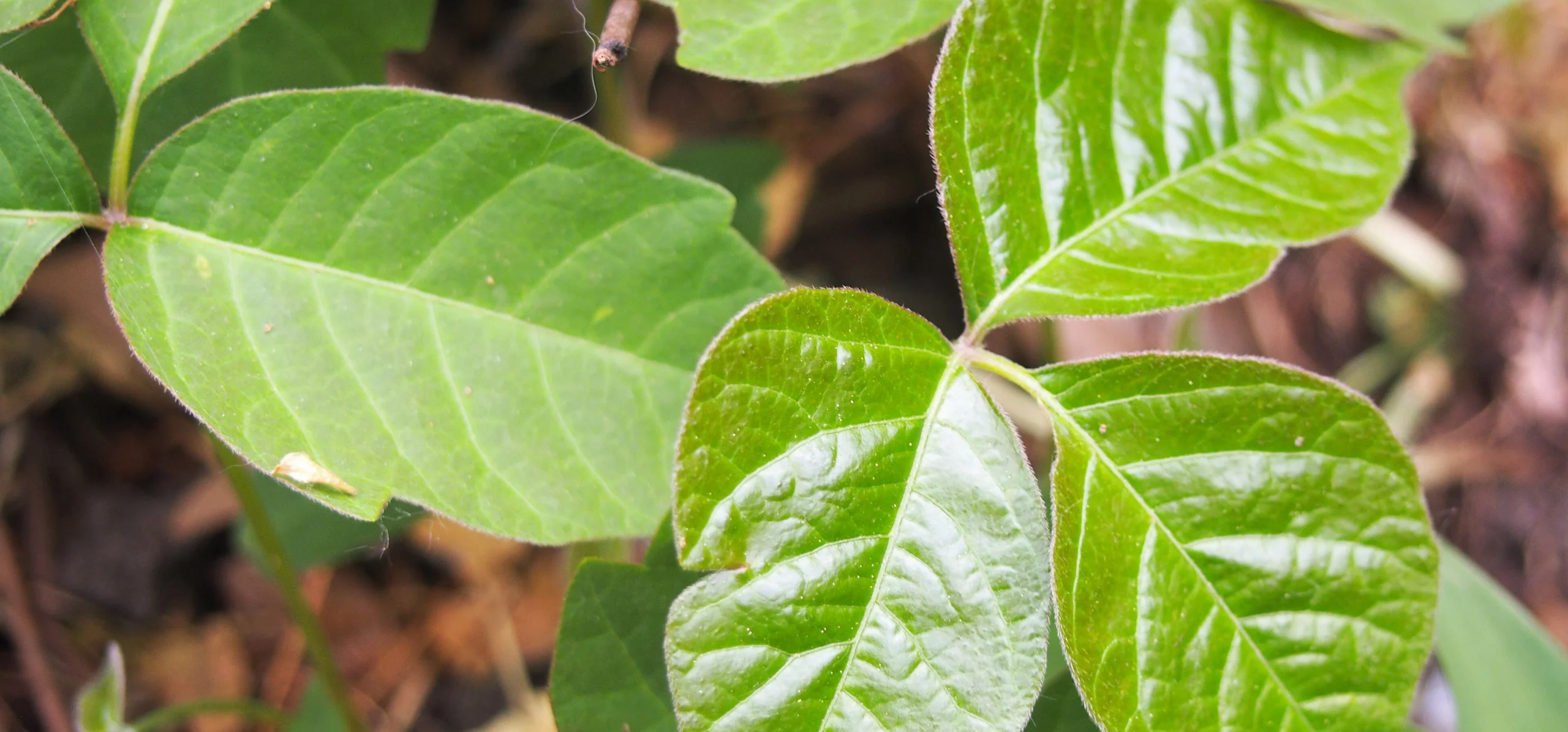
Three glossy or dull leaflets on a single stalk, the middle one often on a slightly longer stem than the two side ones, is the fastest way to place this plant: Toxicodendron radicans, poison ivy. It shows up as a low groundcover threading through a lawn, a shrub at the edge of a border, or a vine climbing a fence or tree trunk by fuzzy aerial roots, and all three forms carry urushiol, the oily resin that causes an itchy, blistering rash in most people who touch it. It belongs to the cashew family, Anacardiaceae, the same family as mango and pistachio, and it is native and common across most of North America. The identification and safety details below matter more here than anywhere else in this encyclopedia: get them right before you touch, mow, or pull anything.
Identifying poison ivy
The leaflets vary enough from plant to plant that relying on a single photo is a mistake: edges can be smooth, wavy, or coarsely toothed, and the surface can be glossy or matte. What stays constant is the count, always three per leaf, and new spring growth that emerges reddish before hardening to green over the following days. In autumn the same foliage turns red, orange, or yellow, often before other nearby plants change color, which makes established patches easy to spot from a distance. Small greenish white flowers open from the leaf axils and are followed by waxy, whitish to pale yellow berries that ripen in late summer and hang on well into winter. Growth habit is the other tell: poison ivy climbs by short, hairy aerial roots pressed flat against bark or wood, not by twining stems or tendrils, which is why an established vine looks almost furry against a tree trunk.
Poison ivy versus Virginia creeper and other look-alikes
The plant most often mistaken for poison ivy is Virginia creeper, and the fix is the old rhyme: leaves of three, let it be, leaves of five, let it thrive. Virginia creeper carries five leaflets with consistently toothed edges, climbs using tendrils tipped with adhesive sucker discs rather than aerial roots, and produces small, dark blue berries instead of white ones. Young Virginia creeper shoots can occasionally show only three leaflets, which is where most misidentifications happen, so check a few leaves on the same runner rather than judging from one. Boxelder seedlings are the other common mix-up: their compound leaves also come in groups of three, but the leaflet edges are more evenly and sharply toothed, and the young stems are green and hairless rather than woody and root-covered.
Urushiol and the rash it causes
Every part of the plant, leaves, stems, roots, and berries, contains urushiol, an oily resin that triggers allergic contact dermatitis in most people on contact. The oil transfers readily: brushing the plant, handling a rake or tool that touched it, or petting a dog that walked through a patch can all move urushiol onto skin, which is why an outbreak of the rash can appear on someone who never went near the plant directly. Dead and dried plant material stays hazardous for a long time, so a winter vine with no leaves is not a safe vine to grab bare-handed. Never burn poison ivy: the smoke carries vaporized urushiol particles that can inflame the eyes, skin, and lungs, and severe reactions from inhaling it can require emergency care.


Where poison ivy grows
Its native range runs from North America south to Guatemala, with populations on the Bahamas and Bermuda as well, and within that range it turns up almost everywhere: dry or wet woodland, thickets, fencerows, roadsides, clearings, and neglected waste ground. It tolerates shade well enough to thread through a forest understory but grows fastest and flowers most heavily with several hours of direct sun, which is exactly the light a fence line, a woodpile, or the sunny edge of a garden bed provides. Because it climbs, it is often first noticed several feet up a tree rather than at ground level, having used the trunk as a ladder toward better light.
Removing poison ivy safely
Small, young patches can be hand-pulled when the soil is moist and the whole root comes free, but always in long sleeves, long pants tucked into boots, and disposable gloves, since bare skin and urushiol should never meet. For an established patch, digging out the shallow, spreading roots works better than pulling, and a string trimmer should be avoided entirely: it shreds the plant into an airborne mist of urushiol droplets that can drift onto skin, into eyes, or into the lungs. A climbing vine that has grown up a valued tree is best handled with a window cut, removing a section of stem near the ground and another higher up, then leaving the upper growth to die in place rather than pulling it down through the canopy. Wood mulch spread three to six inches deep helps suppress new seedlings, while cardboard, landscape fabric, or heavy plastic can smother an existing patch, but only if left in place for a full growing season or longer.
Herbicide, disposal, and goats
Where a patch is too large to dig out by hand, cutting the stem and applying a concentrated systemic herbicide directly to the fresh cut, within about fifteen minutes before the wound seals over, is the most effective chemical method, and it works best from late summer into autumn, when the plant is already moving sugars down into the roots for winter. Whatever method is used, pulled or cut material should go straight into a trash bag, never into a compost pile and never onto a brush fire, since composting does not neutralize urushiol and burning aerosolizes it. Goats are one of the few animals unaffected by urushiol and will graze the foliage readily, though they leave the roots untouched, so goat grazing works as repeated seasonal control rather than a one-time fix.
Why it is not just a hazard
For all the caution it demands from people, poison ivy is a genuinely useful native plant for wildlife. The persistent white berries are a winter food source for many birds, which is also how the plant spreads, seeds pass through and are deposited in new spots along fence lines and forest edges. The ASPCA lists poison ivy as non-toxic to dogs, cats, and horses when it comes to ingestion, so the real risk to pets is carrying urushiol on their fur rather than being poisoned by eating it. In a wild corner of a property, left alone along a back fence or in a hedgerow away from paths, it is worth leaving in place for the birds rather than treated as something to eradicate on sight everywhere it appears.
Test your plant knowledge
Tap a card to flip it and reveal the answer.
Poison ivy always has exactly three leaflets per leaf. Tap to reveal ✓ True
Virginia creeper, poison ivy's most common look-alike, has five leaflets. Tap to reveal ✓ True
A leafless poison ivy vine in winter is safe to handle bare-handed. Tap to reveal ✕ False
Burning poison ivy is a safe way to dispose of a cut patch. Tap to reveal ✕ False
The ASPCA lists poison ivy as toxic to dogs and cats if ingested. Tap to reveal ✕ False
Sources
References consulted for this guide
- GBIF: Toxicodendron radicans (L.) Kuntzegbif.org
- POWO (Kew): Toxicodendron radicans (L.) Kuntzepowo.science.kew.org
- ASPCA: Toxic and Non-toxic Plants, Poison Ivyaspca.org
- Missouri Botanical Garden Plant Finder: Toxicodendron radicansmissouribotanicalgarden.org
- Penn State Extension: Manage Poison Ivy Safelyextension.psu.edu
- Penn State Extension: Virginia Creeper and Poison Ivy Identification with Controlextension.psu.edu
- Reference entity : Wikipédiaen.wikipedia.org