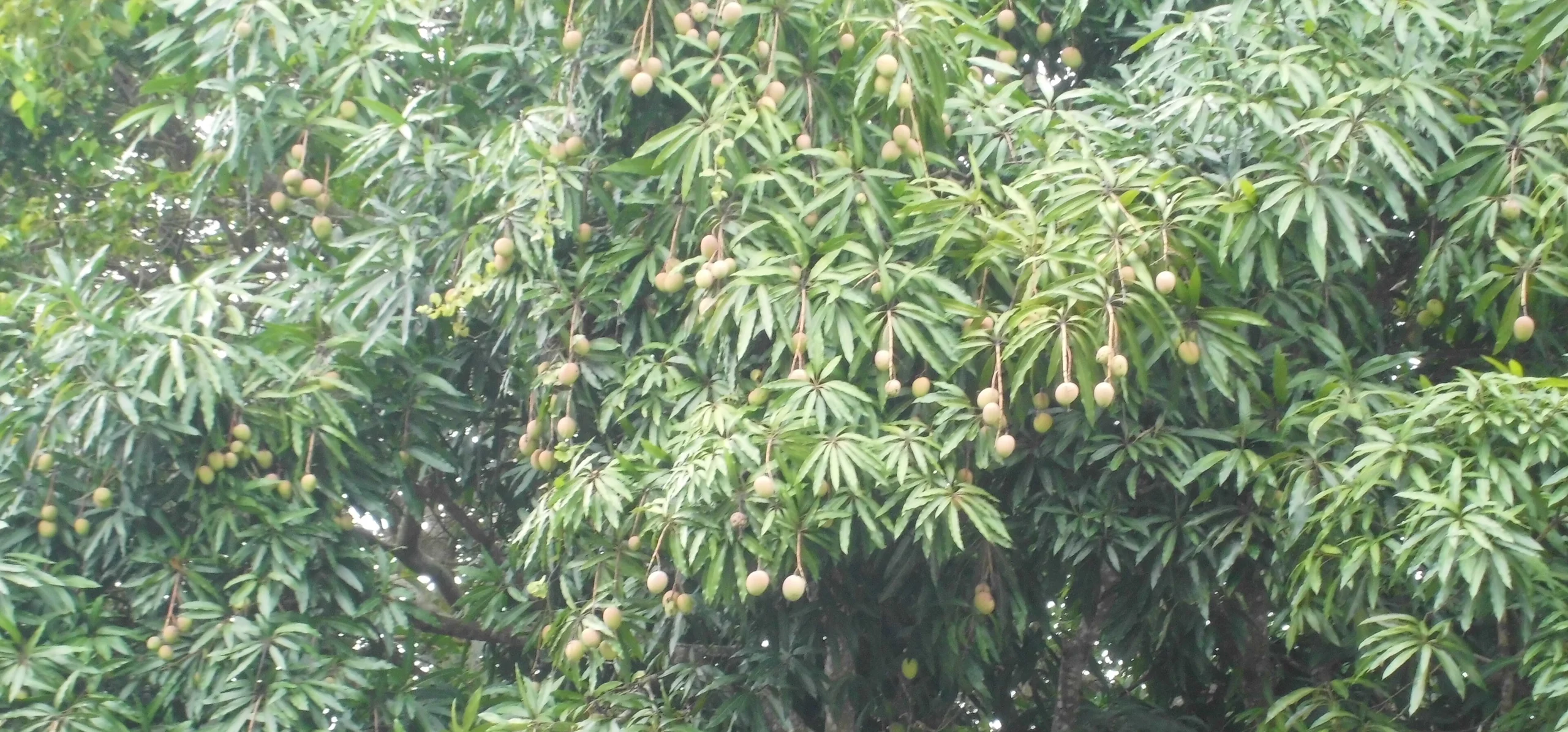
Mango Tree
Mangifera indica
Family · Anacardiaceae
A mango grown from a seed rarely fruits indoors; a grafted dwarf like 'Irwin' in a large pot on a warm patio can, often within three to five years.
Mangifera indica
Plant profile
- WateringModerateWater every 7 days
- Light exposureFull sun
- Ideal temperature-2–40 °C
- Hardiness zoneUSDA 10–11
Growth
- Family
- Anacardiaceae
- Life cycle
- Perennial
- Growth speed
- 6/10
- Mature size
- 200–3000 cm
- Spread
- 200–3000 cm
- Propagation
- Seed
- Grafting
FloweringBlooms once a year after a dry, cool spell; fruit is picked mature and ripened off the tree
Dormancyno true dormancy; growth pauses in cool or dry spells, which also triggers flowering
Time to maturitygrafted dwarf cultivars flower and fruit within about 3 to 5 years; seed-grown trees usually take 5 to 8 years outdoors and often never fruit indoors
Soil & climate
- Soil pH
- pH 5.5–7.5
- Soil types
- sand, loam
- Drought tolerance
- Yes
Light & Placement
- Origin
- Assam to China (S. Yunnan) (POWO); cultivated pantropically for millennia
- Where to place it
- Brightest available south-facing window for a young seed-grown seedling
- Heated greenhouse or sunroom for a young grafted tree before it moves outdoors
- Full sun, open planting site in a frost-free tropical or dry-season subtropical garden
- Sheltered from cold wind and any risk of frost
- Large 55 to 95 L (15 to 25 gallon) container with generous drainage for a grafted dwarf cultivar
Safety
- Toxicity
- HumansToxic
Invasive speciesnot generally listed as invasive; naturalized after long cultivation in many tropical regions but not flagged as a priority weed by CABI or USDA
Data fromMangifera indica L., GBIF Backbone TaxonMangifera indica L., Plants of the WorldHS2/MG216: Mango Growing in the Florida Mango, UF/IFAS Gardening SolutionsMangifera indica (mango), CABI Compendiu
Where it grows
World distribution
Mango Tree is native to 5 countries: Bhutan, China, India, Myanmar (Burma), and Thailand.GBIF records 102,338 documented identifications across 168 countries, with the largest concentrations in India, Colombia, and Brazil.
- Bhutan
- China
- India
- Myanmar (Burma)
- Thailand
Yellow to orange dots: concentration of documented identifications per country. Green countries: sourced native range. Source: GBIFNative range from POWO (Kew).
A backyard mango seed pushed into a pot germinates within a few weeks and grows into a glossy, easy houseplant, but it almost never fruits indoors, and even planted outdoors later it can take the better part of a decade to flower. A grafted dwarf cultivar such as 'Irwin', 'Cogshall' or 'Nam Doc Mai', grown in a large pot on a warm, sunny patio or in a greenhouse, is the realistic route to actual mangoes within a few years. Mangifera indica is a large evergreen tree native to the Assam region of northeastern India and adjoining Myanmar and southern China, and almost everything about how it is grown, from the dry spell it needs to flower to the frost that can kill it outright, traces back to that monsoon and dry season climate.
Seed-Grown Houseplant or Grafted Dwarf
Sprouting the large, fibrous stone from a supermarket mango is a fun windowsill project: soak the cleaned seed for a day, ease the inner kernel out of its husk, and it sends up a thick shoot within two to three weeks in warm, moist compost. The catch is that fruit quality does not come true from seed, and most seedlings need five to eight years of real tropical heat to flower; confined to a pot indoors, a seedling may never flower at all. Named cultivars are instead propagated by grafting a piece of a proven fruiting tree onto seedling rootstock, which fruits far sooner, often within three to five years, and reproduces the parent's flavor exactly; dwarf and semi-dwarf selections such as 'Irwin', 'Cogshall' and the Thai cultivar 'Nam Doc Mai' stay compact enough for a large container instead of the 9 to 30 m (30 to 100 ft) a full-size unpruned tree can eventually reach.
Climate and Frost
Mangifera indica is strictly a tree of the tropics and the frost-free subtropics: it lives outdoors year-round only in USDA zones 10b to 11, and cold is the one thing it cannot be nursed through. Young trees are killed at around -1 to -2°C (29 to 30°F), mature wood can take a brief dip to about -4°C (25°F) with damage limited to leaves and small branches, and open flowers or developing fruit are hurt by anything below about 4°C (40°F) for even a few hours. Just as important as warmth is a genuine dry spell: flowering is triggered by several weeks of cooler, drier weather, and a tree kept constantly warm, wet and fed year-round, as a container plant on an automatic timer often is, can put out lush foliage indefinitely and never set a flower.
Light, Soil and Planting
Give it the sunniest spot available: full, unobstructed sun for most of the day is non-negotiable, whether it grows in open ground or the largest pot the patio can hold. Soil needs to be deep and well-drained above all else, since standing water around the roots causes root rot faster than almost any other mistake; a sandy loam suits it best, and the species tolerates a fairly wide soil pH from about 5.5 to 7.5. A grafted dwarf destined for a container needs one that size from the start, roughly 55 to 95 L (15 to 25 gallons) with generous drainage holes, because mango roots resent disturbance once established.


Watering and Feeding
Water young trees and container specimens regularly and deeply while they establish, letting the top layer of soil dry between waterings rather than keeping it saturated. Once a tree is a few years old it becomes genuinely drought-tolerant, and that is also when watering should change with the season: cut back sharply in the weeks before and during flowering, since a drier root zone helps trigger a strong, even bloom rather than scattered, weak flushes. Feed during active growth with a fertilizer formulated for fruit trees or citrus, easing off as flowering approaches and again once fruit is developing, since heavy nitrogen at the wrong moment pushes leafy growth instead of fruit.
The Pink Flush of New Growth
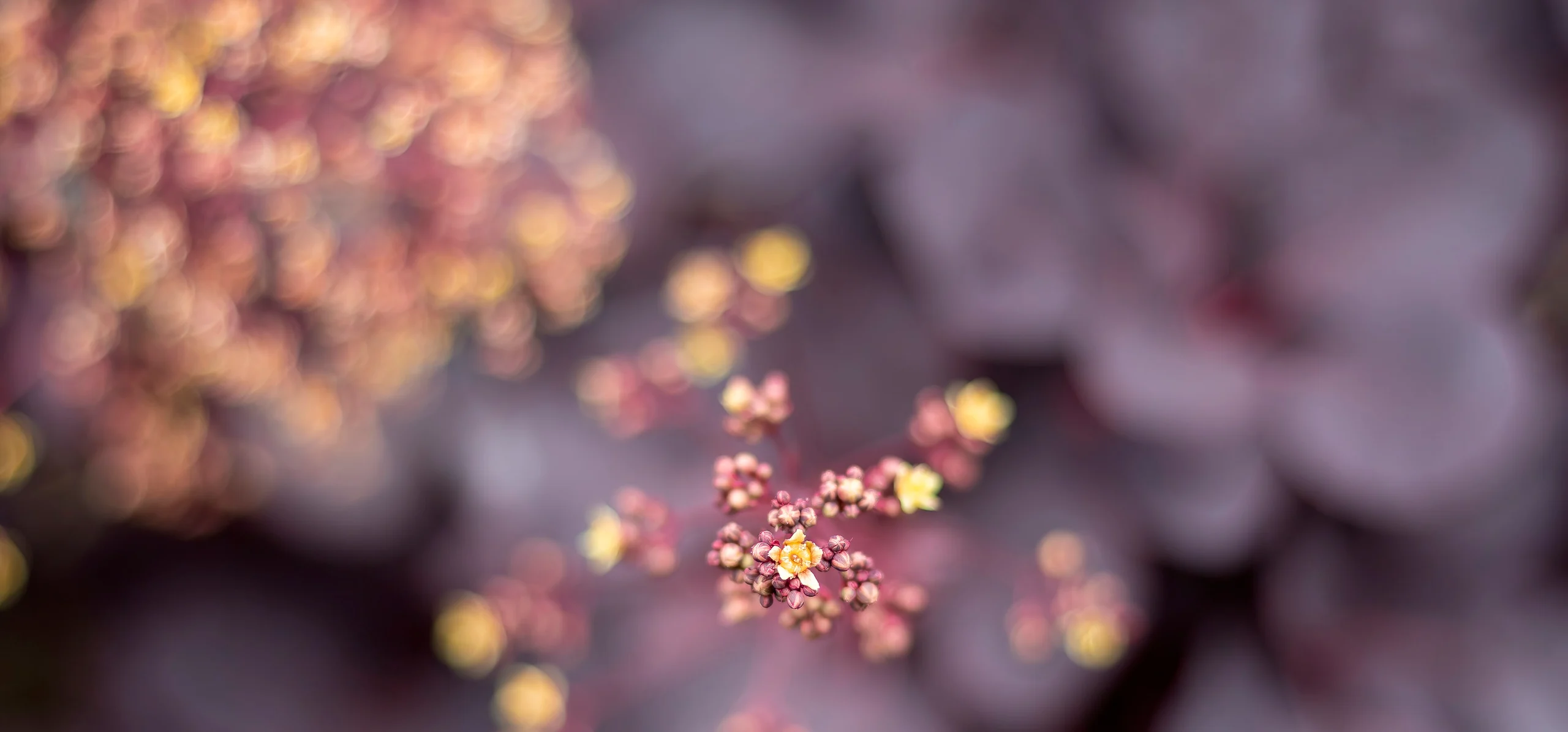
New mango leaves do not emerge green: they unfurl a soft coppery pink to bronze-red, hang limp for the first day or two, then stiffen and turn green over one to two weeks as chlorophyll develops, a flush that can cover an entire canopy in one wave after a warm rain or a feed. It is a normal, attractive stage rather than a stress symptom, but that same soft new tissue is the most vulnerable to sunscald if a shaded seedling is moved abruptly into full outdoor sun, and to the pests and fungal problems covered next, so a fresh flush is worth watching rather than ignoring.
Pests and Diseases
Anthracnose and powdery mildew are the two diseases that matter most, and both attack flowers and young fruit during humid, rainy weather at bloom time, causing blossom blight, fruit drop and black lesions on ripening fruit; a copper-based fungicide applied at early bloom and repeated through a wet flowering spell is the standard response. The mango seed weevil, Sternochetus mangiferae, lays eggs on young fruit and its grub tunnels into the seed itself, usually invisible from outside until the fruit is cut open, while fruit flies puncture ripening skin to lay eggs that hatch into maggots in the flesh; both are managed mainly by sanitation, removing fallen and infested fruit promptly, rather than by treating the tree. Scale insects also target mango, clustering on stems and leaf undersides, weakening growth and excreting sticky honeydew that grows sooty mold; light infestations usually respond to horticultural oil.
Harvest and Ripening
A mango is picked mature but still firm and green-shouldered, not soft, since fruit left to ripen fully on the tree is far more prone to disease, bruising and premature drop; the classic test is a fruit that separates from the stem with a slight twist and shows a hint of give near the stem end. Ripening then finishes at room temperature over three to seven days, turning fragrant and softening evenly, and a paper bag speeds the process the same way it does with avocados. Fruit picked mature and ripened off the tree consistently tastes better than fruit left to ripen while still hanging.
Sap, Skin and Pet Safety
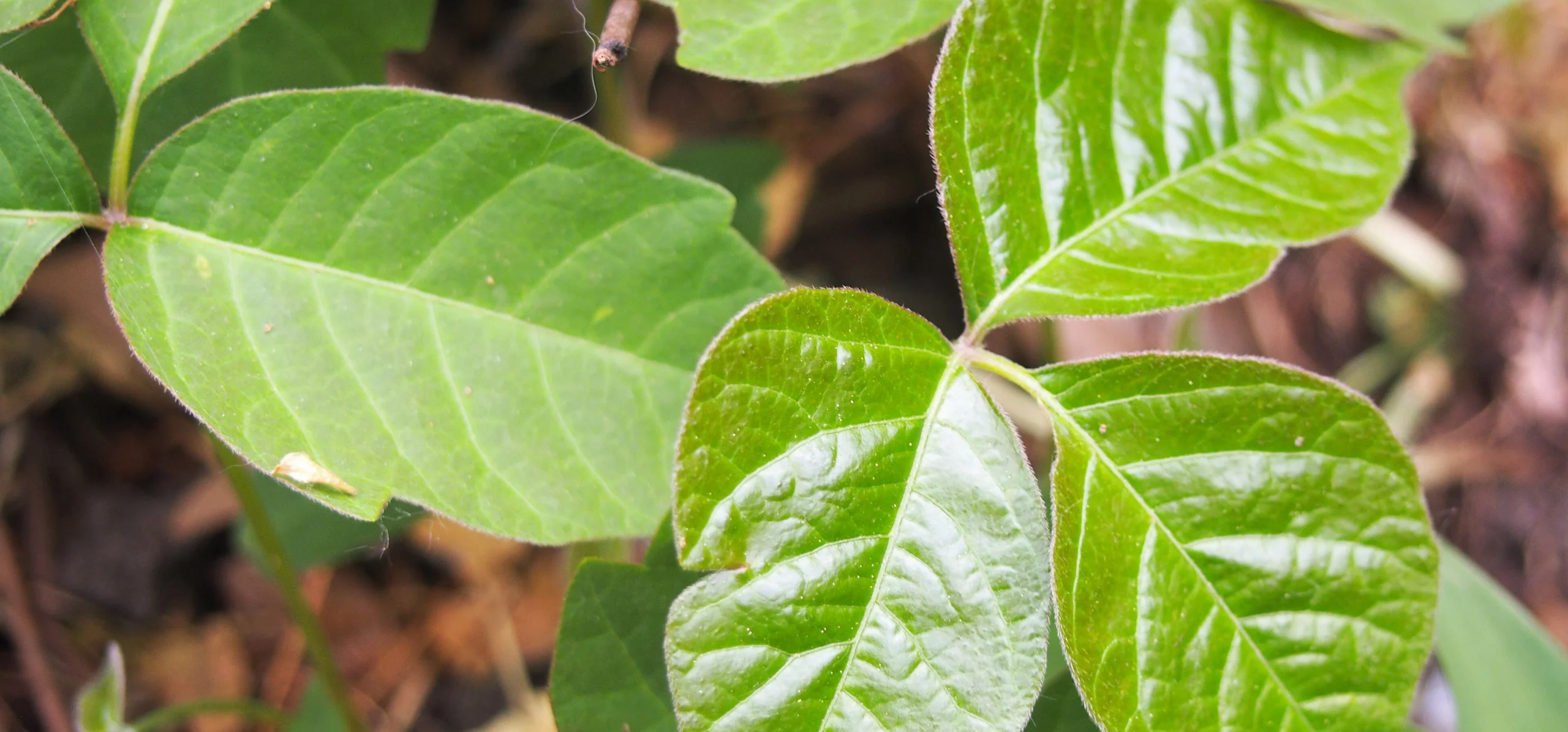
Mangifera indica belongs to the Anacardiaceae, the same family as poison ivy and poison oak, and the sap, unripe skin and the resin near the stem all contain urushiol-related compounds; people already sensitized to poison ivy can develop the same itching, blistering contact dermatitis from handling mango skin or sap, most often around the mouth and hands after peeling and eating fruit with the skin still on. The species does not currently have its own entry in the ASPCA's toxic and non-toxic plant database, so there is no official ruling either way for cats, dogs or horses; ripe flesh in small amounts is widely treated as safe, but the large, hard pit is a genuine choking and intestinal obstruction hazard, and the leaves and sap are irritant enough to keep curious pets from chewing on them.
Test your plant knowledge
Tap a card to flip it and reveal the answer.
A mango grown from a supermarket seed will typically fruit within a couple of years as a houseplant. Tap to reveal ✕ False
Anthracnose and powdery mildew mainly damage mango flowers and young fruit during humid, rainy weather at bloom time. Tap to reveal ✓ True
A dry spell before and during flowering helps trigger a strong, even bloom in mango trees. Tap to reveal ✓ True
Mango sap and unripe skin can cause a poison-ivy-like skin reaction in sensitized people. Tap to reveal ✓ True
Mature mango trees are killed by the same light frost that kills young seedlings. Tap to reveal ✕ False
Sources
References consulted for this guide
- Mangifera indica L., GBIF Backbone Taxonomygbif.org
- Mangifera indica L., Plants of the World Online (Kew)powo.science.kew.org
- HS2/MG216: Mango Growing in the Florida Home Landscape, UF/IFAS EDISask.ifas.ufl.edu
- Mango, UF/IFAS Gardening Solutionsgardeningsolutions.ifas.ufl.edu
- Mangifera indica (mango), CABI Compendiumcabi.org
- Reference entity : Wikipédiaen.wikipedia.org