Adam's Needle
Yucca filamentosa
Family · Asparagaceae
Yucca filamentosa (Adam's Needle) needs full sun, well-drained soil and USDA zone 4 to 10 hardiness; it tolerates drought, salt spray and hard frost.
Yucca filamentosa
Plant profile
- WateringLittleWater every 14 days
- Light exposureFull sun
- Hardiness zoneUSDA 4–10
Growth
- Family
- Asparagaceae
- Life cycle
- Perennial
- Growth speed
- 3/10
- Mature size
- 90–245 cm
- Spread
- 90–150 cm
- Flowering
- April to June (South), late summer (cooler climates)
- Propagation
- Division
- Cutting
- Seed
Time to maturity10 to 20 years
Soil & climate
- Soil pH
- pH 6–8
- Soil types
- Well-drained sand or loam, Clay if drainage is good, Shallow rocky soil
- Saline soil
- Tolerated
- Drought tolerance
- Yes
Light & Placement
- Origin
- West Virginia to SE. U.S.A.
- Where to place it
- Unheated greenhouse or cold frame for young plants only
- Full sun border or foundation bed
- Coastal or seaside garden
- Xeriscape or gravel garden
- Wide, deep terracotta or clay pot with drainage holes for young plants before planting out
Safety
- Toxicity
- CatsToxic
- DogsToxic
- HorsesToxic
- HumansToxic
Data fromGBIFPlants of the World Online (Kew)RHSNC State ExtensionASPCA
Where it grows
World distribution
Adam's Needle is native to a single country: United States.GBIF records 9,317 documented identifications across 46 countries, with the largest concentrations in United States, France, and Germany.
- United States
Yellow to orange dots: concentration of documented identifications per country. Green countries: sourced native range. Source: GBIFNative range from POWO (Kew).
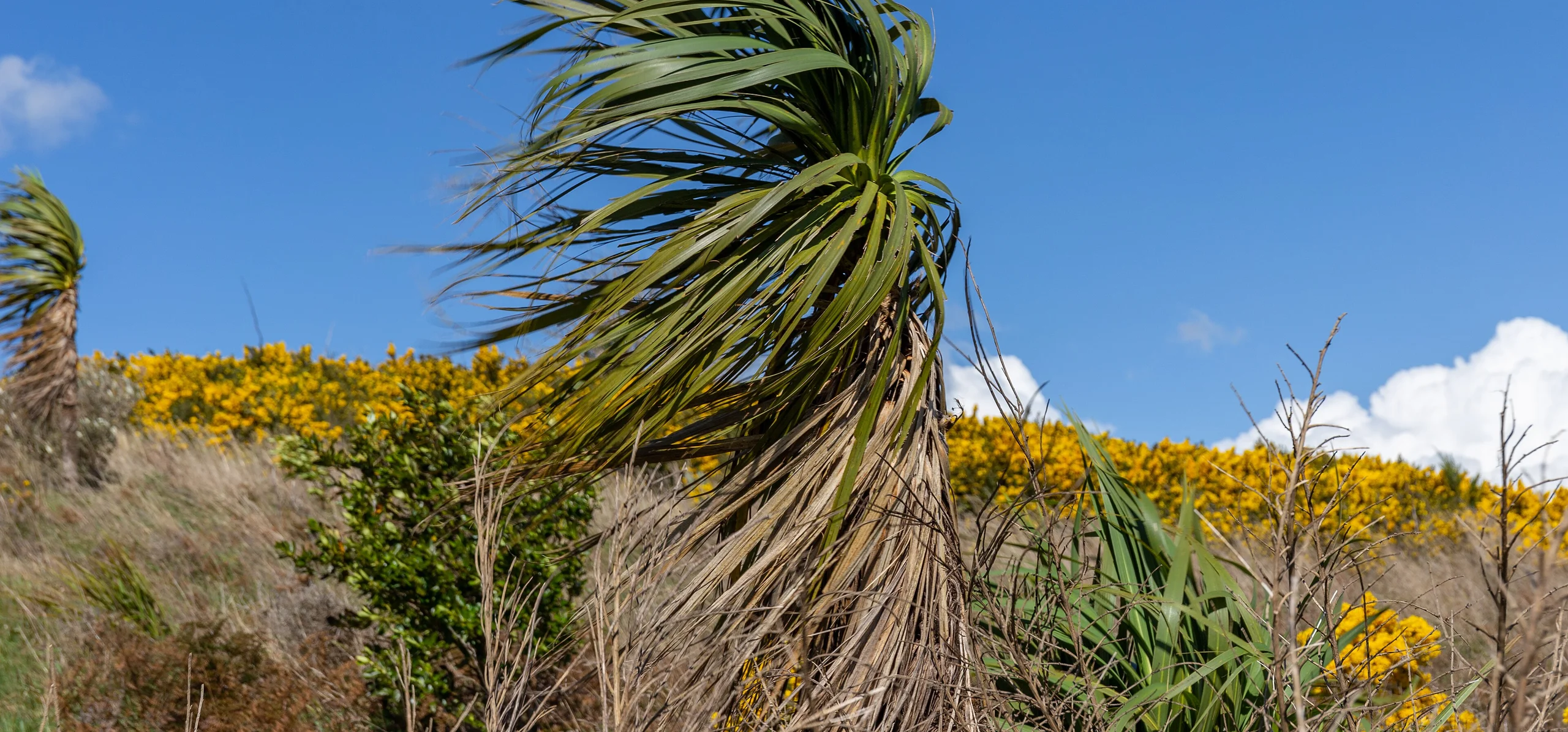
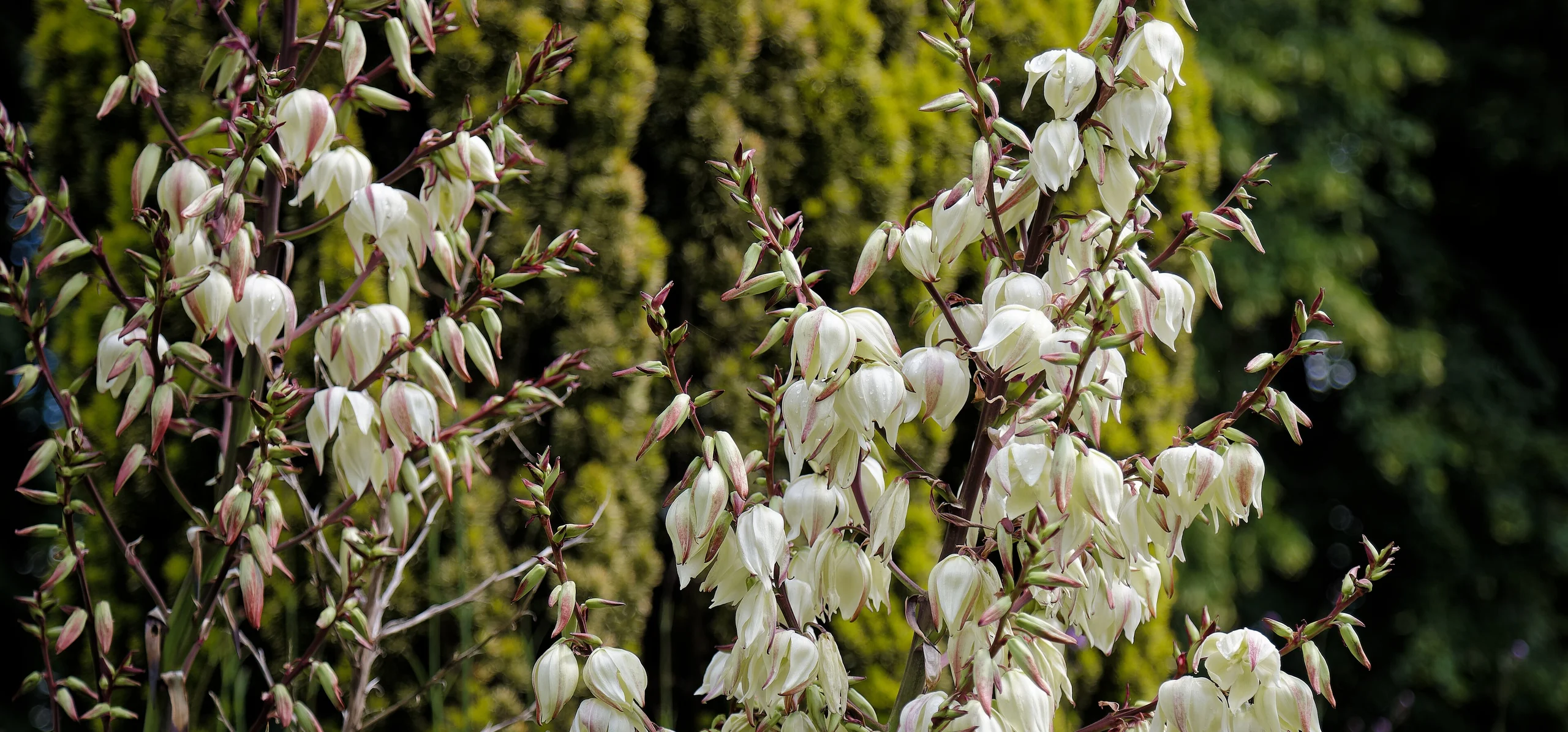
Yucca filamentosa, commonly called Adam's Needle, is not a cactus and not a true palm, despite the alternate name needle palm: it is a clump-forming, essentially stemless perennial in the asparagus family, native to the southeastern United States. Buy one and you get two plants in one: a tight rosette of stiff, blue-green, sword-shaped leaves edged with curling threadlike filaments, and, once the clump matures, a flower spike that can shoot several feet into the air in a single season. It is one of the least demanding plants you can put in a sunny bed: full sun, soil that drains, and otherwise leave it alone.
Native range and what it tells you about care
Kew's Plants of the World Online lists the native range of Yucca filamentosa as West Virginia south through the southeastern United States. That origin, open ground rather than woodland, explains most of how the plant behaves in a garden: it expects strong light, sharp drainage and the occasional dry spell, and it sulks wherever soil stays wet or shade lingers most of the day.
Hardiness and placement
This is one of the hardiest yuccas grown outdoors. NC State Extension rates it for USDA zones 4a to 10b, and the RHS gives it its top UK hardiness rating, H5, meaning it survives even a severe winter outdoors without protection. NC State Extension calls for full sun, at least six hours of direct light a day, though the plant will also take two to six hours of sun in partial shade. A south or east-facing bed against a wall, where reflected heat keeps the soil dry, suits it better than a shaded border ever will.
Soil and planting
NC State Extension notes that Yucca filamentosa adapts to clay, loam, sand and shallow rocky soils, provided drainage is good and the pH sits close to neutral, in the 6.0 to 8.0 range. The one condition it will not forgive is standing water: plant it on a slope, in a raised bed, or work grit into heavy ground before planting if rain tends to pool. The same source rates it salt spray resistant, which is why it turns up in seaside gardens where far showier perennials burn and fail.
Watering: little, and less as it settles in
Water a newly planted specimen every seven to ten days through its first summer, long enough for the root system to establish before the plant is left to fend for itself. After that, treat it as highly drought tolerant, the rating NC State Extension gives it, and water only in an extended dry spell. A yucca watered on a fixed weekly schedule year after year is far more likely to develop crown and root rot than one left to rely on rainfall.
How often to water your Adam's Needle
The bloom spike
As a foliage rosette alone, the RHS puts mature size at a modest 0.5 to 1 metre tall and 1 to 1.5 metres across, reached over ten to twenty years. Add the flower spike and the plant works on a different scale: NC State Extension gives an overall height of three to eight feet once it blooms, on panicles that reach five to six feet themselves, hung with waxy, bell-shaped, creamy-white flowers that the RHS measures at six centimetres each. Flowering time shifts with climate: NC State Extension records blooms from April to June in the warm Southeast, while the RHS, describing plants grown in the cooler UK, places flowering in late summer. Either way, expect the first bloom spike three to five years after planting, not before.
Dividing and propagating the clump
Left alone, a single plant slowly produces offset rosettes around its base until it becomes a multi-headed clump. NC State Extension lists division, root cuttings and seed as the standard propagation methods. Division is the fastest route to a flowering-size plant: in spring, slice away a rooted offset with a spade and replant it immediately at the same depth it was growing. A section of the fleshy rhizome laid horizontally in gritty, free-draining mix and kept just barely moist will also sprout new rosettes within a few months.
Pests, disease and handling safely
Few pests trouble this plant. NC State Extension names the yucca plant bug as the main insect to watch for on flower spikes, and leaf spot or blight can appear if the crown sits in poorly drained soil for long. The bigger concern is toxicity: the ASPCA lists yucca (Yucca spp.) as toxic to dogs, cats and horses, with saponins as the toxic principle, so keep pets and grazing animals away from fallen leaves and flower stalks. The RHS additionally flags Yucca filamentosa as a skin allergen: wear gloves when dividing a clump or trimming a spent flower stalk, since both the sap and the sharp, needle-tipped leaves irritate skin on contact.


Test your plant knowledge
Tap a card to flip it and reveal the answer.
Yucca filamentosa needs full shade to thrive. Tap to reveal ✕ False
Yucca filamentosa is hardy enough to survive winters as cold as USDA zone 4. Tap to reveal ✓ True
This yucca tolerates salt spray, making it suitable for coastal gardens. Tap to reveal ✓ True
Yucca filamentosa should be watered on a fixed weekly schedule all year to stay healthy. Tap to reveal ✕ False
The ASPCA lists yucca as toxic to dogs, cats and horses. Tap to reveal ✓ True
Sources
References consulted for this guide
- GBIF - Yucca filamentosagbif.org
- Plants of the World Online (Kew) - Yucca filamentosapowo.science.kew.org
- RHS - Yucca filamentosarhs.org.uk
- NC State Extension - Yucca filamentosaplants.ces.ncsu.edu
- ASPCA - Toxic and Non-toxic Plants: Yuccaaspca.org
- Reference entity : Wikipédiaen.wikipedia.org