Common Three-Seeded Mercury
Acalypha rhomboidea
Family · Euphorbiaceae
Identify Acalypha rhomboidea in the garden: rhombic leaves, clear sap, bract-hidden flowers, its annual cycle, look-alikes, and how to manage it.
Acalypha rhomboidea
Plant profile
- WateringLittleWater every 10 days
- Light exposurePartial sun
Growth
- Family
- Euphorbiaceae
- Life cycle
- Annual
- Growth speed
- 7/10
- Mature size
- 15–60 cm
- Flowering
- Summer to fall, flowers hidden in bracts
- Propagation
- Seed
DormancyNone, dies at frost
Time to maturityBlooms by midsummer
Soil & climate
- Soil types
- clay, loam, rocky
- Drought tolerance
- Yes
Light & Placement
- Origin
- E. Canada to central & eastern U.S.
- Where to place it
- Disturbed garden beds
- Roadsides and ditches
- Forest edges
Safety
- Toxicity
- HumansToxic
Invasive speciesNative, self-seeds freely
Data fromAcalypha rhomboidea Raf., GBIF Backbone Acalypha rhomboidea Raf., Plants of the Acalypha rhomboidea, NC State Extension Acalypha rhomboidea, Flora of North AmerAcalypha rhomboidea, USDA PLANTS Databas
Where it grows
World distribution
Common Three-Seeded Mercury is native to 2 countries: Canada and United States.GBIF records 11,639 documented identifications across 12 countries, with the largest concentrations in United States, Canada, and Portugal.
- Canada
- United States
Yellow to orange dots: concentration of documented identifications per country. Green countries: sourced native range. Source: GBIFNative range from POWO (Kew).
A hairy-stemmed weed with diamond-shaped leaves and odd, leafy little cups tucked in the leaf axils has probably just turned up in a disturbed bed, a vegetable row, or a gravel path. That is almost certainly common three-seeded mercury, Acalypha rhomboidea, a native North American annual in the spurge family. It is not a spurge in the usual sense, snap a stem and the sap runs clear, not milky, which is the fastest way to rule out a true Euphorbia. It causes no lasting harm to a garden, sets seed quickly, and disappears with the first hard frost.
Identifying Acalypha rhomboidea
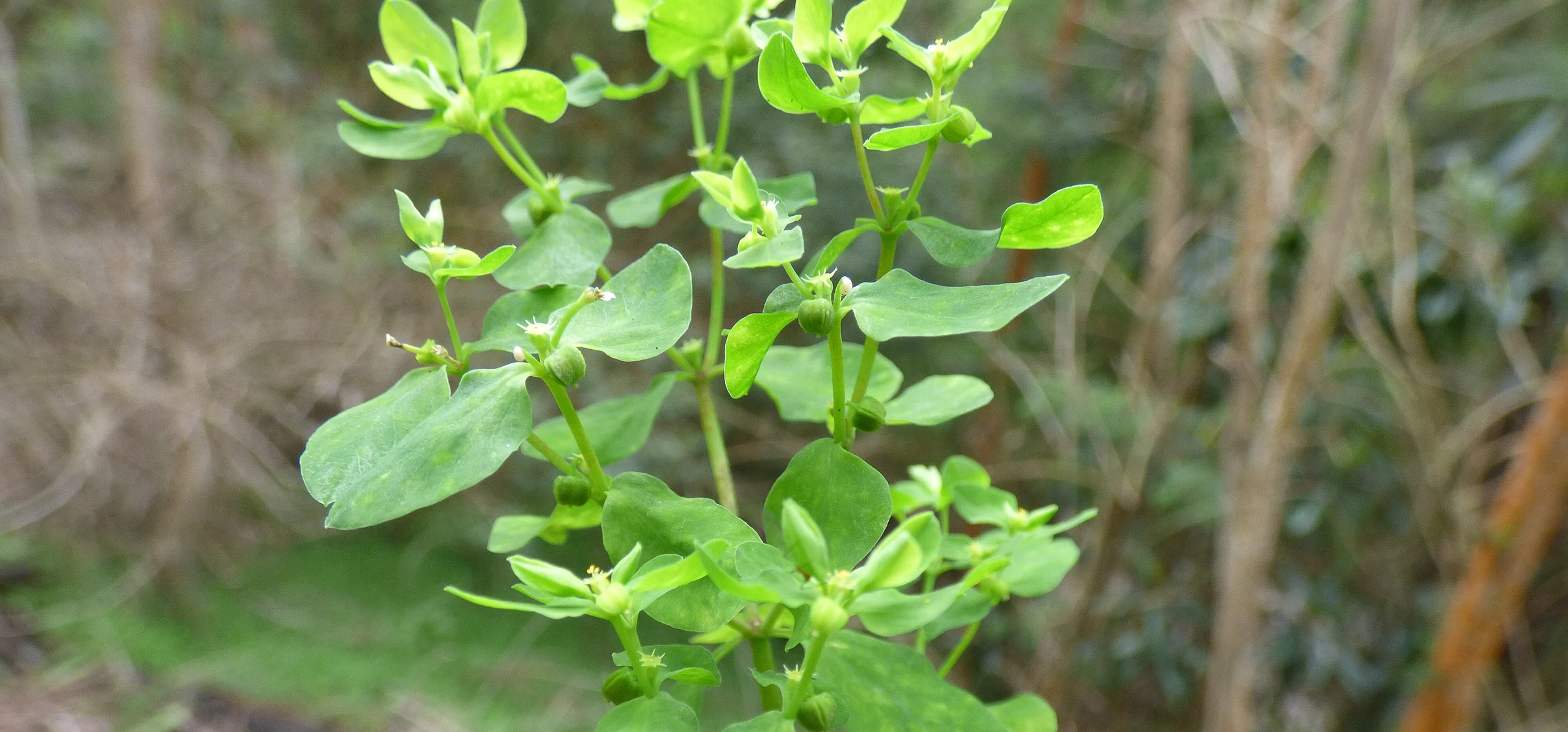
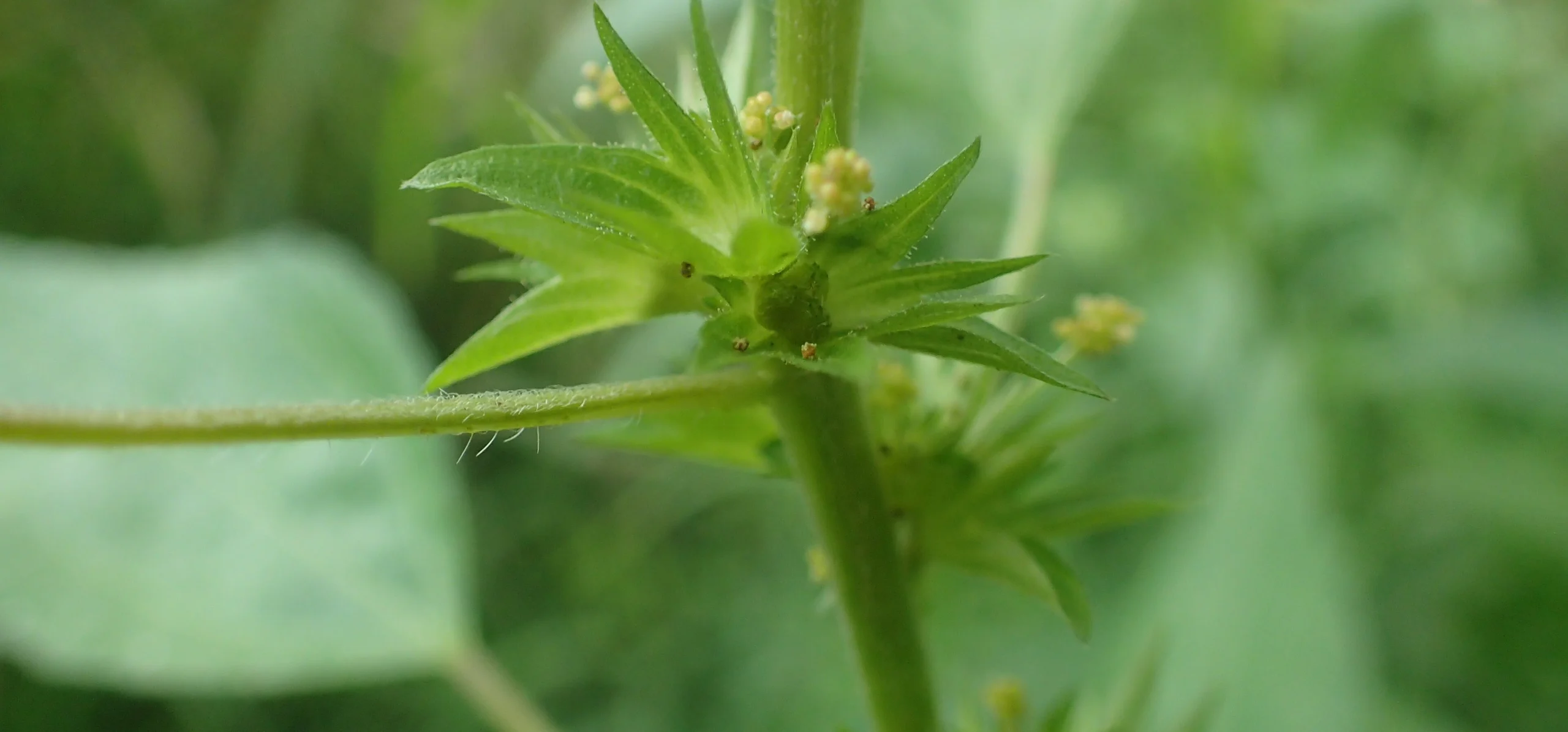
The plant grows 15 to 60 cm tall on an erect, often unbranched taproot, branching from the base only once it passes about 20 to 25 cm. Leaves are alternate, ovate to rhombic (hence the epithet, from the Latin for diamond-shaped), 2 to 9 cm long, with bluntly toothed margins, conspicuous pinnate veins, and a slightly hairy petiole. Stems carry fine white hairs. Look closely in the leaf axils and you will find the real identification clincher: small, leaf-like, folded bracts that look like tiny pleated cups. The flowers themselves have no petals or sepals and sit almost hidden inside these bracts, so what reads as a flower cluster from a distance is mostly bract tissue.
Acalypha rhomboidea vs. Acalypha virginica
The two species are frequently confused and often grow side by side. According to the Flora of North America treatment, the pistillate bract of A. rhomboidea has 5 to 9 lobes (occasionally 11), each one third to two thirds of the bract's length, while A. virginica carries a more deeply cut bract with 8 to 14 lobes (occasionally 16), each only a quarter to half the bract's length. Counting bract lobes with a hand lens settles the identification when leaf shape and hairiness overlap, as they often do between the two.
A Fast, Single-Season Life Cycle
This is a true annual: seed germinates once soil warms in late spring, growth is unbranched and quiet for several weeks, then the plant branches from the base and picks up speed through the heat of summer. Flowering runs from summer into fall, and because the flowers carry no scent and no showy parts, most gardeners notice the plant only once the bracts are conspicuous. The whole plant is killed outright by the first hard frost, leaving only seed in the soil to start the cycle again next spring.


Native Range and Habitat
Acalypha rhomboidea is native, not introduced: Plants of the World Online lists its native range as eastern Canada through the central and eastern United States, and it is recorded from Nova Scotia and Ontario south to Florida and west into Texas. In the wild and in gardens alike it favors disturbed ground, tolerating clay, loam, or rocky soils that stay moist or run occasionally dry, and it grows equally well in full sun or light shade. Roadsides, ditches, forest edges, waste ground, and freshly turned garden beds all suit it, which is exactly why it shows up uninvited so often.
Managing It in Garden Beds
Because it reproduces entirely by seed and reseeds freely, the only reliable long-term control is preventing seed set. Hand-pull plants while they are still small and unbranched, taproots lift cleanly from loose soil, and a 5 to 7 cm mulch layer over bare beds in late spring blocks most germination. Once bracts have formed, pull and bag rather than compost the plants unless your compost runs hot enough to kill seed, since a single missed patch can reseed a bed for several summers. In vegetable rows it competes for water and light with young transplants but rarely overwhelms an established crop, so a couple of weeding passes before flowering usually keeps it in check without any spraying.
Ecological Value
Left in an odd corner rather than pulled, three-seeded mercury earns its keep. The North Carolina State Extension notes that birds eat the seeds, and the three-seeded, three-lobed capsules typical of the genus scatter enough small seed to make the plant a minor but genuine food source through fall. As a native annual filling disturbed ground quickly, it also holds bare soil that would otherwise wash out before a more permanent planting establishes, a role many gardeners overlook because the plant reads as an anonymous weed rather than as a native species doing a native species' job.
Skin Contact and Pet Safety
Acalypha rhomboidea does not appear in the ASPCA's toxic or non-toxic plant lists, so no verified pet-toxicity status exists for this species specifically; treat it as unconfirmed rather than assuming it is safe. The North Carolina State Extension Gardener Plant Toolbox does list contact dermatitis as a documented irritant effect for this species, so wear gloves when pulling large stands, particularly if you have sensitive skin, and wash hands afterward.
Test your plant knowledge
Tap a card to flip it and reveal the answer.
Acalypha rhomboidea produces a milky latex sap like most other spurges. Tap to reveal ✕ False
This plant completes its entire life cycle within a single growing season. Tap to reveal ✓ True
Its tiny flowers are hidden inside conspicuous, folded, leaf-like bracts rather than shown on petals. Tap to reveal ✓ True
Acalypha rhomboidea and Acalypha virginica can always be told apart by leaf color alone. Tap to reveal ✕ False
The species is native to eastern North America rather than introduced from elsewhere. Tap to reveal ✓ True
Sources
References consulted for this guide
- Acalypha rhomboidea Raf., GBIF Backbone Taxonomygbif.org
- Acalypha rhomboidea Raf., Plants of the World Online (Kew)powo.science.kew.org
- Acalypha rhomboidea, NC State Extension Gardener Plant Toolboxplants.ces.ncsu.edu
- Acalypha rhomboidea, Flora of North America (efloras.org)efloras.org
- Acalypha rhomboidea, USDA PLANTS Databaseplants.usda.gov
- Reference entity : Wikipédiaen.wikipedia.org