Crown of Thorns
Euphorbia milii
Family · Euphorbiaceae
Crown of thorns (Euphorbia milii) needs full sun, soil that dries between waterings, and protection once temperatures drop near 35°F (1.7°C).
Euphorbia milii
Plant profile
- WateringLittleWater every 10 days
- Light exposureFull sun
- Hardiness zoneUSDA 9–11
Growth
- Family
- Euphorbiaceae
- Life cycle
- Perennial
- Growth speed
- 4/10
- Mature size
- 91–183 cm
- Spread
- 46–91 cm
- Propagation
- Cutting
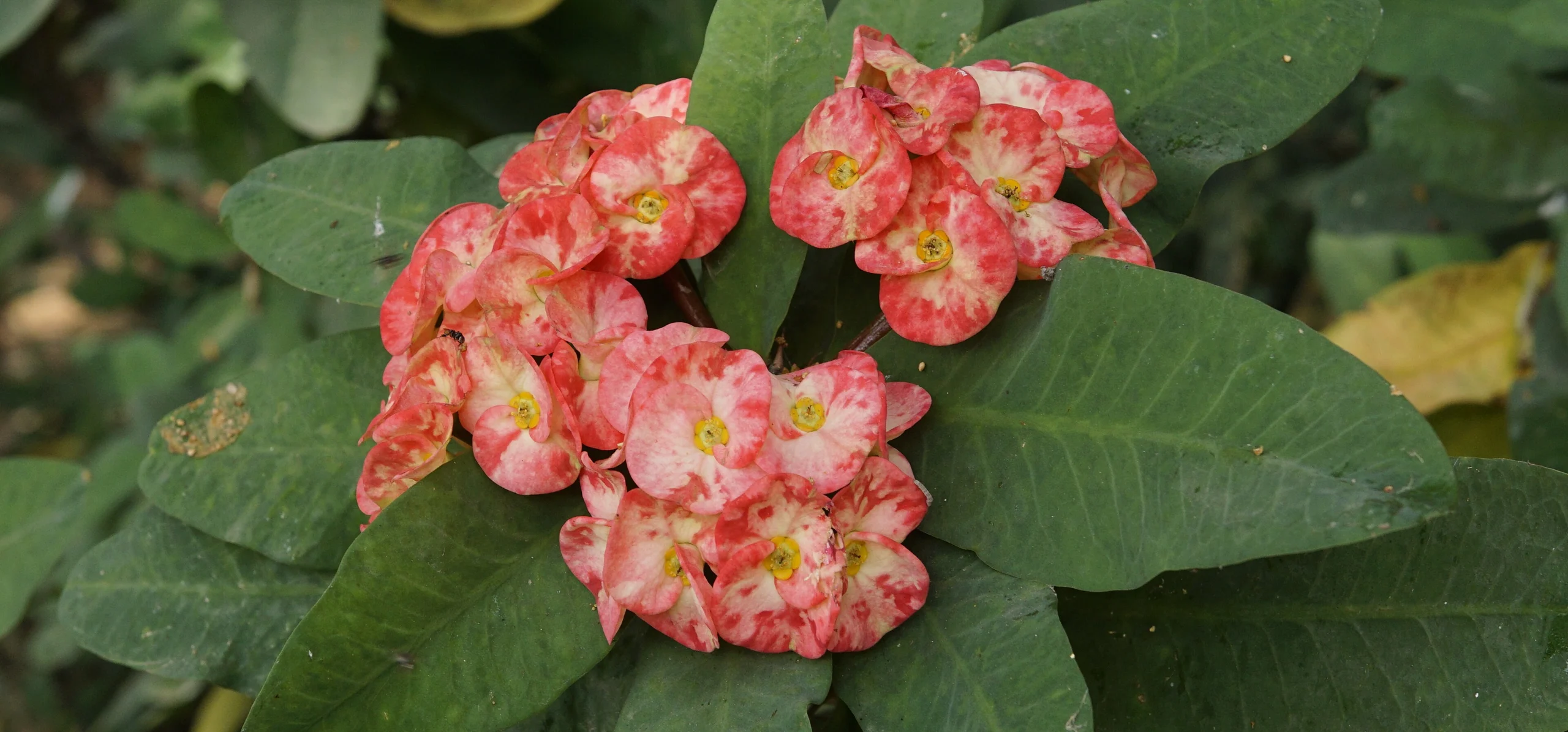
FloweringSmall cyathia surrounded by showy red, pink, yellow or white bracts, nearly year-round
DormancyGrowth and flowering slow through short, cool winter days rather than a full leaf-drop dormancy
Soil & climate
- Soil types
- sand, shallow-rocky, well-drained
- Drought tolerance
- Yes
Light & Placement
- Origin
- Madagascar
- Where to place it
- unobstructed south or west-facing window
- under a grow light if no window gets 6+ hours of direct sun
- sunniest bed available, frost-free zones 9 to 11
- raised or rocky spot with sharp drainage
- terracotta or other pot with a real drainage hole
- cactus/succulent mix amended with extra perlite or coarse sand
Safety
- Toxicity
- HumansToxic
Data fromGBIF: Euphorbia milii Des Moul.POWO: Euphorbia milii Des Moul.Missouri Botanical Garden Plant Finder: NC State Extension Gardener Plant Toolbo
Where it grows
World distribution
Crown of Thorns is native to a single country: Madagascar.GBIF records 2,869 documented identifications across 121 countries, with the largest concentrations in India, Madagascar, and Brazil.
- Madagascar
Yellow to orange dots: concentration of documented identifications per country. Green countries: sourced native range. Source: GBIFNative range from POWO (Kew).
A crown of thorns that just came home from the nursery is often already root-bound in a plastic grow pot, and the two habits that kill it fastest indoors are a spot with only a few hours of light and a saucer left holding water after every watering. Euphorbia milii is a woody succulent shrub native to Madagascar, built to shrug off drought and full tropical sun, so a shaded windowsill and a constantly damp pot work against everything the plant is adapted to. Give it direct light for most of the day and let the mix dry before watering again, and the same plant keeps pushing new red or yellow bract clusters through most of the year.
Origin and What Makes This Species Recognizable
In its native Madagascar, Euphorbia milii grows into a sprawling shrub 3 to 6 feet tall with a spread of 1.5 to 3 feet, according to Missouri Botanical Garden and NC State Extension; in cultivation outside that range it usually tops out nearer 3 feet, and as a houseplant it rarely passes 2 feet. What most people call the flower is a pair of showy red, pink, yellow or white bracts, modified leaves that surround the plant's true flowers: tiny, petal-less clusters called cyathia sitting at the center of each pair. The stems are ribbed and armed with thick black spines, dense enough that even a light brush against a mature plant draws blood, which is the origin of both the common name and the belief that the biblical crown of thorns was woven from a related Euphorbia.
Light Needs Indoors and Out
NC State Extension lists this species as a full-sun plant, meaning six or more hours of direct light a day, and a crown of thorns kept in anything less stops flowering long before it stops growing leaves. Indoors, an unobstructed south or west-facing window is usually the only spot bright enough; a plant that leans hard toward the glass or drops flower buds while pushing out thin, pale stems is asking for more direct sun, not fertilizer. Outdoors it belongs in the sunniest bed or container available, ideally against a wall or paving that reflects extra heat and light back onto the plant.
Watering and Avoiding Root Rot
Missouri Botanical Garden describes its needs as dry to medium moisture, and the plant tolerates missed waterings far better than it tolerates a pot that never dries out: wet soil, particularly in winter, can be fatal. Water thoroughly until it runs from the drainage holes, then wait until the top inch or two of mix is dry before watering again; during active growth in spring and summer this can mean weekly, while a plant resting through a cool winter can go several weeks between waterings. A saucer left holding runoff undoes all of this within days, so empty it every time.


Soil and Potting
Both Missouri Botanical Garden and NC State Extension describe the ideal soil as coarse, sandy and fast-draining, and NC State specifically lists sand and shallow, rocky ground among the textures this species tolerates. A cactus or succulent potting mix with extra perlite or coarse sand worked in reproduces this well in a container, and the pot itself needs a real drainage hole; a decorative cachepot with no outlet recreates the standing water the plant is least equipped to handle. Repot only when roots circle the base of the pot, moving up one size at most, since a container much larger than the root ball holds moisture the roots cannot use quickly enough.
Propagating From Stem Cuttings
Crown of thorns roots readily from stem cuttings taken in spring or early summer, using a young stem no thicker than a pinky finger rather than an older, woody one. Cut a few inches from a healthy tip with a clean blade, then hold the cut end under cool running water for a few seconds to stop the milky sap from flowing before it seals over; sap left to dry on its own tends to gum up the wound and slow healing. Let the cutting callus in open air for a day or two, then set it in a barely damp, gritty mix and keep it in bright, indirect light rather than direct sun until roots form, typically within two to three weeks.
Pests, Diseases and Common Mistakes
NC State Extension notes this species has no serious pest or disease problems, but scale, mealybug, thrips and mites all show up on stressed plants, usually ones kept too dark and too damp at the same time. Both NC State and Missouri Botanical Garden list leaf spot, stem rot, root rot and botrytis blight as the diseases most likely to appear, nearly always traced back to soil that stays wet. The most common mistake with this species is not underwatering but overcorrecting for the thorns, moving the plant somewhere out of the way that also happens to be dim, then reading the resulting leaf drop as a watering problem and adding more water instead of more light.
Winter Hardiness and Cold Protection
NC State Extension places crown of thorns in USDA hardiness zones 9a through 11b, and Missouri Botanical Garden is specific about the failure point: plants react poorly once temperatures dip below 35°F, about 1.7°C, and outside its hardy zones it needs to come indoors well before the first frost. A plant left outside through a cold, wet autumn faces the worst combination for this species, cold and damp soil together, so gardeners in marginal zone 9 climates who want to overwinter it outdoors should keep it in a raised, sheltered spot with covered soil rather than a low-lying bed that collects cold, wet air.
Handling the Sap Safely
Every cut or broken part of this plant leaks a sticky white latex that NC State Extension identifies as containing diterpene esters, the compounds behind its poison rating: contact with skin causes mild to severe dermatitis, contact with the eyes can damage the cornea, and chewing on any part can blister the lips and mouth. Wear gloves when pruning, propagating or repotting, and rinse sap off skin with water rather than wiping it, since spreading it over a larger area increases irritation. Crown of thorns does not currently have its own individual entry in the ASPCA's toxic and non-toxic plant database, but the sap's effects hold regardless of that listing, so cuttings, fallen leaves and the plant itself are best kept out of reach of cats, dogs and small children who chew on houseplants.
Test your plant knowledge
Tap a card to flip it and reveal the answer.
The bright red or yellow parts most people call the flower are actually modified leaves called bracts. Tap to reveal ✓ True
Crown of thorns is usually propagated from a single leaf, the way many other succulents are. Tap to reveal ✕ False
Wet soil in winter is more dangerous to this plant than a few missed waterings in summer. Tap to reveal ✓ True
Euphorbia milii is native to a rainforest region of Southeast Asia. Tap to reveal ✕ False
The ASPCA currently publishes its own dedicated toxicity entry for crown of thorns. Tap to reveal ✕ False
Sources
References consulted for this guide
- GBIF: Euphorbia milii Des Moul.gbif.org
- POWO: Euphorbia milii Des Moul.powo.science.kew.org
- Missouri Botanical Garden Plant Finder: Euphorbia miliimissouribotanicalgarden.org
- NC State Extension Gardener Plant Toolbox: Euphorbia miliiplants.ces.ncsu.edu
- Reference entity : Wikipédiaen.wikipedia.org