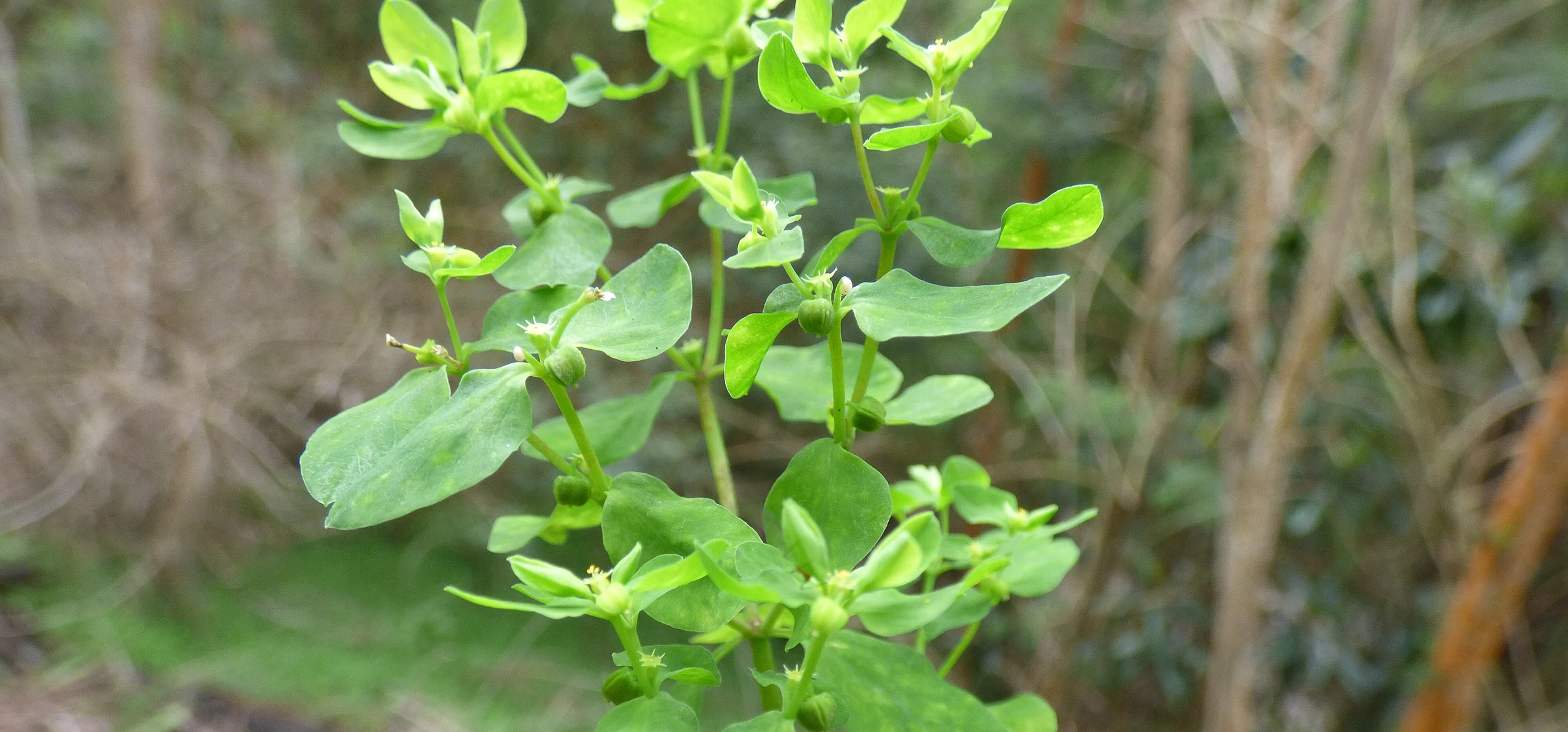
Petty Spurge
Euphorbia peplus
Family · Euphorbiaceae
Petty spurge's milky sap irritates skin and eyes, reseeds from a dormant seed bank, and was once refined into the actinic keratosis drug Picato.
Euphorbia peplus
Plant profile
- WateringModerateWater every 10 days
- Light exposureIndirect light
Growth
- Family
- Euphorbiaceae
- Life cycle
- Annual
- Growth speed
- 6/10
- Mature size
- 5–20 cm
- Flowering
- Tiny greenish flowers in cup-shaped cyathia, nearly year-round in mild climates
- Propagation
- Seed
DormancyLate-fall seed lies dormant over winter and germinates the following spring (UC IPM)
Time to maturityFlowers within weeks of germination, nearly year-round where winters stay mild
Soil & climate
- Soil types
- chalk, clay, loam, sand
- Drought tolerance
- No
Light & Placement
- Origin
- Mediterranean to Somalia and Europe to Western Himalaya (naturalized worldwide)
- Where to place it
- greenhouse benches
- nursery pots kept under cover
- shady flower beds
- disturbed cultivated ground
- moist garden borders
- nursery containers
Safety
- Toxicity
- HumansToxic
Invasive speciesNaturalized worldwide outside its native range as a common garden and nursery weed (RHS, POWO).
Data fromGBIF: Euphorbia peplus L.POWO: Euphorbia peplus L.RHS: Euphorbia peplus (petty spurge)UC IPM: Spotted Spurge and Other SpurgesPurdue University Clinical Drug Experien
Where it grows
World distribution
Petty Spurge is native to 45 countries: Albania, Algeria, Austria, Belarus, Belgium, Bulgaria, Croatia, and Czechia….GBIF records 310,549 documented identifications across 126 countries, with the largest concentrations in United Kingdom, France, and Netherlands.
- Albania
- Algeria
- Austria
- Belarus
- Belgium
- Bulgaria
- Croatia
- Czechia
- Egypt
- Eritrea
- Estonia
- Finland
Show 33 more countriesShow fewer countries
- France
- Georgia
- Germany
- Greece
- Hungary
- Iceland
- India
- Iran
- Iraq
- Italy
- Lebanon
- Libya
- Morocco
- Netherlands
- Norway
- Oman
- Pakistan
- Palestinian Territories
- Poland
- Portugal
- Romania
- Russia
- Saudi Arabia
- Somalia
- Spain
- Sudan
- Sweden
- Switzerland
- Tunisia
- Türkiye
- Ukraine
- United Arab Emirates
- Yemen
Yellow to orange dots: concentration of documented identifications per country. Green countries: sourced native range. Source: GBIFNative range from POWO (Kew).
Euphorbia peplus is a small, pale green weed with cup-shaped flower clusters that turns up uninvited in flower beds, vegetable rows and nursery pots, usually wherever the soil stays a little moist and shaded. Snap a leaf or stem and it weeps a thin milky sap within seconds, and that sap is the whole story of the plant: caustic enough to irritate skin and eyes, and also the raw material once refined into a licensed skin-cancer drug. The plant itself is unremarkable to look at, low and branching, but the sap changes how you should handle it, whether you are hoeing it out of a border or wondering why anyone would extract anything from a weed this small.
Identifying Petty Spurge in Beds and Pots
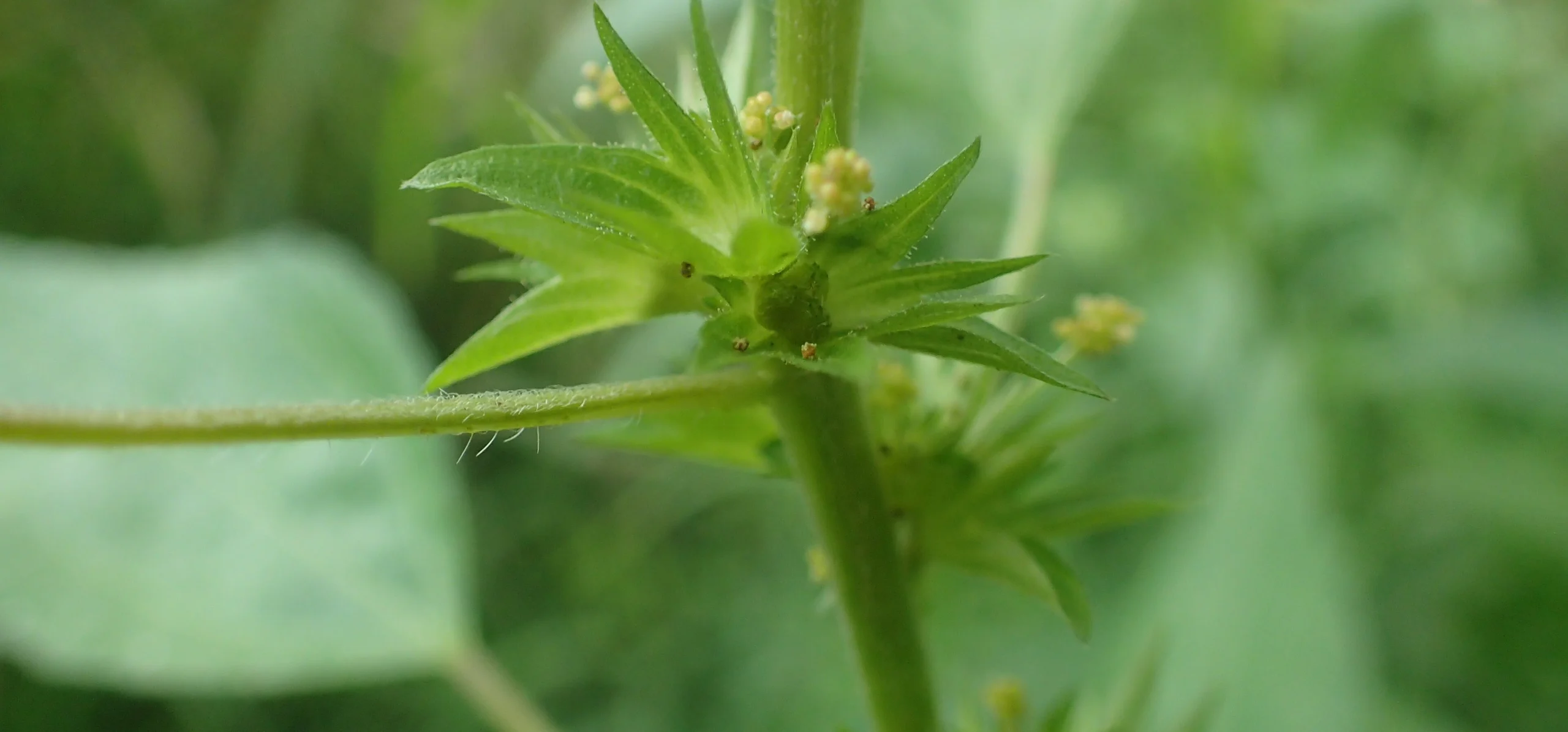
Euphorbia peplus stays low and branching, typically 5 to 20 cm tall, according to the Royal Horticultural Society's plant record, with smooth, hairless stems and oval leaves up to 3 cm long. What sets it apart from other small weeds is the flower structure: instead of ordinary petals, the stem tips carry small pale green flowers held inside triangular bracts, the cup-shaped cyathia typical of the genus Euphorbia. Cut a leaf or stem and it weeps a thin white latex almost immediately, the fastest field check that what is growing in the pot or border is petty spurge rather than a look-alike seedling.
The Caustic Sap: Handle It With Gloves
Every part of the plant carries the same latex that oozes from a cut leaf, and the RHS plant record rates it plainly: irritant to skin and eyes, and harmful if eaten. The University of California's Statewide IPM Program is more specific about the handling risk, recommending gloves whenever a plant is pulled by hand because the sap is a skin irritant. The bigger risk is the eyes rather than the skin: a rubbed eye after weeding can carry latex onto the eye's surface, so it is worth washing hands before touching your face during and after a weeding session, and keeping the plant away from children who might snap a stem out of curiosity.
From Weed Sap to a Licensed Skin-Cancer Drug
The same caustic latex that calls for gloves in the garden turned out to contain a genuinely useful molecule. Purdue University's Clinical Drug Experience Knowledgebase records that ingenol mebutate, a diterpene ester isolated from Euphorbia peplus sap, was developed into a prescription gel marketed as Picato and approved by the FDA to treat actinic keratosis, a precancerous skin lesion, applied under a doctor's direction for only two to three days per course. It is a striking arc for a plant most gardeners meet only as something to hoe out: the same chemistry that makes the raw sap dangerous to touch is what gives the purified drug its effect on abnormal skin cells. That gap is exactly why the plant is not a home remedy. A pharmaceutical gel is a standardized, measured concentration applied under medical supervision to a lesion a doctor has already assessed; sap straight off a cut stem is neither standardized nor diagnostic, and rubbing it on a mole, spot or lesion at home is dangerous. It can chemically burn healthy skin, it tells you nothing about what the lesion actually is, and it delays the biopsy a genuine skin cancer needs. Leave the drug to the pharmacy and the plant to the compost bin.


Where It Turns Up: Flower Beds, Nursery Pots and Disturbed Ground
UC IPM's pest note on garden spurges lists petty spurge as a cool-season annual most common in shady, moist flower beds, unlike the more sun-loving, ground-hugging spurges that spread across open sunny ground. That preference for shade and moisture also explains why it is such a persistent nursery pest: potted stock kept under cover, on greenhouse benches and in nursery containers, offers exactly the sheltered, evenly damp conditions its seed favors, and a single flowering plant tucked at the base of a container can seed an entire batch before anyone notices. Outside pots, it favors the same disturbed, cultivated ground as most garden weeds, tolerating a wide range of soils from chalk and clay to loam and sand, according to the RHS.
Hoeing, Hand-Pulling and Mulch
Control is straightforward if you catch it before it flowers, and both UC IPM and the RHS agree on the core rule: remove plants before seed sets. Hand-pulling works, but UC IPM warns that pulled plants often snap at the stem and leave the root behind to resprout, so a hoe cut just below the soil surface tends to be more reliable than a tug. Gloves are not optional here: UC IPM specifically recommends them because the sap is a skin irritant, and wearing them for a five-minute weeding pass is easier than treating a rash afterward. Mulch is the longer-term fix, since petty spurge seed needs light to germinate and, per UC IPM, will not sprout once buried deeper than about half an inch; a layer of fine organic mulch at least 2 inches deep, or 3 to 4 inches if the material is coarse bark, blocks that light and starves new flushes before they start.
The Seed Bank Behind a Recurring Weed
A bed that grows petty spurge once tends to grow it again, because the seed does not germinate all at once. UC IPM's pest note explains that seed produced in late fall mostly lies dormant over winter and germinates the following spring, so a flush pulled in April can be followed by a second wave from seed the same plants dropped the previous autumn. The seed is also shallow-germinating: it needs light to sprout and stops germinating once turned much deeper than the surface layer, which is exactly why a light hoeing that only stirs the top inch of soil can trigger a new flush rather than prevent one. The practical upshot is the same as for most annual weeds with a seed bank: one thorough weeding rarely finishes the job, and mulch matters more in year two and three of control than in the first season.
Toxicity to Pets and People
Petty spurge does not appear on the ASPCA's toxic or non-toxic plant lists for cats, dogs or horses, so there is no ASPCA classification to rely on either way for pet safety. That is not the same as a clean bill of health: the RHS record for the species rates the sap as irritant to skin and eyes and harmful if eaten, and that latex chemistry does not stop being irritant just because the species is missing from one database. Treat it the way you would treat any unlisted plant with a caustic sap: keep pets and small children from chewing on it, and pull it with gloves rather than bare hands.
Test your plant knowledge
Tap a card to flip it and reveal the answer.
Petty spurge's sap is a skin and eye irritant, so gloves should be worn when pulling it. Tap to reveal ✓ True
Rubbing this plant's raw sap on a skin lesion is a safe home version of the ingenol mebutate skin-cancer drug. Tap to reveal ✕ False
Petty spurge seed needs light to germinate, so seed buried more than about half an inch deep mostly fails to sprout. Tap to reveal ✓ True
Once every mature petty spurge plant is pulled from a bed, no more seedlings should appear because the seed bank is exhausted. Tap to reveal ✕ False
The ASPCA lists petty spurge as toxic to cats, dogs and horses. Tap to reveal ✕ False
Sources
References consulted for this guide
- GBIF: Euphorbia peplus L.gbif.org
- POWO: Euphorbia peplus L.powo.science.kew.org
- RHS: Euphorbia peplus (petty spurge)rhs.org.uk
- UC IPM: Spotted Spurge and Other Spurges (Pest Notes 7445)ipm.ucanr.edu
- Purdue University Clinical Drug Experience Knowledgebase: Ingenol Mebutatecdek.pharmacy.purdue.edu
- Reference entity : Wikipédiaen.wikipedia.org