Poinsettia
Euphorbia pulcherrima
Family · Euphorbiaceae
Poinsettia (Euphorbia pulcherrima) care: bright indirect light, water only when topsoil is dry, and the 16-hour darkness routine that turns bracts red again.
Euphorbia pulcherrima
Plant profile
- WateringModerateWater every 7 days
- Light exposureIndirect light
- Ideal temperature10–21 °C
- Hardiness zoneUSDA 9–11
Growth
- Family
- Euphorbiaceae
- Life cycle
- Perennial
- Growth speed
- 7/10
- Mature size
- 91–366 cm
- Spread
- 91–244 cm
- Flowering
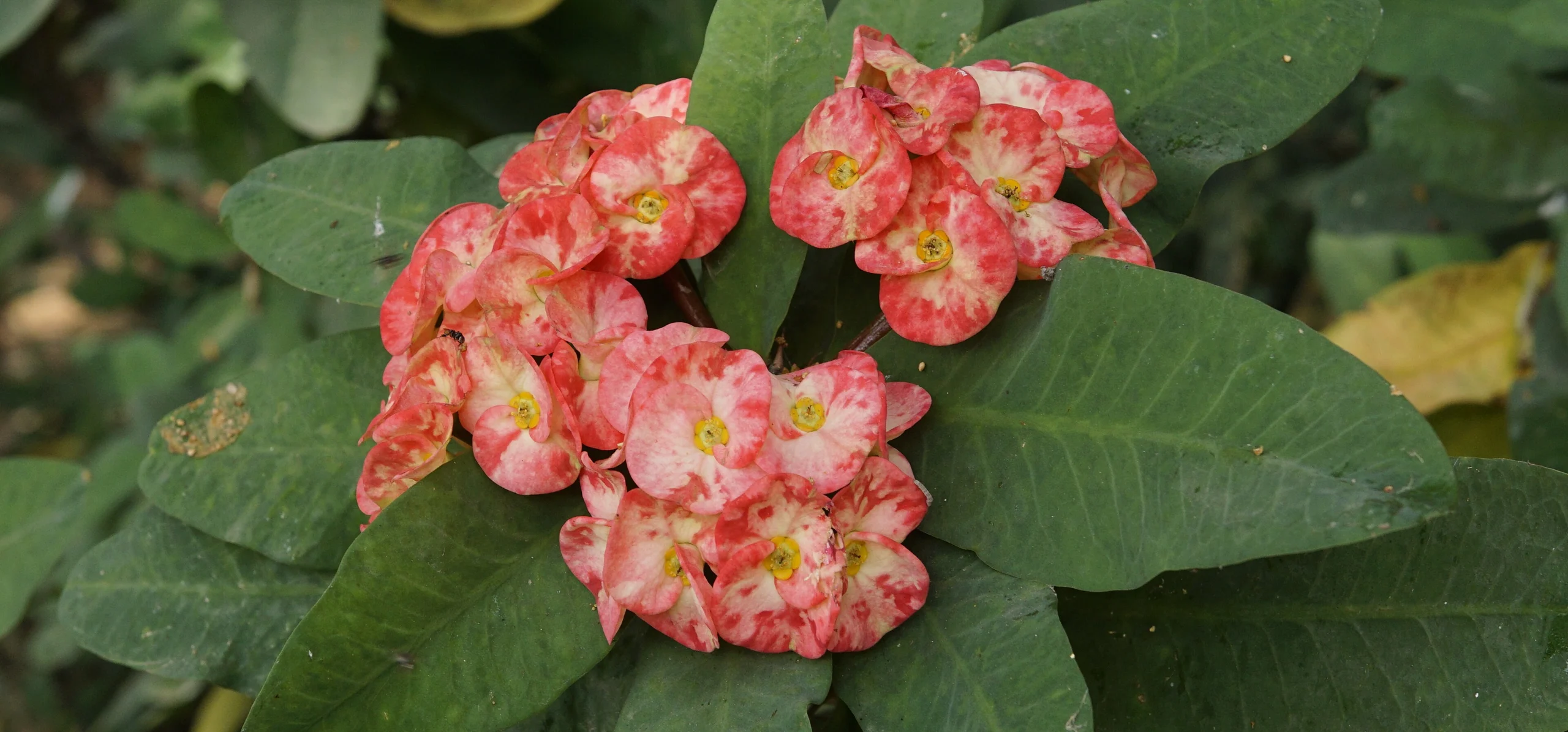
- Bracts color under short winter days; true flowers are small yellow cyathia
- Propagation
- Cutting
DormancyRests after bracts fade in late winter until new growth resumes in spring
Time to maturityCommercial cuttings finish as flowering pot plants in a few months under short-day forcing
Soil & climate
- Soil pH
- pH 6–8
- Soil types
- loam, peat, well-drained
- Drought tolerance
- No
Light & Placement
- Origin
- Pacific slope of Mexico to Guatemala
- Where to place it
- east or south-facing window, out of direct midday sun
- bright room away from drafts and heaters
- frost-free bed with 4 to 5 hours of sun (zones 9b to 11)
- sheltered spot away from streetlights that disrupt the dark cycle
- container only slightly larger than the root ball, with drainage
- no saucer left holding standing water
Safety
- Toxicity
- CatsToxic
- DogsToxic
- HorsesToxic
- HumansToxic
Data fromGBIF: Euphorbia pulcherrima Willd. ex KlPOWO: Euphorbia pulcherrima Willd. ex KlASPCA: Toxic and Non-Toxic Plants, PoinsNC State Extension: Euphorbia pulcherrimUniversity of Minnesota Extension: Growi
Where it grows
World distribution
Poinsettia is native to 2 countries: Guatemala and Mexico.GBIF records 4,803 documented identifications across 130 countries, with the largest concentrations in Mexico, Brazil, and India.
- Guatemala
- Mexico
Yellow to orange dots: concentration of documented identifications per country. Green countries: sourced native range. Source: GBIFNative range from POWO (Kew).
A poinsettia that arrives as a holiday gift is nearly always already root-bound in its foil-wrapped nursery pot, and the two things that strip its color fastest in the first weeks are a cold ride home and a saucer left full of drained water. Euphorbia pulcherrima is native to the seasonally dry Pacific slope of Mexico and Guatemala, not a frost country, so a single chilly draft near a door or window can trigger leaf and bract drop within days. Keep it out of moving cold air, water only when the topsoil feels dry, and a healthy plant holds its color for eight to ten weeks past purchase, sometimes longer.
Choosing a Healthy Plant at the Store
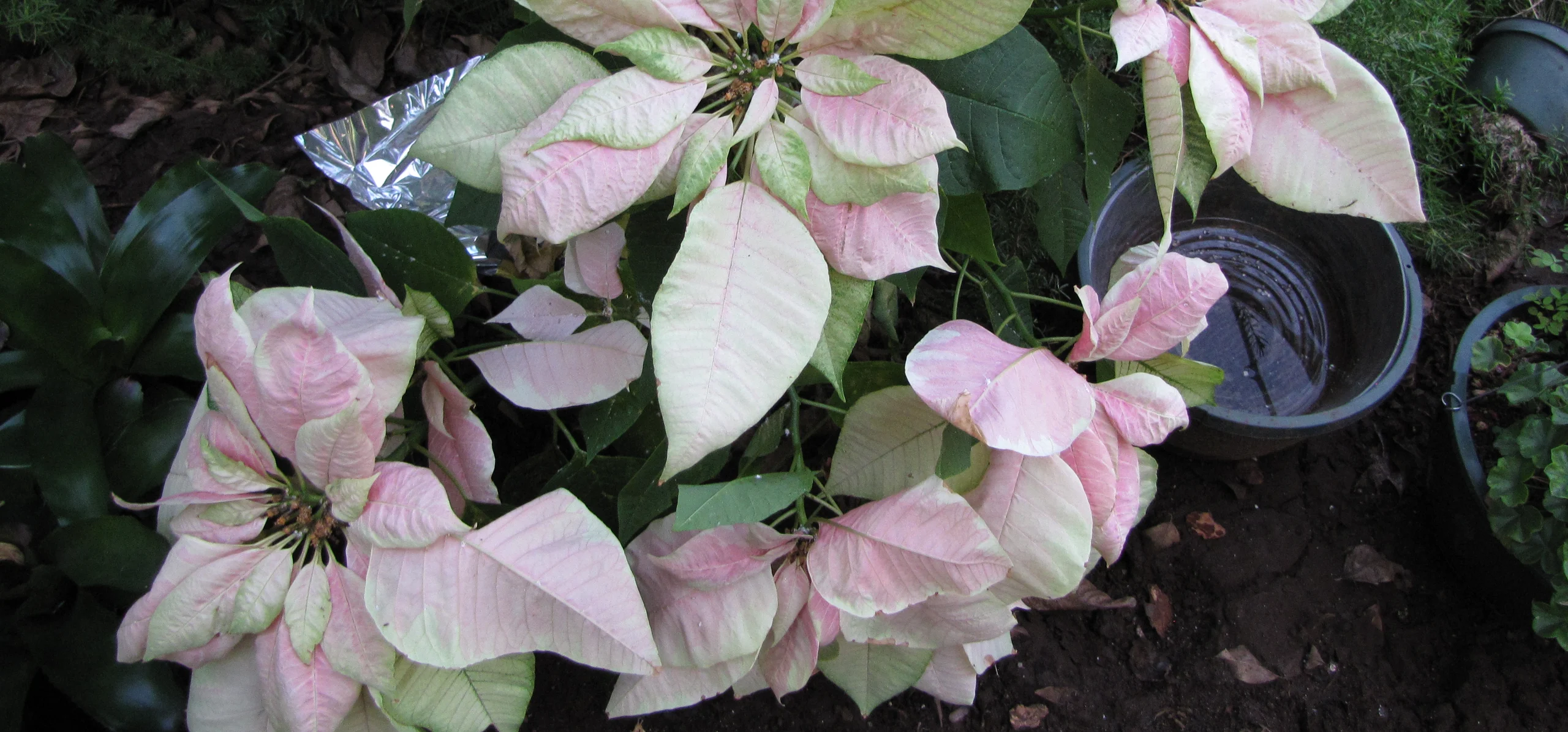
Look past the colored bracts, the leaves everyone mistakes for petals, and check the true flowers instead: the small yellow-green button clusters, called cyathia, sitting at the center of each rosette. Tight, barely open cyathia mean the plant was finished recently and has weeks of display ahead; cyathia that have already shed their pollen mean the show is closer to fading no matter how vivid the bracts still look. Skip any plant kept outdoors on a cold pavement or just inside a drafty shop entrance, a single cold night before purchase causes damage that only becomes visible two or three days later at home.
Light and Warmth Indoors
Indoors, poinsettia wants partial shade rather than full sun, roughly two to six hours of direct light a day according to NC State Extension, or a spot with bright indirect light for most of the day. An unobstructed east or south-facing window usually supplies this without scorching the bracts. Room temperatures around 18 to 21°C keep it comfortable, and both a spot too close to a heat register and a windowsill pressed against a cold night pane produce the same symptom, leaves yellowing at the base of the stem before dropping.

Watering Without Root Rot
Press a finger into the potting mix before watering; only water once the top layer feels dry, then water thoroughly until it drains, and empty the decorative foil sleeve or saucer within the hour. Poinsettia roots rot quickly in standing water, and a plant left sitting in its own runoff is one of the most common ways these plants decline indoors. Underwatering shows as mild wilting that recovers within an hour of a proper soak; overwatering shows as lower leaves yellowing and dropping while the mix still feels damp, and that distinction matters more than sticking to a fixed schedule.
Feeding and Repotting After the Bracts Fade
Skip fertilizer while the bracts are in color, feeding a blooming plant does nothing for the display. Once color fades and new growth resumes, typically in late winter, feed every few weeks through spring and summer with a balanced fertilizer diluted to about half strength. If repotting, move up to a pot only a few centimetres wider using a loam-based mix rich in organic matter, compost, leaf mold or peat moss, the kind of free-draining, humus-rich soil NC State Extension lists for this species.
Forcing the Bracts to Color Again
Poinsettia is a short-day plant, it only develops colored bracts after several weeks of long, uninterrupted nights, which is why commercial growers can time an entire crop to finish for a single week in December. University of Minnesota Extension recommends starting on or near the 21st of September: give the plant about 16 hours of complete, unbroken darkness, a closet or a box set over it works, and 8 hours of bright light every day without exception, since even a hallway light switched on for a minute during the dark period resets the clock. Keep the cycle going for roughly eight weeks; by late November the bracts begin showing color, and once that color has set, move the plant back to a bright window with about six hours of direct light and stop the dark treatment.
| Period | What to do |
|---|---|
| Late September | Start 16h unbroken darkness nightly, 8h bright light by day |
| October to mid-November | Continue the dark cycle without any interruption |
| Late November | First bract color visible; keep the cycle going a little longer |
| Early December onward | Stop the dark treatment; move to a bright window, about 6h direct light |
Pests to Watch For
Whitefly, mealybugs and spider mites are the pests NC State Extension lists most often on this species, along with soft scale on older, woodier stems. A cloud of tiny white insects lifting off the underside of a leaf when the stem is disturbed is whitefly; small cottony tufts tucked into leaf axils are mealybugs; fine pale stippling on the upper leaf surface with faint webbing near the growing tip points to spider mites, which tend to build up fastest in the same hot, dry air that also stresses the plant. Isolating a newly bought plant from other houseplants for a week or two makes any of these far easier to catch before they spread.
Is It Actually Poisonous? Separating Fact From Myth
The story that a poinsettia leaf can kill a child or a pet has circulated for decades and outruns what poison control data actually shows. The ASPCA lists Euphorbia pulcherrima as toxic to cats, dogs and horses, but its own description of the clinical picture is irritation of the mouth and stomach, sometimes vomiting, and the entry notes explicitly that the plant is generally over-rated in toxicity. The milky latex sap in every part of the plant is the real irritant for people too, capable of causing contact dermatitis on skin or a sting if it reaches the eyes, and chewing a leaf is more likely to cause a mild stomachache than anything serious. Keep fallen leaves away from a pet that chews on houseplants and wash sap off skin promptly, treating it as an irritant rather than a poison to fear.
Growing It Outdoors in Frost-Free Climates
Outside the pot-and-holiday context, Euphorbia pulcherrima is a shrub native to the seasonally dry tropical forests of the Pacific slope from Mexico to Guatemala, and it only survives outdoors year-round in USDA hardiness zones 9b to 11, where damaging frost is rare or absent. Planted in the ground there it can reach roughly 0.9 to 3.7 metres tall with a similar spread within a few seasons, far larger than anything grown in a pot, and it keeps blooming on its own short-day cycle without any manual dark treatment since the ambient night length already does the work. A single hard freeze kills the above-ground growth outright, so gardeners at the cooler edge of that range mulch the root zone heavily each winter and expect the plant to resprout from the base once the soil warms.
Test your plant knowledge
Tap a card to flip it and reveal the answer.
The colored parts of a poinsettia are modified leaves called bracts, not petals. Tap to reveal ✓ True
A poinsettia can be left sitting in a foil sleeve full of drained water without any harm to the roots. Tap to reveal ✕ False
To make the bracts color again, the plant needs about 16 hours of complete, unbroken darkness a night for roughly eight weeks. Tap to reveal ✓ True
The ASPCA classifies poinsettia as so toxic that a single chewed leaf is typically fatal to cats and dogs. Tap to reveal ✕ False
Euphorbia pulcherrima survives outdoors year-round only in nearly frost-free climates, roughly USDA zones 9b to 11. Tap to reveal ✓ True
Sources
References consulted for this guide
- GBIF: Euphorbia pulcherrima Willd. ex Klotzschgbif.org
- POWO: Euphorbia pulcherrima Willd. ex Klotzschpowo.science.kew.org
- ASPCA: Toxic and Non-Toxic Plants, Poinsettiaaspca.org
- NC State Extension: Euphorbia pulcherrima (Poinsettia)plants.ces.ncsu.edu
- University of Minnesota Extension: Growing and Caring for Poinsettiaextension.umn.edu
- Reference entity : Wikipédiaen.wikipedia.org