Butterfly Bush
Buddleja davidii
Family · Scrophulariaceae
Butterfly bush flowers on new wood, so a hard spring prune is what makes it bloom big. Deadheading, sterile cultivars, and where it is regulated as a weed.
Buddleja davidii
Plant profile
- WateringModerateWater every 10 days
- Light exposureFull sun
- Hardiness zoneUSDA 5–9
Growth
- Family
- Scrophulariaceae
- Life cycle
- Perennial
- Growth speed
- 8/10
- Mature size
- 150–370 cm
- Spread
- 120–460 cm
- Flowering
- Cone-shaped, honey-scented flower spikes from midsummer to early autumn
- Propagation
- Cutting
- Seed
Dormancydeciduous; stems can die back to the base in cold winters and resprout
Time to maturityflowers in its first year from a cutting; reaches full size within 2-3 growing seasons
Soil & climate
- Soil types
- chalk, loam, sand, poor or rocky soil, disturbed or waste ground
- Drought tolerance
- Yes
Light & Placement
- Origin
- Tibet to central and southern China
- Where to place it
- sunny mixed border
- gravel garden
- informal hedge or screen
- pollinator border
- large container for compact sterile cultivars
Safety
- Toxicity
- Not listed by the ASPCA as toxic or non-toxic to pets
- Pet safe
- Yes
Invasive speciesNoxious weed with restricted sale in Oregon and Washington; naturalized invasive alien species in parts of Europe. Choose a sterile or low-fertility cultivar where regulated.
Data fromGBIF Backbone Taxonomy: Buddleja davidiiPlants of the World Online (Kew): BuddleRHS: Buddleja davidii (butterfly bush)NC State Extension Gardener Plant ToolboMissouri Botanical Garden Plant Finder:
Where it grows
World distribution
Butterfly Bush is native to a single country: China.GBIF records 366,481 documented identifications across 110 countries, with the largest concentrations in United Kingdom, Switzerland, and France.
- China
Yellow to orange dots: concentration of documented identifications per country. Green countries: sourced native range. Source: GBIFNative range from POWO (Kew).
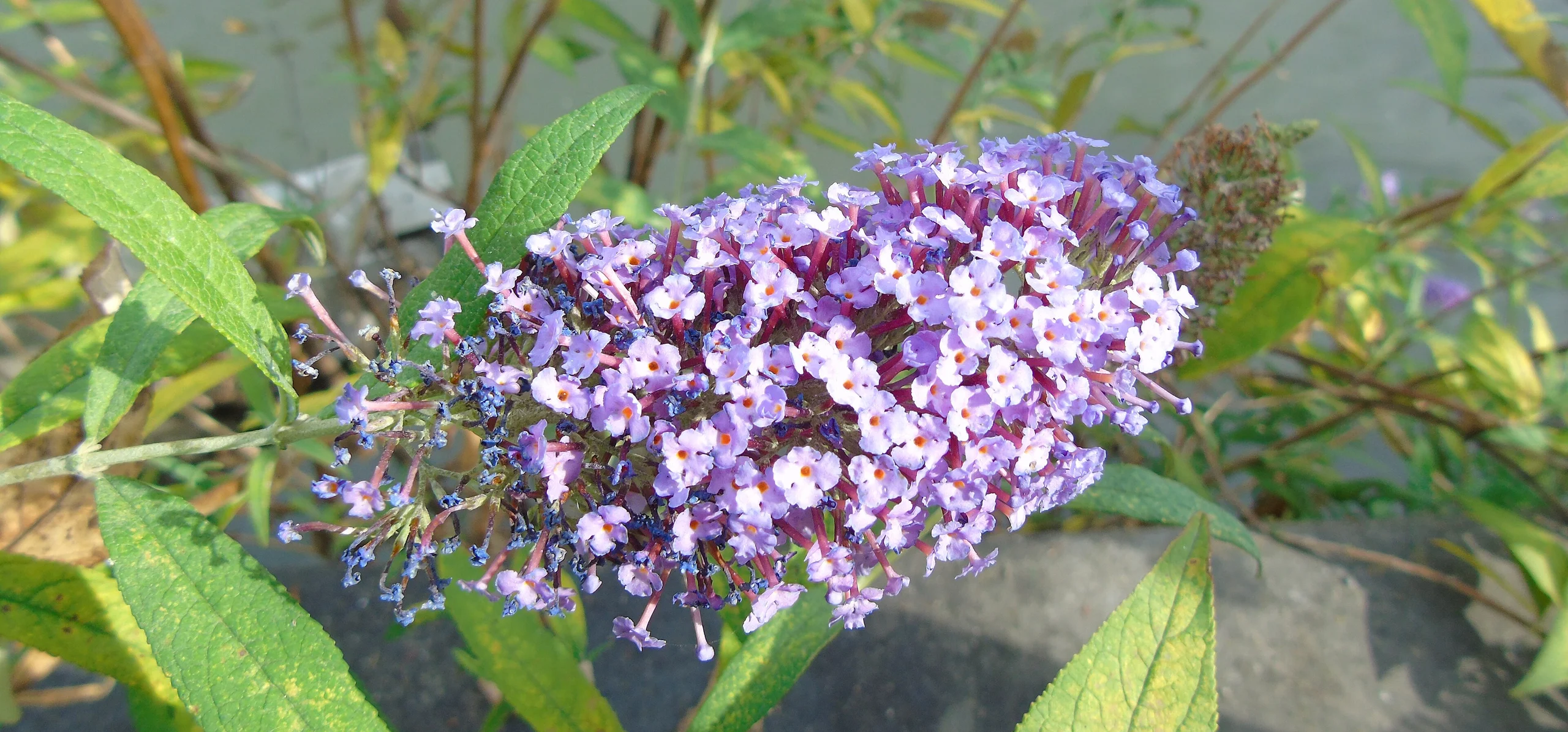
Buddleja davidii is a fast, woody shrub grown for its cone-shaped flower spikes, tapering clusters of tiny, orange-throated florets in purple, pink or white that open through summer and carry a distinct honey scent. It flowers on wood produced the same spring, which is the single fact that governs how you prune it: cutting the whole plant back hard in late winter or early spring does not cost you a season of bloom, it is what produces the biggest, showiest spikes. The trade-off for that vigor is a seed output large enough that the species is now a regulated weed across parts of its introduced range, so what you do with the spent flower heads matters almost as much as how you cut the stems. Check whether you were sold the true species or a compact, low-seed hybrid before deciding how strict your deadheading needs to be.
Native Range and Why It Escapes Gardens
Buddleja davidii is native from Tibet to central and southern China, growing on open, well-drained ground rather than in closed forest. That preference for bare, disturbed soil is exactly what railway ballast, demolition rubble, quarry faces and motorway verges offer in the places it has been planted since the late nineteenth century, which is why it colonizes wasteland so readily once seed escapes a garden. The same trait that makes it forgiving for a beginner, tolerating poor, stony, low-fertility soil that would stunt most flowering shrubs, is what lets it establish on sites nothing else will touch.
Light, Soil and Planting
Give it full sun; flowering drops off noticeably in shade and the arching stems get thin and floppy reaching for light. It is not fussy about soil pH or fertility and grows in chalk, loam or sand, but it must have sharp drainage, since the same rocky-slope origin that makes it drought-tolerant once established also makes it intolerant of sitting in wet ground over winter. Plant in autumn or spring, water it in, and skip the temptation to dig in rich compost: soft, over-fed growth is more prone to winter dieback than growth from a lean site.


The Hard Spring Prune
Because flowers form on wood grown that same year, butterfly bush takes a harder annual cut than almost any other garden shrub without losing a single bloom. In late winter or very early spring, before new growth starts, cut every stem back to a low framework roughly knee height, 15 to 30 cm above the ground, removing the previous year's growth entirely. Left unpruned, the plant turns into a tall, woody, gappy shrub with small flower spikes held out of easy view; pruned hard every year, it stays a manageable 1.8 to 2.4 m and rewards you with the largest spikes it is capable of. Skipping the hard cut for a year or two is not fatal, but the plant then needs a harder renovation prune to get back to a tidy shape.
Deadheading to Stop the Seed Bomb
A single spent flower panicle can carry an enormous number of seeds, tens of thousands from one cluster has been recorded in cultivar trials, and a mature, unpruned plant carries dozens of panicles by late summer. Snip each flower spike off as it browns and fades, cutting back to a strong side shoot or a healthy pair of leaves rather than leaving a bare stub. Beyond keeping the plant tidy, this is the single most effective thing you can do to stop volunteer seedlings from turning up in gravel, gutters and neighboring beds the following spring, and it usually triggers a smaller second flush of flowers into early autumn.
Where It Is Regulated as a Weed
Butterfly bush escaped so successfully from West Coast gardens that both Oregon and Washington classify the species as a noxious weed and restrict sale of the straight species and most seed-producing cultivars; Oregon requires any cultivar sold in the state to be tested and shown to set no more than 2 percent viable seed. It has also naturalized widely across parts of Europe, spreading along railway lines and rubble sites in Britain since it first escaped cultivation there in the early twentieth century, and is treated as a naturalized invasive alien species in several other European countries even where it is not under a formal sale ban. Check your local county or state extension list before planting the species itself near wild land, a waterway or an unmanaged verge.
Sterile Cultivars for Regulated Areas
Breeders responded to the weed listings with hybrids selected for little or no viable seed while keeping the same nectar-rich spikes. The Lo & Behold series (including 'Blue Chip' and 'Ice Chip'), the Flutterby series, and cultivars such as 'Miss Molly' and 'Miss Ruby' were bred and trial-tested to fall under the 2 percent viable-seed threshold that Oregon and Washington use to approve a cultivar for sale, and most also stay compact, 60 to 120 cm, which suits a small border or a large container better than the species' full size. These are the cultivars to plant if you are anywhere the wild species is discouraged or if you simply want the flowers without the annual seedling patrol.
Nectar Powerhouse, Not a Caterpillar Host
Adult butterflies, moths and bees mob a flowering spike for its abundant nectar, which is the entire basis of the plant's common name and its reputation as a pollinator magnet. What it does not do, because it evolved in Asia alongside a different set of insects, is feed a single native butterfly or moth caterpillar; no North American or European species uses its leaves as larval food the way monarchs depend on milkweed or swallowtails depend on native umbellifers. A garden built entirely around butterfly bush draws in passing adults but raises no new butterflies at all, so treat it as a nectar plant to pair with regional host plants, not a replacement for them.
Common Mistakes
The most common mistake is planting the full-size species as an informal hedge and then never pruning it hard, which produces a leggy, bare-legged shrub with modest flowers instead of the dense, floriferous mound the plant is capable of. The second is skipping deadheading and then being surprised by dozens of seedlings in the gravel and border edges the next spring; the plant did not do anything unusual, it just went unchecked. The third is planting the true species where a local extension office or noxious-weed board discourages it, when a sterile cultivar delivers the same flower spikes with almost none of the liability. In colder gardens near the edge of its hardiness range, expect stems to die back to the base most winters; treat it like a woody perennial that gets cut hard back every spring anyway, and the dieback barely matters.
Test your plant knowledge
Tap a card to flip it and reveal the answer.
Buddleja davidii flowers on wood grown that same spring, so a hard prune in late winter does not sacrifice that year's blooms. Tap to reveal ✓ True
Deadheading spent flower spikes has no real effect on how many seedlings appear around the plant. Tap to reveal ✕ False
Every butterfly bush cultivar sold in nurseries produces roughly the same amount of viable seed as the wild species. Tap to reveal ✕ False
Because adult butterflies feed heavily on its nectar, butterfly bush also serves as a larval host plant for their caterpillars. Tap to reveal ✕ False
Buddleja davidii is classified as a noxious weed with restricted sale in some US states, including Oregon and Washington. Tap to reveal ✓ True
Sources
References consulted for this guide
- GBIF Backbone Taxonomy: Buddleja davidii Franch.gbif.org
- Plants of the World Online (Kew): Buddleja davidii Franch.powo.science.kew.org
- RHS: Buddleja davidii (butterfly bush)rhs.org.uk
- NC State Extension Gardener Plant Toolbox: Buddleja davidiiplants.ces.ncsu.edu
- Missouri Botanical Garden Plant Finder: Buddleja davidiimissouribotanicalgarden.org
- Reference entity : Wikipédiaen.wikipedia.org