Pot Marigold
Calendula officinalis
Family · Asteraceae
Pot marigold thrives in full sun and poor, free-draining soil. Covers siting, watering, deadheading for more blooms, seed sowing, pests and pet safety.
Calendula officinalis
Plant profile
- WateringLittleWater every 10 days
- Light exposurePartial sun
Growth
- Family
- Asteraceae
- Life cycle
- Annual
- Growth speed
- 8/10
- Mature size
- 10–50 cm
- Spread
- 10–50 cm
- Flowering
- Summer through autumn until the first hard frost
- Propagation
- Seed
DormancyNone; usually grown as a fast annual and cleared after the first hard frost
Time to maturityBlooms the same season it is sown, from summer into autumn (RHS)
Soil & climate
- Soil types
- chalk, loam, sand
- Drought tolerance
- Yes
Light & Placement
- Origin
- Western Mediterranean
- Where to place it
- sunny or lightly shaded border
- cutting garden bed
- vegetable garden edging
- cottage garden bed
- compact containers with peat-free, well-drained potting mix
Safety
- Toxicity
- CatsSafe
- DogsSafe
Data fromCalendula officinalis L., GBIF Backbone RHS: Calendula officinalis (common marigPOWO: Calendula officinalis L.ASPCA: Pot Marigold toxicity to cats and
Where it grows
World distribution
Pot Marigold is native to a single country: Spain.GBIF records 53,151 documented identifications across 117 countries, with the largest concentrations in United Kingdom, Germany, and Belgium.
- Spain
Yellow to orange dots: concentration of documented identifications per country. Green countries: sourced native range. Source: GBIFNative range from POWO (Kew).
Pot Marigold, Not French or African Marigold
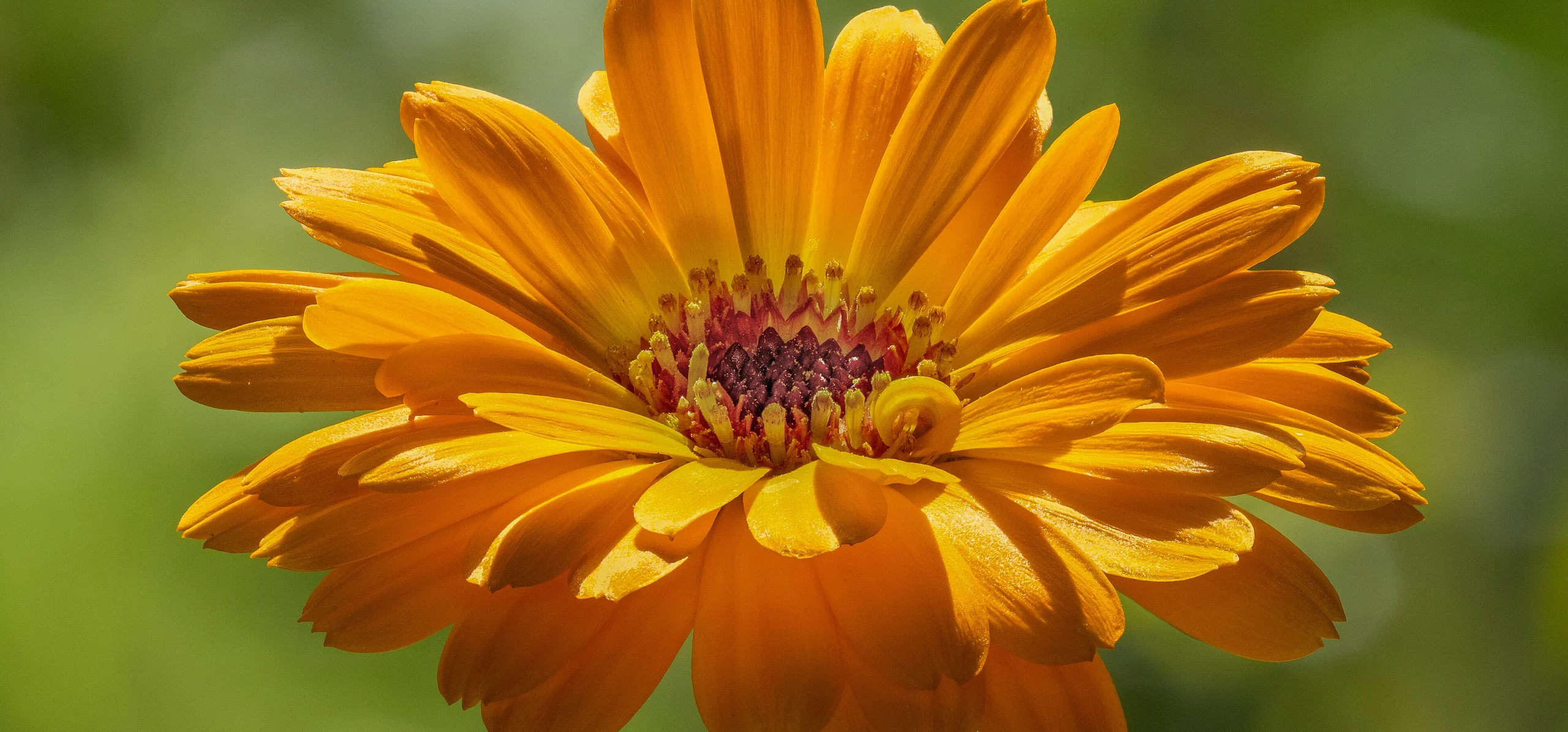
If a seed packet or plant tag just says "marigold," check for Calendula officinalis before you plant it: the French and African marigolds sold under the same common name belong to the unrelated genus Tagetes and want different soil and spacing. Pot marigold is a fast, bushy annual or biennial native to the western Mediterranean, with aromatic, faintly sticky mid-green leaves and daisy-like flowers ranging from pale yellow to deep orange. The RHS lists it as fast-growing, reaching 10 to 50 cm tall with a similar spread, so one plant fills a surprising amount of border in a single season. Its edible, faintly bitter petals and long history as a dye plant and skin remedy explain why it still turns up in cottage gardens and kitchen beds alike.
Sun and Site Selection
Pot marigold flowers best in full sun but the RHS also lists partial shade as acceptable; expect fewer, smaller blooms and looser, leggier growth the further it sits from direct light. It tolerates exposed or sheltered positions and any aspect, east, south or west facing, which makes it a forgiving choice for the awkward corners where fussier annuals sulk. Give plants room to breathe: crowding several together in a tight bed traps humidity around the foliage and encourages the powdery mildew that shows up in wet summers, so space clumps for airflow rather than packing them in for instant colour.
Soil and Planting
This is a plant of poor, thin Mediterranean ground, and rich, heavily fed soil buys soft, floppy stems at the expense of flowers. The RHS lists chalk, loam and sand as suitable soil types, with acid, neutral or alkaline pH all tolerated; the one firm requirement is drainage, since standing winter or spring wet rots the roots faster than cold ever will. On heavy clay, raise the bed a few centimetres or work in coarse grit before sowing. Skip fertiliser at planting time: a season on lean soil produces a tougher, more compact, more floriferous plant than a rich one ever does.


Watering and Drought Tolerance
Established pot marigold is drought tolerant, one of the traits that makes it a reliable filler in a border that only gets attention once a week. Water new sowings and young seedlings regularly while roots establish, then taper off: once plants are a few weeks old, water only when the top few centimetres of soil have dried out, and let established clumps coast through short dry spells without intervention. Overwatering does more harm than an occasional missed week, soggy soil around the crown is a faster route to root and crown rot than drought stress ever is.
Deadheading, Pinching and Keeping the Bloom Going
Pot marigold flowers from summer into autumn and keeps going until the first hard frost, but only if spent flowers are removed before they set seed. Snap or snip faded blooms off at the base of the stem every few days; left in place, the plant channels its energy into ripening seed heads instead of opening new flowers, and the display tails off within weeks. Pinching out the soft terminal shoots on young plants, once they carry three or four sets of true leaves, pushes a bushier, more floriferous habit instead of a single tall, leggy stem, a five-minute job that pays off for the rest of the season.
Propagation and Self-Seeding
Seed is the practical way to propagate pot marigold, and the RHS recommends sowing in situ in spring or autumn rather than raising transplants; the large, curved seeds germinate readily where they are to flower. Left with a few seed heads at the end of the season, it also reseeds itself readily, and volunteer seedlings often appear the following spring without any help. That makes it an easy plant to keep going year after year without buying fresh seed, though it also means an autumn tidy that removes unwanted seed heads is the only real control if you do not want it spreading through neighbouring beds or gravel paths.
Pests, Diseases and Safety Around Pets
Pot marigold is comparatively trouble-free. Aphids and whiteflies are the pests most likely to cluster on soft new growth, with occasional visits from flea beetles, spider mites and slugs on young seedlings; a strong jet of water dislodges a light aphid infestation without reaching for a spray. The main disease risk is powdery mildew, a grey-white coating that develops on foliage during humid, wet summers, especially where plants are crowded; thin the planting and strip off badly affected leaves rather than treating with fungicide as a first response. For households with cats and dogs, the ASPCA lists pot marigold as non-toxic to both, so a nibbled petal is not a cause for alarm; horses are not covered by the ASPCA listing for this species, so no claim can be made either way for them.
Test your plant knowledge
Tap a card to flip it and reveal the answer.
Pot marigold stops flowering once summer heat arrives and will not bloom again until spring. Tap to reveal ✕ False
Pot marigold tolerates poor, chalky or sandy soil as long as drainage is good. Tap to reveal ✓ True
Leaving faded flowers on the plant has no effect on how long it keeps blooming. Tap to reveal ✕ False
Pot marigold self-seeds readily and often reappears on its own the following year. Tap to reveal ✓ True
The ASPCA lists pot marigold as toxic to cats and dogs. Tap to reveal ✕ False
Sources
References consulted for this guide
- Calendula officinalis L., GBIF Backbone Taxonomygbif.org
- RHS: Calendula officinalis (common marigold)rhs.org.uk
- POWO: Calendula officinalis L.powo.science.kew.org
- ASPCA: Pot Marigold toxicity to cats and dogsaspca.org
- Reference entity : Wikipédiaen.wikipedia.org