Creeping Bellflower
Campanula rapunculoides
Family · Campanulaceae
Campanula rapunculoides spreads by tuberous roots that regrow from broken fragments and is a Restricted invasive plant in Wisconsin and other states.
Campanula rapunculoides
Plant profile
- WateringModerateWater every 7 days
- Light exposurePartial sun
Growth
- Family
- Campanulaceae
- Life cycle
- Perennial
- Growth speed
- 8/10
- Mature size
- 50–100 cm
- Spread
- 10–50 cm
- Propagation
- Seed
- Division
FloweringNodding, bell-shaped violet-blue flowers in a one-sided raceme, roughly June to August
Dormancydies back to its rhizomes and tuberous roots each winter, resprouting from below ground in spring
Time to maturityreaches flowering size 2 to 5 years after germinating from seed
Soil
- Soil types
- chalky, loamy, sandy
Light & Placement
- Origin
- Europe to Central Asia; introduced and naturalized across much of North America
- Where to place it
- sunny to lightly shaded border
- roadside or disturbed ground
- cottage garden edge
- solid-bottomed container only
Safety
- Pet safe
- No
ToxicityNot listed by the ASPCA for cats, dogs or horses; roots and young leaves have a history of being eaten by humans
Invasive specieslisted as Restricted under Wisconsin's invasive species rule (NR 40) and treated as a noxious weed in other Midwestern states; avoid planting outside its native range and dispose of pulled roots as waste rather than compost
Data fromGBIF: Campanula rapunculoides L.Plants of the World Online (Kew): CampanRHS: Campanula rapunculoides (creeping bMissouri Botanical Garden Plant Finder: University of Minnesota Extension: Creep
Where it grows
World distribution
Creeping Bellflower is native to 29 countries: Albania, Austria, Belarus, Belgium, Bulgaria, Croatia, Czechia, and Denmark….GBIF records 145,030 documented identifications across 70 countries, with the largest concentrations in Germany, Sweden, and France.
- Albania
- Austria
- Belarus
- Belgium
- Bulgaria
- Croatia
- Czechia
- Denmark
- Estonia
- Finland
- France
- Georgia
Show 17 more countriesShow fewer countries
- Germany
- Greece
- Hungary
- Iran
- Italy
- Kazakhstan
- Kyrgyzstan
- Netherlands
- Norway
- Poland
- Romania
- Russia
- Spain
- Sweden
- Switzerland
- Türkiye
- Ukraine
Yellow to orange dots: concentration of documented identifications per country. Green countries: sourced native range. Source: GBIFNative range from POWO (Kew).
A Bellflower That Escaped the Border
Campanula rapunculoides is a perennial in the bellflower family (Campanulaceae), native to Europe and west to Central Asia, that most people meet either as a tall spike of true-blue nodding flowers they did not plant, or as a weed that keeps coming back in a bed where it was never intentionally grown. GBIF's accepted name for the species is Campanula rapunculoides L., and older texts sometimes list it under synonyms such as Campanula morifolia or Campanula lunariifolia. It was carried into North American gardens generations ago, partly for its flowers and partly because its roots and young leaves have a history of being eaten, and it has since spread well beyond where anyone planted it. The single most useful thing to work out before doing anything else is whether what you are looking at is this species or one of the well-behaved garden bellflowers it is often mistaken for, because the two call for completely different responses.
Identifying the Plant Underfoot
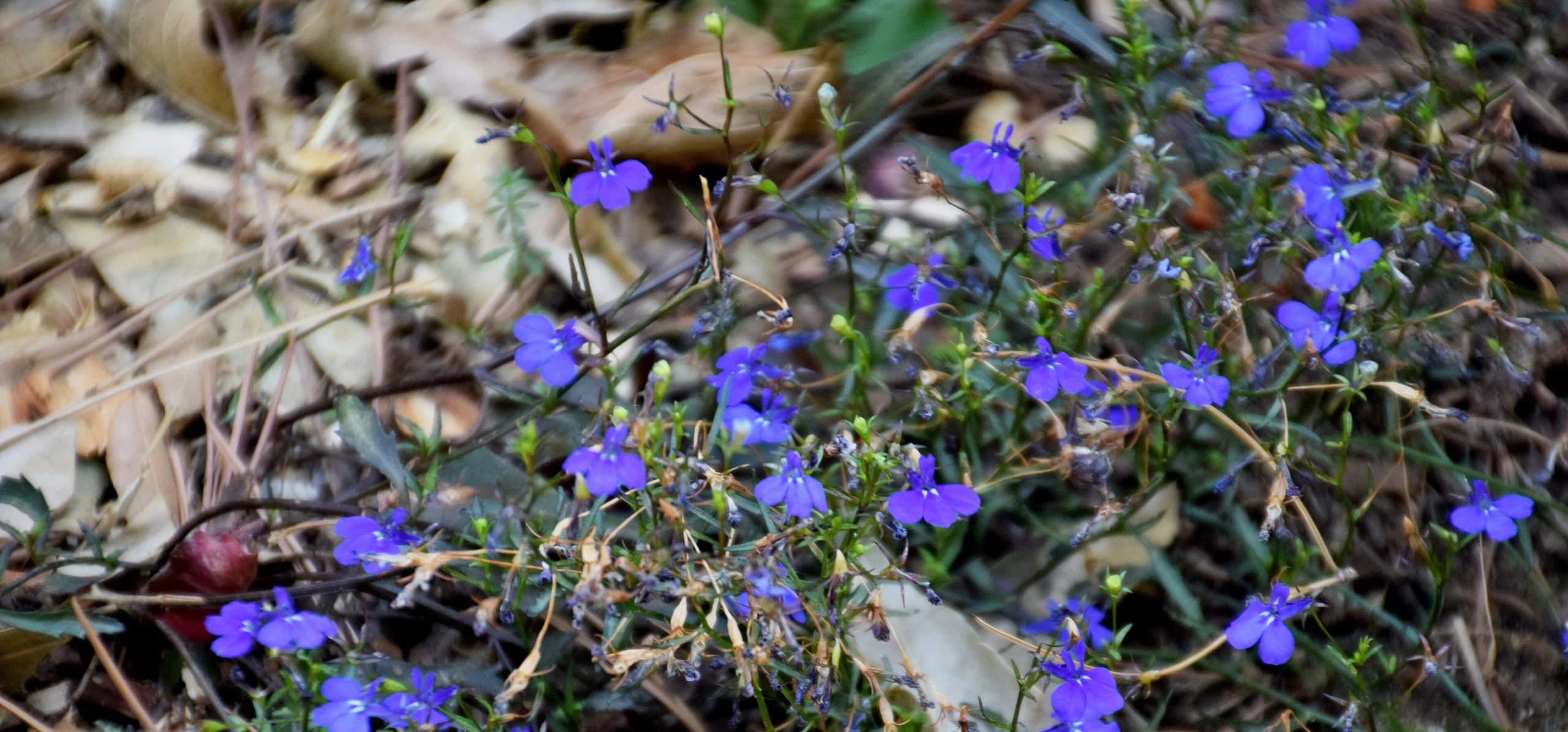
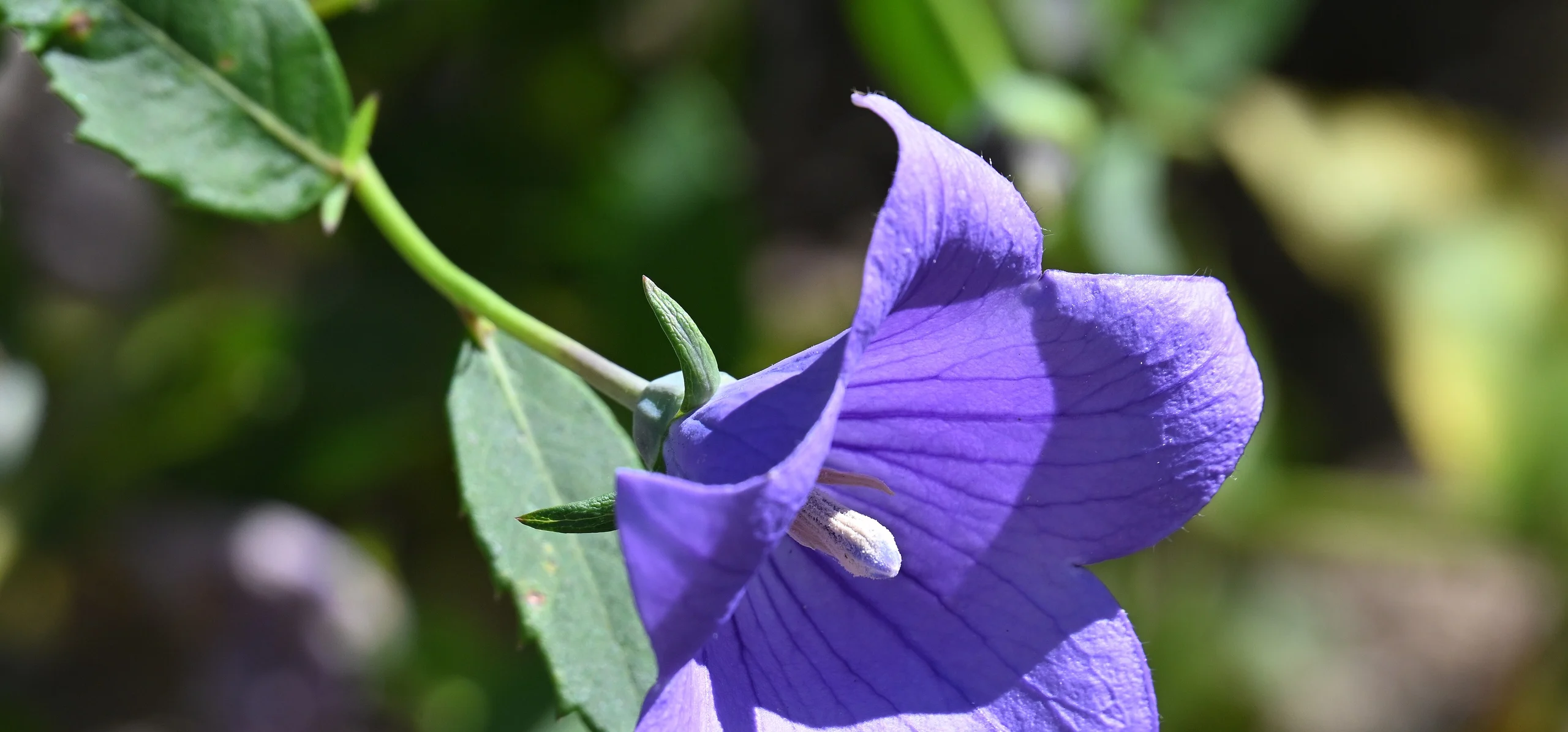
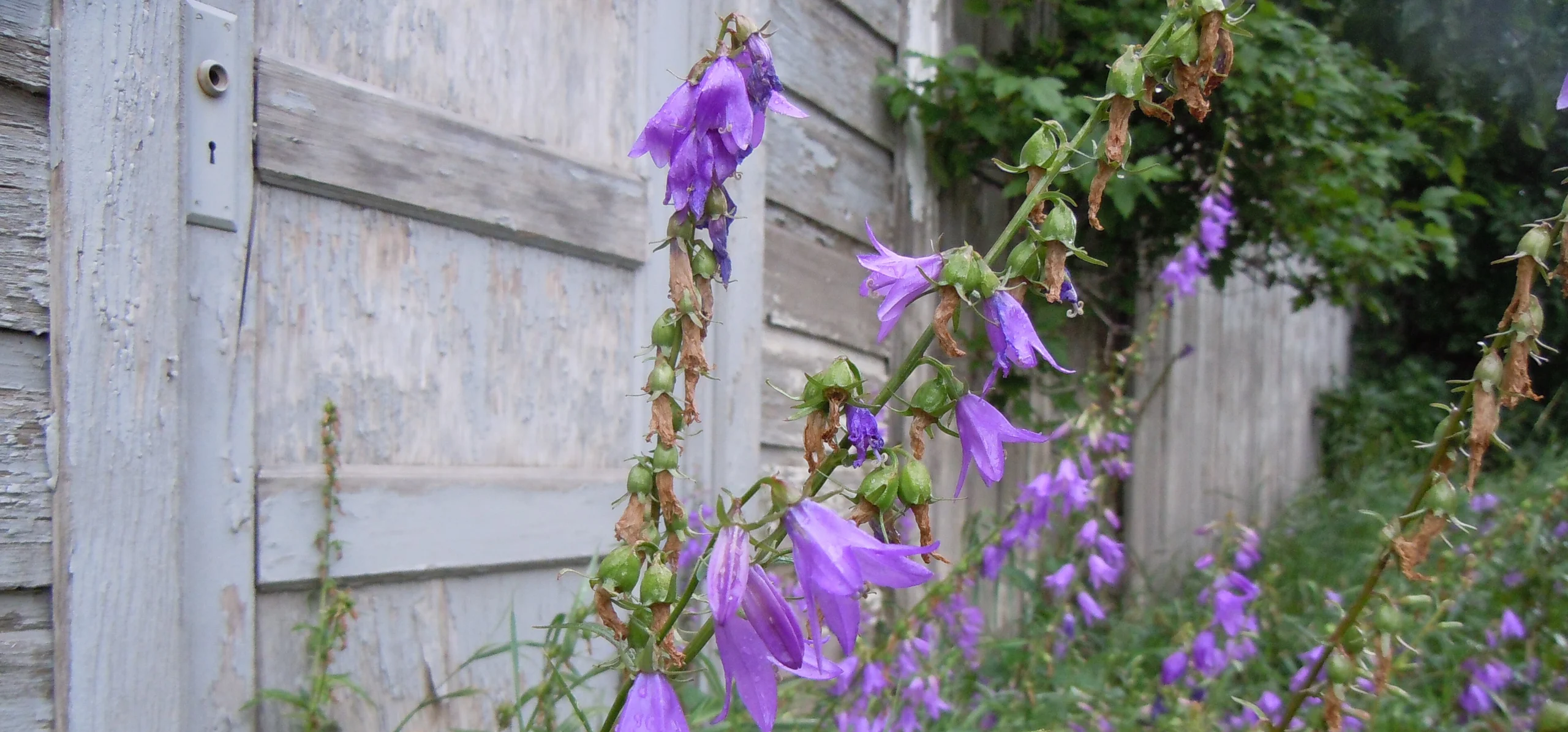
Basal leaves are heart-shaped and long-stalked, but leaves further up the stem narrow progressively into a lance shape, alternate along a stem that runs green to purplish and releases a milky sap when snapped. From roughly June to August it sends up flowering stems 50 cm to about a metre tall, topped with nodding, bell-shaped, violet-blue flowers held mostly along one side of the stem rather than spaced evenly around it. That lopsided, one-sided raceme is the fastest visual cue once you know to look for it. Left to flower, a stem produces seed capsules that split to scatter fine seed nearby, though the plant's real advantage in a garden bed comes from underground, not from seed.
Not the Bellflower You Planted: Telling It Apart
Nursery-bought garden bellflowers such as peach-leaved bellflower, clustered bellflower and Serbian bellflower form tidy clumps or low mats and do not travel underground the way this species does, so a bellflower that keeps popping up further from where it was planted each year is a strong first clue. Where it grows alongside native look-alikes, University of Minnesota Extension points to two useful contrasts: American bellflower is taller with flowers that are more open and less bell-shaped, and native harebell has a similarly purple flower but is a smaller, less robust plant with quite different leaves. None of the North American native or common cultivated bellflowers combine a heart-shaped basal leaf, a one-sided raceme and an aggressively spreading root system the way Campanula rapunculoides does, so when all three line up together, treat it as this species until proven otherwise.

The Root System That Beats Most Weeding
What makes this plant genuinely hard to garden around is underground: a network of thin, creeping rhizomes that sporadically swell into carrot-like, tuber-style storage roots, running to roughly 30 cm deep or more depending on the soil. Pulling a visible rosette almost always snaps this root system rather than lifting it whole, and University of Minnesota Extension is explicit that new plants can sprout from the small root fragments left behind, which is why a patch that looked cleared in spring is often back by midsummer. This is also why the plant tolerates being mowed, trodden on or half-dug and simply resprouts from whatever root material survives underground.
Realistic Removal, Not a One-Time Pull
Treat the first season of control as the start of a program rather than a fix. Dig and sift the soil to roughly 30 cm deep to lift as much of the lateral root and taproot system as you can, working the soil by hand where a fork alone will shear roots and leave pieces behind. Bag whatever root material and flowering stems you remove and put them out as waste rather than into a home compost pile, a chopped root that lands in a warm heap can simply reroot there instead of breaking down. For a stand too large to dig, a triclopyr-based herbicide applied in mid to late autumn, when the plant is pulling nutrients down into its roots for winter, is what extension services generally describe as the more effective timing. Expect to check the same ground again the following year: fragments and any seed already shed will keep producing a few new rosettes for several seasons even after a thorough dig. If you want to keep the flower anyway, it stays reasonably well behaved only in a solid-bottomed container with no drainage into open soil, the same logic gardeners use for containing mint.
Restricted and Watched Across North America
Introduced and naturalized from Alaska and Canada south through most of the northern United States, Campanula rapunculoides has moved from ornamental curiosity to regulated plant in several places. Wisconsin lists it as Restricted under its invasive species rule (NR 40), a category that limits selling, transporting or introducing the plant in the state, and the Missouri Botanical Garden notes it is also treated as a noxious weed in other Midwestern states outside Missouri. None of that applies in its native range, where it is simply an unremarkable roadside and meadow wildflower across Europe and Central Asia, part of why gardeners in Europe can grow it in a border with none of the caution that makes sense in a North American yard.
Common Mistakes That Bring It Right Back
- Pulling the visible top growth once and assuming the roots came with it, when a snapped root is usually still alive underground.
- Composting pulled roots or flowering stems instead of bagging them as waste.
- Leaving a cut or pulled flowering stem lying on the bed, where a pollinated flower can still finish ripening seed using energy stored in the stem.
- Buying or trading a bellflower at a plant sale on name alone; the common name overlaps loosely with other garden Campanula, so checking for the one-sided raceme and spreading roots before planting saves years of digging later.
Test your plant knowledge
Tap a card to flip it and reveal the answer.
A small fragment of root left behind in the soil can regrow into a whole new creeping bellflower plant. Tap to reveal ✓ True
One thorough hand-pulling, done while the plant is in flower, is normally enough to clear a patch for good. Tap to reveal ✕ False
Its bell-shaped flowers usually hang from just one side of the flowering stem. Tap to reveal ✓ True
The leaves stay the same heart shape from the base of the plant all the way up the flowering stem. Tap to reveal ✕ False
Wisconsin classifies creeping bellflower as a Restricted species, which limits its sale and transport. Tap to reveal ✓ True
Sources
References consulted for this guide
- GBIF: Campanula rapunculoides L.gbif.org
- Plants of the World Online (Kew): Campanula rapunculoidespowo.science.kew.org
- RHS: Campanula rapunculoides (creeping bellflower)rhs.org.uk
- Missouri Botanical Garden Plant Finder: Campanula rapunculoidesmissouribotanicalgarden.org
- University of Minnesota Extension: Creeping bellflowerextension.umn.edu
- Reference entity : Wikipédiaen.wikipedia.org