Cornflower
Centaurea cyanus
Family · Asteraceae
Cornflower is a hardy annual sown in autumn or spring. Covers sowing timing, meadow mixes, deadheading, cut flowers, edible petals and its decline in the wild.
Centaurea cyanus
Plant profile
- WateringLittleWater every 7 days
- Light exposureFull sun
- Hardiness zoneUSDA 2–11
Growth
- Family
- Asteraceae
- Life cycle
- Annual
- Growth speed
- 7/10
- Mature size
- 30–100 cm
- Spread
- 10–50 cm
- Flowering
- Late spring through summer
- Propagation
- Seed
Dormancynone, completes its lifecycle in one growing season
Time to maturityflowers in 8 to 12 weeks from sowing
Soil
- Soil types
- clay, loam, sand, chalk
Light & Placement
- Where to place it
- sunny border
- cutting garden
- wildflower meadow
- gravel bed
- large container with a peat-free, well-drained compost
OriginCentral and eastern Mediterranean, naturalized across Europe's cereal fields and beyond
Safety
- Toxicity
- CatsSafe
- DogsSafe
- HorsesSafe
Invasive speciesself-seeds readily and can become weedy in beds if seed heads are left to ripen
Data fromCentaurea cyanus, GBIF Backbone TaxonomyPOWO: Centaurea cyanus L.RHS: Centaurea cyanus (cornflower)ASPCA: Cornflower toxicity to cats and dNC State Extension Gardener Plant Toolbo
Where it grows
World distribution
Cornflower is native to 8 countries: Albania, Bulgaria, Croatia, Greece, Italy, Lebanon, Romania, and Türkiye.GBIF records 215,866 documented identifications across 101 countries, with the largest concentrations in France, Netherlands, and Germany.
- Albania
- Bulgaria
- Croatia
- Greece
- Italy
- Lebanon
- Romania
- Türkiye
Yellow to orange dots: concentration of documented identifications per country. Green countries: sourced native range. Source: GBIFNative range from POWO (Kew).
A Hardy Annual From the Mediterranean Cornfields
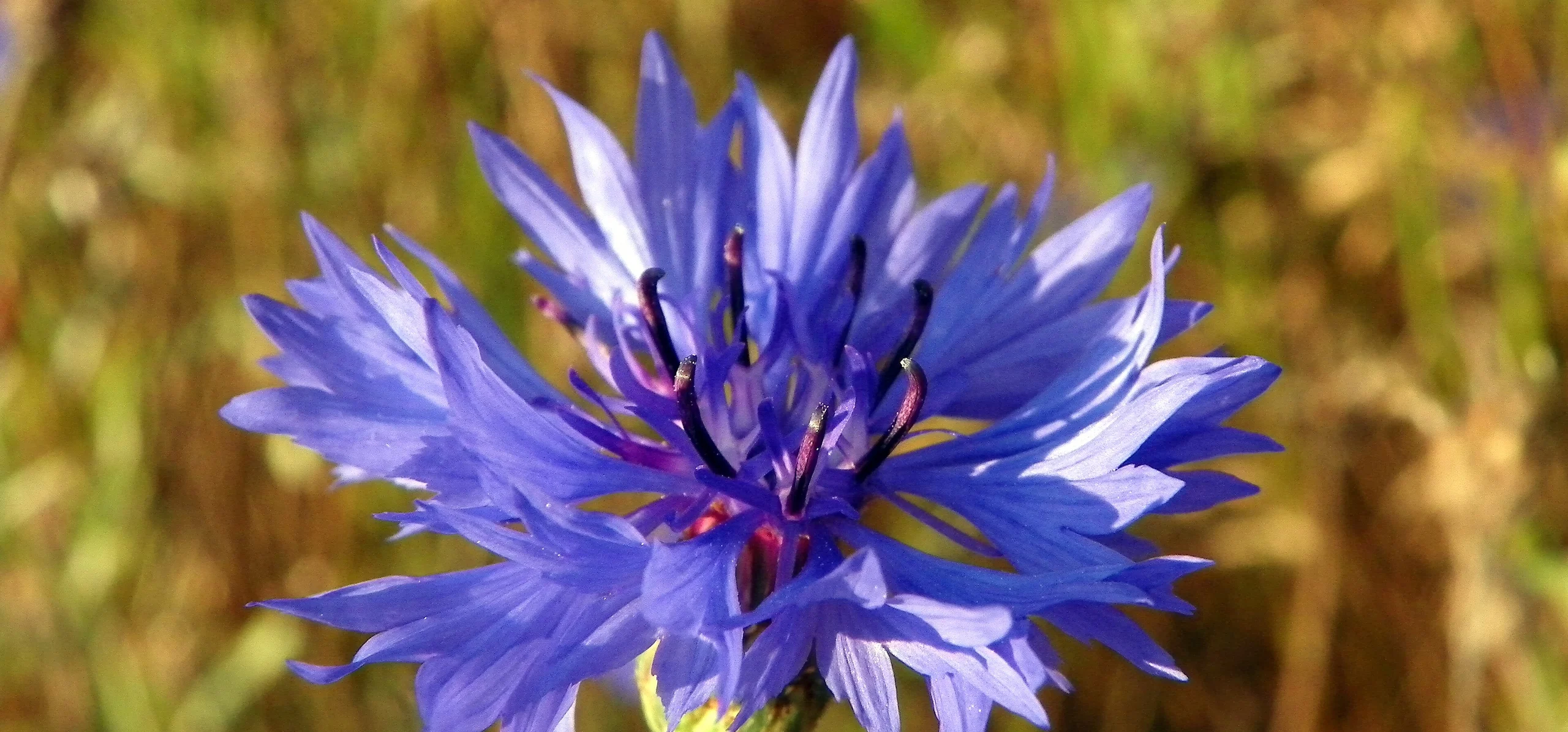
Centaurea cyanus, the cornflower, is a hardy annual in the daisy family (Asteraceae), native to the central and eastern Mediterranean, where it grew alongside wild cereals long before farming began. Once grain cultivation spread across Europe, cornflower travelled with it as a weed of the furrows, its wiry grey-green stems and narrow, slightly lobed leaves reaching 30 to 100 cm depending on the variety, topped by solitary flowerheads 3 to 4 cm across from late spring into summer. The wild form blooms an intense cornflower blue; garden seed strains now range through pink, maroon, white and near-black. Every part above ground dies back at season's end, this is a true annual, not a plant that goes dormant and returns from the same root each year.
Sowing in Autumn or Spring
Cornflower is unusual among hardy annuals in genuinely rewarding an autumn sowing. Seed sown direct outdoors in early to mid autumn germinates within one to two weeks, and the young rosettes sit through winter largely unbothered, the RHS rates the species H6, hardy down to between -20 and -15 degrees C. Those overwintered plants resume growth as soon as days lengthen, come into flower several weeks ahead of a spring sowing, and build sturdier, more branched stems that need less staking. Spring sowing, from mid spring once soil has warmed, is simpler and avoids any risk of a hard freeze catching young seedlings in an exposed bed, but the display starts later and fades sooner once summer heat sets in. Sowing a second batch in spring alongside an autumn one is the easiest way to keep flowers coming from early summer to the first frosts; thin seedlings to around 20 to 30 cm apart so plants do not stretch and flop into each other.


Site, Soil and Watering
Full sun and poor to average, well-drained soil suit cornflower best; it tolerates clay, loam, sand and chalk and grows across a wide pH range from acid to alkaline, but waterlogged winter ground is the one condition it will not forgive. Keep newly sown seedlings from drying out completely while roots establish, then taper off, plants growing well at 10 to 15 cm tall generally manage on rainfall alone through most summers and need supplemental water only in prolonged dry spells. Skip fertiliser at sowing time: soil that is too rich produces soft, over-tall growth that flops in wind and rain, exactly the outcome a lean, poor bed avoids.
Growing in Wildflower and Meadow Mixes
Cornflower is a fixture of annual meadow and cornfield-style mixes, typically alongside corn poppy, corn marigold and corn chamomile, the classic quartet of arable weeds turned garden favourites. In a mix it plays the same role it once played in real grain fields: fast germination and early flowering give it a head start over slower perennial meadow species in the first season, while its readiness to self-seed keeps a thin population going into year two even where the rest of the mix needs resowing. For a meadow effect rather than a border display, scatter seed thinly over bare, raked soil rather than sowing in rows, cornflower grown too densely produces short, weak stems competing for the same light.
Deadheading, Cutting and Vase Life
Removing spent flowerheads as they fade, before they set seed, is what keeps cornflower blooming for months rather than weeks; left to seed, most plants slow down and stop producing new buds within a few weeks of the first flush. Cornflower also makes a genuinely good cut flower: pick stems when the outer ring of florets has just opened but the centre is still tight, condition in deep water, and blooms hold in a vase for five to seven days. Cutting for the house has much the same effect as deadheading, regular picking through summer prolongs flowering in the bed almost as effectively as snipping off faded heads with secateurs.
Edible Petals
The petals, pulled free of the bitter central disc, are edible and carry a mild, faintly clove-like sweetness rather than any real flavour punch; their main value in the kitchen is colour, scattered over salads, pressed onto iced cakes, or frozen into ice cubes for drinks. Use only petals from plants grown without pesticide treatment, and separate them from the green calyx and central florets before serving, since the appeal here is visual rather than culinary weight.
Pests, Disease and a Weed in Retreat
Cornflower is largely trouble-free: powdery mildew can appear on crowded plants in still, humid weather, and aphids occasionally cluster on young flower stems, but neither usually needs more than thinning the row or a strong jet of water. The species self-seeds prolifically enough to be considered weedy in a tidy border if seed heads are left standing, deadhead or hand-weed volunteer seedlings to keep numbers down. Ironically, the same intensive arable farming that once made cornflower a familiar weed of grain fields, closer-drilled crops, herbicide use and cleaned seed among the causes, has pushed wild populations into marked decline across much of its former range, so the plant most gardeners meet today is a deliberately sown ornamental rather than an accidental one. It is non-toxic to cats, dogs and horses, and its flowers remain a reliable draw for bees and butterflies wherever it is grown.
Test your plant knowledge
Tap a card to flip it and reveal the answer.
Cornflower can be sown in autumn so it overwinters as a small plant and flowers earlier the next summer. Tap to reveal ✓ True
Cornflower flowers best in rich soil with regular fertiliser. Tap to reveal ✕ False
Deadheading spent flowers keeps cornflower blooming for longer. Tap to reveal ✓ True
Cornflower petals are toxic if eaten. Tap to reveal ✕ False
Cornflower self-seeds so readily that it can become a weed problem in a tidy border. Tap to reveal ✓ True
Sources
References consulted for this guide
- Centaurea cyanus, GBIF Backbone Taxonomygbif.org
- POWO: Centaurea cyanus L.powo.science.kew.org
- RHS: Centaurea cyanus (cornflower)rhs.org.uk
- ASPCA: Cornflower toxicity to cats and dogsaspca.org
- NC State Extension Gardener Plant Toolbox: Centaurea cyanusplants.ces.ncsu.edu
- Reference entity : Wikipédiaen.wikipedia.org