Parlor Palm
Chamaedorea elegans
Family · Arecaceae
Parlor palm care: partial shade, free draining soil, and water only when the top few centimeters dry, plus repotting, flowers and pest control.
Chamaedorea elegans
Plant profile
- WateringLittleWater every 12 days
- Light exposurePartial shade
- Ideal temperature15–27 °C
- Hardiness zoneUSDA 10–12
Growth
- Family
- Arecaceae
- Life cycle
- Perennial
- Growth speed
- 3/10
- Mature size
- 60–250 cm
- Spread
- 60–150 cm
- Flowering
- Small yellow to orange-red blooms after several years
- Propagation
- Seed
DormancyGrowth slows in cooler, darker winter months
Time to maturityFirst flowers after several years; full height in 10 to 20 years
Soil & climate
- Soil pH
- pH 5.5–7
- Drought tolerance
- Yes
Soil typesFree-draining, humus-rich mix, Added perlite or coarse grit, Loam, clay or sandy based compost
Light & Placement
- Origin
- Mexico to Honduras
- Where to place it
- North or east facing window, 1-2 m back
- Office or hallway with filtered light
- Shaded understory position in frost-free zones 10-12
- Any free-draining pot slightly larger than the rootball
Safety
- Toxicity
- CatsSafe
- DogsSafe
Data fromChamaedorea elegans Mart., GBIF BackboneChamaedorea elegans Mart., Plants of theParlor Palm toxicity, ASPCA Animal PoisoChamaedorea elegans (parlour palm), RHSChamaedorea elegans, NC State Extension
Where it grows
World distribution
Parlor Palm is native to 4 countries: Belize, Guatemala, Honduras, and Mexico.GBIF records 1,218 documented identifications across 30 countries, with the largest concentrations in Mexico, Guatemala, and United States.
- Belize
- Guatemala
- Honduras
- Mexico
Yellow to orange dots: concentration of documented identifications per country. Green countries: sourced native range. Source: GBIFNative range from POWO (Kew).
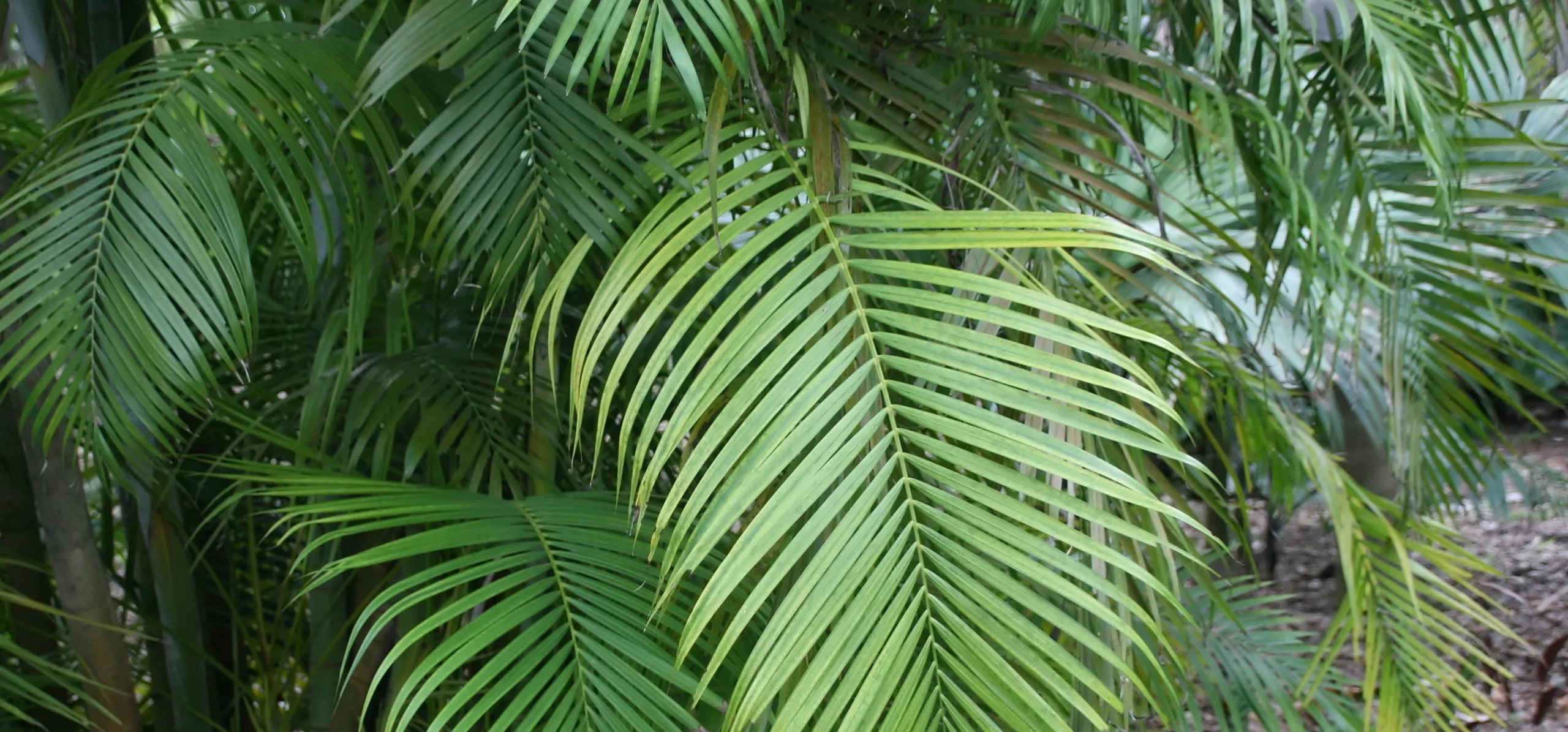
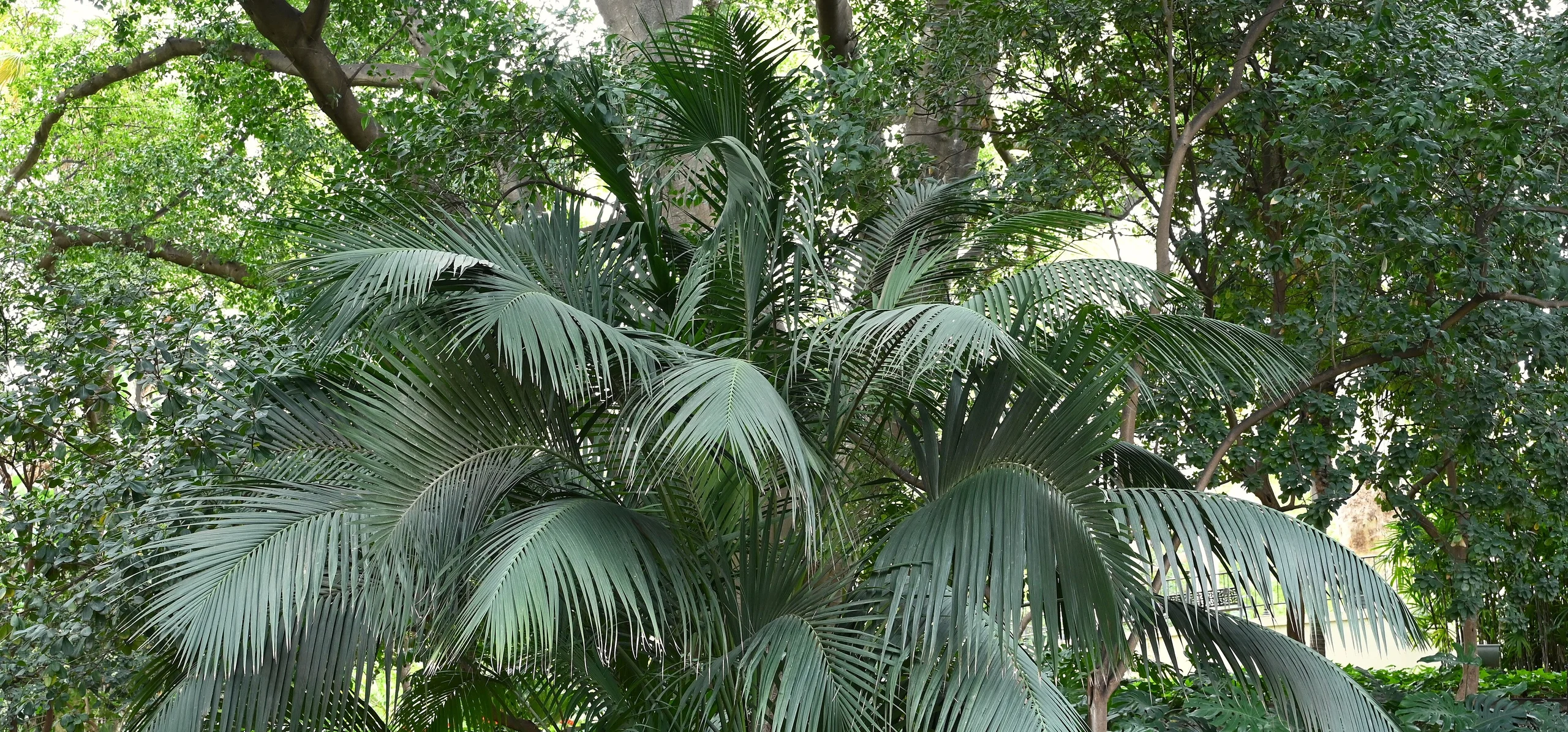
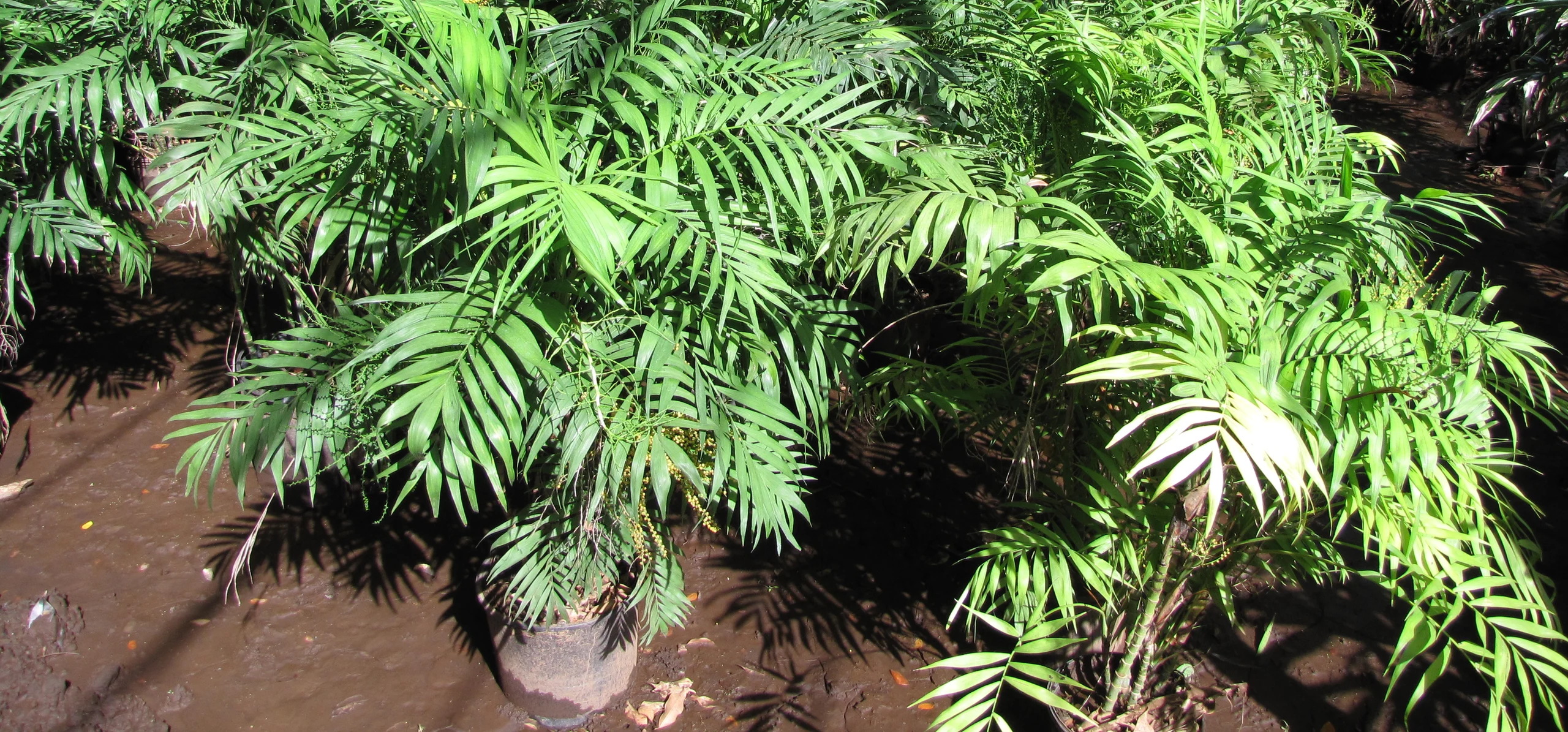
Chamaedorea elegans, the parlor palm, is one of the few palms that genuinely accepts a dim corner: a Victorian parlor favorite long before anyone coined the term low-light houseplant. Fronds emerge one at a time from a single slender cane, pale and folded, and unfurl over one to two weeks into arching, feather shaped leaves. It grows slowly and stays compact for years, so a plant bought at 30 cm tall will still suit a desk corner five years later. The one real threat to a parlor palm is not too little light, it is a heavy hand with the watering can.
Light and placement
Give it partial shade rather than a sunny sill: a north or east facing window a meter or two back, or a spot lit through a sheer curtain, matches the dappled understory light it evolved under in the rainforests of southern Mexico and northern Central America. Direct midday sun through south or west facing glass scorches the thin leaflets within days, leaving pale, bleached patches that never green up again. In an office or hallway lit mostly by fluorescent tubes, a parlor palm still holds its color for years, though new fronds come slightly smaller and more sparsely spaced than on a plant kept nearer a window.
Watering and drainage
Water once the top two to three centimeters of mix have dried, then soak thoroughly until water runs from the drainage holes, and empty the saucer afterward. The species tolerates a short dry spell far better than it tolerates wet feet: a pot left standing in water for even a few days is enough to start root rot, which shows up as a sour smell at the soil line and lower fronds yellowing from the base upward. Cut back sharply in winter, when a plant kept at cooler room temperature may need water only every two or three weeks. Brown, crisping leaflet tips usually trace back to dry indoor air or a buildup of mineral salts from tap water rather than underwatering; flush the pot with plain water every couple of months to clear the residue.
Soil and potting mix
Pot in a free draining, humus rich mix that leans acid to neutral. A standard peat free houseplant compost cut with added perlite or coarse grit drains fast enough to protect the roots while still holding some moisture between waterings. Loam, clay, chalk or sandy based mixes all work provided the pot has a drainage hole; what matters is structure, not one magic ingredient. Choose a pot only slightly larger than the current rootball, since a parlor palm actually grows better a touch pot bound, and a container that is too roomy holds moisture the roots cannot use in time.


Feeding
This is a light feeder. A balanced liquid fertilizer diluted to half strength, applied monthly through spring and summer, is plenty; more frequent or fuller strength feeding tends to scorch the fine root hairs and leaves a white crust of salts on the soil surface. Stop feeding entirely from autumn through winter, when growth all but halts and unused nutrients simply accumulate in the pot. A parlor palm that looks pale despite regular feeding is more often suffering from low light or a stale, compacted mix than from a lack of fertilizer.
Repotting a slow grower
Because it grows slowly and prefers being slightly pot bound, a parlor palm rarely needs repotting more than once every two to three years, and a mature specimen in its final decorative pot can go five years untouched. Repot in spring, moving up only one pot size, and check the rootball for the sour smell or blackened, mushy roots that signal past overwatering rather than a simple need for room. Given a stable pot and steady light, a parlor palm reaches its full ultimate height of roughly 1.5 to 2.5 meters only after ten to twenty years, so impatience is rarely rewarded here.
Flowers, seed and telling the sexes apart
Chamaedorea elegans is dioecious, meaning an individual plant is either male or female, and only a female pollinated by a nearby male sets the small round seeds nurseries collect for propagation. Even indoors, a plant several years old can send up short, branching flower stalks studded with tiny yellow to orange red blooms, a trait few other houseplant palms show this readily. Home growers essentially never propagate a parlor palm from cuttings or division; commercial stock is grown from seed, and the dense, multi stemmed pots sold in shops are usually several seedlings potted together rather than one plant that branched on its own.
Common problems and pests
Spider mites are the most frequent pest, arriving in the dry, warm air of a centrally heated room and announcing themselves with a stippled, dusty look to the foliage before any webbing is visible between leaflets. Mealybugs cluster as white cottony tufts in the leaf axils near the cane. Both respond to insecticidal soap or neem oil applied every five days for three weeks, with the plant moved somewhere more humid afterward to discourage a repeat infestation. Yellowing lower fronds on an otherwise healthy plant are often simply old age: palms shed their oldest leaves from the bottom as new ones emerge at the top, and cutting a spent frond back to the cane once it has fully browned is routine grooming rather than a sign of trouble. Unlike many popular houseplants, the ASPCA lists Chamaedorea elegans as non-toxic to cats and dogs, one more reason it has stayed a fixture on offices and windowsills since the Victorian era.
Test your plant knowledge
Tap a card to flip it and reveal the answer.
Chamaedorea elegans tolerates deep shade and low indoor light better than most houseplant palms. Tap to reveal ✓ True
Parlor palm roots recover quickly from sitting in standing water. Tap to reveal ✕ False
Chamaedorea elegans is dioecious, so an individual plant is either male or female. Tap to reveal ✓ True
A parlor palm should be moved into a much larger pot every year to keep growing well. Tap to reveal ✕ False
The ASPCA lists the parlor palm as non-toxic to cats and dogs. Tap to reveal ✓ True
Sources
References consulted for this guide
- Chamaedorea elegans Mart., GBIF Backbone Taxonomygbif.org
- Chamaedorea elegans Mart., Plants of the World Online (Kew)powo.science.kew.org
- Parlor Palm toxicity, ASPCA Animal Poison Controlaspca.org
- Chamaedorea elegans (parlour palm), RHSrhs.org.uk
- Chamaedorea elegans, NC State Extension Gardener Plant Toolboxplants.ces.ncsu.edu
- Reference entity : Wikipédiaen.wikipedia.org