American Burnweed
Erechtites hieraciifolius
Family · Asteraceae
American burnweed announces itself with a sharp smell when crushed, flower heads that never open, and a dandelion-like seed puff on freshly dug or burned soil.
Erechtites hieraciifolius
Plant profile
- WateringLittleWater every 7 days
- Light exposureFull sun
Growth
- Family
- Asteraceae
- Life cycle
- Annual
- Growth speed
- 9/10
- Mature size
- 40–300 cm
- Propagation
- Seed
FloweringSmall cream-to-pinkish disc flower heads that never fully open, summer into early fall
DormancySeeds can persist in the soil and germinate once bare, sunlit ground is exposed
Time to maturityFlowers in summer to early fall and dies at the first frost
Soil & climate
- Soil types
- disturbed, burned, cultivated, freshly mulched
- Drought tolerance
- Yes
Light & Placement
- Where to place it
- freshly burned or cleared ground
- newly dug vegetable beds
- disturbed roadsides and construction edges
OriginEastern Canada to tropical and subtropical America (POWO); introduced as a weed in parts of Europe and across Asia
Safety
- Toxicity
- Not listed by the ASPCA
- Pet safe
- No
Invasive speciesNative to eastern North America but introduced as a weed in parts of Europe and across Asia, including Japan, Korea, China, and Indochina, and considered invasive in Japan per the CABI Compendium.
Data fromGBIF: Erechtites hieraciifolius (L.) RafPOWO: Erechtites hieraciifoliusPenn State Extension: American Burnweed,Clemson Cooperative Extension HGIC: WeedCABI Compendium: Erechtites hieraciifoli
Where it grows
World distribution
American Burnweed is native to 32 countries: Antigua & Barbuda, Argentina, Bahamas, Belize, Bolivia, Brazil, Canada, and Cayman Islands….GBIF records 67,283 documented identifications across 81 countries, with the largest concentrations in United States, Brazil, and South Korea.
- Antigua & Barbuda
- Argentina
- Bahamas
- Belize
- Bolivia
- Brazil
- Canada
- Cayman Islands
- Colombia
- Costa Rica
- Cuba
- Dominican Republic
Show 20 more countriesShow fewer countries
- Ecuador
- El Salvador
- French Guiana
- Guatemala
- Guyana
- Haiti
- Honduras
- Jamaica
- Mexico
- Nicaragua
- Panama
- Paraguay
- Peru
- Puerto Rico
- St. Lucia
- Suriname
- Trinidad & Tobago
- United States
- Uruguay
- Venezuela
Yellow to orange dots: concentration of documented identifications per country. Green countries: sourced native range. Source: GBIFNative range from POWO (Kew).
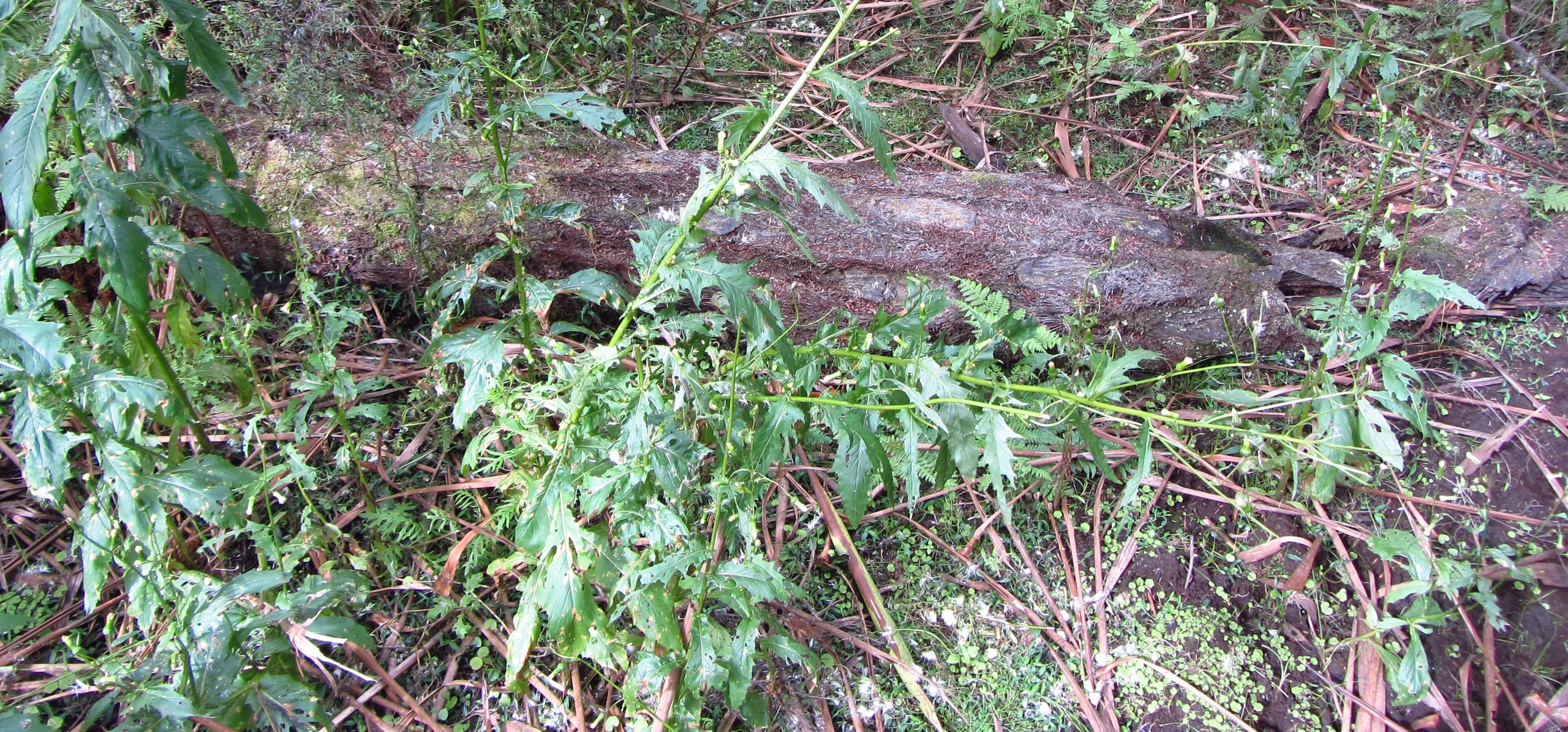
A stand of Erechtites hieraciifolius can appear within weeks of soil being dug, mulched, or burned, and the smell usually gives it away before the leaves do: crush a stem and it releases a sharp, unpleasant odor that has nothing in common with a garden herb. The stems are brittle and grooved, the leaves start finely toothed and get progressively more ragged and lobed as the plant matures, and the flower heads never open into anything resembling a daisy, they stay closed as narrow greenish buds until they split into a dandelion-like puff of wind-borne seed. It is an annual, not a perennial squatter, and in most beds it behaves like a one-season visitor tied to freshly disturbed ground rather than a plant that settles in for good.
Identifying It: Smell, Ragged Leaves, and Flower Heads That Never Open
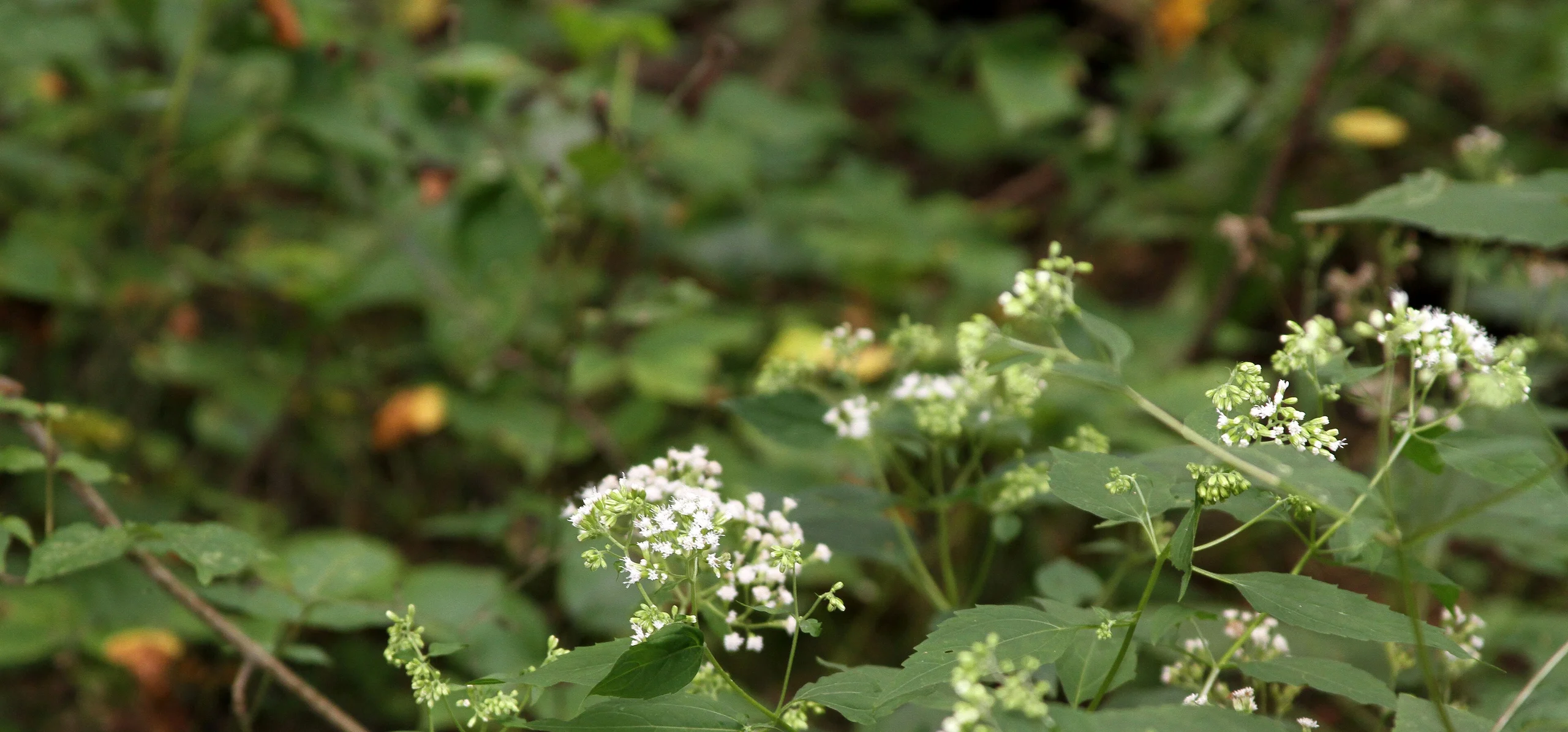
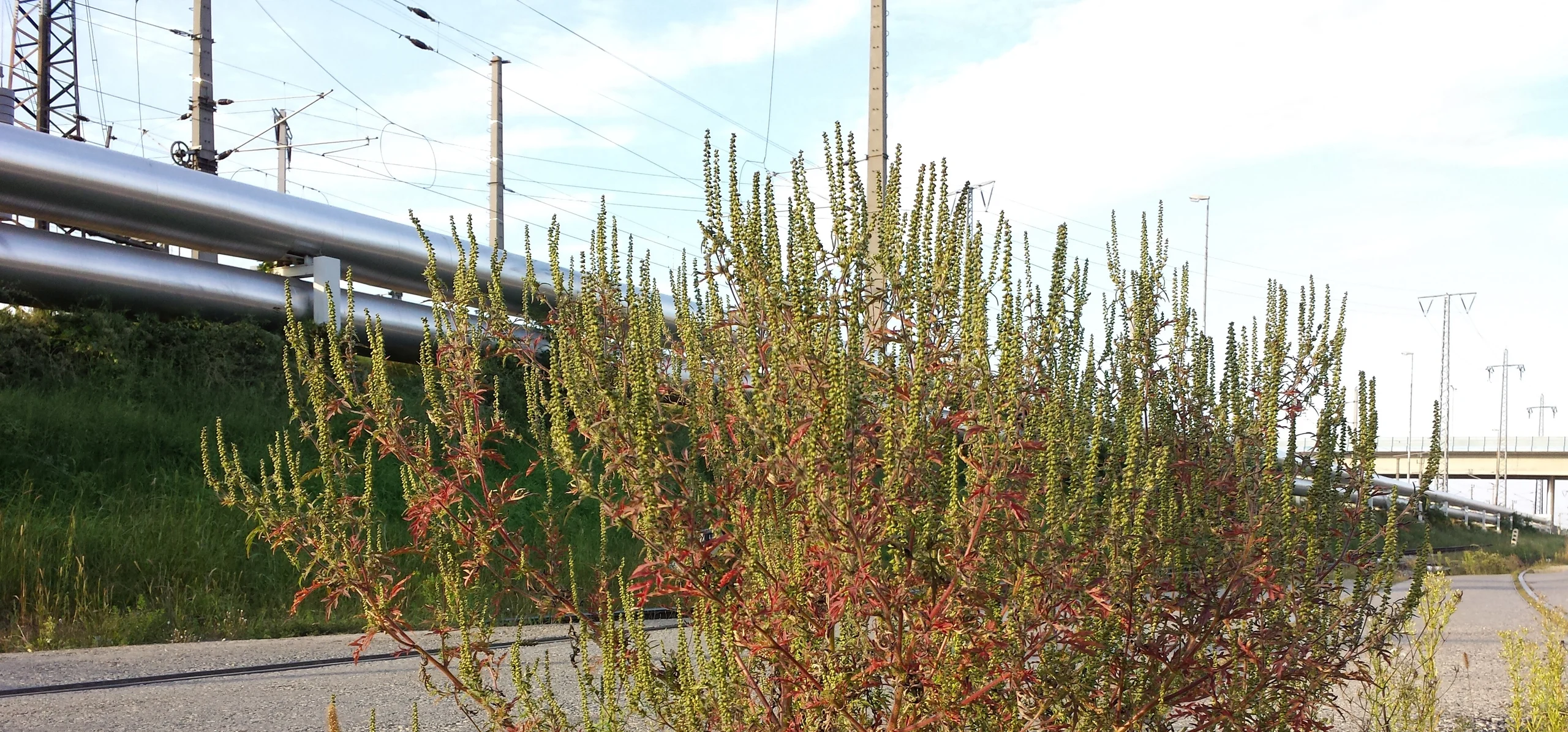
Penn State Extension describes the crushed foliage as releasing an unpleasant scent, which is the fastest field cue before the plant is tall enough to recognize by shape. The stems are solid with white pith and can reach 0.4 to 3 meters, branching heavily above the midpoint on older plants. Leaves run 2 to 8 inches long and about half an inch to two and a half inches wide, elliptical to lanceolate with a sharp tip; Clemson Cooperative Extension's Home & Garden Information Center notes that young plants carry finely toothed, long elliptical leaves, while mature growth develops heavier toothing and can show distinct lobes, which is the ragged look most people notice first. The flower heads themselves are small, 3 to 10 millimeters wide, cream to pinkish, and stay tucked below inch-long green bracts instead of opening flat. After wasps pollinate them, each head turns into a tuft of seed carried on white-silver hairs, the same dandelion-style parachute that lets a single plant seed a whole bed downwind.
One Plant, Two Spellings: Hieraciifolia Versus Hieraciifolius
The name printed on seed catalogs and foraging guides is usually Erechtites hieraciifolia, but GBIF's accepted name for this species is Erechtites hieraciifolius (L.) Raf. ex DC., and the two forms are not a typo, they are alternate Latin endings for the same plant that have circulated in botanical literature for decades. GBIF's own synonym list even carries a third spelling, Erechtites hieracifolia (L.) Raf., dropping a letter entirely. None of these variants point to a different species: the classification is stable at family Asteraceae, genus Erechtites, order Asterales, and any of the three names in a search engine or plant ID app should land on the same weed described here.
Why It Explodes on Burned Ground and Freshly Dug Beds
Both Penn State Extension and Clemson HGIC describe American burnweed as one of the first species to colonize open ground, the classic behavior of a pioneer plant. Penn State notes that its seeds can withstand harsh conditions and then germinate once conditions turn favorable, which in practice means they sit inert in the soil until a fire, a tiller, or a fresh load of mulch exposes bare mineral soil to direct light. A brand-new vegetable bed, a lot cleared for construction, or ground burned the previous season are all the same opportunity to this plant: open soil with no canopy and no competing roots yet established.


Why the Same Bed Rarely Repeats the Show
The heavy first-year flush is not a sign the plant has moved in permanently. Clemson HGIC notes that a 3-inch layer of medium to coarse mulch prevents new seedlings from establishing, which points to the real mechanism: this weed germinates on exposed, sunlit soil, and once a bed fills in with other plants or settles under a mulch layer, the bare germination niches close. The seeds that did not sprout do not disappear, they can remain in the soil, but a bed that produced dozens of plants in its first disturbed season typically produces far fewer once its surface is covered again, simply because there is nowhere left for a seed to land on open ground.
Pulling It Before the Seed Puff Opens
Both extensions agree this is an easy weed to remove by hand: Penn State attributes this to a short taproot with shallow, fibrous secondary roots, and Clemson calls it easily hand-pulled. The only real skill is timing. Penn State is specific that removal has to happen before the plant releases its seed, since a single missed plant can drop thousands of viable seeds into the soil. For an ordinary garden bed, hand-pulling on that schedule plus a mulch layer to block new germination is normally enough; Penn State reserves broad-spectrum herbicide for larger infestations, which is a farm- or lot-scale measure rather than something a home bed usually needs.
From Eastern North America to Japan: A Weed That Followed People
POWO lists the native range of Erechtites hieraciifolius as eastern Canada to tropical and subtropical America, which covers its original range across the Americas. The CABI Compendium entry for the species records it as introduced in parts of Europe and across Asia, including Japan, Korea, China, and Indochina, and it is treated as an invasive species in Japan. The mechanism is the same one that lets it colonize a garden bed: wind-borne seed exploits any patch of disturbed, sunlit ground, and disturbed ground, from shipping yards to cleared land, exists on every continent people have settled.
A Minor, Double-Edged Player for Wildlife
Clemson HGIC lists the flowers as a pollen source for beneficial insects, including tachinid flies, native bees, and wasps, so a stand left standing briefly before pulling is not wasted on wildlife. The same source notes the plant also hosts the tarnished plant bug, a pest that damages small fruits and vegetables, which makes its wildlife value modest and mixed rather than a reason to let it stay in a productive bed.
Is It Safe to Have Around Pets?
American burnweed does not appear under either of its scientific or common names in the ASPCA's toxic and non-toxic plant database; the ASPCA's own "Fire Weed" entry is a different plant, Epilobium angustifolium, not this species. That makes its status simply unlisted rather than confirmed safe, so the practical approach is the same one used for any unlisted wild weed: pull it out of reach of grazing pets and livestock rather than assuming it is harmless because no warning exists.
Test your plant knowledge
Tap a card to flip it and reveal the answer.
The sharp smell released when American burnweed is crushed is often the fastest way to identify it before the flowers appear. Tap to reveal ✓ True
American burnweed's flower heads open flat like a daisy to show off showy petals. Tap to reveal ✕ False
Hand-pulling American burnweed before it releases its seed puff is usually enough to control it without herbicide in a home garden bed. Tap to reveal ✓ True
Because it thrives on freshly disturbed soil, American burnweed usually keeps producing large numbers of new plants once a bed's surface is covered again. Tap to reveal ✕ False
American burnweed is native only to the Americas and has never spread to other continents. Tap to reveal ✕ False
Sources
References consulted for this guide
- GBIF: Erechtites hieraciifolius (L.) Raf. ex DC.gbif.org
- POWO: Erechtites hieraciifoliuspowo.science.kew.org
- Penn State Extension: American Burnweed, Erechtites hieraciifoliusextension.psu.edu
- Clemson Cooperative Extension HGIC: Weed of the Month, American Burnweedhgic.clemson.edu
- CABI Compendium: Erechtites hieraciifolius (American burnweed)cabi.org
- Reference entity : Wikipédiaen.wikipedia.org